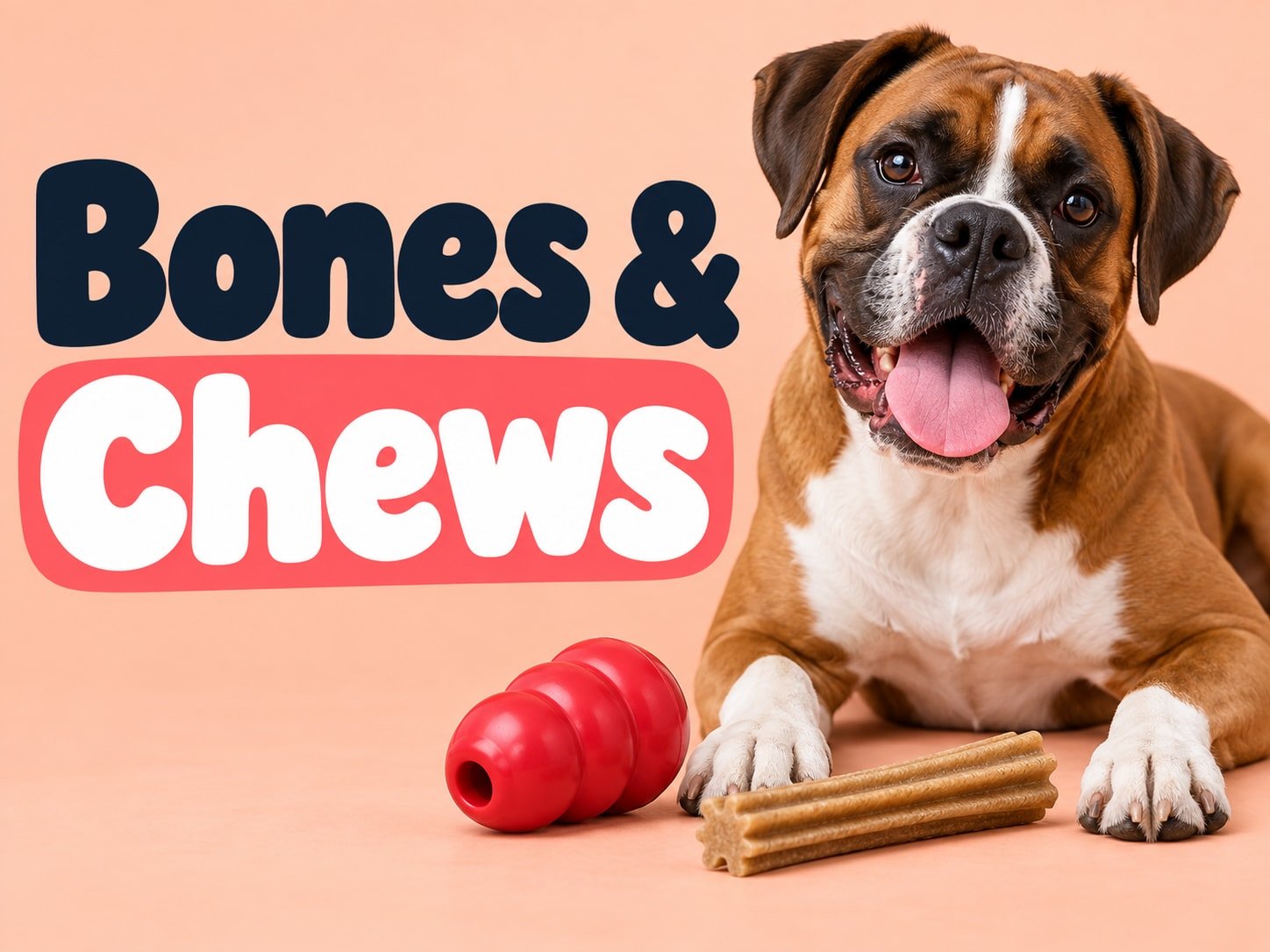
Choose chews for your dog’s size, teeth and chewing habits, and supervise their use. Bones and very hard objects can injure teeth or cause problems if swallowed; no chew is completely risk-free.
Compare chews by what can go wrong
On a phone, swipe the table sideways to read every column.
| Choice | Check before offering | Stop when |
|---|---|---|
| Flexible rubber toy | Fits the dog’s size; cannot be swallowed whole; no torn pieces | It splits or pieces can be removed. |
| Edible chew | Appropriate size and ingredients; count calories; ask about dietary restrictions | The last piece becomes small enough to swallow. |
| Dental chew | Appropriate size; look for a product with an independent VOHC seal if dental benefit is the goal | Gulping or stomach upset occurs. |
| Hard bone, antler or hoof | High risk of fractured teeth, splinters or swallowed pieces | Choose a safer alternative rather than testing the dog’s teeth. |
Supervision matters more than a “natural” label. Watch how your dog chews: a slow nibbler and a powerful gulper need different choices. Take away damaged objects before pieces break off. If a chew causes coughing, repeated gagging, vomiting, painful chewing or a missing fragment, contact your veterinarian promptly.
Dental value versus entertainment
A toy can occupy a dog without cleaning teeth. A dental chew with an accepted plaque or tartar claim can complement brushing, but it cannot replace examination and professional care where needed. Check the VOHC accepted products list for the exact product rather than relying on package language alone.
Be cautious with bones
Both cooked and raw bones can cause problems, including damaged teeth, choking or injury after swallowing. Raw animal products also introduce hygiene concerns. Do not assume a bone is suitable because it is marketed as natural. Discuss choices with your veterinarian, particularly if your dog has dental disease or digestive problems.
Read the size and use guidance
Choose a product intended for your dog’s size and check the maker’s instructions. Inspect toys for cracks, loose pieces and exposed filling before each use. Edible chews also contribute calories. Keep the packaging so ingredients and product details are available if your dog has a reaction.

What should you compare before buying a chew?
Look at size guidance, material, ingredients, calorie information and the manufacturer’s removal instructions. A product that works for a gentle chewer may fail quickly with a dog who tears off chunks. Ask your veterinary team about dental products with evidence behind their claims. The Veterinary Oral Health Council evaluates particular plaque or tartar claims; acceptance does not make a product suitable for every dog or remove the need for supervision.
Supervise every session
Offer a chew in a quiet place where you can watch. End the session when the item becomes damaged or small enough to swallow. Avoid reaching into the mouth of a dog who guards items; get professional help with a safe exchange plan instead of creating a confrontation.
Know when to get help
Breathing difficulty is an emergency. Repeated gagging, vomiting, abdominal pain or difficulty passing stool after chewing also needs veterinary advice. Tell the clinic what was swallowed and when, and bring the remaining product or packaging if available.

How do you set up a calmer chewing session?
Give each dog a separate comfortable space and keep children from approaching a dog with a chew. Put a timer or reminder in place if that helps you check the item regularly. Have a safe, previously trained exchange routine. When a dog stiffens, growls or guards the item, stop reaching for it and seek a qualified professional’s help with a handling plan.
Your practical checklist
- Inspect the whole item before giving it to the dog.
- Read the size, age and supervision guidance on the packaging.
- Offer it where you can watch without crowding the dog.
- Remove damaged or swallowable remnants through a safe exchange.
- Record the brand and type if any digestive or dental problem follows.
Common questions and answers
Are raw bones safer than cooked bones?
Raw does not mean risk-free. Bones can damage teeth or cause choking and digestive injury, while raw animal products add microbial concerns. Ask your veterinarian about alternatives that suit your dog rather than using rawness as the main safety test.
Can dental chews replace toothbrushing?
They may be one part of a dental plan, but they do not automatically replace brushing or veterinary dental care. Check the specific product’s evidence and use instructions. A dog with painful teeth needs assessment before being encouraged to chew more.
What if my dog swallows a large piece?
Call your veterinarian with the product, approximate piece size, time and dog’s weight. Do not wait for a blockage to become obvious or try to induce vomiting without instructions. Breathing difficulty needs emergency care immediately.
Can two dogs share a chew?
Give separate items in separate spaces and avoid creating competition. Supervision is about behaviour as well as breakage. If one dog steals or guards chews, use physical separation and professional guidance instead of expecting the dogs to work it out.
Check our previous articles
Continue with these related guides from My Dog Recipes:
Sources and further reading
- ASPCA: Food and bone hazards
- WSAVA: Treats and daily feeding
- Veterinary Oral Health Council: Accepted products
Updated September 29, 2026. General educational guidance; individual health and feeding decisions depend on your dog’s needs.


Leave a Reply