
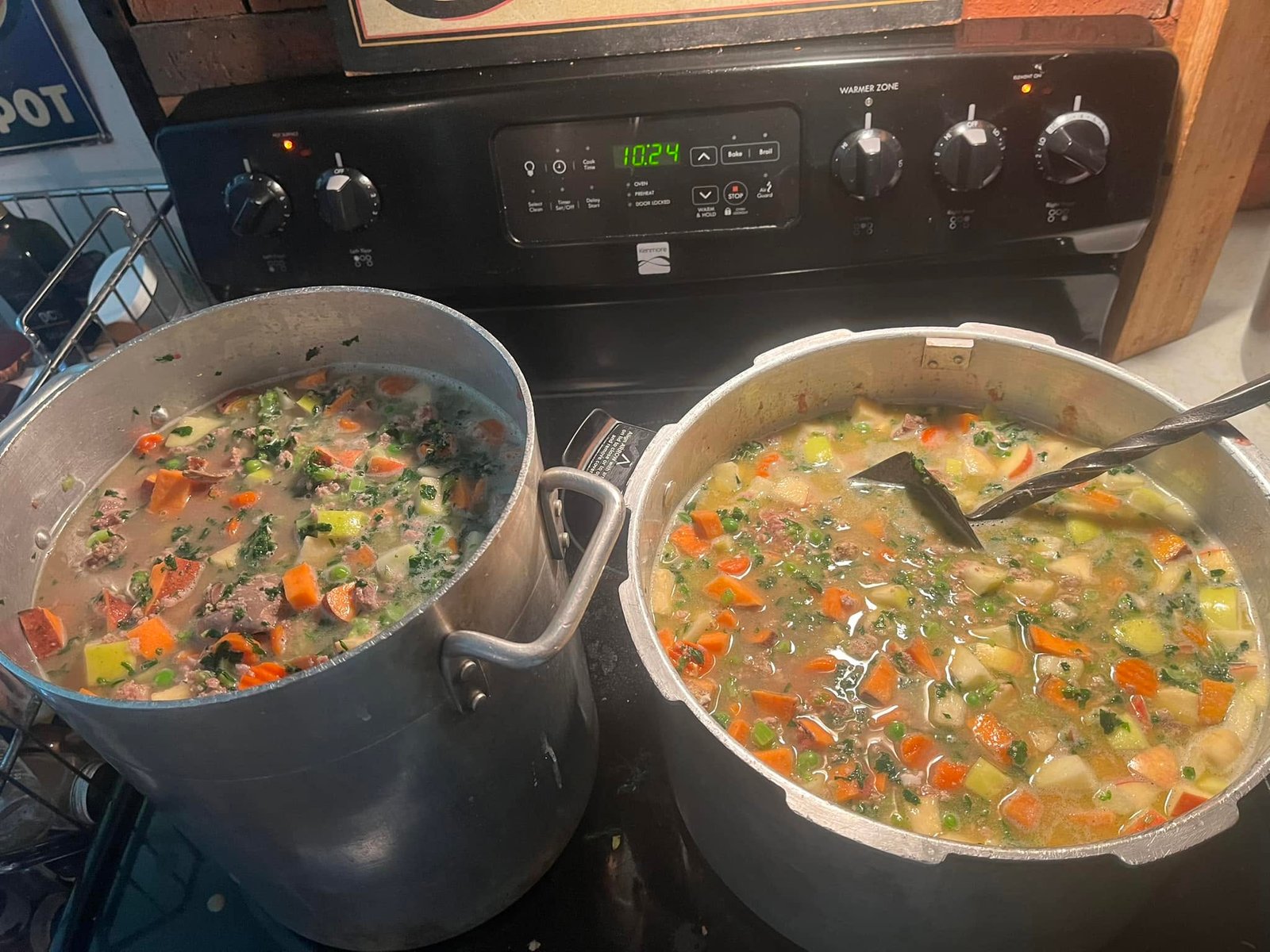
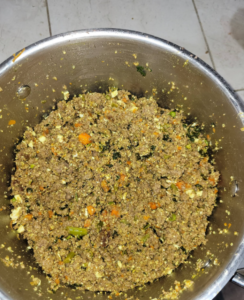
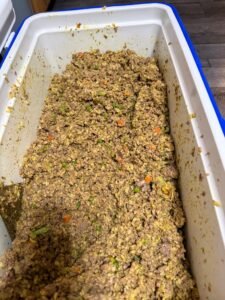
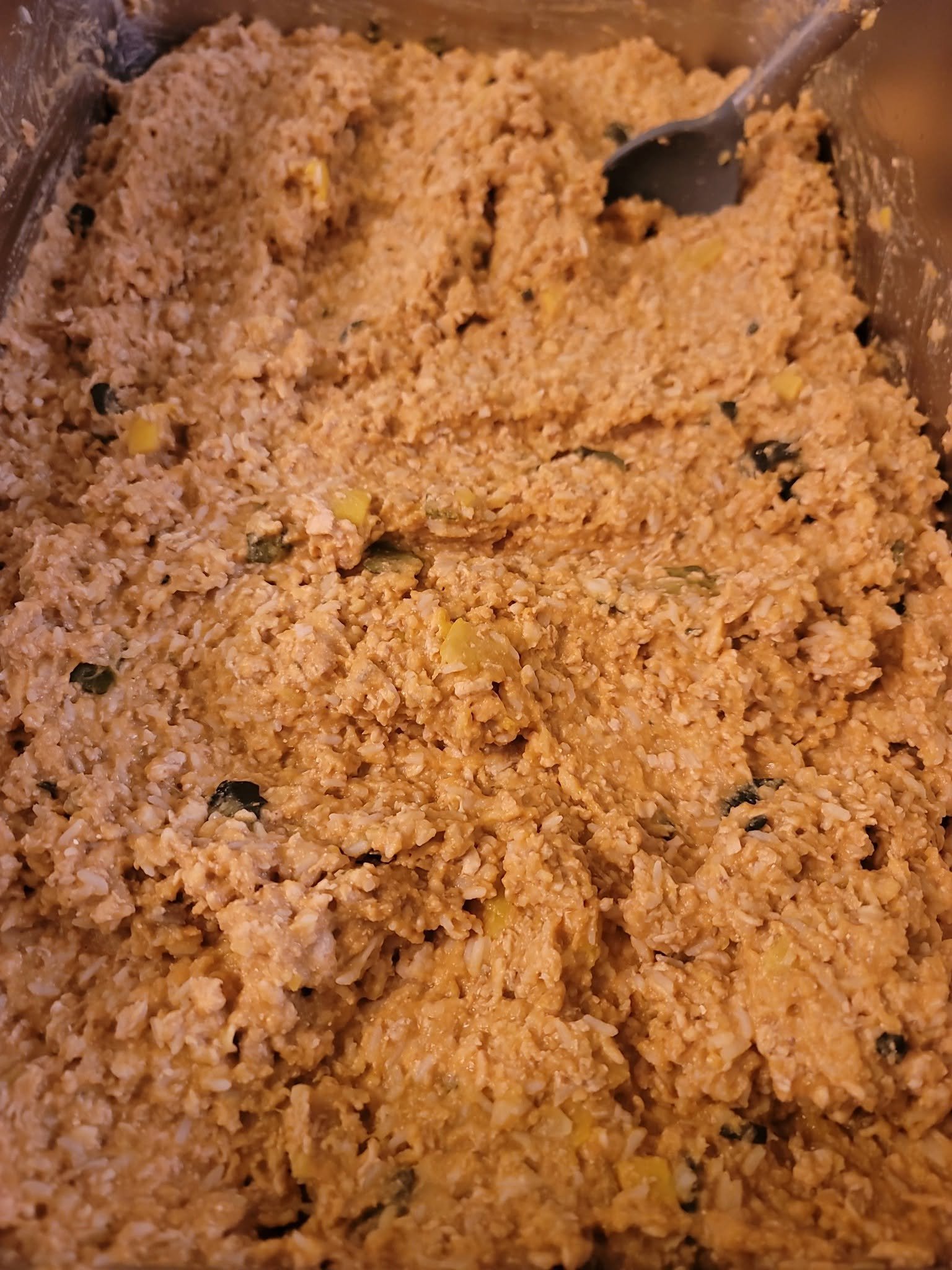
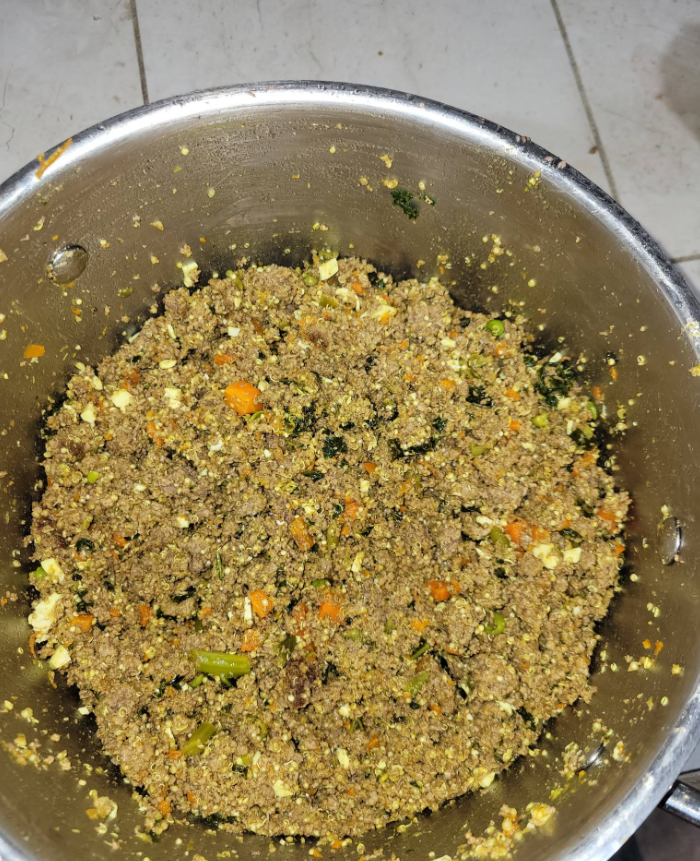
Preparing homemade dog food in a large batch starts with an organized ingredient list and a plan for cooking, cooling and storage. This poultry, brown rice and oat mixture also includes chicken liver, eggs, sweet potatoes, apples and green vegetables. The supplied photograph shows two pots in progress; the quantities below describe one batch.
Recipe development note: This is an unformulated recipe draft, not a complete daily feeding plan. The oats and vegetable package weights are missing, and the listed 2 lb of liver and 1 cup of coconut oil need review as part of the full formulation. Do not assume these proportions are appropriate for your dog or replace regular food with this mixture.
Ingredients recorded for one batch
- 3 lb ground chicken or turkey
- 2 lb chicken livers — supplied amount, pending nutritional review
- 12 eggs
- 1 cup coconut oil — supplied amount, pending nutritional review
- 1 bag brown rice, 16 oz — confirm whether this is dry rice or a ready-cooked product
- 1 large container old-fashioned oats — net weight to confirm
- 1 bag frozen chopped broccoli — net weight to confirm
- 1 bag frozen peas — net weight to confirm
- 1 bag frozen chopped spinach — net weight to confirm
- 1 small bag frozen carrots — net weight to confirm
- 4 large sweet potatoes — prepared weight to confirm
- 4 apples — cored, with seeds removed; prepared weight to confirm
Package descriptions are preserved from the original notes rather than converted into guessed measurements. Record the actual weights before repeating the batch. The two pots in the photograph do not establish the finished yield, number of meals or portion size.
A practical preparation workflow
The original submission lists ingredients but does not provide cooking instructions. The following is a proposed kitchen workflow for a recipe that has first been checked and finalized, rather than a claim about how the pictured food was made.
Prepare the ingredients separately
Wash the apples and sweet potatoes. Remove apple cores and seeds, then chop the fruit into manageable pieces. Peel and dice the sweet potatoes. Keep raw poultry and liver, their cutting boards and their utensils separate from ingredients that are already cooked.
Cook the grains and vegetables
Once the rice product and oat weight are confirmed, cook each grain in plain water using its package instructions. Cook the frozen vegetables as directed on their packets. Boil or steam the sweet potato until tender. Preparing these components separately makes it easier to check their texture and prevents a very full pot from cooking unevenly.
Cook poultry, liver and eggs thoroughly
Cook the ground chicken or turkey and chicken liver to an internal temperature of 165°F / 74°C, checking with a food thermometer. Hard-boil the eggs until the whites and yolks are firm, remove the shells and chop. Do not add onion, garlic, salty stock cubes or seasoned sauces.
Mix only the finalized quantities
Chop the cooked liver and combine the prepared ingredients in clean food-safe containers. Use the oil amount specified in the reviewed formulation; do not automatically pour in the full cup from these notes. Mix thoroughly so the ingredients are distributed evenly, then begin cooling in small portions promptly.
How should a large batch be stored?
Divide cooked food into shallow containers rather than letting two deep stockpots cool on the stove. Refrigerate within two hours, or within one hour if the surrounding temperature exceeds 90°F / 32°C. Keep refrigerated portions at 40°F / 4°C or below and use within three to four days. Freeze the rest promptly in labeled portions. Thaw in the refrigerator, and if reheating, heat to 165°F / 74°C before cooling the serving to a comfortable temperature.
Can blueberries, venison or beef liver be added?
The original notes mention these as occasional additions, but no quantities are supplied. They are not included in this draft’s base ingredient list. Changing meats or adding extra liver changes the recipe, so have substitutions and amounts specified in the final formulation rather than adding whatever is available.
What is the right serving size?
No reliable serving size or calorie total can be given from this ingredient list. The package weights, finished yield and the dog’s individual needs are not known. A board-certified veterinary nutritionist can turn exact ingredient weights into a complete recipe and feeding plan. Until then, keep this as a preparation draft rather than a daily-diet recommendation.
Leave a Reply