
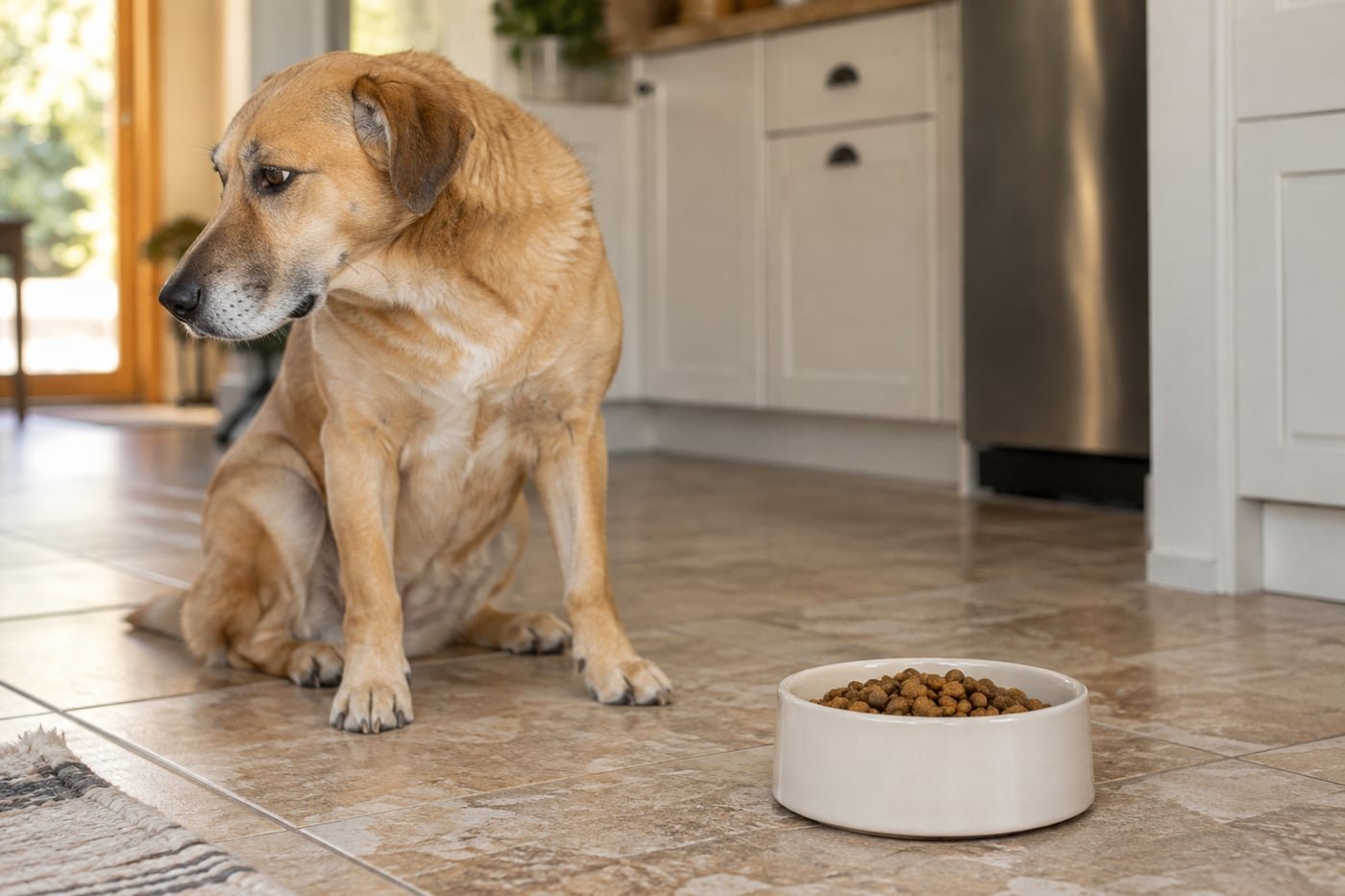
If you are asking “Why is my dog not eating?”, start by looking for other changes. Appetite loss can accompany illness, nausea, pain, stress or difficulty picking up and chewing food. It should not automatically be labeled picky eating. [1]
Check urgency before changing the menu
Seek emergency care if food refusal occurs with a swollen painful abdomen, repeated unsuccessful attempts to vomit, collapse, breathing trouble or suspected toxin exposure. Call your vet promptly if your dog also vomits, seems lethargic or cannot keep water down. A puppy, a dog receiving insulin or a dog with an existing illness needs individualized advice early. [1] [3]
For an otherwise comfortable adult dog that skips one meal, record the missed meal and call if refusal continues or anything else changes. Do not use a fixed waiting period to override signs that your dog is unwell.
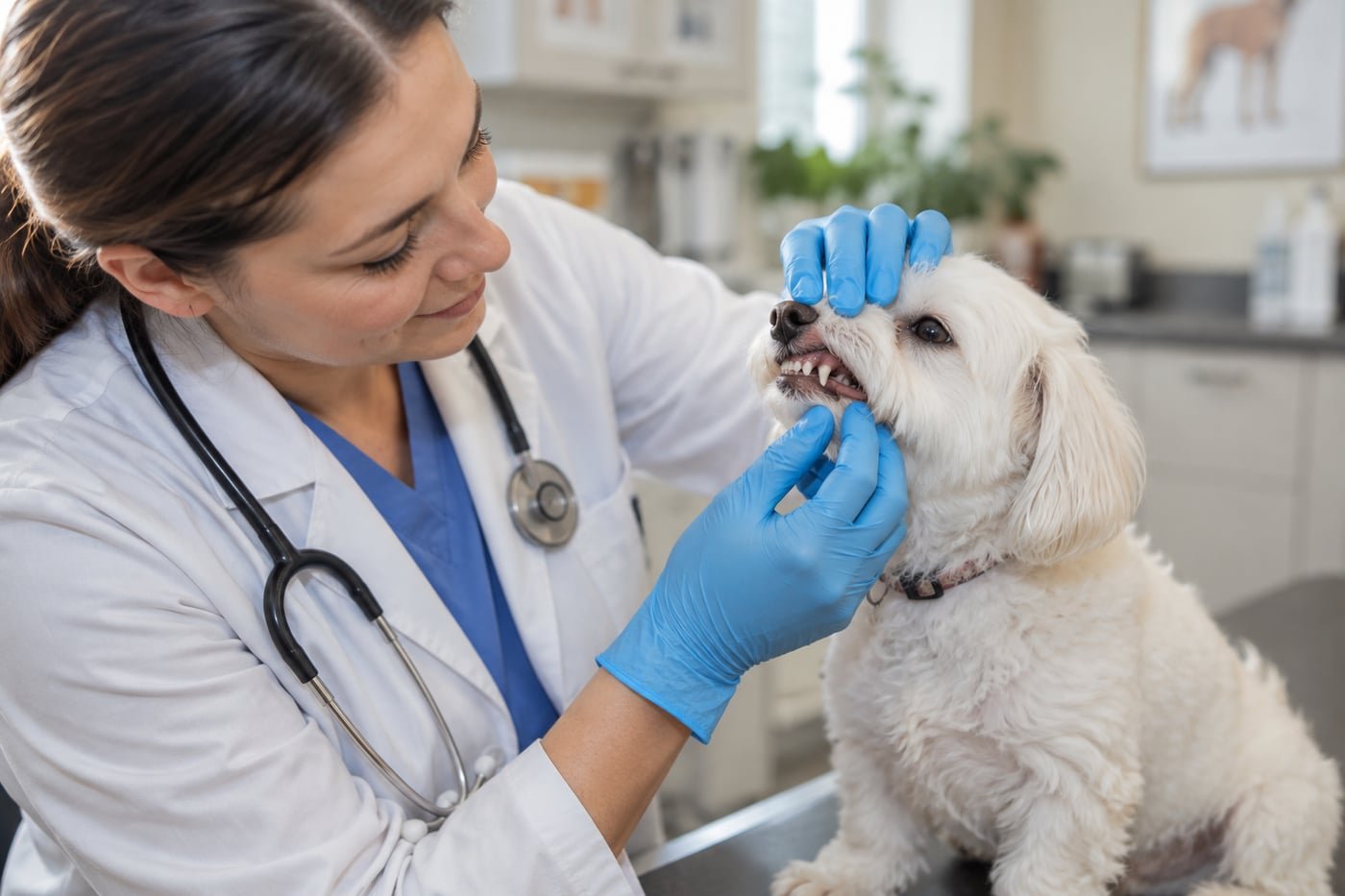
Does your dog want food but struggle to eat?
There is a useful difference between showing no interest in food and approaching it but dropping it, chewing awkwardly or backing away. Mouth pain or a swallowing problem may affect a dog that still appears hungry. Let your vet examine the mouth safely rather than trying to prise it open at home. [1]
Watch one ordinary meal without crowding your dog. Note whether they sniff, lick, chew or walk away. If it is safe, a short video may describe the problem more clearly than a long list of possible explanations.
Before trying more treats, check the routine
Write down everything offered in the previous day, including training rewards, chews and food from other people. Check whether the usual food is fresh and has been stored according to the label. Note recent changes to feeding location, household routine or the food itself.
A veterinarian should rule out a medical cause before managing a dog as a picky eater. Repeatedly replacing meals with treats can obscure how much the dog is actually eating and make the history harder to interpret. [2]
What information will help the vet?
- The last full meal and approximate amounts eaten since.
- Whether the dog accepts any foods but refuses others.
- Drinking, urination, bowel movements and vomiting.
- Current medications and recently started supplements.
- Possible access to toys, bones, rubbish or toxic foods.
Ask for a clear feeding plan and a point at which to call back. Do not force-feed or syringe food into a resisting dog, and do not change prescribed medication without instructions.
Common questions about food refusal
Should I add chicken or broth?
Ask your vet before changing the diet of an unwell dog. Added food may be unsuitable for a prescribed diet, and some broths contain unsafe ingredients such as onion or garlic. A topper is not a treatment for unexplained appetite loss.
Can stress affect appetite?
It can, but a recent stressful event does not rule out illness. Give your vet the timing and context without assuming stress is the only explanation.
Related Dog Health guides
Sources
Content updated September 9, 2026. Educational information, not a diagnosis or a substitute for veterinary care.




Leave a Reply