
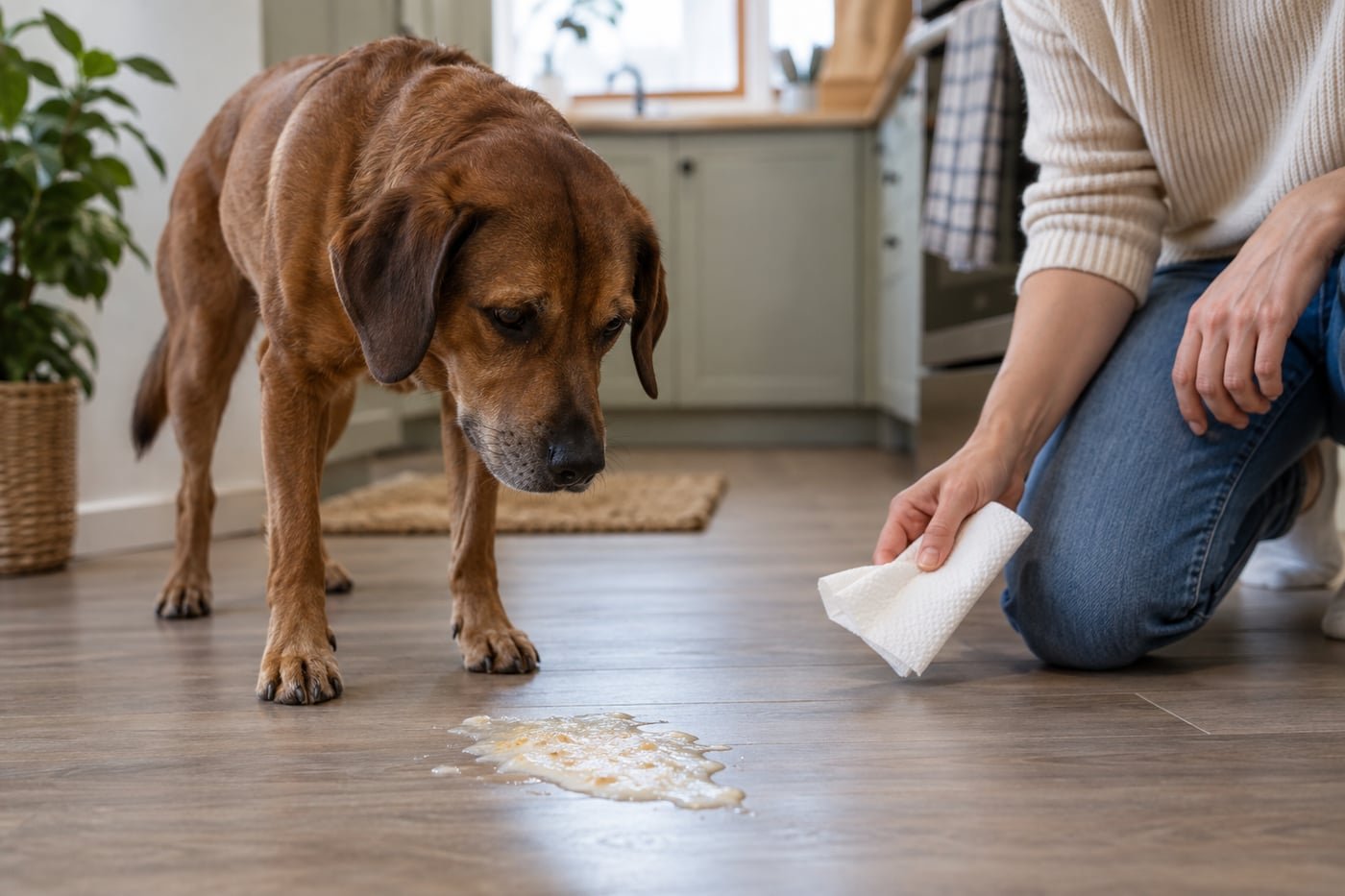
“Why is my dog vomiting?” does not have one answer. A dog may vomit after dietary indiscretion, but vomiting can also occur with a swallowed object, poisoning, pancreatitis or disease outside the digestive tract. The pattern and the dog’s overall condition matter more than the color alone. [1] [2]
When vomiting is an emergency
Go to an emergency veterinarian for repeated retching with little or nothing coming up, especially with a swollen abdomen or distress. Collapse, severe weakness, significant abdominal pain and suspected toxin or foreign-object exposure also require urgent assessment. Repeated vomiting, blood or an inability to retain water warrants prompt veterinary help. [2] [3]
Do not wait for every warning sign to appear. Call the clinic with your dog’s age, symptoms and any possible exposure. Bring relevant packaging if your dog may have eaten something harmful.

Vomiting or regurgitation?
Vomiting usually involves active abdominal effort, often with nausea or retching beforehand. Regurgitation is a more passive return of material, sometimes soon after eating. Both can matter medically. If the event is hard to describe, a short video can help your vet understand what happened. [2]
Describe the event rather than relying on a label: “food came up without heaving” or “she retched several times before bringing up fluid.” Do not provoke another episode to capture it on camera.
What can you safely do next?
After an isolated episode in an otherwise comfortable adult dog, contact your vet if you are uncertain about monitoring. Keep track of further episodes and whether water stays down. Avoid new treats, rich foods and unprescribed anti-nausea medicines. Ask the clinic for an individualized food and water plan rather than following a blanket fasting rule. [1] [2]
Puppies and dogs with existing illnesses need earlier advice. If your dog is distressed or repeatedly vomiting, home observation is not a substitute for examination.
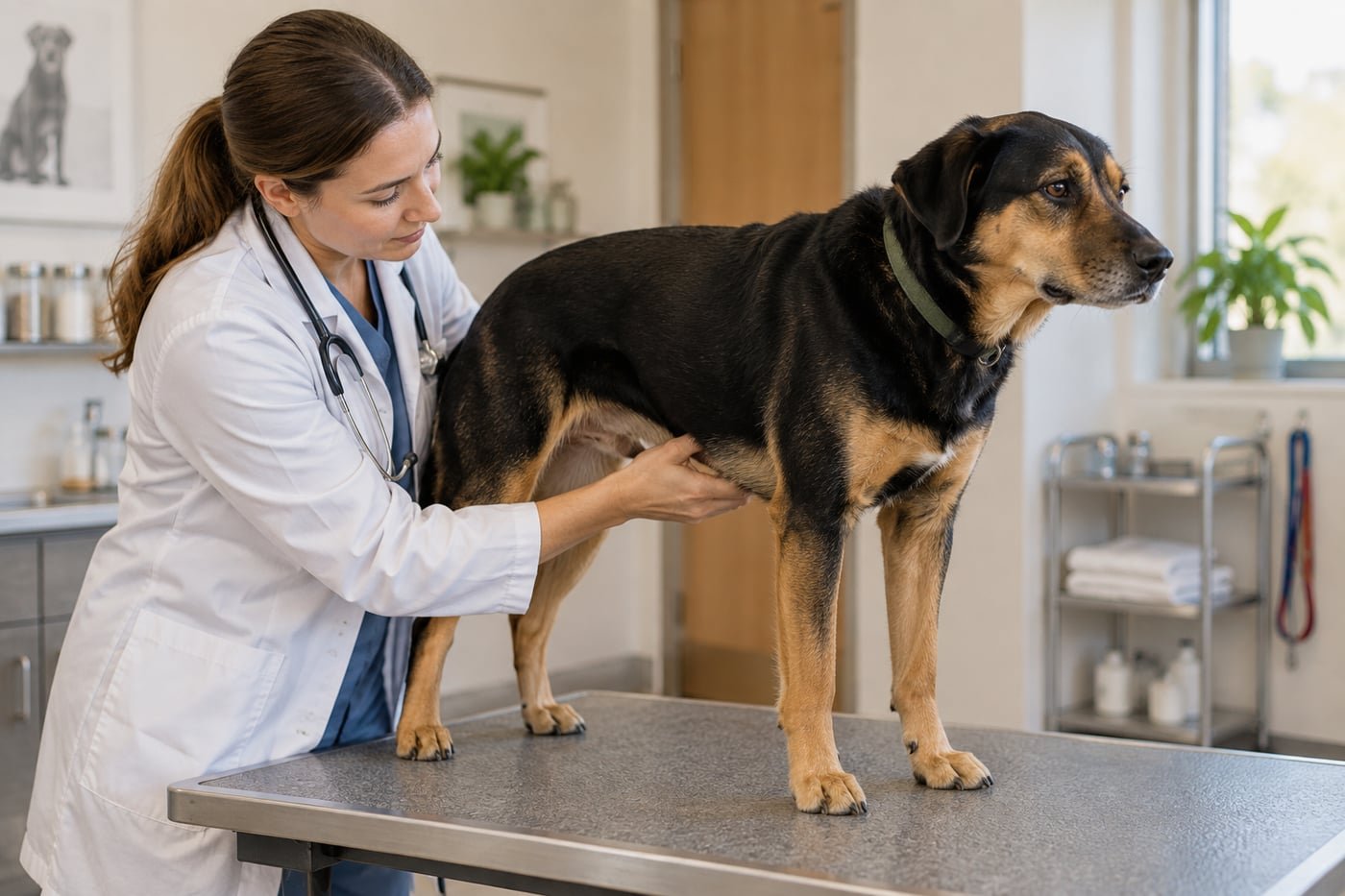
Make your phone call more useful
- Record when vomiting started and how many episodes occurred.
- Describe food, foam, fluid, blood or possible foreign material.
- Note diarrhea, appetite, drinking and energy.
- List medications, recent food changes and anything missing from the house.
- Tell the clinic about past digestive disease or recent procedures.
Save a photograph if useful, but keep your attention on your dog. An image of vomit cannot establish the cause or show how dehydrated an animal has become.
Common vomiting questions
Is yellow vomit just an empty stomach?
Yellow fluid may contain bile, but that does not prove an empty stomach is the only issue. Repeated episodes or other symptoms need veterinary attention.
Should I make my dog vomit after eating something unsafe?
No, unless a veterinarian or animal poison service specifically directs you. Inducing vomiting can be dangerous in some exposures, and delaying professional advice may reduce treatment options.
Related Dog Health guides
Sources
- Cornell: Vomiting
- Merck Veterinary Manual: Vomiting in dogs
- VCA: Urgent care for vomiting or diarrhea
Content updated September 9, 2026. Educational information, not a diagnosis or a substitute for veterinary care.









Leave a Reply