
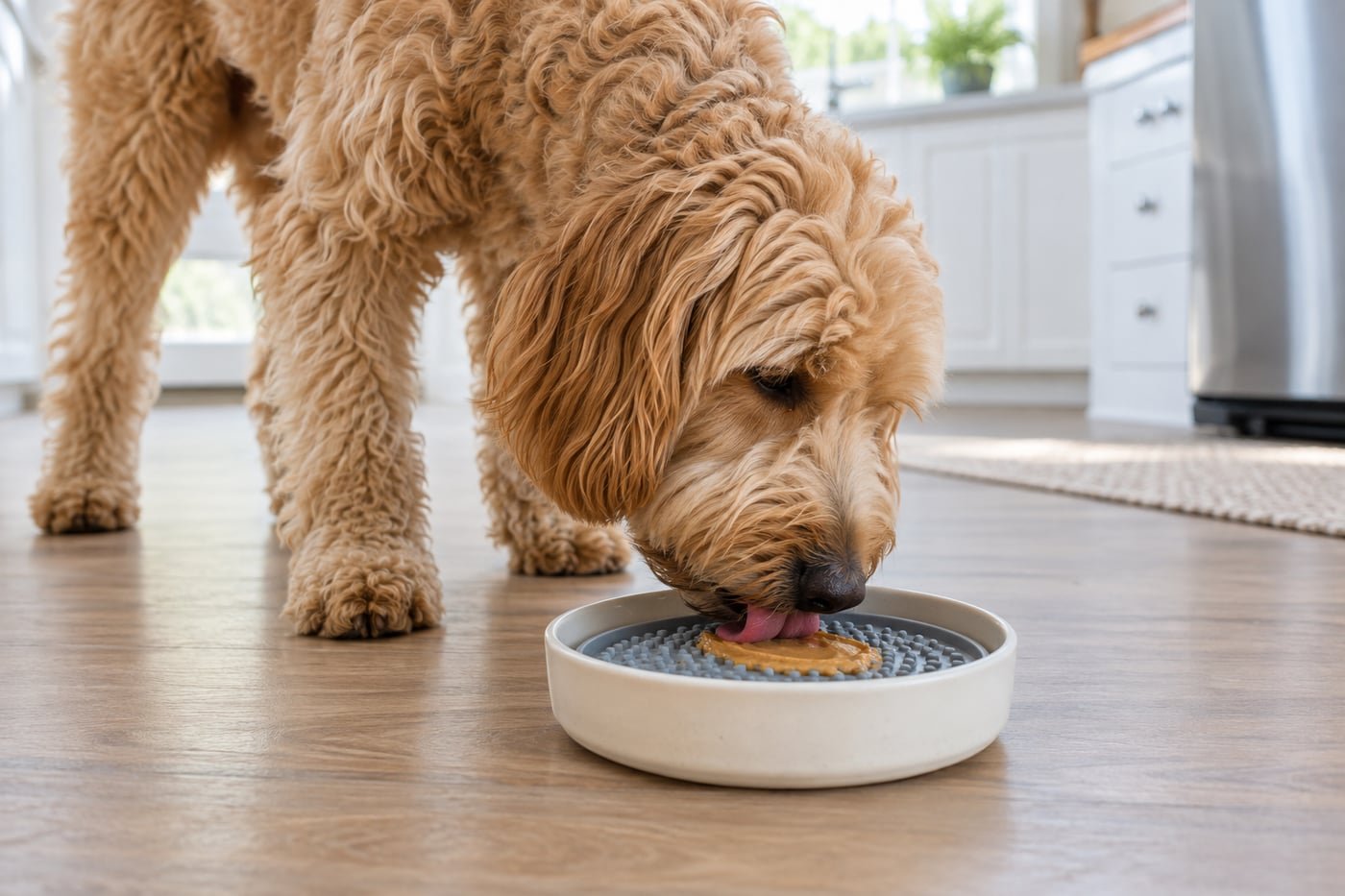
Dogs can have a small amount of peanut butter only when the ingredients are suitable. The most important label check is xylitol, also called birch sugar: this sweetener is dangerous to dogs. Never assume that a familiar-looking jar has the same recipe as the one you bought before. [1] [2]
Which peanut butter should you choose?
A simple unsalted product made from peanuts is a practical choice. Avoid products containing xylitol, chocolate or other unsuitable additions. Read the ingredient list rather than relying on claims such as natural, healthy or reduced sugar. Those words do not establish canine safety. [1] [2]
Keep the jar where everyone who feeds the dog can check it. If you transfer some to another container, label it clearly and retain the packaging information.
How do you serve peanut butter safely?
- Check the ingredients every time you use a new jar.
- Measure a small amount before giving it to your dog.
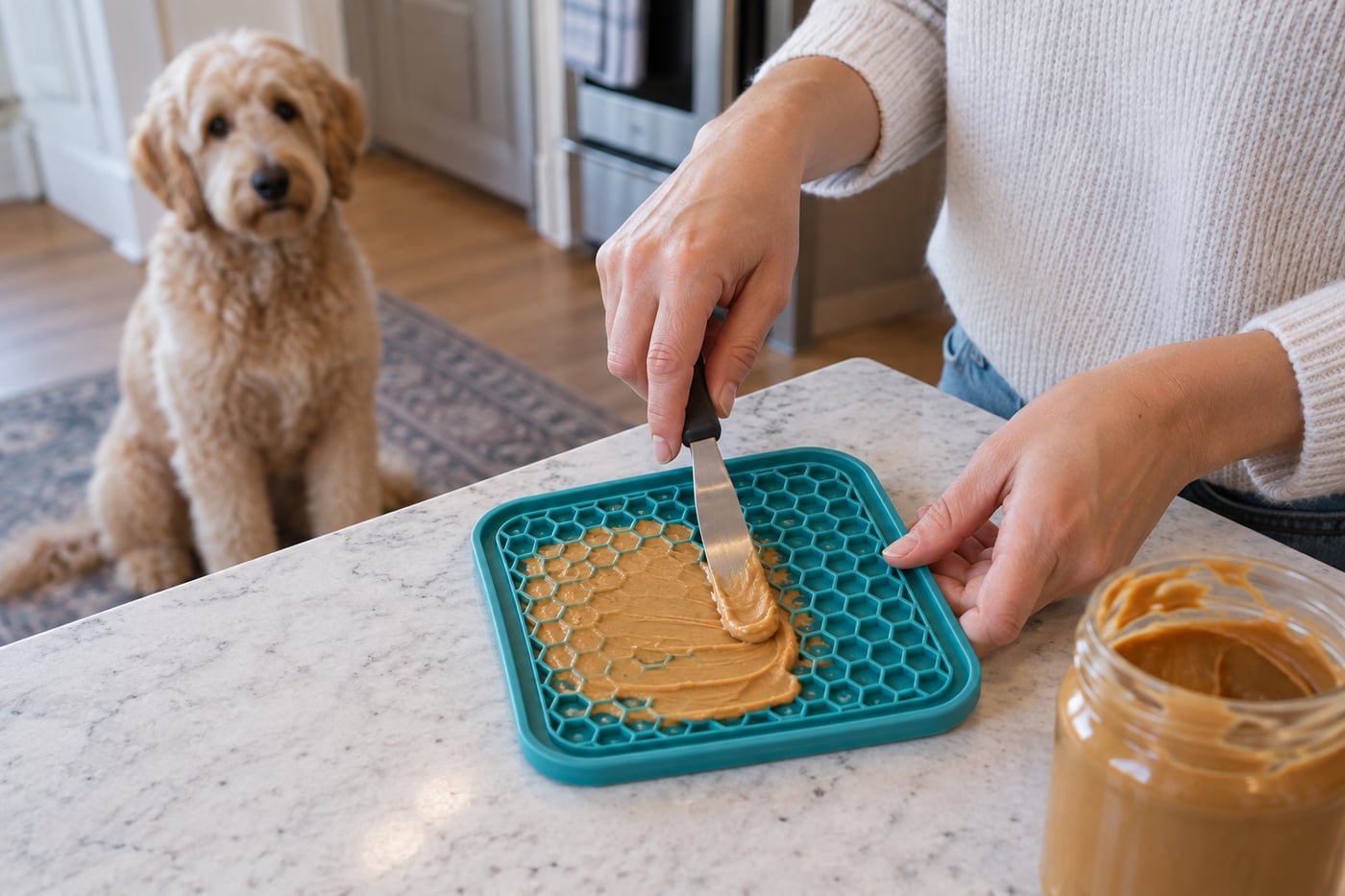
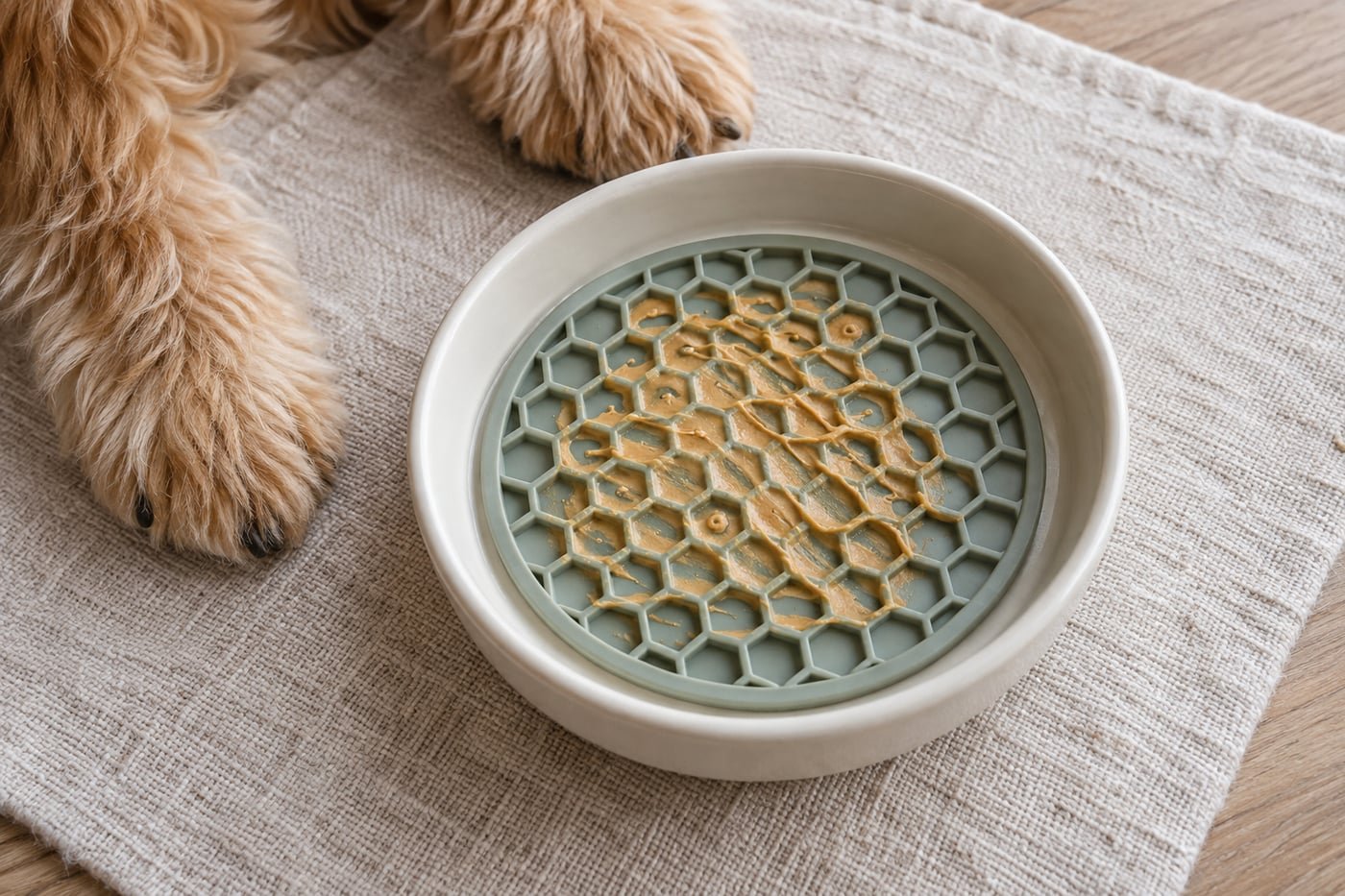
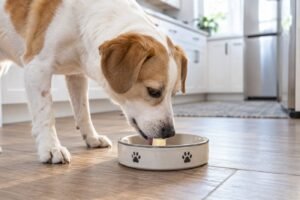
- Spread it thinly on a suitable feeding surface or dog enrichment toy.
- Supervise your dog and wash the feeding item afterward.
A thin smear is easier to manage than a large sticky lump. Do not give your dog an open jar to lick, and remove packaging that could be chewed or swallowed.
Why should portions be small?
Peanut butter is calorie-dense and high in fat. A little can take up a significant share of a small dog’s treat allowance. Dogs with pancreatitis history, excess weight, suspected peanut allergy or a prescribed diet need veterinary advice before trying it. [1] [2]
How much peanut butter can a dog have?
Start with a tiny lick. Count it alongside every other snack and chew, generally within about 10% of daily calories. An enrichment toy does not make its filling calorie-free; measure the filling rather than packing the toy full. [2]
What if your dog eats peanut butter with xylitol?
Call a veterinarian or animal poison service immediately. Xylitol can cause a dangerous drop in blood sugar and may damage the liver. Do not wait for weakness or other symptoms. Bring the ingredient list and estimate how much was eaten; do not induce vomiting unless instructed. [1] [2]
Can peanut butter hide medication?
Ask the prescribing veterinarian first because some medicines have feeding instructions. If it is appropriate, use a small smear and confirm that the tablet was swallowed. Peanut butter should help deliver prescribed care, not replace it.
Related food safety guides
Sources
Content updated September 9, 2026. General educational information; ask your veterinarian about your dog’s individual feeding needs. This article has not been reviewed by a veterinarian.
Leave a Reply