
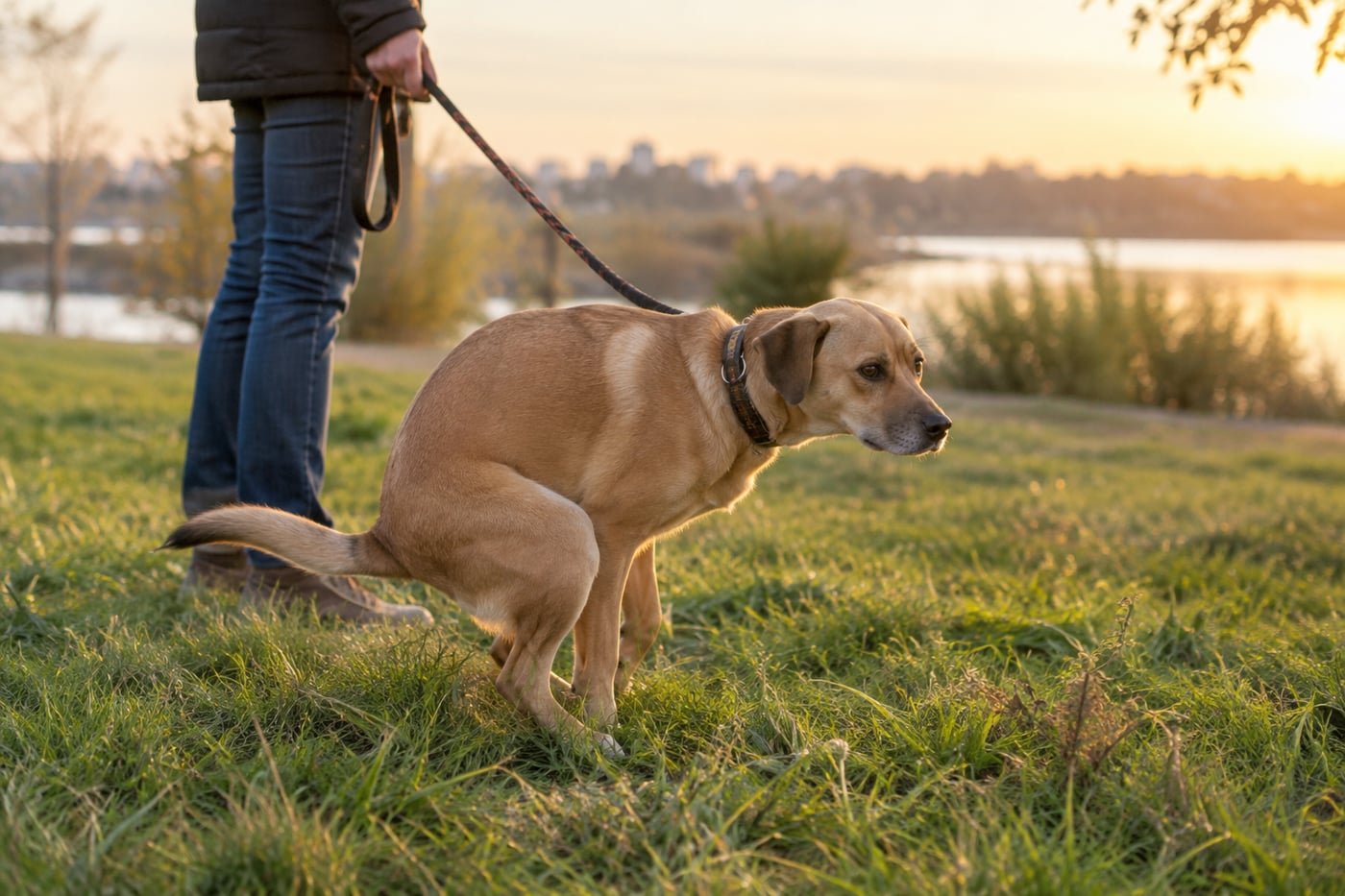
“Why does my dog have diarrhea?” is a question about a symptom, not a diagnosis. Loose stool may follow a diet change or eating something unsuitable, but parasites, infections and other diseases can cause similar signs. Appearance alone cannot establish the cause. [1]
Start with your dog’s overall condition
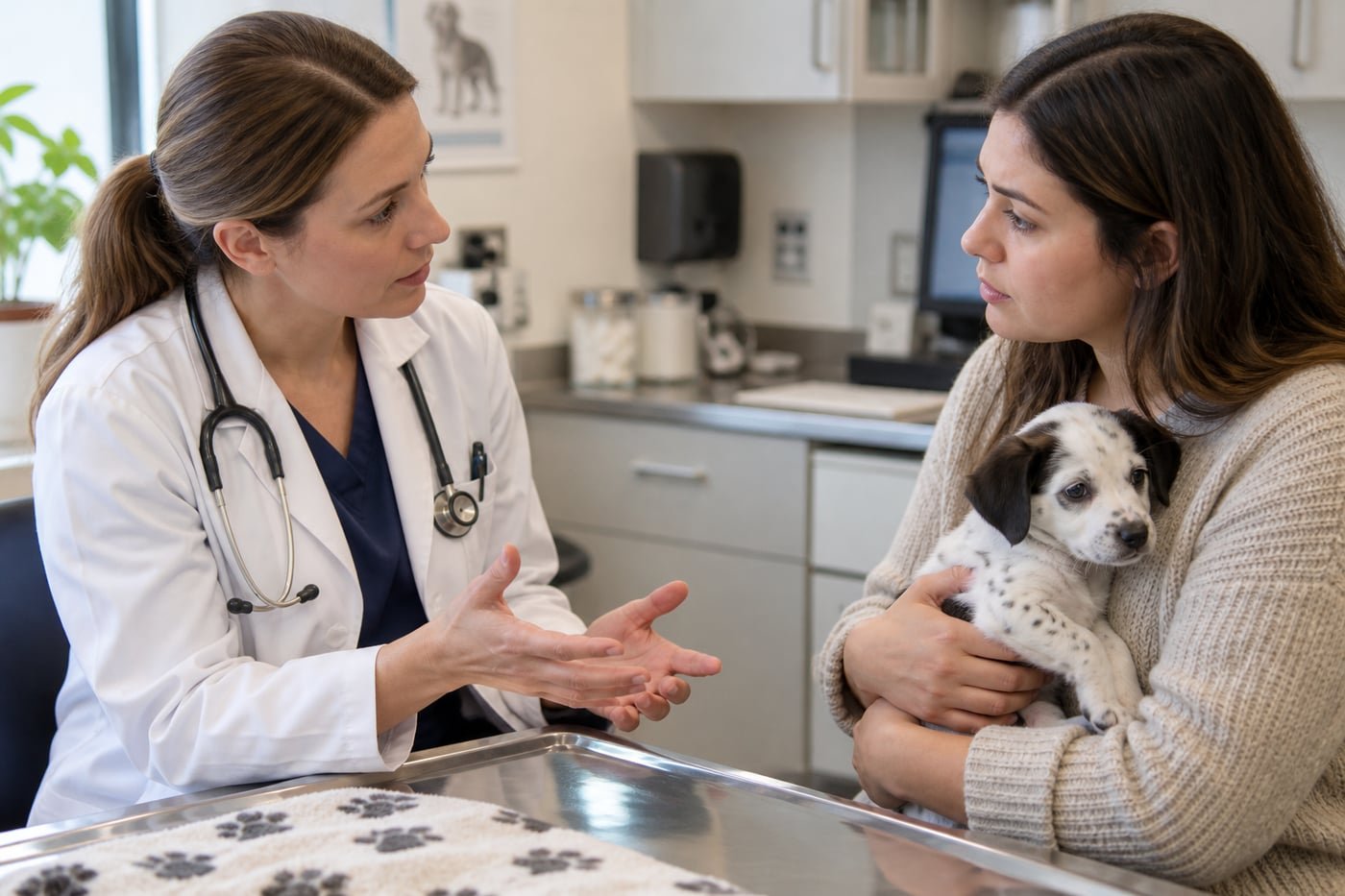
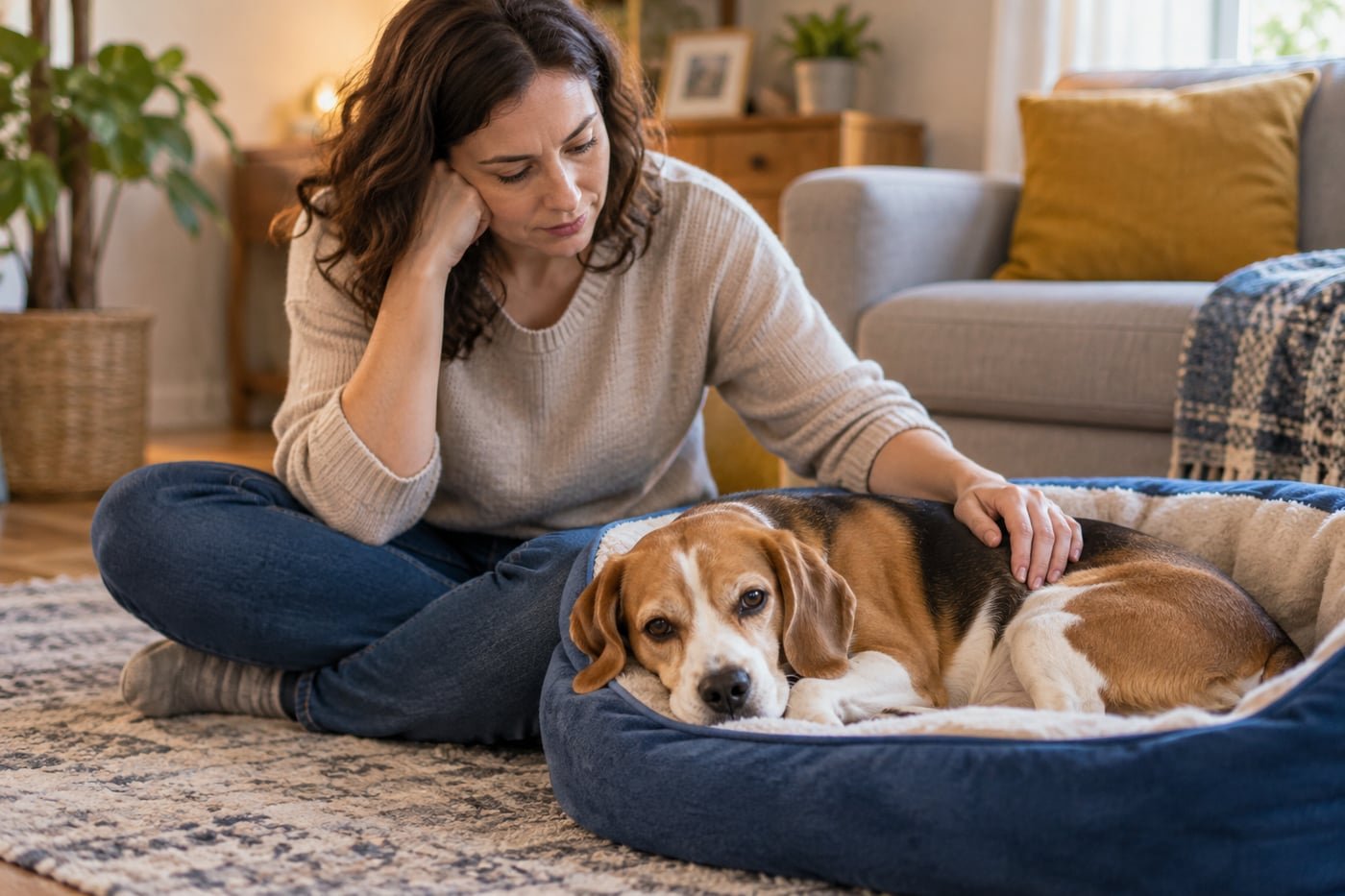
Contact a veterinarian promptly if diarrhea comes with vomiting, reduced appetite, lethargy or signs of dehydration. Profuse diarrhea, collapse, severe pain, black tarry stool or substantial bleeding requires urgent help. Puppies need early veterinary advice rather than a long trial of home remedies. [1] [3]
When you call, describe both the stool and the dog. “Watery stool four times and too tired to get up” tells the clinic more than “an upset tummy.” Mention any blood even when it is only a small streak, so the team can assess urgency.
What details help identify the cause?
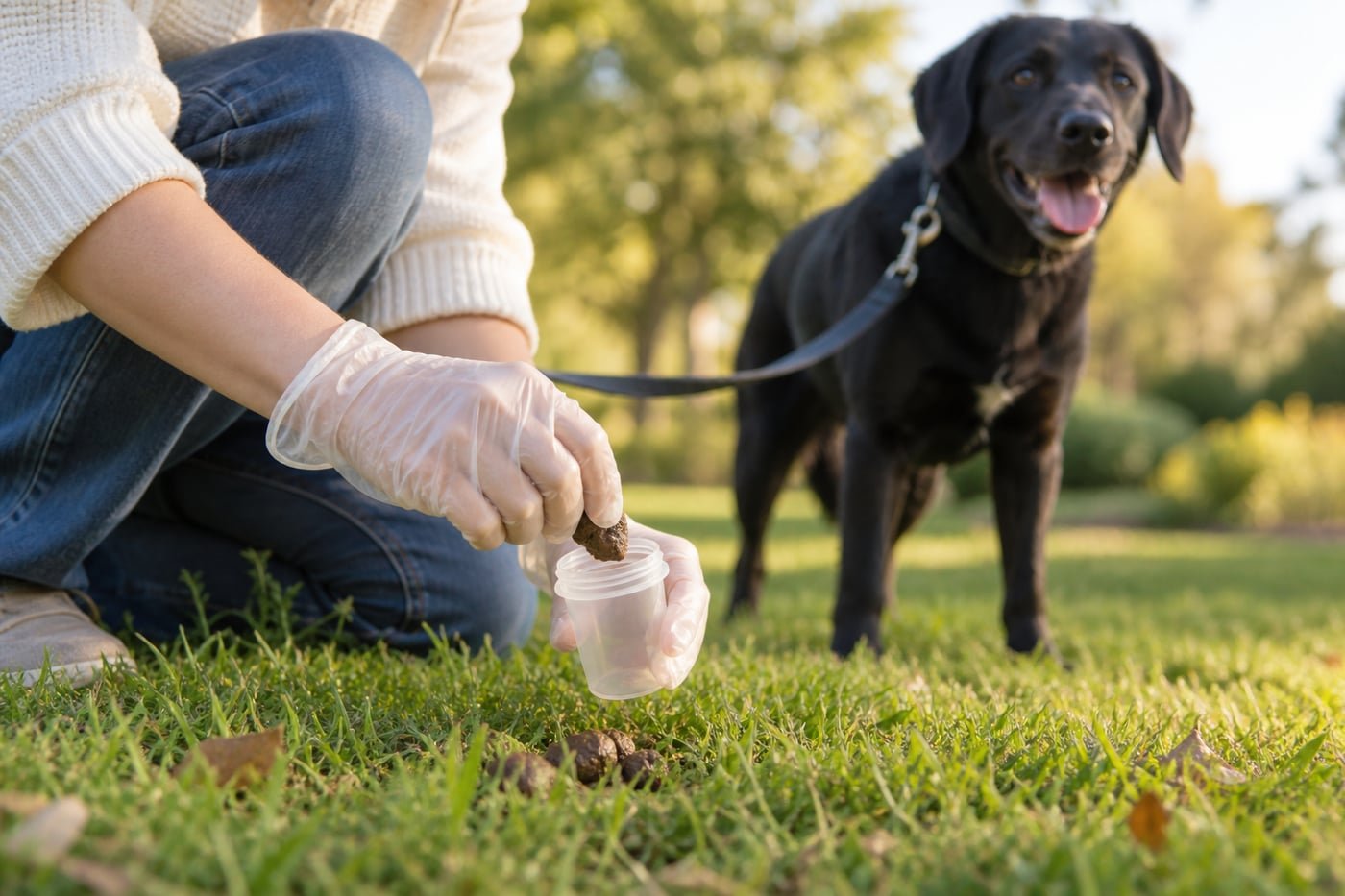
Useful observations include frequency, urgency, volume, straining and how long the problem has lasted. Recent changes in food, treats, environment or medications also matter. The vet may examine a stool sample for parasites or recommend other testing based on the examination and history. [2]
- Write down each episode rather than estimating at the end of the day.
- Keep food labels and a list of recent chews or snacks.
- Note travel, boarding, dog-park visits and contact with other unwell animals.
- Ask whether the clinic wants a fresh stool sample and how to package it.
- Record whether your dog still drinks, eats and urinates normally.
Home care should follow a plan
For a stable adult dog, your vet may recommend a temporary gastrointestinal diet or another feeding adjustment. The right plan depends on the dog and suspected cause. Avoid human anti-diarrhea medicine, leftover antibiotics and repeated changes between homemade foods unless the vet advises them. [1]
Ask what improvement should look like and when to call again. Keep fresh water available and monitor for vomiting. If symptoms worsen, contact the clinic sooner than the planned follow-up.
Keep cleanup simple and hygienic
Pick up stool promptly, wash your hands after handling waste and clean soiled areas. Keep a dedicated towel and collection container ready if your vet requests a sample. Avoid shared dog activities while the cause is being assessed, particularly if infection is possible.
Questions about loose stool
Does diarrhea always need antibiotics?
No. Treatment depends on the cause and severity. Antibiotics are not a general fix for every episode, and medication should be selected by your veterinarian.
Can a playful puppy still need a checkup?
Yes. A bright puppy can still need stool testing and veterinary guidance. Call the clinic rather than waiting for obvious weakness, especially when vaccination or deworming history is incomplete. [3]
Should I bring a photograph?
A photo may help describe the stool, but it does not replace a fresh sample or examination when your vet recommends those.
Related Dog Health guides
Sources
Content updated September 9, 2026. Educational information, not a diagnosis or a substitute for veterinary care.



Leave a Reply