
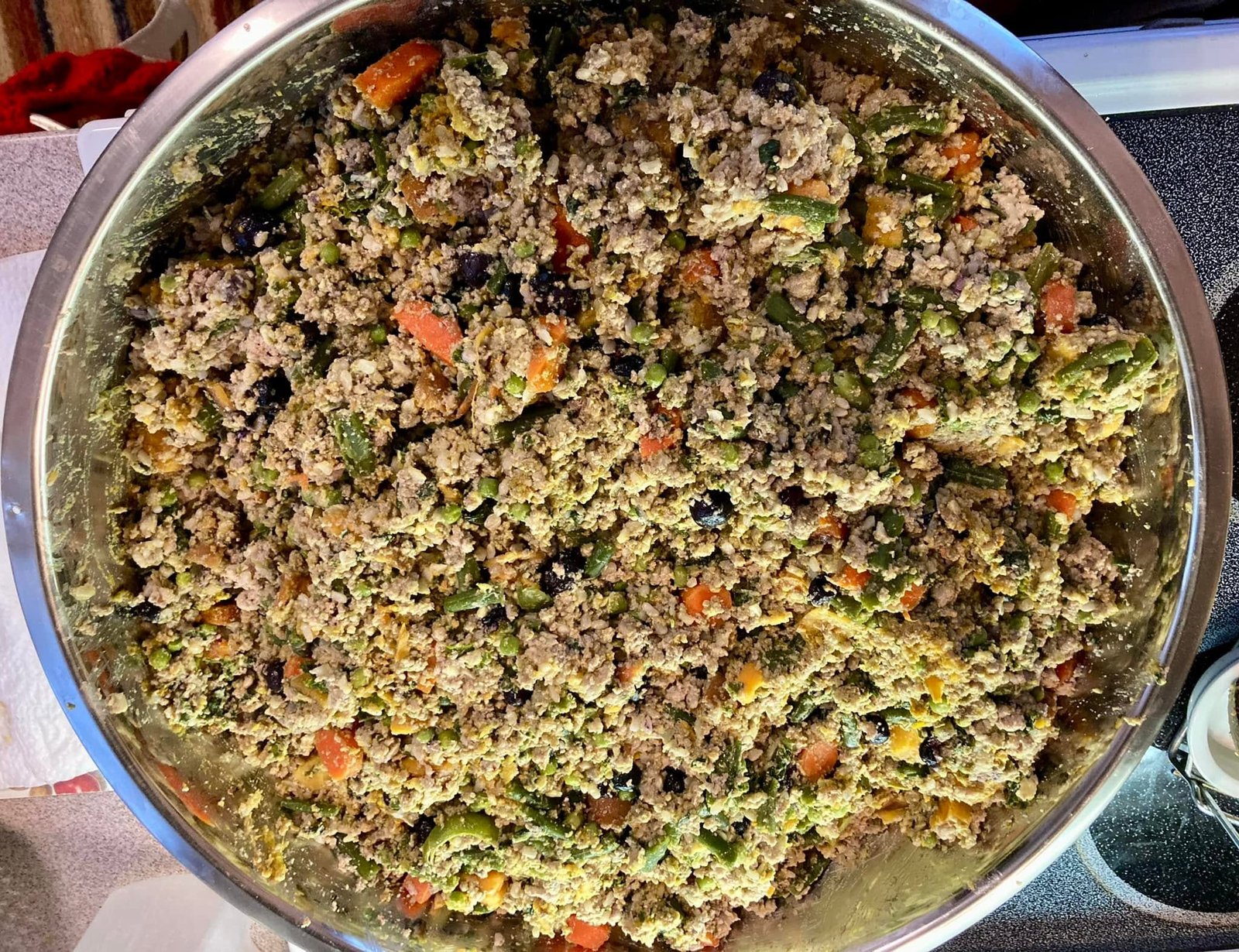
Homemade turkey and vegetable dog food takes planning beyond the cooking pot. A well-organized preparation day brings together measured ingredients, clean equipment and enough refrigerator and freezer space for the finished food.
This guide covers ingredient planning, batch preparation and storage. It is not a measured recipe or a complete daily feeding plan. Before preparing a homemade diet for regular feeding, obtain a formulation tailored to your dog from a veterinary nutritionist.
Ingredients for a turkey and vegetable mixture
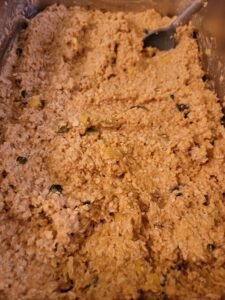
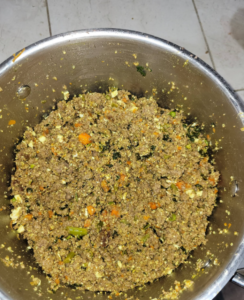
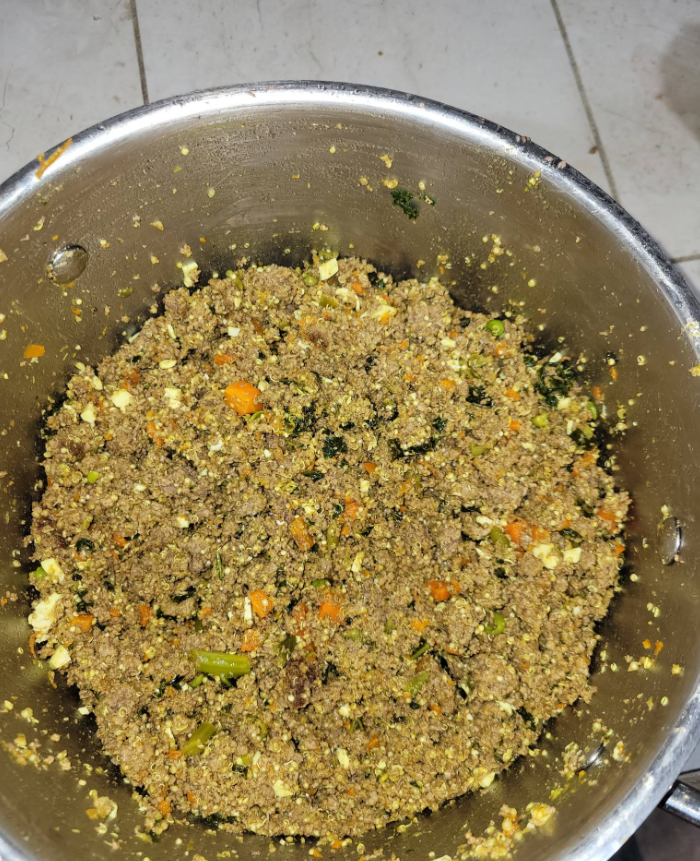
The ingredient combination shown includes turkey, beef liver, brown rice, eggs, sweet potatoes, carrots, green beans, peas, leafy greens, blueberries and pumpkin purée. Exact weights and proportions are needed before this combination can become a repeatable recipe.
- Turkey and beef liver
- Brown rice and eggs
- Sweet potatoes and carrots
- Green beans and peas
- Spinach or kale
- Blueberries and plain pumpkin purée
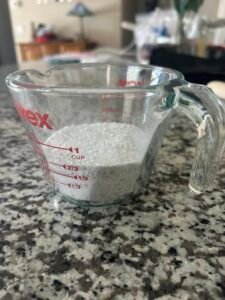
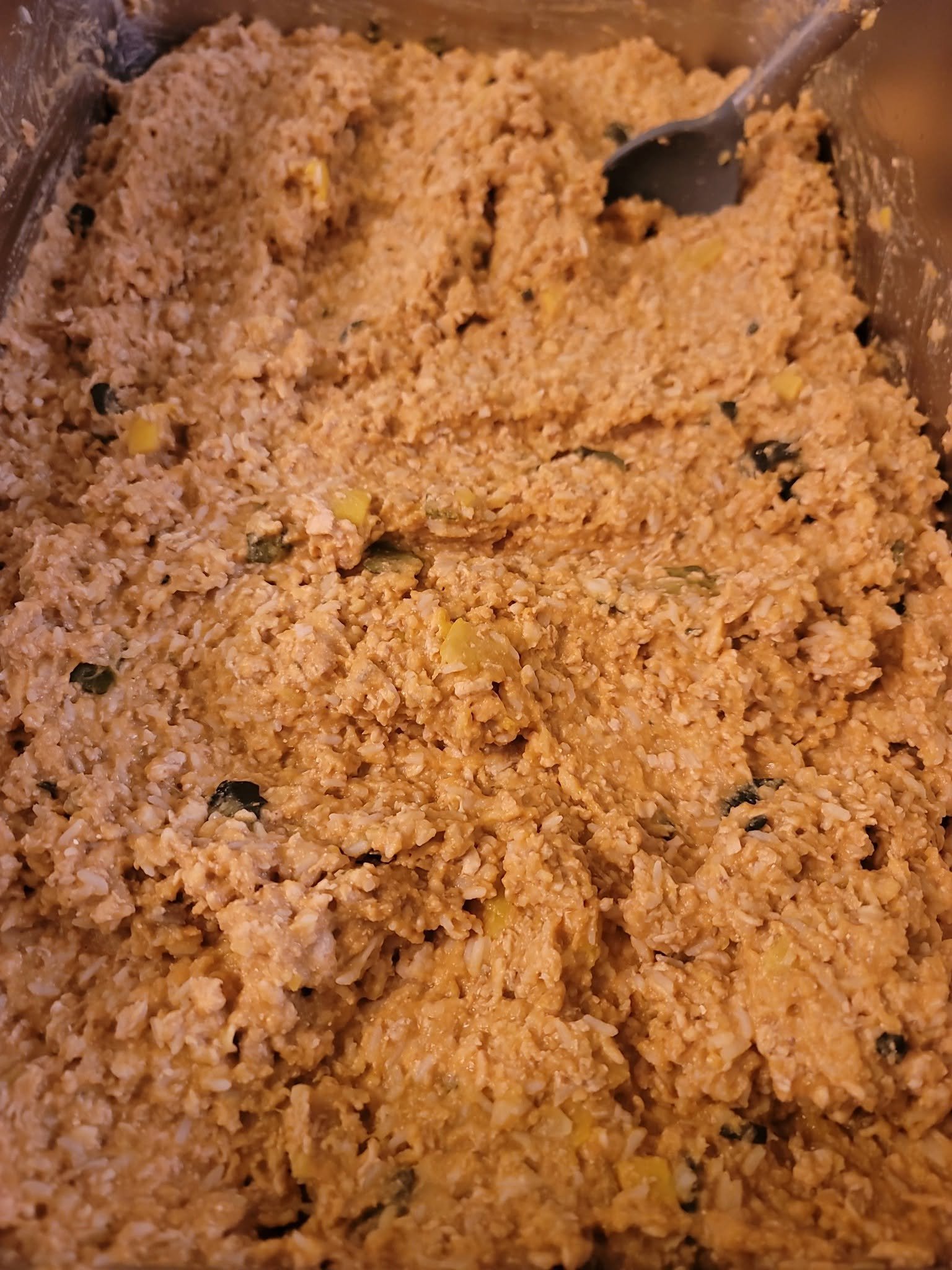
Record whether each ingredient is weighed raw or cooked. Follow the specified meat cut and preparation method, and avoid exchanging ingredients without checking the formulation. A bowl’s capacity does not establish the weight, calorie content or number of servings in a finished batch.
Organizing a cooking session
Set out the ingredients, food thermometer, mixing utensils and storage containers before starting. Keep equipment used for raw meat separate from cooked food. Preparing components in manageable batches makes it easier to check their doneness and mix them evenly.
Cook the meat, grains and vegetables using the methods in the finalized recipe. Check meat with a food thermometer rather than judging it by color. Mix the cooked components thoroughly in a clean, food-safe bowl, then begin portioning promptly. These are general preparation principles rather than a cooking method for an unmeasured formula.
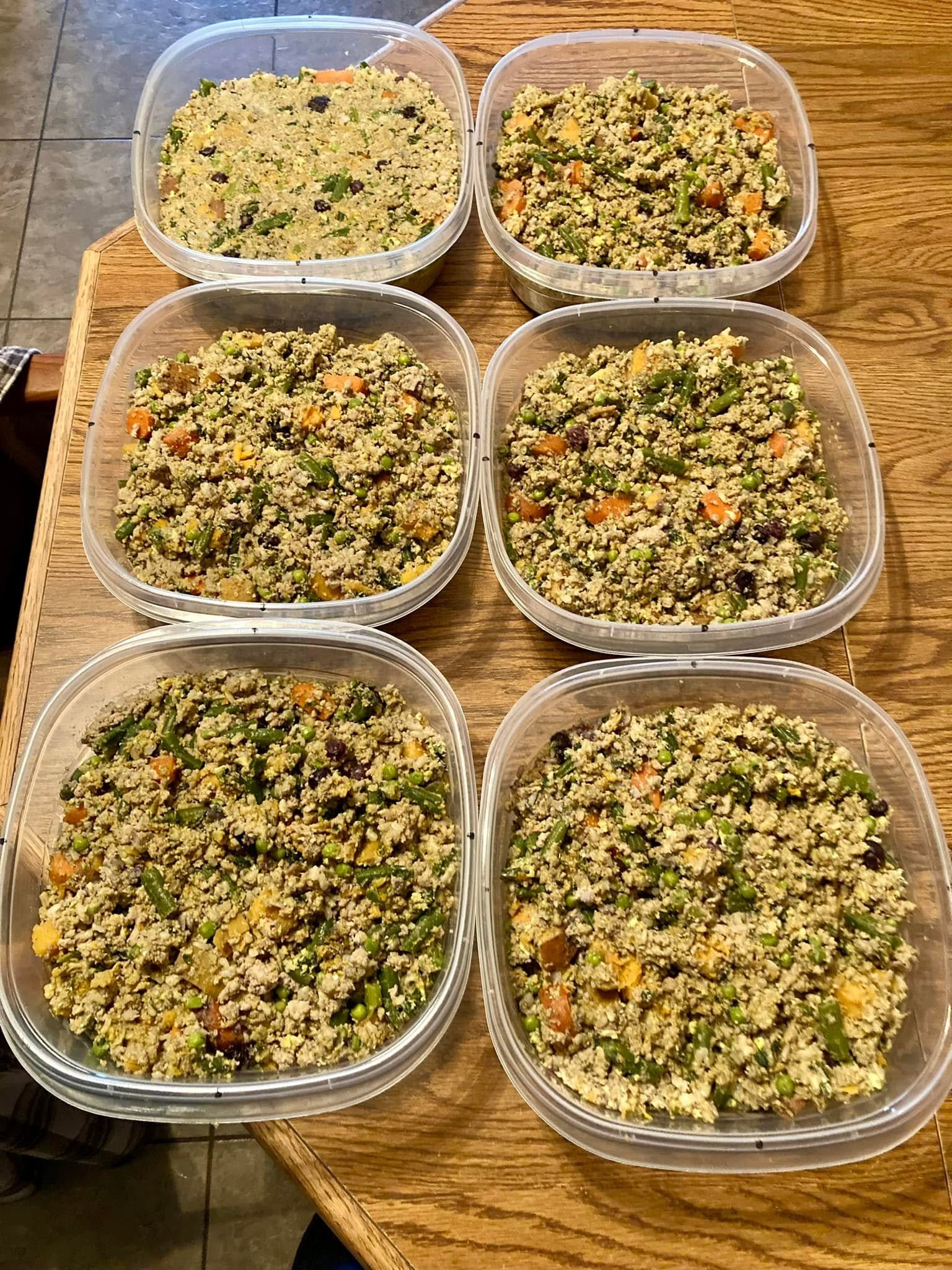
Cooling and storing homemade dog food
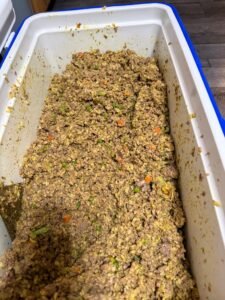
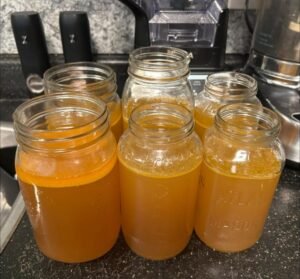
Divide cooked food into small, shallow containers. Refrigerate within two hours of cooking, or within one hour when the surrounding temperature exceeds 90°F / 32°C. Keep the refrigerator at 40°F / 4°C or below.
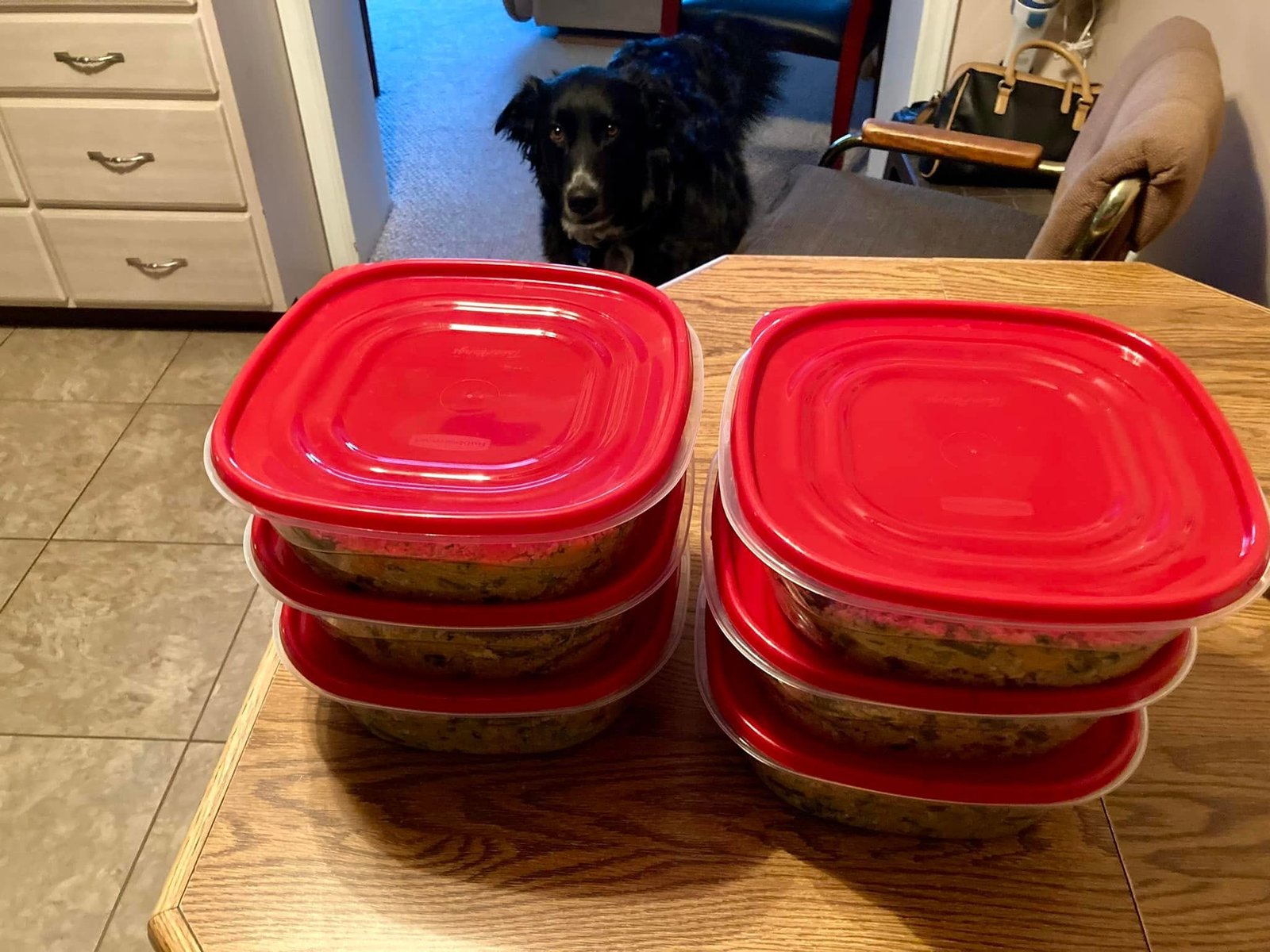
Use refrigerated cooked portions within three to four days and freeze the remaining supply promptly. Label containers with the preparation date and thaw frozen portions in the refrigerator as needed. Avoid leaving a large mixing bowl of food on the counter to cool completely before putting it away.
Calcium and supplements require exact amounts
Eggshells and supplements should not be added by guesswork. The professional formulating the diet should specify any calcium source, its preparation and its measured amount. Supplement choice and quantity need to fit both the dog and the full recipe; adding a powder does not automatically make a homemade mixture complete.
Turmeric and black pepper are not necessary additions to this general preparation guide and should not be used as a treatment for digestive problems. For a dog with a medical condition, follow the prescribed diet and discuss changes with the treating veterinarian.
How much should you serve?
Serving size depends on the finished recipe’s calorie content and the individual dog’s needs. Container size, bowl capacity and another dog’s daily portions cannot provide that answer. Follow the feeding plan supplied with the formulation and weigh portions as directed.
Keeping each batch consistent
Keep a written record of ingredient weights, preparation steps, finished batch weight and storage dates. Use the same measured formulation each time, and have proposed substitutions checked before changing the recipe. This makes cooking days easier to organize and gives you a reliable record to discuss at nutrition follow-ups.

Leave a Reply