

When your dog has an upset stomach, first work out what you are seeing: vomiting, diarrhea, food refusal, drooling, discomfort or a combination. “Upset stomach” is a convenient description, but it does not explain the cause. Different problems can need very different treatment. [1]
First, look for signs that cannot wait
Repeated dry retching, a swollen or very painful abdomen, collapse, suspected poisoning or a swallowed object calls for urgent veterinary care. Seek prompt help for repeated vomiting or diarrhea, blood, marked lethargy or inability to keep water down. The combination of fluid losses and reduced drinking can become dangerous. [1] [2]
If you cannot tell whether the situation is urgent, call the clinic and describe the signs. Do not spend hours trying different foods before asking for advice.
Second, pause experimentation
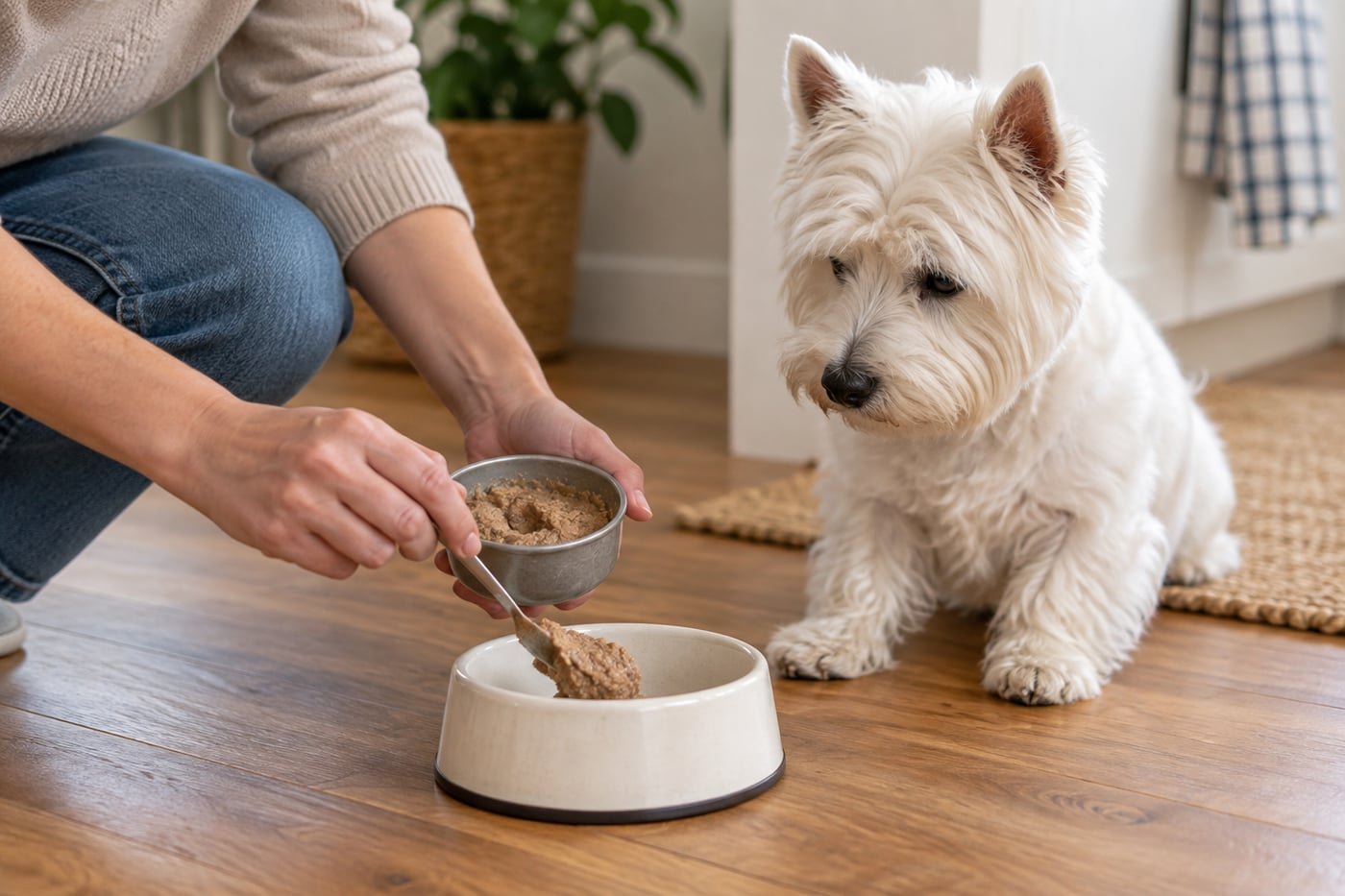
Put new treats and rich table scraps aside while you seek guidance. Do not give a human stomach medicine or painkiller simply because it helped someone else. Likewise, a supplement recommended for a friend’s dog may not be suitable for yours.
Ask your vet what to offer and when. A blanket instruction to withhold food or water is not appropriate for every dog. The feeding and hydration plan should account for age, current symptoms, medical conditions and whether the dog can keep anything down. [2]
Third, prepare a short account
Write a timeline before calling if doing so will not delay urgent care. Start with the last normal meal or bowel movement, then list what changed. Include possible access to rubbish, fatty leftovers, toys, bones or household chemicals.
- How many vomiting or diarrhea episodes have occurred?
- Is your dog comfortable, alert and able to settle?
- Has drinking or urination changed?
- Which medications and supplements are currently given?
- Have similar episodes happened before?
Take packaging and a medication list to the appointment. It is fine to say you do not know whether your dog swallowed something; uncertainty is more useful than an unsupported guess.

Follow through after the first improvement
If your veterinarian recommends home care, ask for the diet, portion pattern, medicine instructions and follow-up point in writing. Keep a note of food offered, symptoms and comfort. Recurring episodes, weight loss or incomplete recovery deserve reassessment rather than the same home routine repeated indefinitely. [2]
Questions about stomach remedies
Is chicken and rice always the answer?
No. It is not suitable for every dog, and a simple homemade mixture is not a complete long-term diet. Ask for a feeding plan that fits your dog’s medical needs, especially when food allergy or a prescribed diet is involved.
Should I give pumpkin or probiotics?
Ask whether they are appropriate before adding them. Neither identifies the cause of symptoms. Tell your vet the exact product and amount you are considering instead of relying on the word “natural.”
What if symptoms return after a normal meal?
Contact your vet and describe the timing. A temporary improvement is useful information, but it does not prove that the underlying problem has resolved.
Related Dog Health guides
Sources
- Merck Veterinary Manual: Digestive disorders
- Merck Veterinary Manual: Stomach and intestinal disorders
Content updated September 9, 2026. Educational information, not a diagnosis or a substitute for veterinary care.






Leave a Reply