
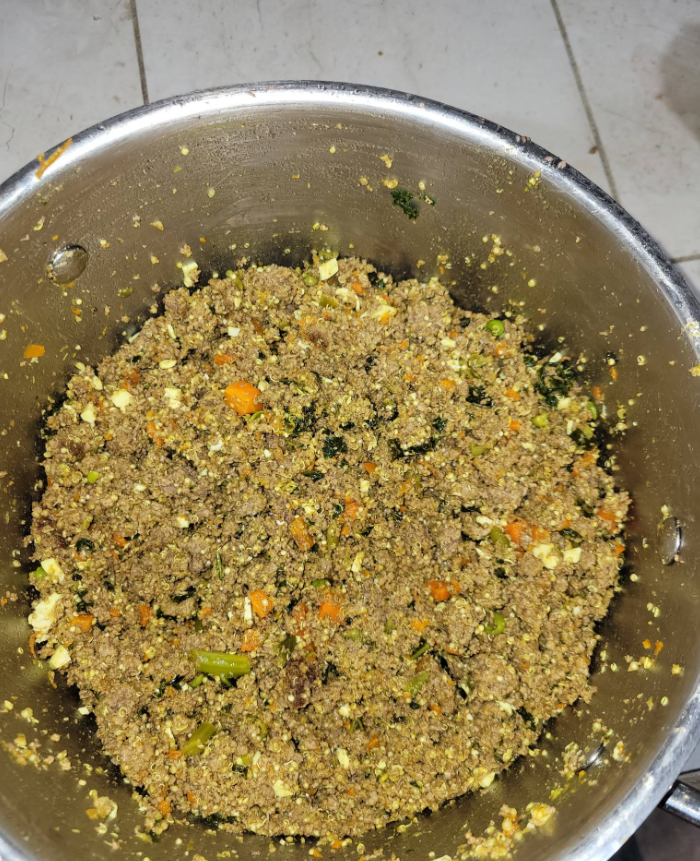
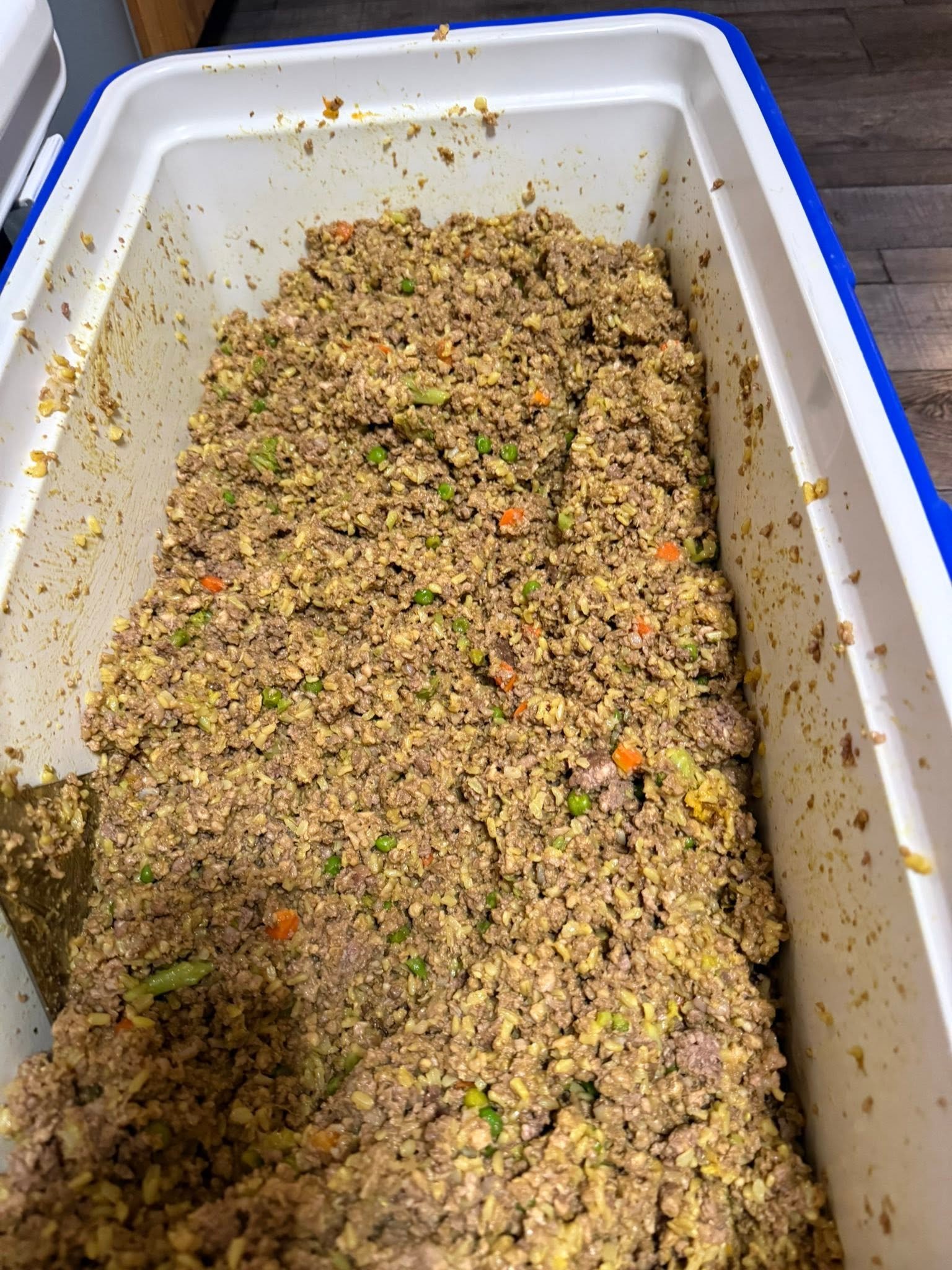
This homemade dog-food preparation combines ground meat, cooked quinoa, hard-boiled eggs and steamed vegetables. The photo sequence follows the ingredients through cooking, mixing and freezer packing.
The supplied quantities are recorded below, but this mixture has not been analysed or established as a complete diet. A daily multivitamin and an unmeasured sprinkle of eggshell cannot establish nutritional adequacy. For regular meals, a veterinary nutritionist should specify the full recipe and supplement amounts.
Supplied ingredients
- 10 lb ground beef, chicken or turkey; the original does not specify fat percentage or whether the weight is raw or cooked
- 1 cup green beans
- 1 cup frozen peas
- 1 head kale
- 2–3 carrots, depending on size
- 1 cup frozen sweet potatoes
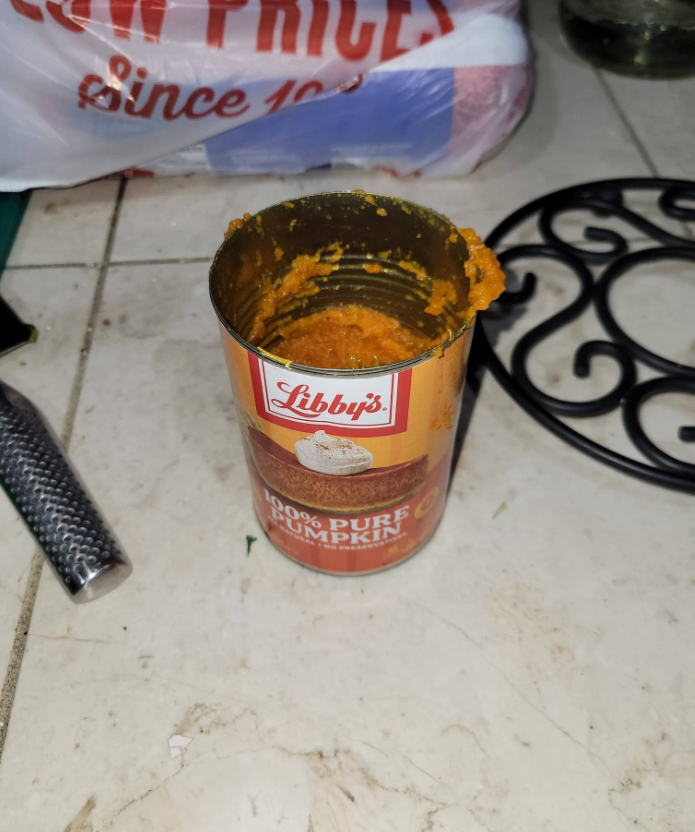
- Half a can of plain pumpkin puree; can size unspecified
- 3 cups cooked quinoa
- 10 hard-boiled eggs, peeled and diced
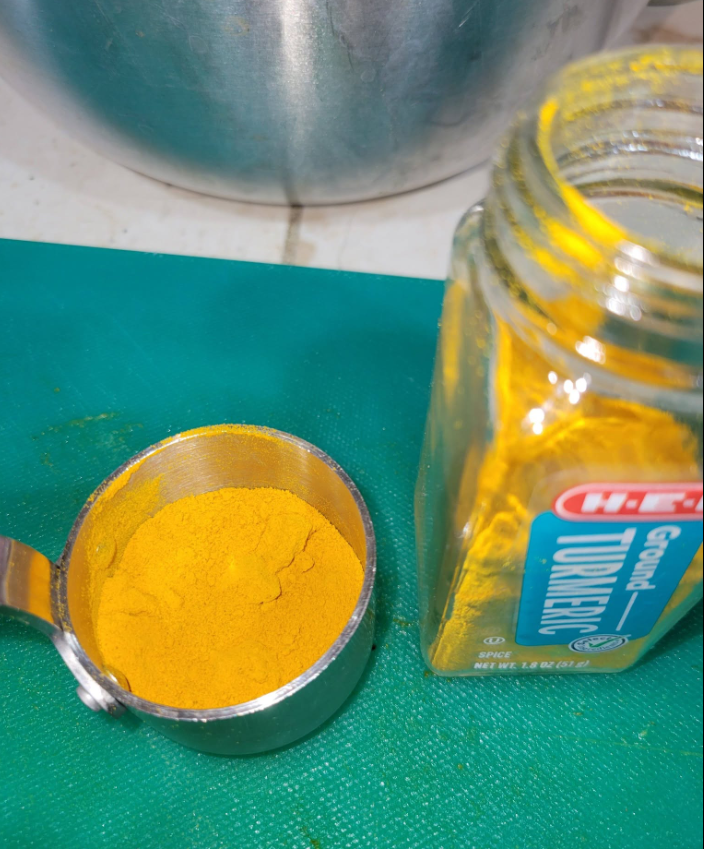
- 1/8 cup turmeric, equivalent to 2 tablespoons
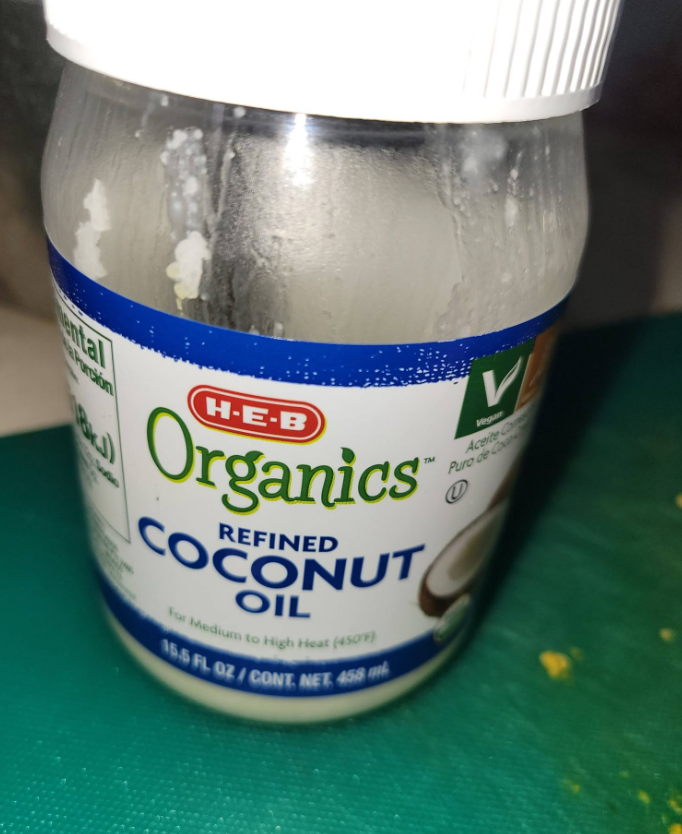
- 2 tablespoons coconut oil
The original also specifies eggshell powder on each serving and a daily multivitamin, without amounts or a product name. Those are recorded as unresolved supplement details, not dosing instructions.
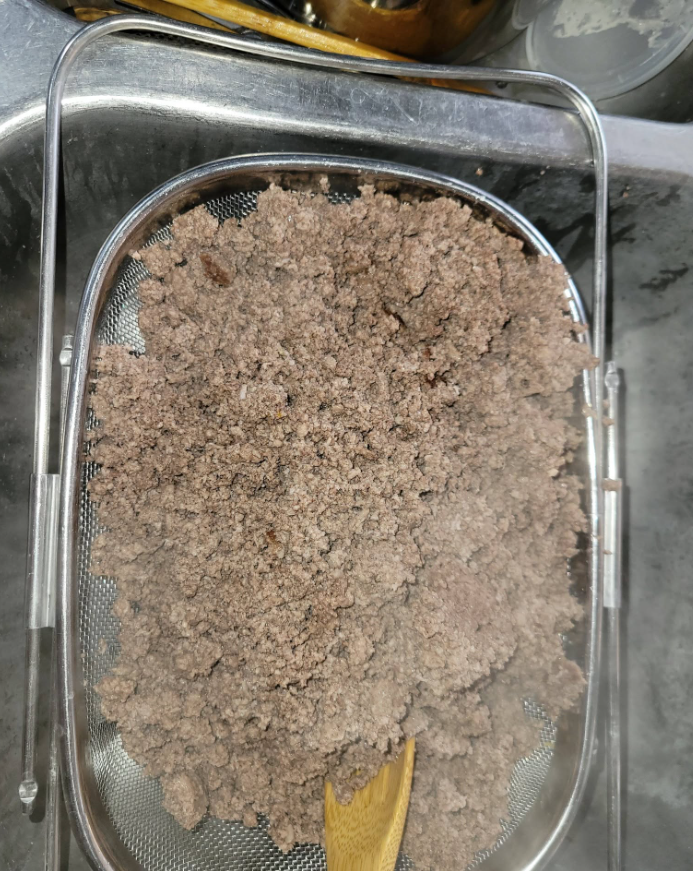
Choose and document the meat
Use plain boneless ground meat. Record its species, fat percentage and whether you weigh it raw or cooked. Beef, chicken and turkey are not nutritionally identical, so a professionally formulated recipe should not be changed between them without an approved substitution.
Cook in manageable batches, keeping unused raw meat refrigerated. Ground beef should reach 160°F (71°C); ground chicken, turkey or a mixture containing poultry should reach 165°F (74°C), measured with a food thermometer. Do not rely on colour. Follow the formulated recipe’s directions on retaining or draining cooking fat, because this changes the finished composition.
Prepare the quinoa and eggs
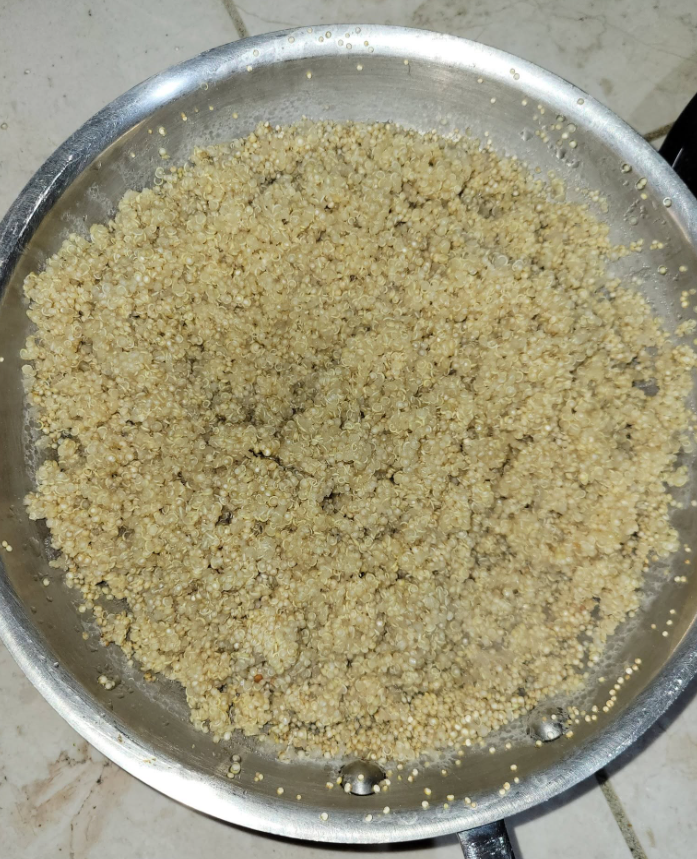
Cook plain quinoa according to its package directions, then measure three cups of the cooked grain. This is not three cups of dry quinoa. Keep the cooked grain separate from raw-meat equipment.
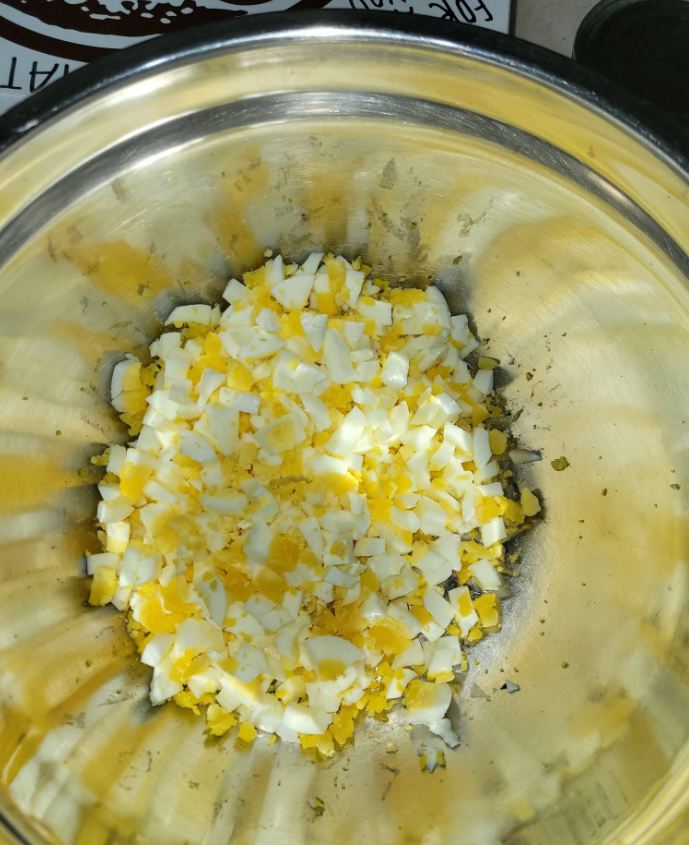
Hard-boil the eggs until the whites and yolks are firm. Peel and dice them with clean utensils. The ten-egg quantity is the supplied batch amount, not a recommendation for an individual dog’s daily intake.
Steam and chop the vegetables
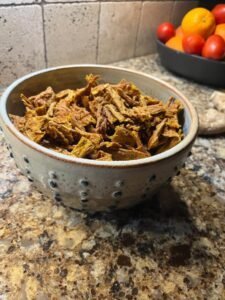
Wash the fresh vegetables and cut them into pieces suitable for steaming. Cook the carrots, green beans, peas, kale and sweet potatoes until tender; add ingredients at different times if needed so the firmer pieces finish cooking. Chop the cooked vegetables into small pieces.
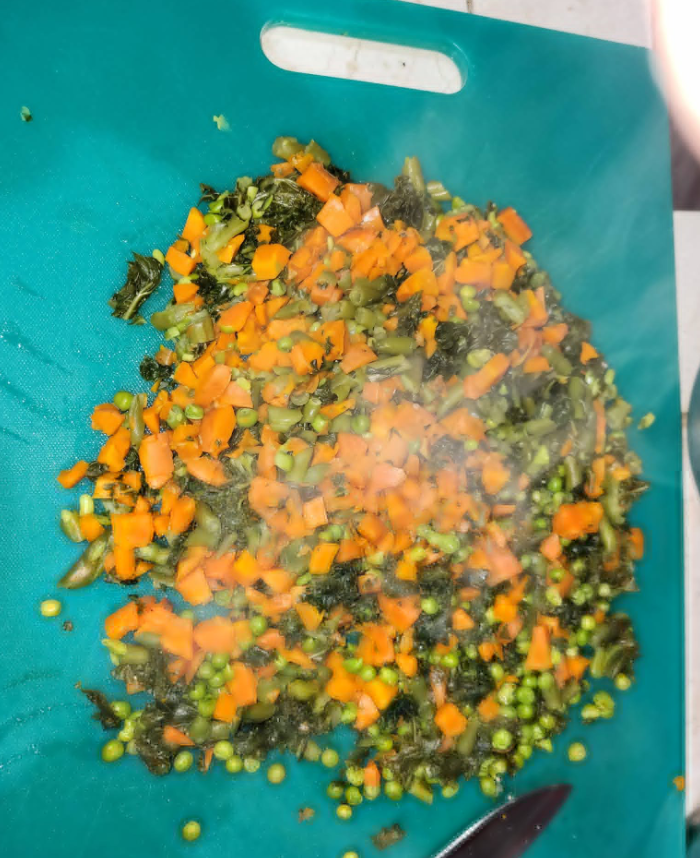
Choose plain pumpkin puree rather than pumpkin pie filling. Because the original says only half a can, there is no confirmed weight for this ingredient. Record the can’s net weight and the amount used before having the batch evaluated or repeating it.
Review the additions
The supplied turmeric and coconut oil quantities are batch amounts. This guide does not claim they treat inflammation, improve immunity or balance the food. Have their inclusion reviewed along with the meat’s fat content and the rest of the recipe.
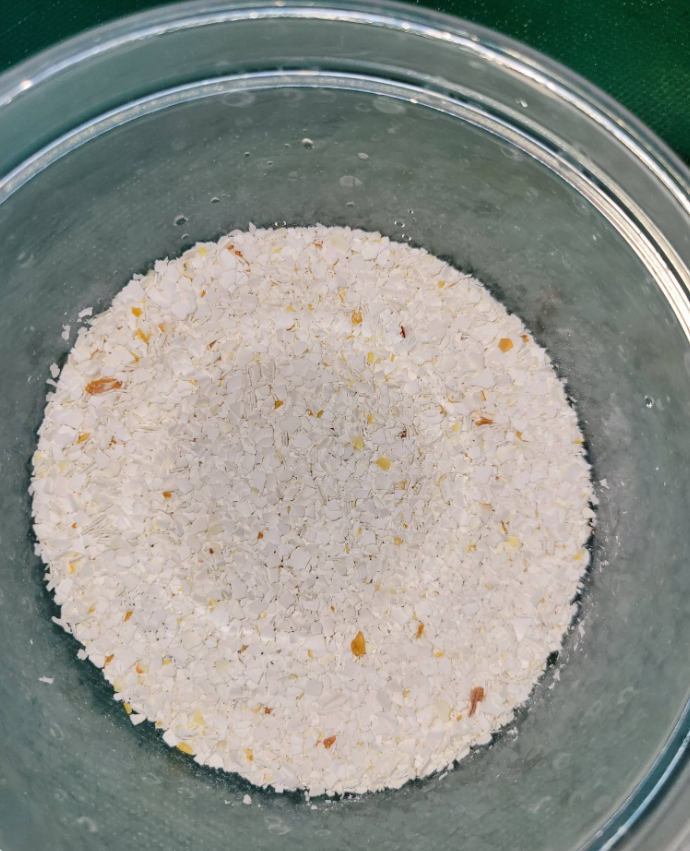
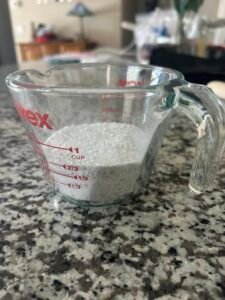
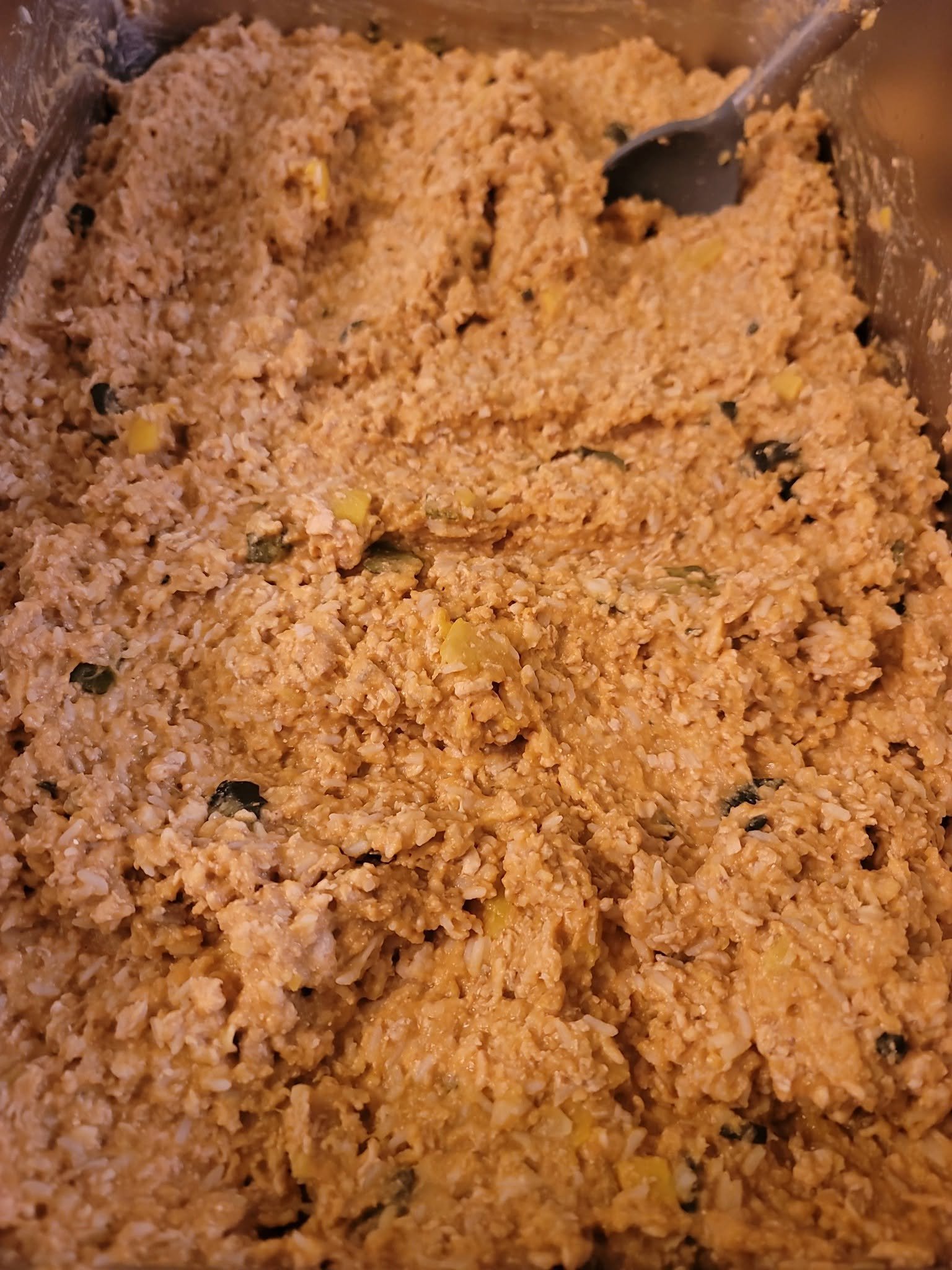
Do not add eggshell powder by eye. The amount and preparation method must match the formulated diet. The supplied photo shows visible shell fragments; it does not demonstrate a uniformly fine powder or establish a calcium dose.
A generic pet multivitamin may be designed to accompany complete commercial food rather than balance a homemade recipe. Provide its exact label and dose to the professional reviewing the diet. Avoid combining extra supplements without checking the total nutrient intake.
Mix and portion
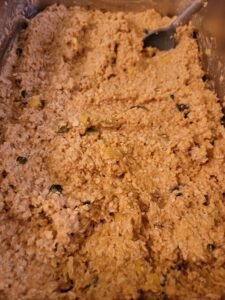
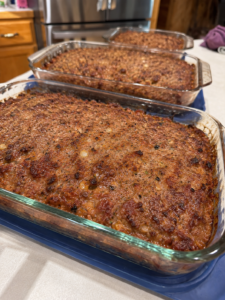
Once the recipe details and additions have been specified, combine the cooked meat, quinoa, eggs and vegetables in a clean food-safe bowl. Mix in the measured pumpkin and any approved additions thoroughly. Record the finished batch weight; the appearance or number of bags does not provide a reliable serving calculation.
Cool and store
Divide cooked food promptly into shallow containers. Refrigerate within two hours, or one hour above 90°F (32°C), at 40°F (4°C) or colder. Use refrigerated portions within three to four days and freeze the remainder promptly. Thaw in the refrigerator.
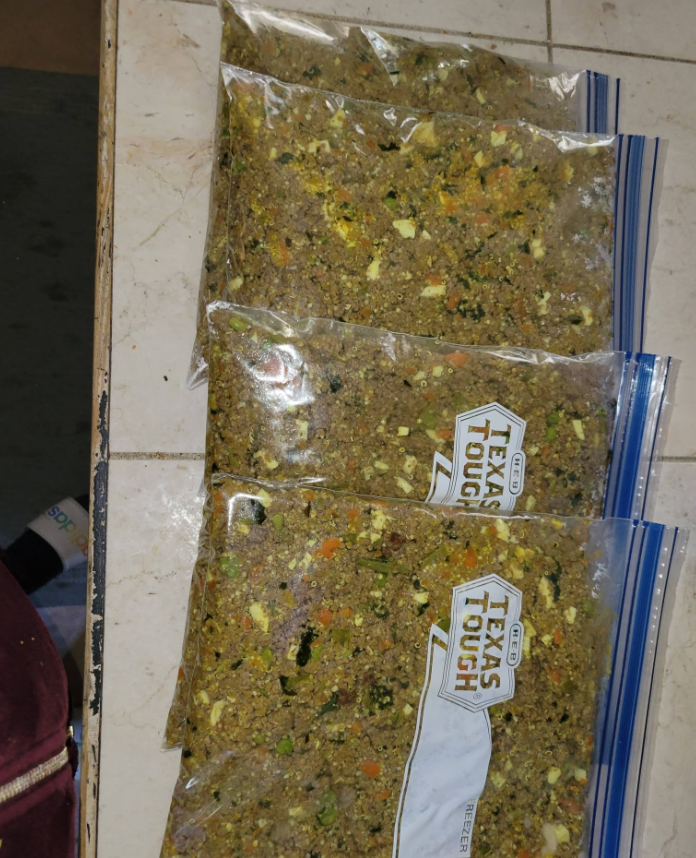
Use bags intended for food freezing and flatten them for convenient storage. Label portions with the preparation date, meat used and weight. Do not leave a large bowl on the counter until fully cool before refrigerating.
Before using this as regular meals
The missing details include meat composition, several ingredient weights, finished yield, supplement composition and the dog’s individual needs. Without these and a nutrient calculation, there is no defensible list of exact additions or deductions that will make this batch complete. Keep a consistent, professionally formulated recipe for regular feeding. This preparation guide provides no calorie estimate, universal serving size or claim of nutritional balance, and has not been kitchen-tested.
Leave a Reply