
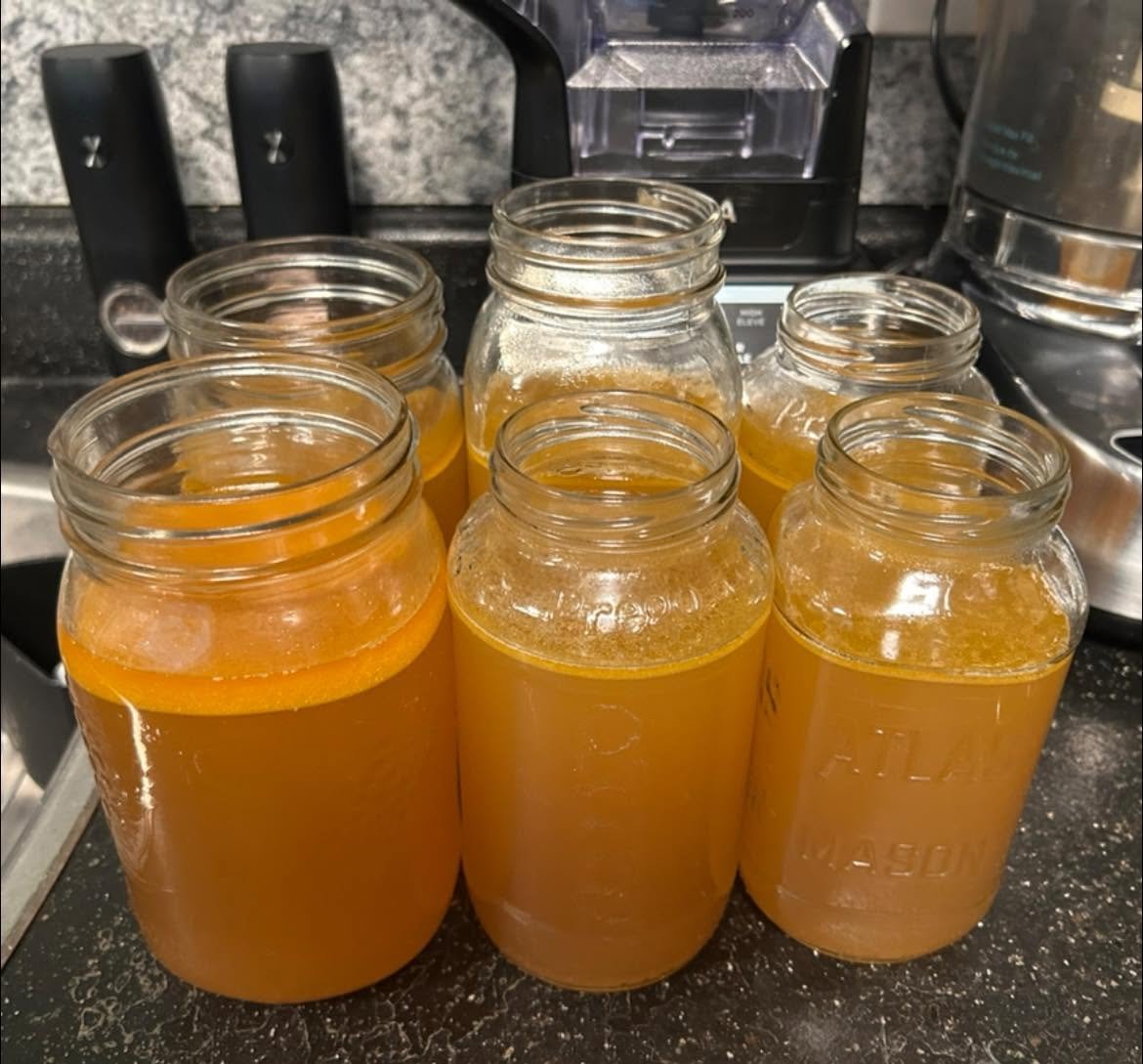
Homemade bone broth for dogs is a simple way to add moisture and flavour to a meal or enrichment feeder. A slow cooker extracts flavour and gelatin from bones and connective tissue, producing a broth that may become jelly-like in the refrigerator.
Keep the ingredients plain, strain out every bone and cool the liquid promptly. This version omits the garlic used in the original preparation: garlic and onion are unsuitable for dog broth, even after cooking.
Why does bone broth turn to jelly?
During slow, moist cooking, collagen in connective tissue becomes gelatin. When enough gelatin is present, the broth sets as it chills and becomes liquid again when warmed. The gel is not pure collagen, and firmness does not measure nutritional quality.
A broth that stays liquid has not necessarily failed. The bones used, water quantity and concentration affect the texture. Homemade and commercial broths can both be liquid. Neither a firm gel nor a long cooking time demonstrates a joint, skin or other therapeutic benefit.
Choosing bones for broth
Choose food-grade bones with cartilage and connective tissue attached. Poultry joints, wings, feet and larger joint ends are useful options. Marrow bones can contribute flavour and fat, but marrow alone does not supply the connective tissue that helps a broth gel.
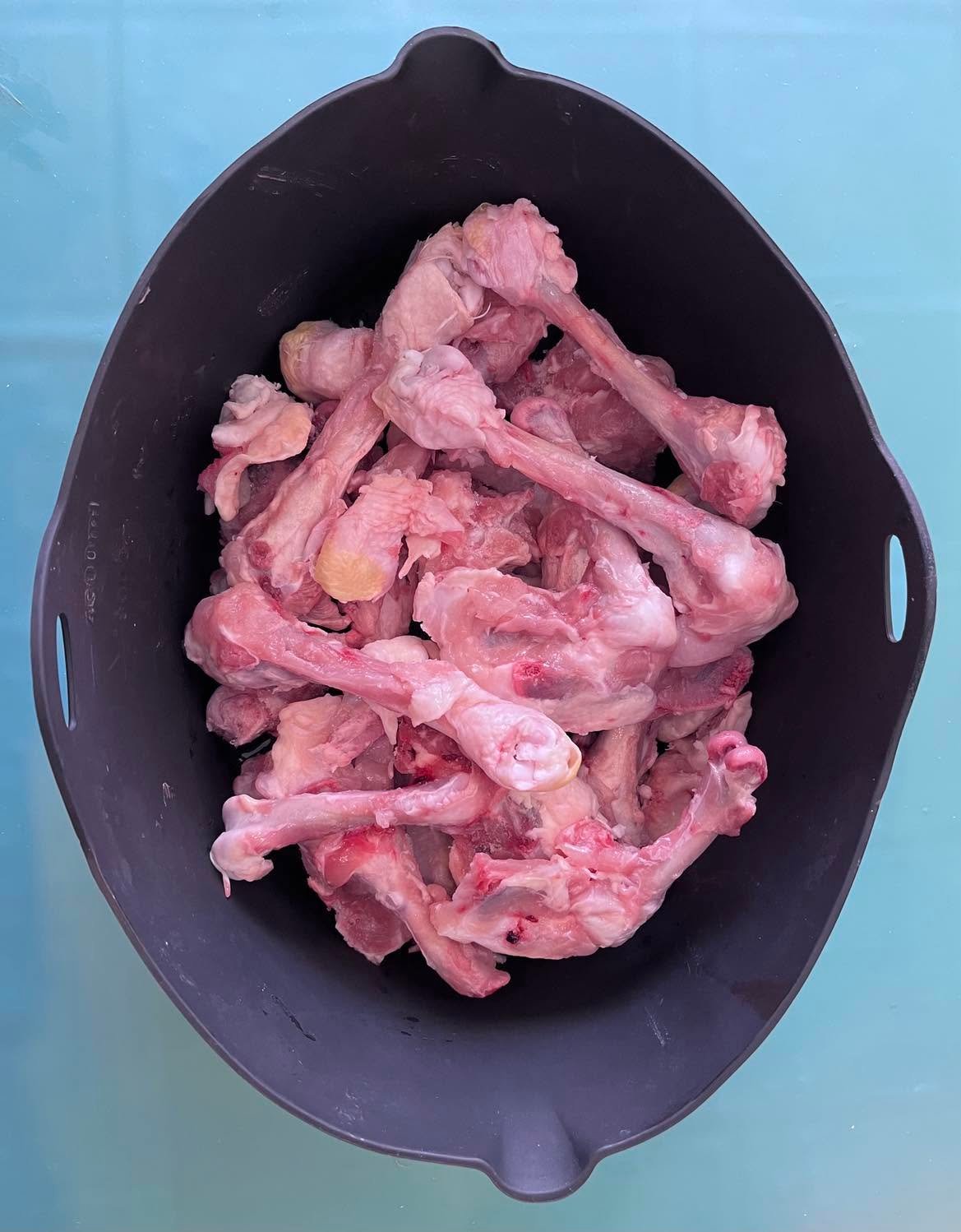
Use fresh refrigerated bones or thaw frozen bones in the refrigerator first. If saving bones from cooking, use only plain, safely stored bones that have not been seasoned with onion, garlic or salty sauces. Avoid cured ham bones and scraps from pets’ bowls.
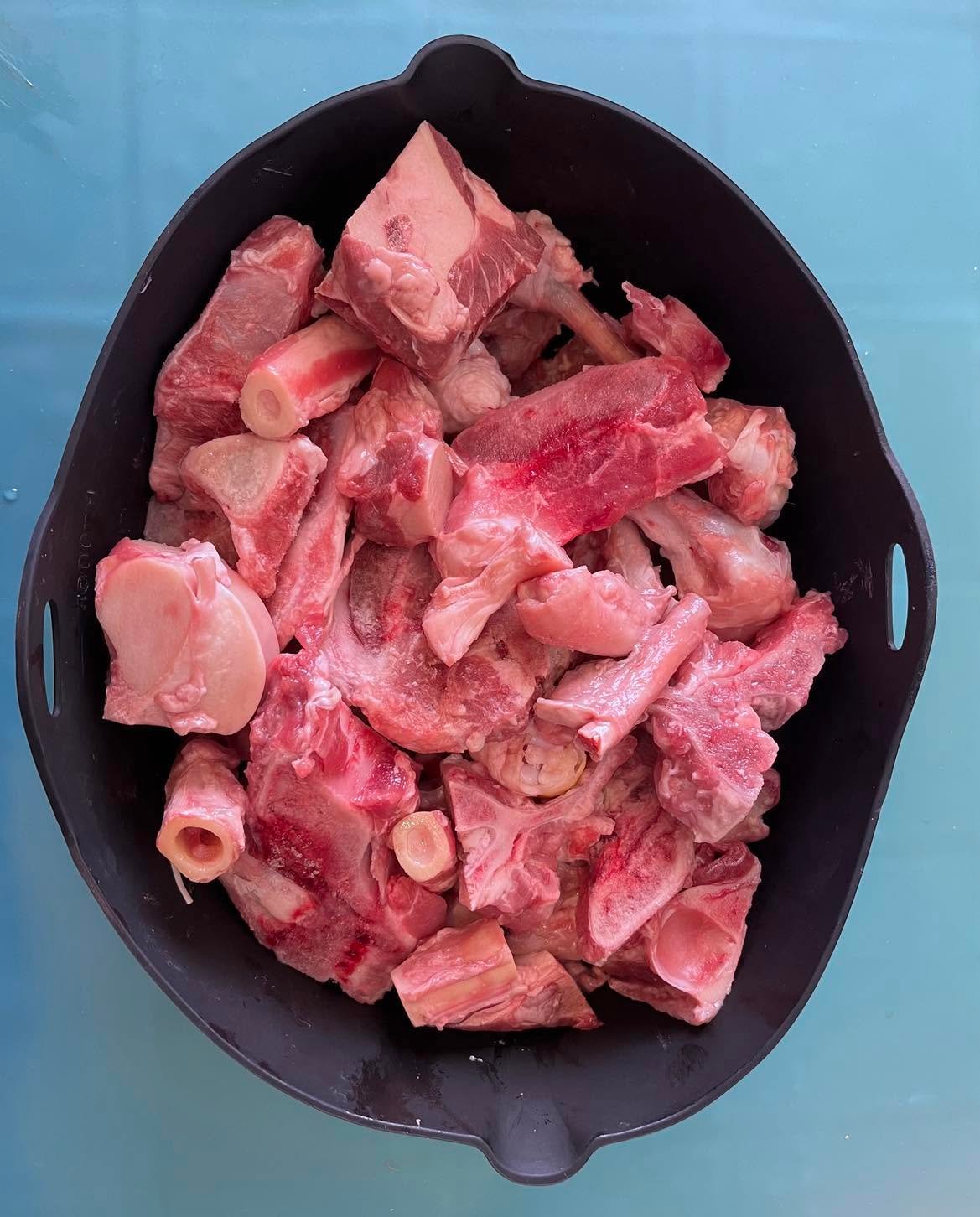
All bones and feet are cooking ingredients only. Remove and discard them after cooking; do not serve the softened bones to your dog or blend them back into the broth.
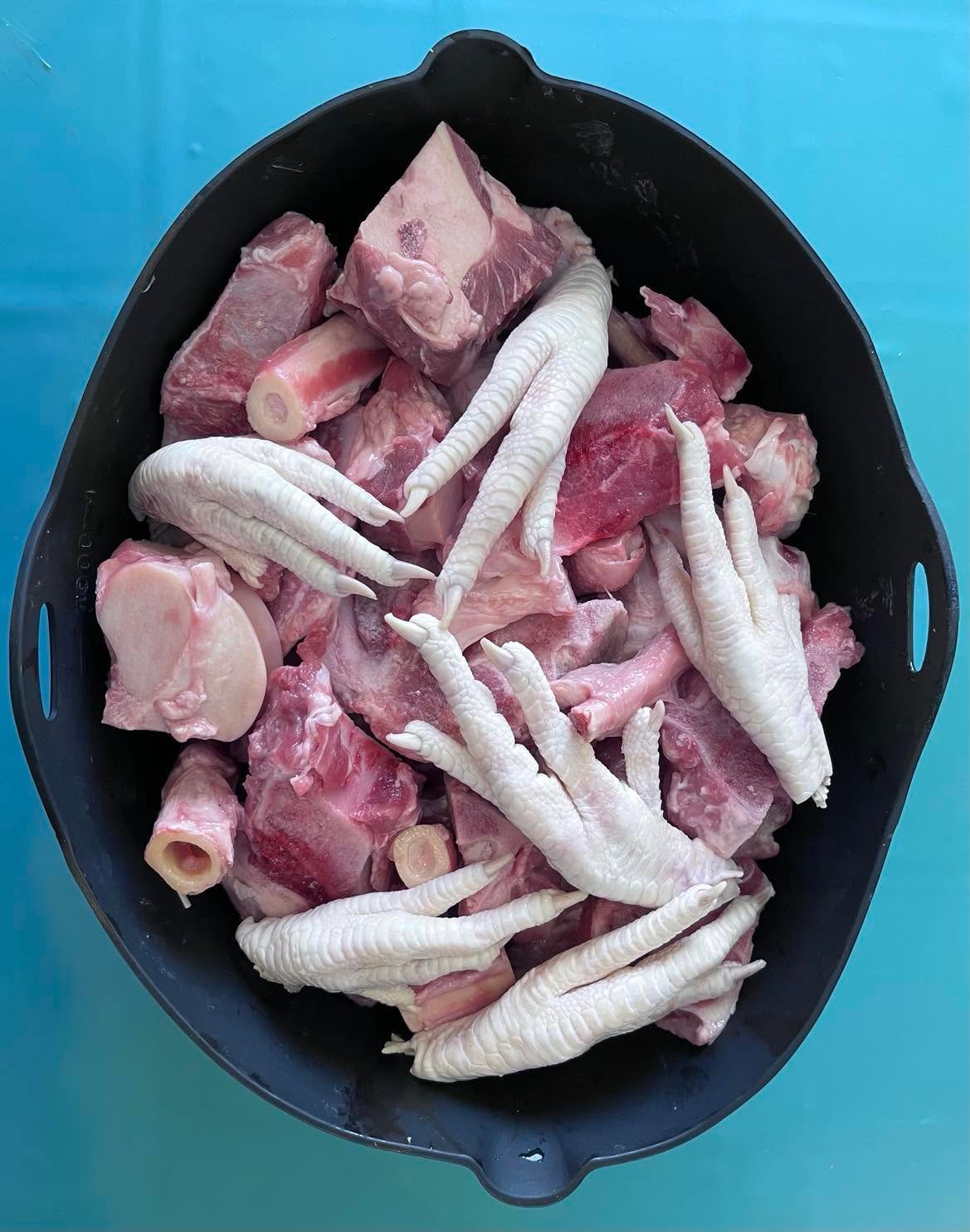
Ingredients and equipment
- Plain bones with attached cartilage or connective tissue, in an amount suited to your slow cooker
- Potable water to cover the bones without exceeding the appliance’s fill limit
- Optional plain celery leaves or carrot pieces
- Optional apple cider vinegar: the original batch used approximately ¼ cup, but the pot size and water volume were not supplied
- A slow cooker, fine-mesh sieve, heat-safe receiving bowl and shallow storage containers
Vinegar is optional, not a requirement for a successful gel or a nutritionally balanced broth. Without a measured batch volume, ¼ cup should not be treated as a universal amount. Ordinary safe drinking water is suitable; bottled water or a specific vinegar brand is unnecessary.
Slow cooker method
1. Load the cooker within its limits
If using a silicone liner, choose one approved for your model and cooking temperature and place it inside the crock before loading. A liner is optional. Add the bones and optional plain vegetables, then water. Follow the manufacturer’s fill guidance and leave space beneath the lid; do not pack bones to the brim.
The following original preparation photos show garlic. Omit it entirely, along with onion, leeks and chives. Removing garlic pieces after cooking does not make garlic-containing broth suitable for dogs.
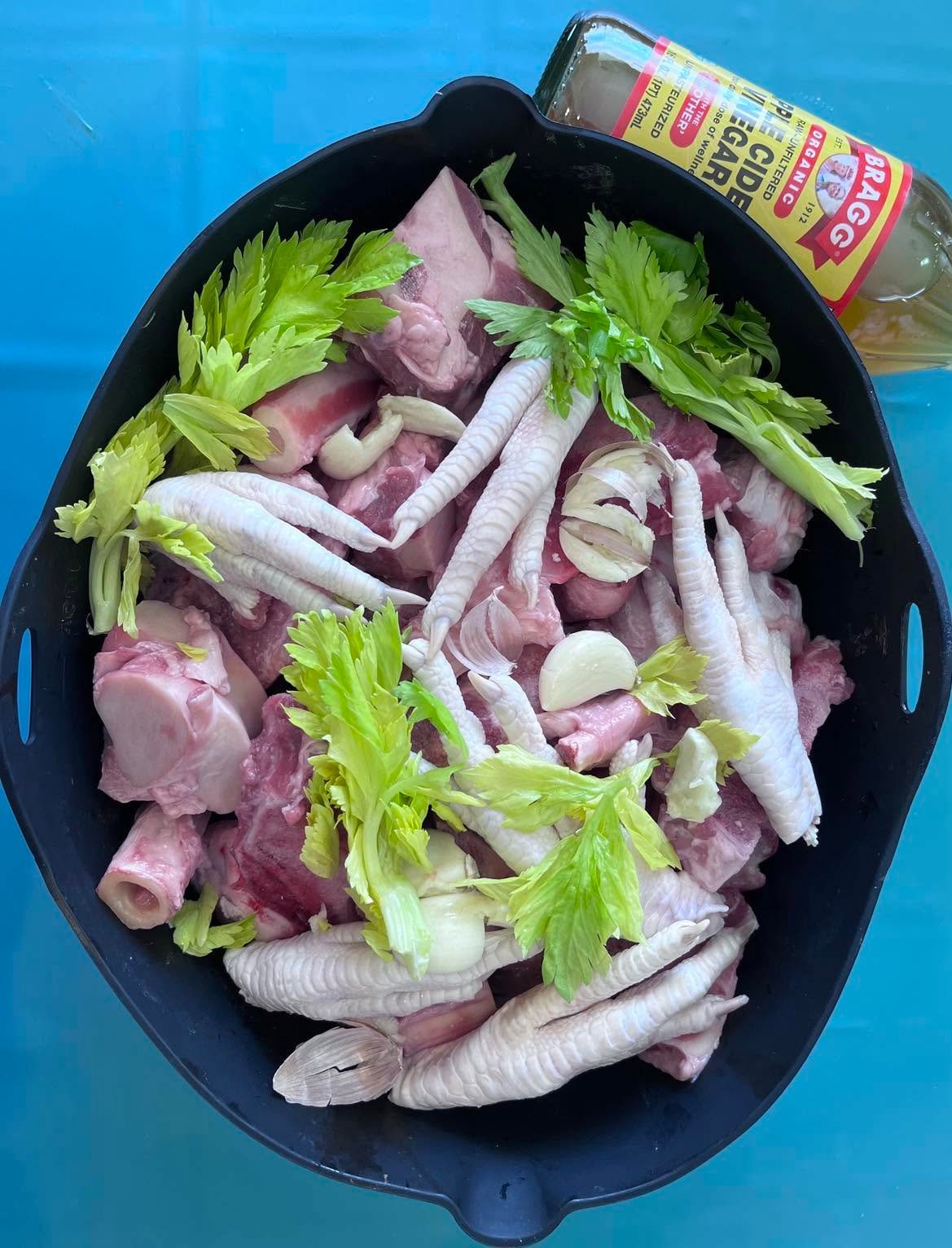
2. Cover and cook
The supplied method uses six hours on high followed by 30 hours on low, for 36 hours total. This is the original schedule, not a tested requirement for every cooker or bone combination. Use it only if your appliance permits that length of continuous cooking. Keep the lid on as much as possible, use a cooking setting rather than “warm,” and follow the manufacturer’s operating instructions.
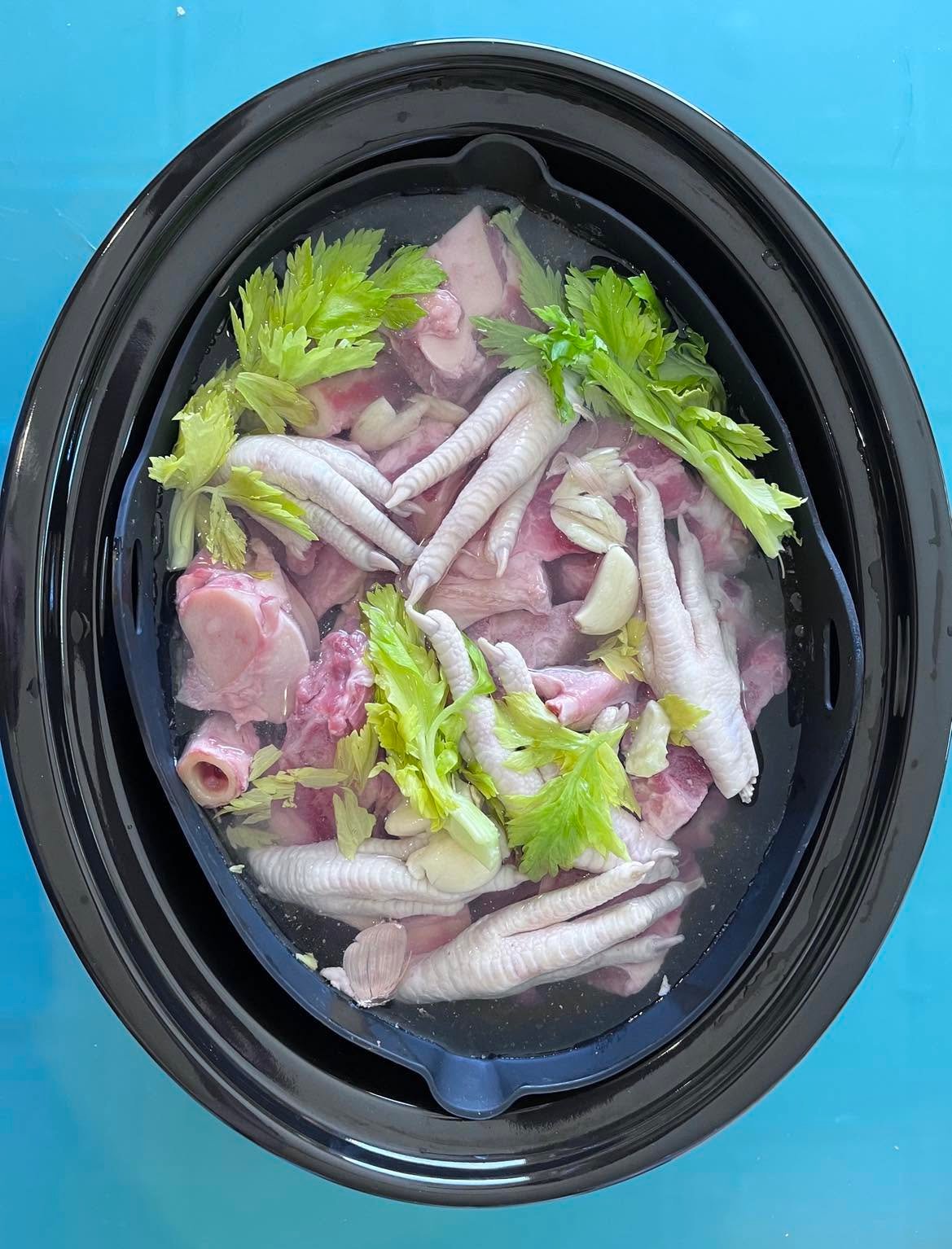
Check liquid levels as needed for your appliance. If evaporation exposes the bones, add a little hot water without exceeding the fill limit, then replace the lid. Avoid repeatedly filling the cooker to the top, which dilutes the broth. Do not convert this schedule directly into pressure-cooker hours; pressure cooking needs a separate tested method.
3. Strain carefully
Switch off the cooker and work carefully while the broth is still hot. Remove large bones with tongs, then ladle the liquid through a fine-mesh sieve into a heat-safe bowl. Line the sieve with food-safe cheesecloth for finer filtration if needed. Avoid crushing or forcing softened solids through the mesh.
Do not lift a heavy liner full of hot liquid by its handles unless the manufacturer explicitly permits it. Ladling reduces the weight and risk of spills. Discard all bones, feet and other solids where pets cannot reach them.
Cool promptly and remove the fat
Divide the strained broth into shallow containers. An ice-water bath around a heat-safe bowl, with occasional stirring using a clean utensil, can speed cooling. Refrigerate within two hours after cooking ends, or one hour in surroundings above 90°F (32°C). Do not leave the full crock or large jars on the counter to cool overnight.
Chill in the refrigerator for about eight hours or overnight. Once cold, lift off the solid fat layer. Skimming reduces fat, but the finished broth still has an unknown calorie content. Use clean utensils to portion it.
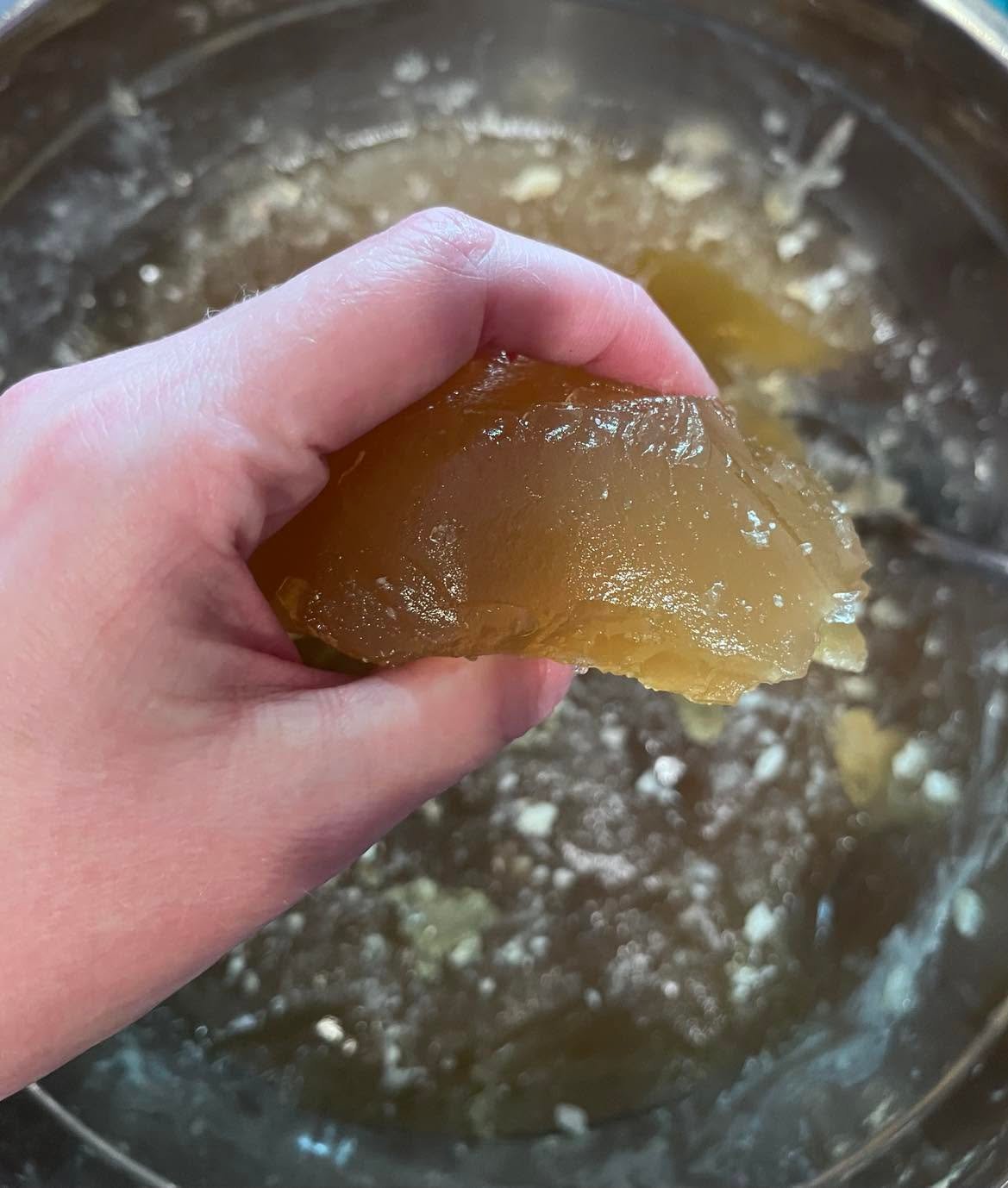
Storage and freezing
Keep refrigerated broth at 40°F (4°C) or below and use within three to four days. Freeze extra portions promptly and aim to use them within two to three months for best quality. Freeze cooled broth in silicone moulds, then transfer the portions to a labelled freezer bag. Use freezer-safe containers with expansion space.
Broth stored in jars is not shelf-stable simply because a lid is fitted. Keep it refrigerated or frozen. Thaw in the refrigerator. If reheating leftovers, bring them to 165°F (74°C), then cool the serving before offering it.
Ways to serve bone broth
- Spoon a small amount over the dog’s usual complete food.
- Use a little cooled liquid to moisten dry food and serve promptly.
- Spread gelled broth thinly over a lick mat.
- Add cooled broth to a suitable food-stuffable toy and refrigerate until set, if the batch gels.
- Freeze small portions in an appropriate enrichment feeder, supervising use.
Start with a small amount and count broth alongside other extras. A homemade batch is not automatically low-calorie, a calcium supplement or a complete meal. For dogs on a prescribed diet or fat restriction, check whether the ingredients and serving fit that plan.

Leave a Reply