
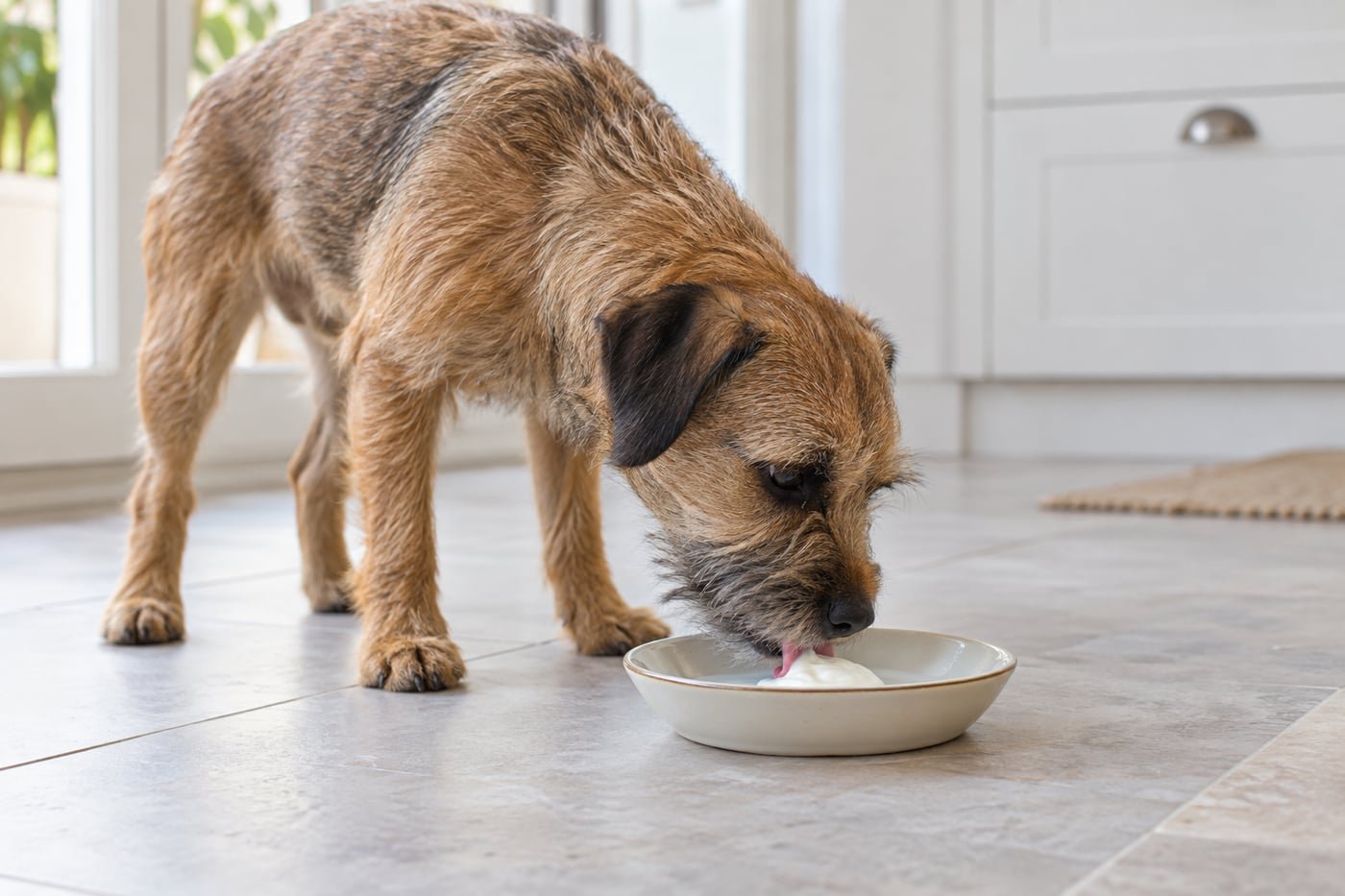
Some dogs can eat a small amount of plain, unsweetened yogurt, but others develop digestive upset from dairy. Check the full ingredient list and never give a product containing xylitol. Yogurt is optional; a dog does not need it to have a balanced diet. [1]
What yogurt can dogs try?
Choose a plain product without added sugar, flavorings or artificial sweeteners. Plain Greek yogurt may contain less lactose than some other varieties, but that does not guarantee tolerance. Fat content and your dog’s medical history also matter. [1] [2]
Keep the original container until you know the ingredients. A spoonful transferred from someone else’s breakfast bowl may also contain granola, raisins or sweetener.
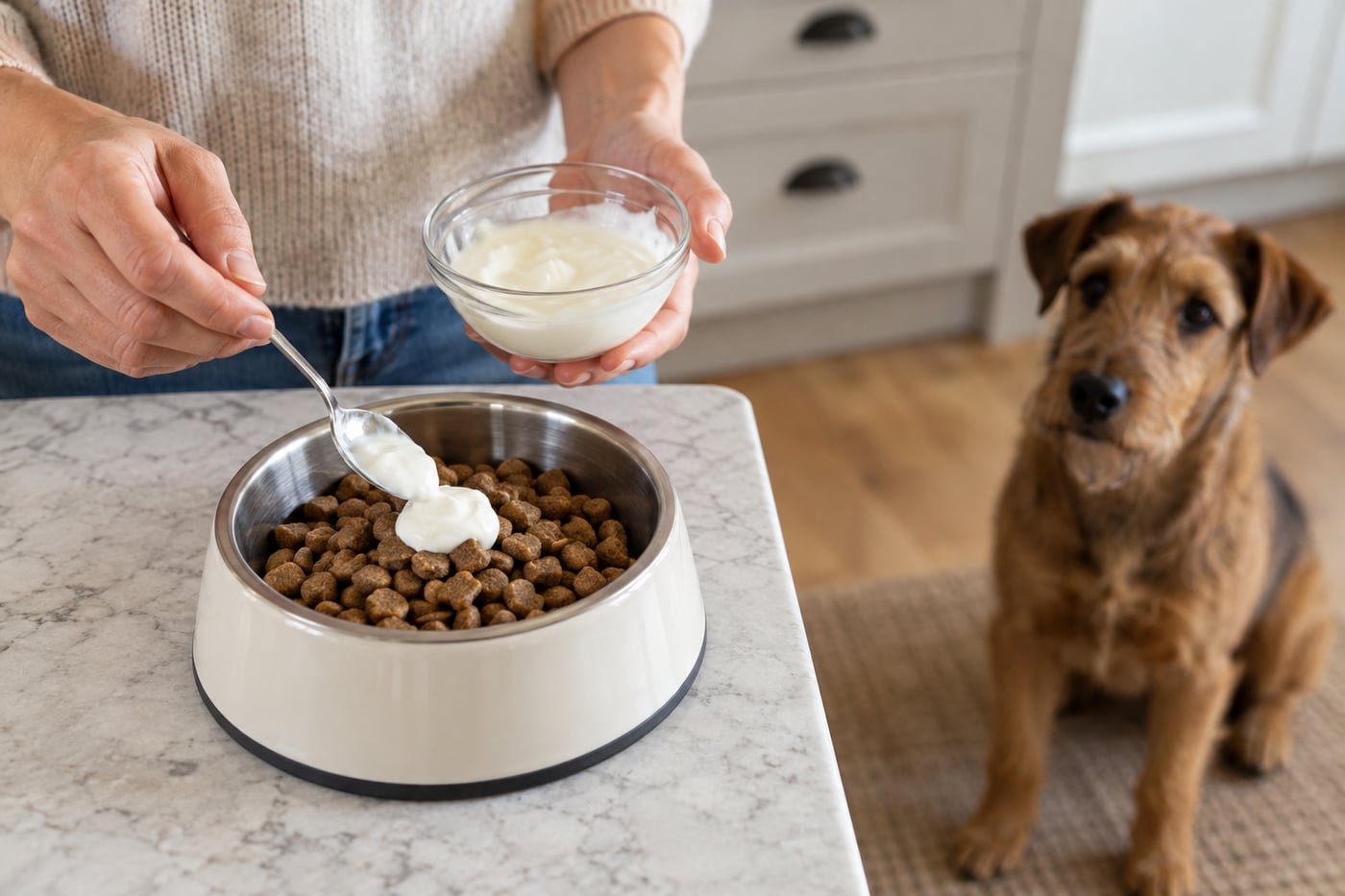
How should you introduce yogurt?
- Read the label for xylitol, sometimes called birch sugar, and other added ingredients.
- Choose a plain, unsweetened product.
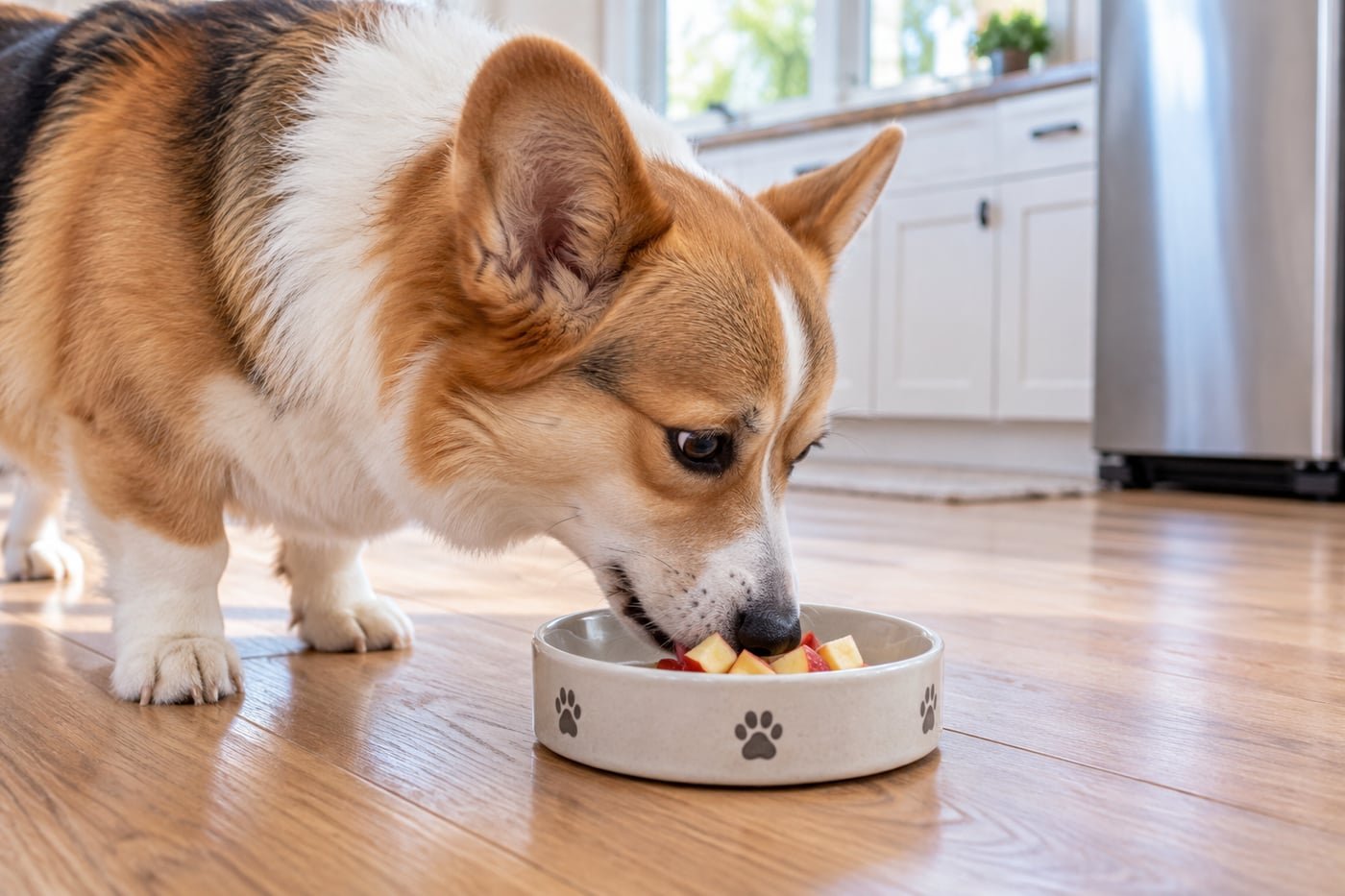
- Put a tiny taste in a clean dish.
- Offer no other unfamiliar foods at the same time.
- Stop if your dog develops gas, vomiting or diarrhea.
Dogs with a dairy allergy, pancreatitis history or prescribed diet should have treats discussed with their vet first. [2]
Is yogurt good for a dog’s digestion?
Some yogurt contains live cultures, but a supermarket yogurt is not the same as a veterinary probiotic chosen for a particular condition. Do not use it to treat diarrhea or replace prescribed care. In a dog that struggles to digest lactose, it may make digestive symptoms worse. [1] [2]

How much yogurt is suitable?
Begin with a small lick rather than a filled bowl. Count its calories alongside biscuits, chews and other extras, usually within about 10% of daily calories. A small dog can use up that allowance quickly. Your veterinarian can help decide whether dairy fits your dog’s feeding plan. [2]
Can dogs eat flavored or frozen yogurt?
Flavored products and frozen desserts can contain added sugar, chocolate or unsafe sweeteners. Their suitability cannot be judged by the word yogurt on the label. Plain yogurt offered in a modest amount is the simpler choice for a dog that tolerates it.
What if a dog eats xylitol-containing yogurt?
Contact a veterinarian or animal poison service immediately, even if your dog seems normal. Take the package or a clear ingredient photo with you and report the amount eaten. Do not wait for symptoms or induce vomiting unless a veterinary professional tells you to. [2]
Related food safety guides
Sources
Content updated September 9, 2026. General educational information; ask your veterinarian about your dog’s individual feeding needs. This article has not been reviewed by a veterinarian.








Leave a Reply