
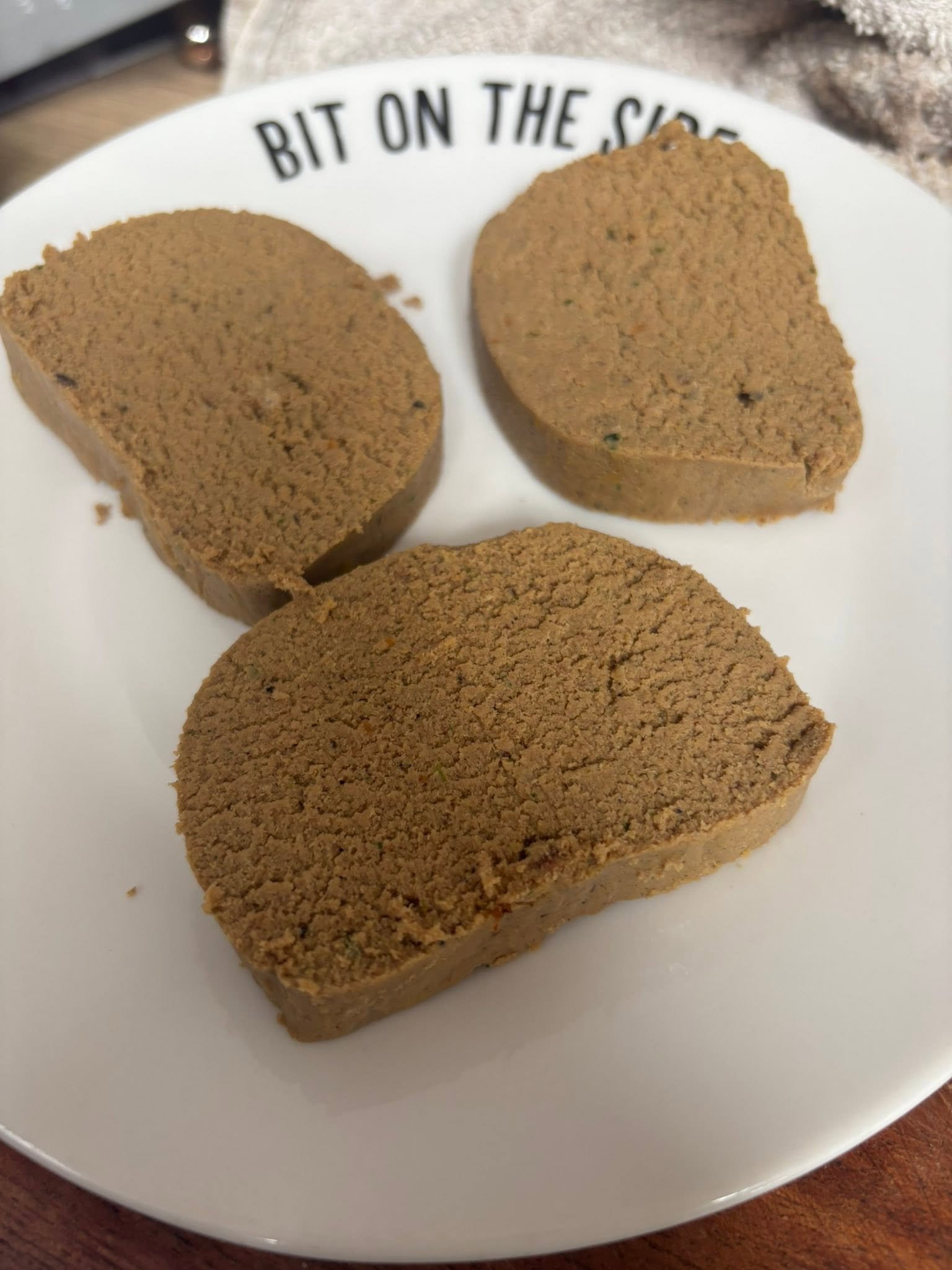
A homemade turkey and chicken chub roll turns cooked meat and vegetables into a smooth, chilled pâté that can be sliced or mashed. Careful blending and restrained use of cooking liquid help the mixture hold its shape without becoming dry.
This is a preparation guide based on an ingredient list without quantities. It is not a complete, balanced diet or a tested formula for a particular dog. A soft texture alone does not establish suitability for a senior dog or a dog with dental or swallowing problems.
Ingredients
- Turkey mince
- Boneless chicken breast
- Beef liver
- Sweet potato
- Sprouts — confirm the variety; the photographs appear to show Brussels sprouts
- Carrots
- Spinach
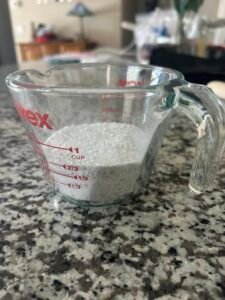
- Flax seed
- Salmon oil
- Water for cooking and adjusting texture
Record the weights before cooking and the exact salmon oil product. The amount of liver, oil and flax seed must be set in the completed feeding formula. Do not estimate supplement doses from the appearance or size of a roll.
How to prepare the mixture
1. Soften the vegetables
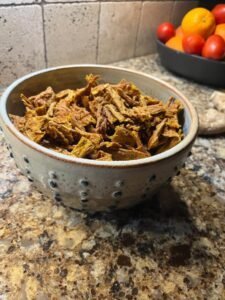
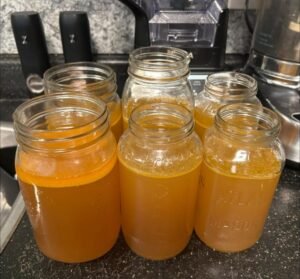
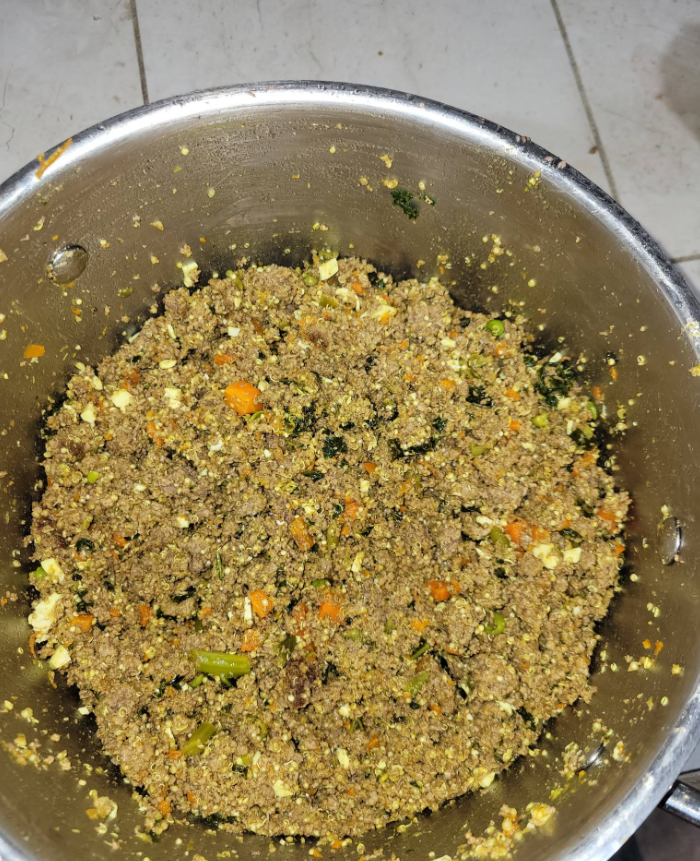
Peel and finely dice the sweet potato and carrots. Trim and chop the confirmed vegetables, then steam or simmer until easily mashed with a fork. Cook spinach until wilted. Reserve a little plain cooking water, keeping the solids separate so the mixture does not become soupy.
2. Cook the meat thoroughly
Cook turkey mince in a nonstick pan, breaking up clumps and adding a splash of water if it sticks. Poach the chicken breast separately and simmer the liver until cooked through. Turkey and chicken must reach 165°F (74°C); beef liver should reach 160°F (71°C). Use a food thermometer rather than judging by color. Keep the food unseasoned.
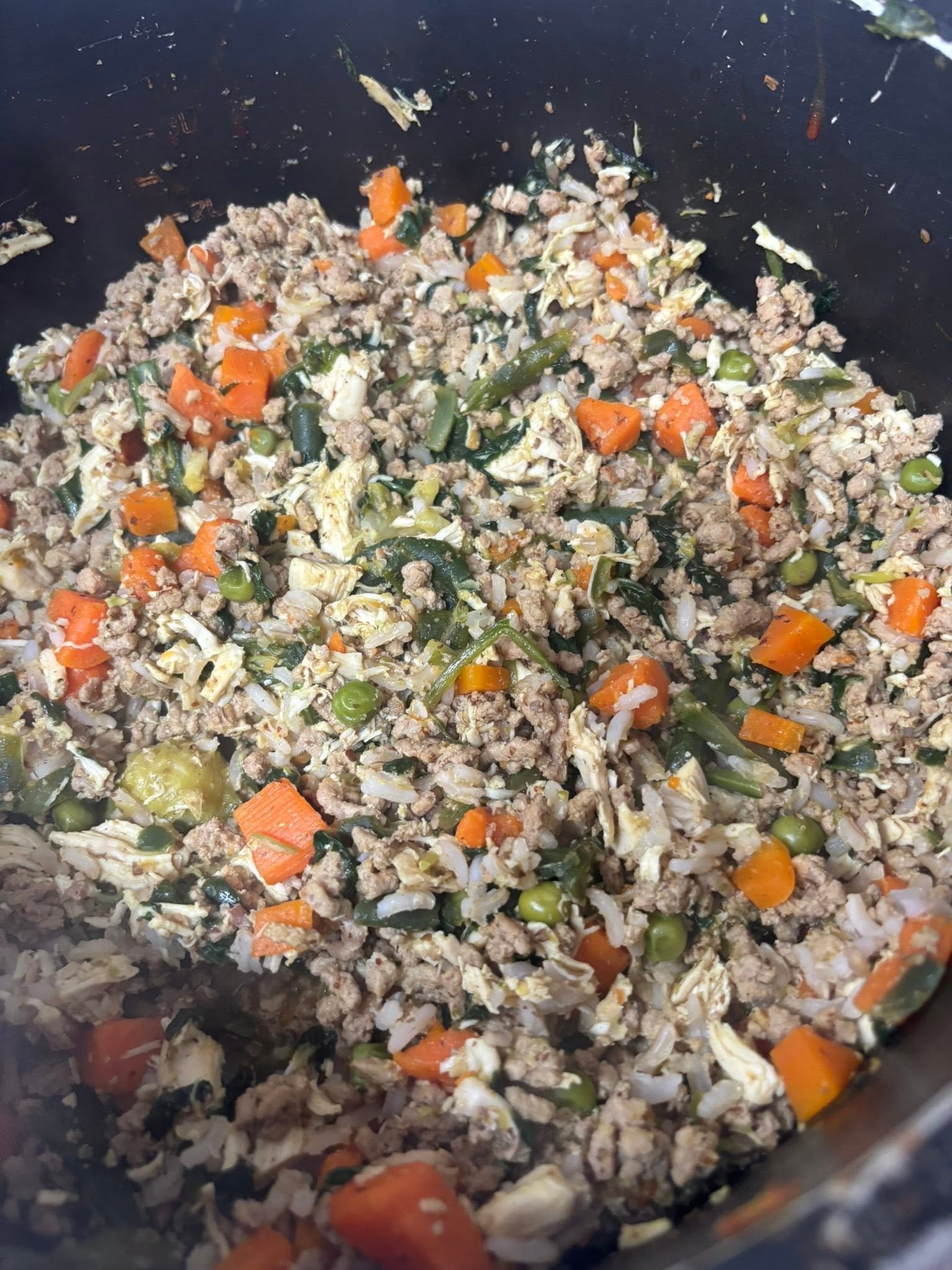
3. Cool promptly, then blend
Divide cooked ingredients into shallow containers and refrigerate promptly, within two hours of cooking or one hour if the room is hotter than 90°F (32°C). Do not wait for a large pot to cool completely on the counter. Blend the chilled ingredients in small batches in a food processor, scraping down the sides with the machine stopped. Follow the appliance instructions and never seal steaming food in a blender.
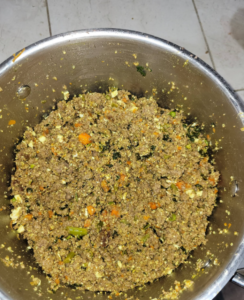
Add reserved, promptly refrigerated cooking liquid one tablespoon at a time, only as needed to move the blades. Aim for a thick paste that holds a mound on a spoon. Grind the measured flax seed finely and mix in it and the salmon oil only in the amounts specified by the finalized formula. Distribute any prescribed supplements evenly through the portion they are intended to supplement.
Shape and chill the roll
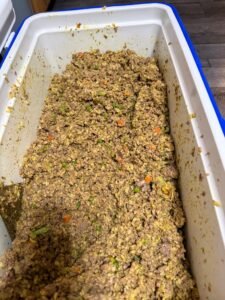
Spread the cold paste along baking parchment and roll it into a compact log. An outer layer of foil can help hold its shape. Make several small rolls rather than one very thick cylinder, and return them to the refrigerator immediately. Alternatively, press the paste into a small covered food container.
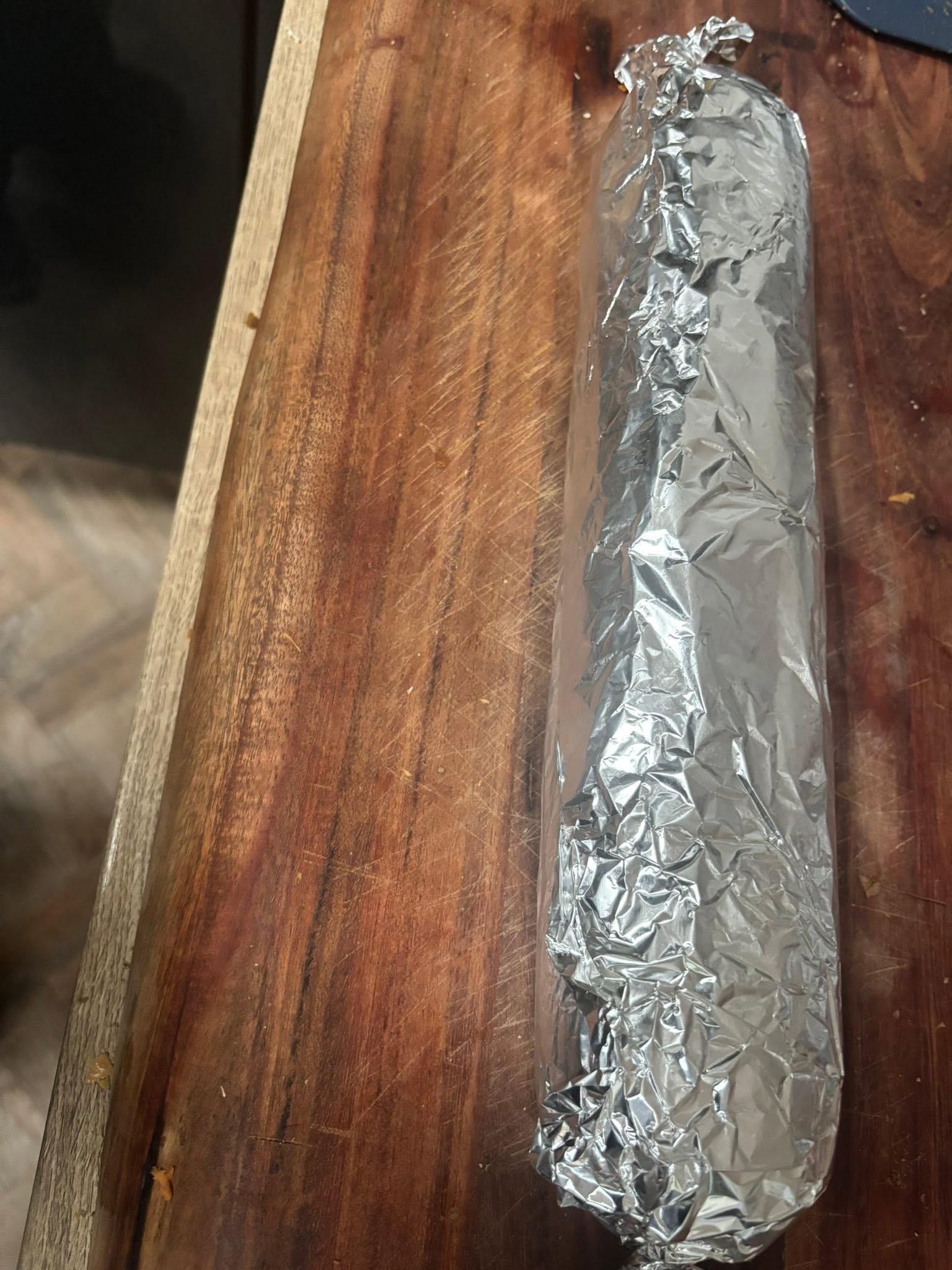
Chill for several hours, until firm enough to handle. This mixture has no added setting agent, so firmness will depend on the ingredient proportions and moisture. Refrigeration may produce a sliceable pâté rather than a firm commercial-style sausage.
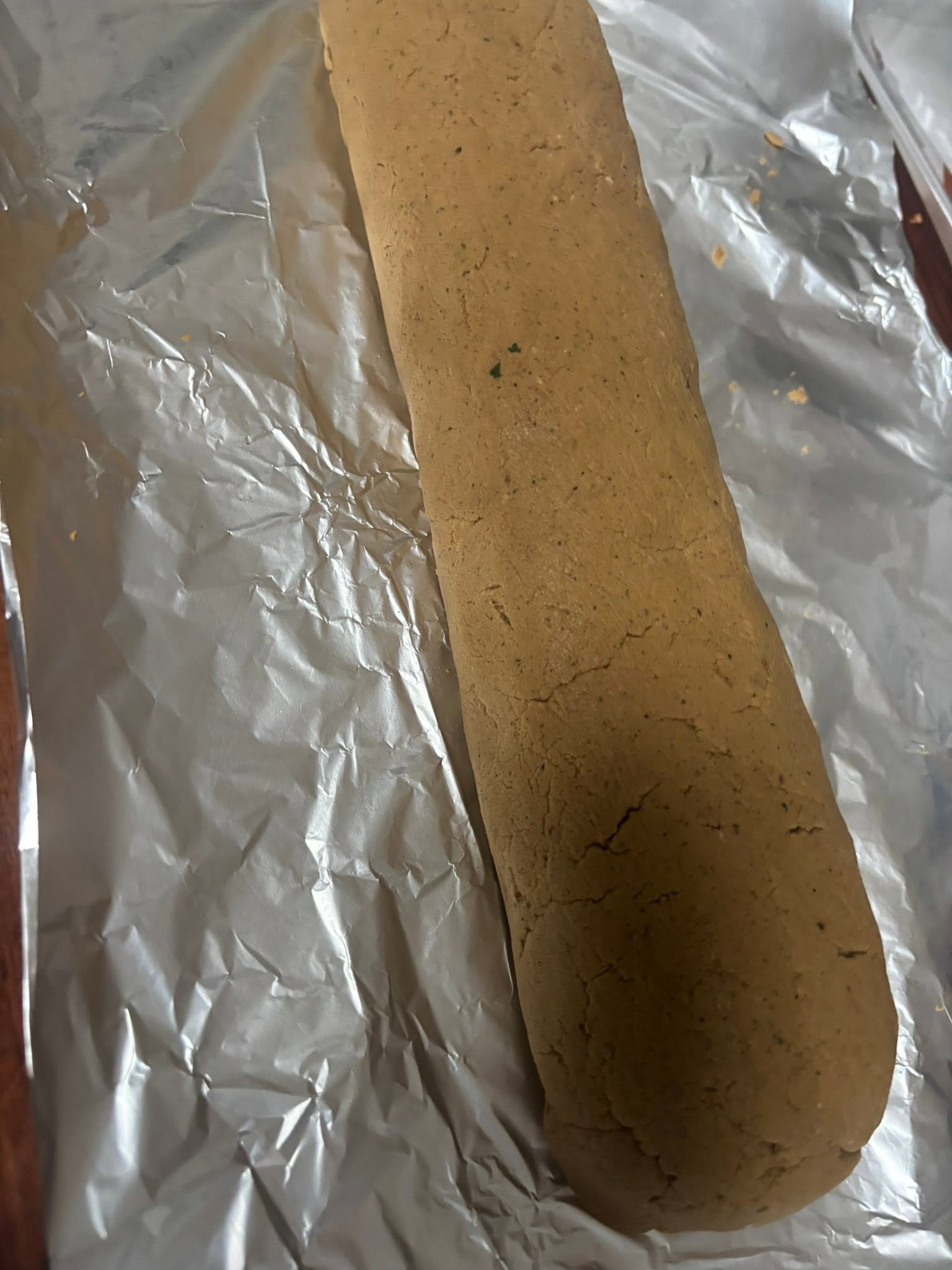
Getting the texture right
If the roll crumbles, mash the serving with a little water. If it is too soft to slice, serve it as a pâté rather than adding unmeasured flour or extra seed. For the next batch, drain the vegetables more thoroughly and use less blending liquid. A sharp knife and a well-chilled roll give cleaner slices.
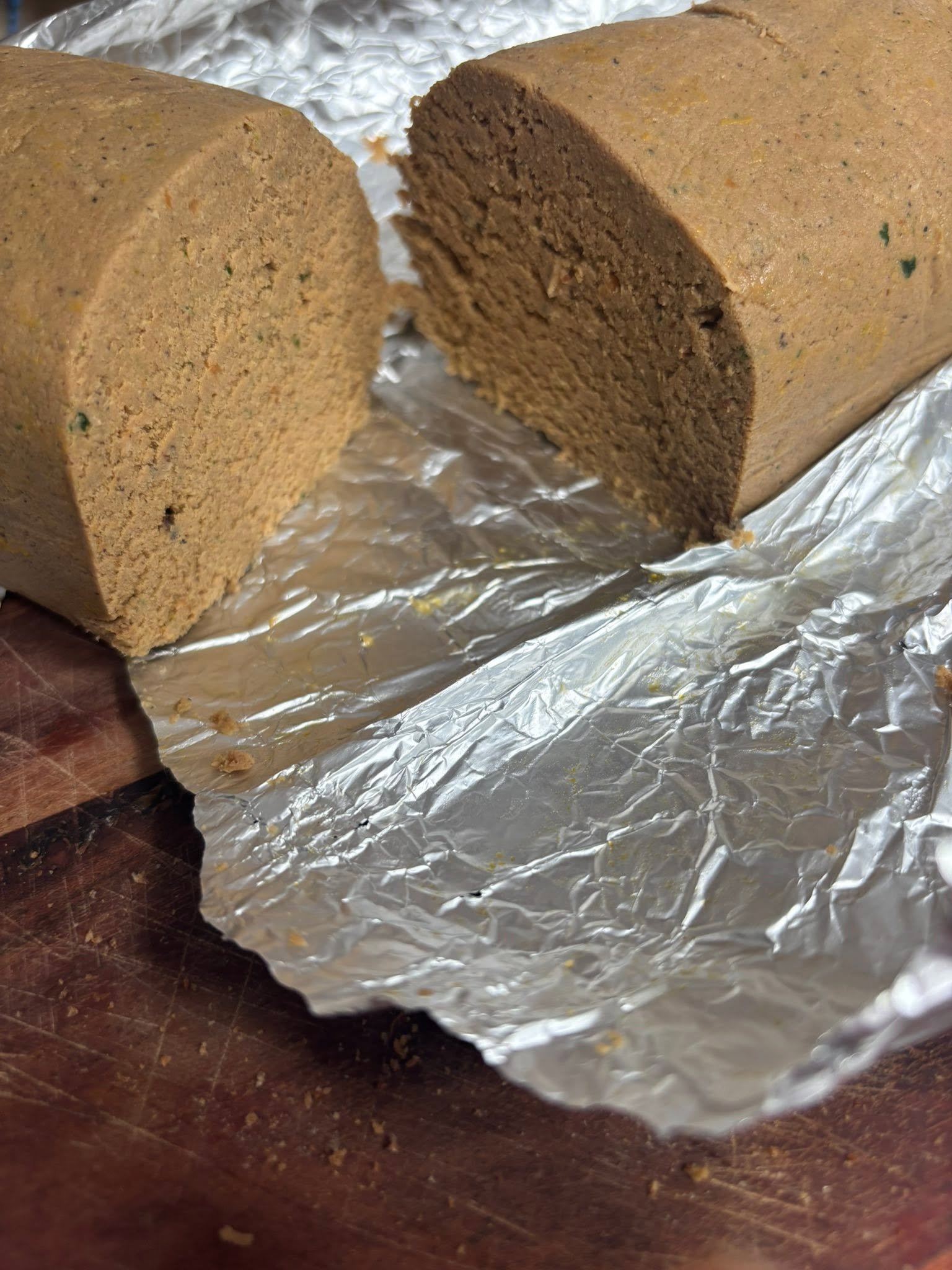
Remove every piece of foil and parchment before serving. Mash or break up the portion to suit the dog, and supervise feeding. A veterinarian can advise on texture when chewing or swallowing is difficult.
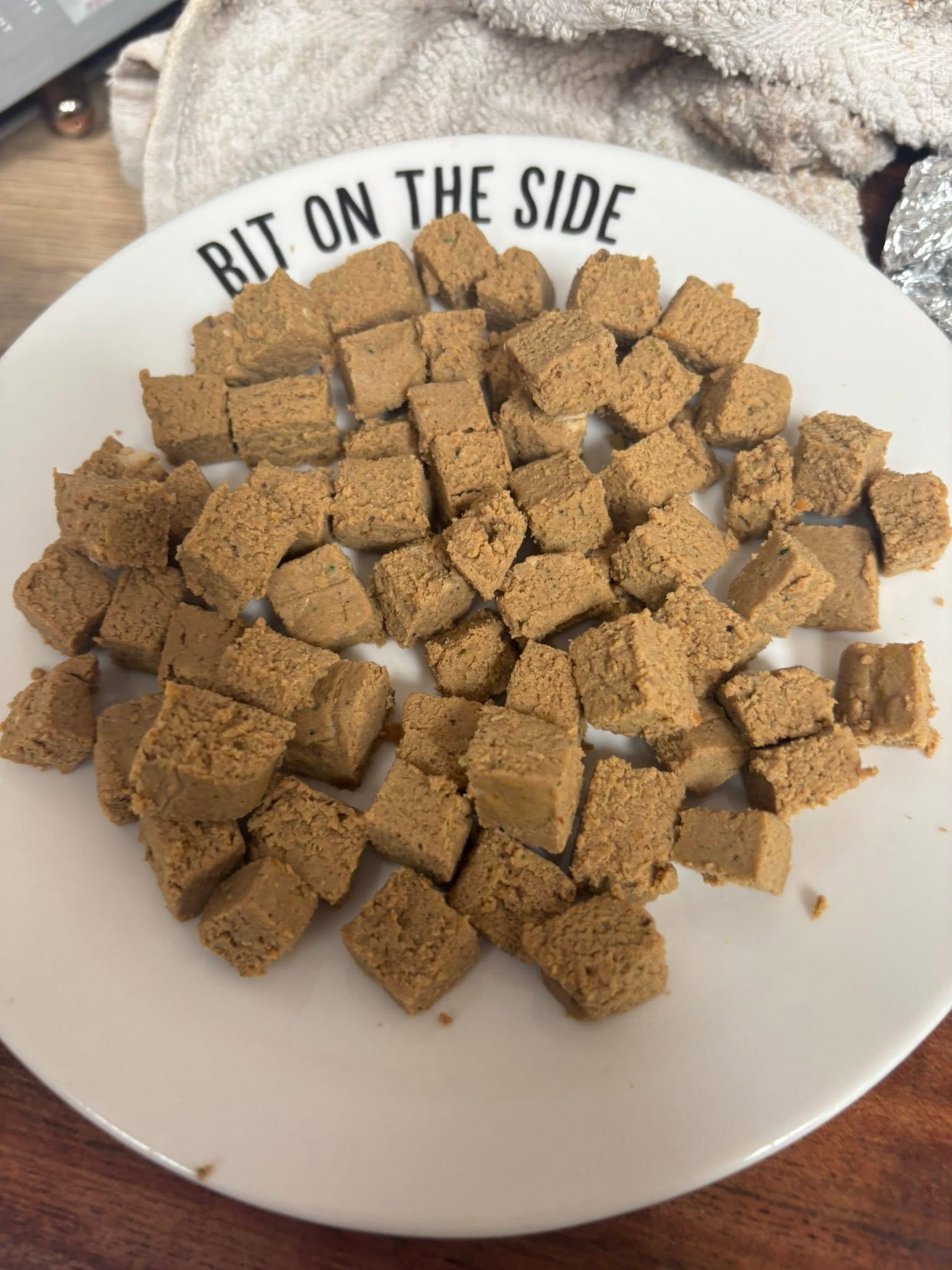
Storage and feeding
Keep at 40°F (4°C) or below and use within three to four days of cooking. Freeze portions promptly for longer storage and thaw in the refrigerator. Shaping or blending does not restart the storage clock. Label portions with the cooking date.
Daily portions cannot be calculated without ingredient weights, finished yield and the dog’s needs. Meat, vegetables and a general multivitamin do not establish nutritional completeness. Before using this as a main meal, obtain an exact formulation from a veterinary nutrition specialist, including calcium, essential fats and any required vitamin and mineral supplement.
Leave a Reply