

A dog microchip stores an identification number that a scanner can read. Register that number with current contact details and keep a visible ID tag too; a microchip does not show your dog’s live location.
A microchip works only when it leads back to you
- Ask the vet or shelter to scan the dog and write down the complete chip number.
- Identify the registry associated with that number and register your current name and contacts.
- Add a backup contact who agrees to answer an unfamiliar number.
- After moving or changing phones, update the registry rather than only the vet’s file.
- At routine visits, ask for another scan and verify the number and contact record.
A microchip is permanent identification, not GPS. It does not show a dog’s location on a map and it does not replace a readable collar tag. A finder must bring the dog to someone with a scanner, and the contact information must still work. Keep a clear current photo and proof of ownership alongside the chip details.
If you adopted a chipped dog
Ask the shelter or previous owner how the transfer is completed. Confirm that the registry shows you as the contact rather than assuming the adoption paperwork automatically changed the database. Save the transfer confirmation.
Check the registration
Ask your vet to scan the chip and confirm the number. Use the relevant registry to check that your name and current contact information are linked to it. Keep a copy of the number with your dog’s records, along with the registry’s contact details.
Update details when life changes
A new phone number, address or owner should trigger a registry update. Do not assume that changing details at the veterinary clinic automatically changes every chip database. If your dog was adopted, confirm that the transfer process is complete.
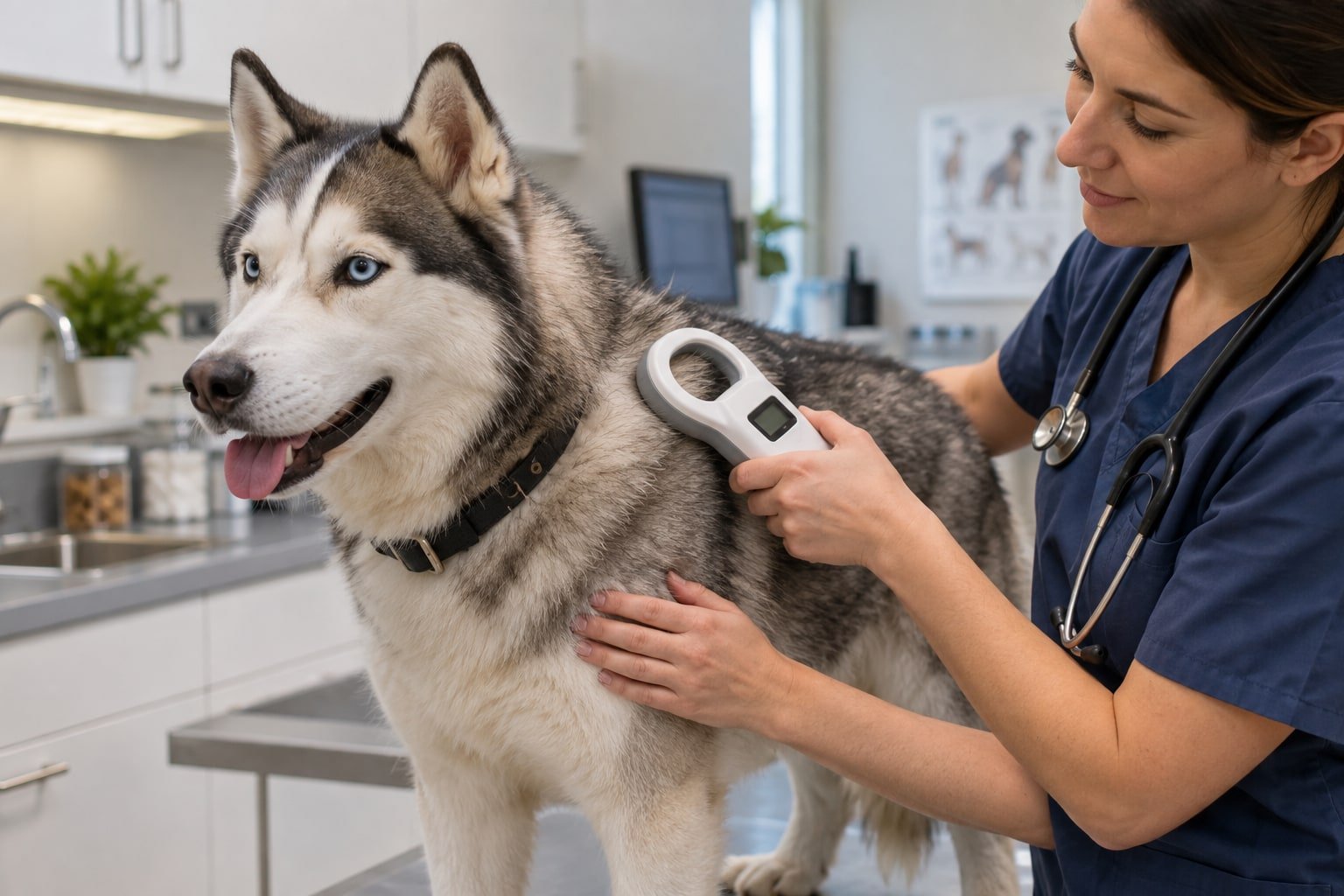
How do you check a chip after adoption or a move?
Ask a clinic to scan the dog and write down the number exactly. Find out which registry holds the record and follow its ownership-transfer or update process. Keep the confirmation instead of assuming a form was processed because it was submitted. If a rescue organisation is still listed as an additional contact, ask how that arrangement should work alongside your own details.
Use visible identification too
A collar tag can let a finder contact you without first locating a scanner. Keep the number legible and replace worn tags. The tag and chip serve complementary roles, so check both during a routine equipment check.
Create a simple annual reminder
At a regular veterinary visit, ask whether the chip can be scanned. Review registration, emergency contacts and recent photographs at the same time. Keep these details in one folder that a trusted person can access if you are away when the dog goes missing.

What should your identification folder contain?
Store the chip number, registry details, recent clear photographs and a backup contact in one place. Include a picture of distinctive markings and the collar tag. Give a trusted carer access to the information before you travel. Review it when you change phone numbers, move house or transfer ownership, and use a calendar reminder for a periodic check even when nothing obvious has changed.
Your practical checklist
- Have the dog scanned and record the chip number accurately.
- Confirm registration with the appropriate registry.
- Check the owner, phone number and backup contact details.
- Fit a readable contact tag and inspect it for wear.
- Ask for a scan at a routine visit and update records when details change.
Common questions and answers
Can a microchip track my dog on a map?
No. A standard identification microchip is read at close range by a scanner. A location tracker is a different device with its own power and connectivity requirements. Do not mistake chip registration for live tracking.
Does my vet update the registry automatically?
Not necessarily. A change in the clinic’s records may not change the external registration database. Ask which action you need to take and confirm it directly with the registry. Keep the updated registration acknowledgement.
Does a microchipped dog still need a collar tag?
A readable tag gives a finder a direct contact route without first locating a scanner. Use both where appropriate and check local identification requirements. Inspect the tag regularly, because a worn or outdated phone number defeats its purpose.
What happens if a found dog’s chip is not registered?
The number may not lead promptly to a current owner. Clinics or shelters may need to investigate further, which can delay reunification. Registration and accurate contact details are essential parts of using the chip effectively.
Check our previous articles
Continue with these related guides from My Dog Recipes:
Sources and further reading
Updated September 29, 2026. General educational guidance; individual health and feeding decisions depend on your dog’s needs.










Leave a Reply