
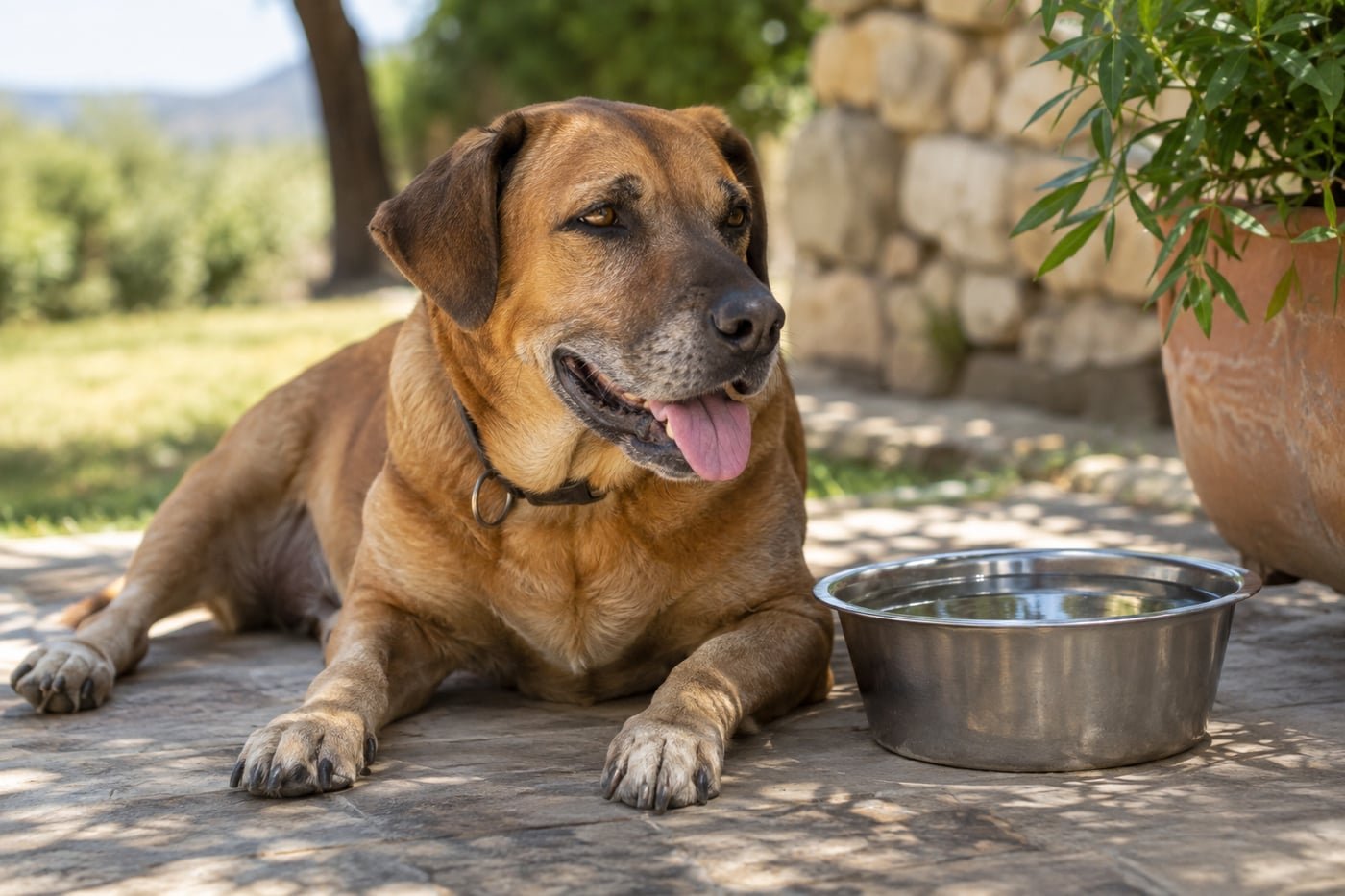
Possible signs of dehydration in dogs include dry or sticky gums, reduced energy, sunken-looking eyes and skin that returns slowly after being gently lifted. These signs are imperfect, and mild dehydration may not be obvious. A dog that looks normal can still need veterinary assessment when fluid losses or illness are present. [1] [2]
Why dehydration can develop
Dehydration occurs when the body loses more water than it replaces. Vomiting, diarrhea, overheating or not drinking enough can contribute. Puppies and medically vulnerable dogs may deteriorate more quickly. The underlying reason matters: simply putting out another bowl does not treat every cause. [1]
Think about what changed first. Did your dog stop drinking, begin vomiting or spend longer in hot conditions? Give your vet the sequence rather than assuming thirst is the whole problem.
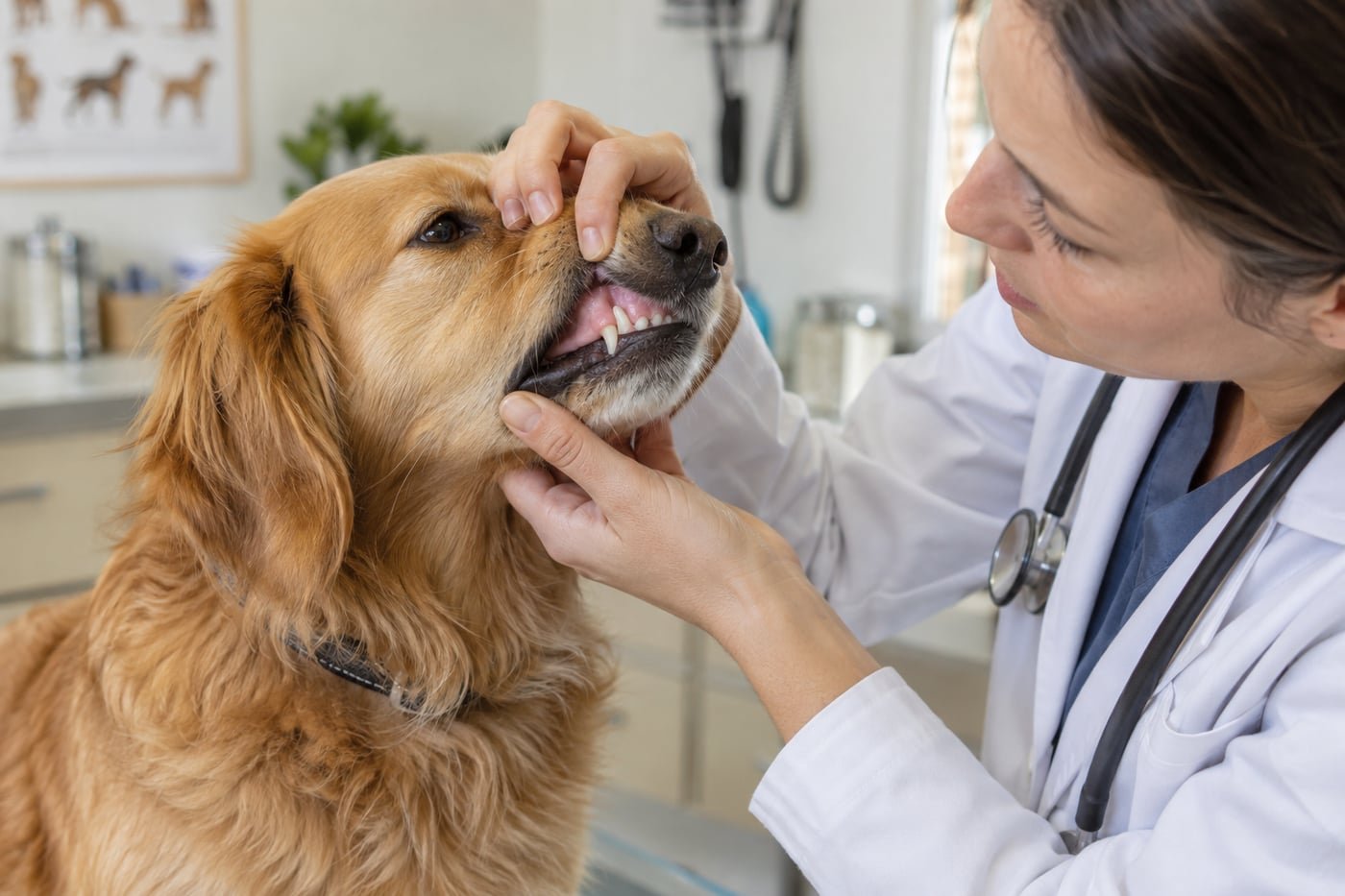
Home checks have limits
Gum moisture and skin elasticity can provide clues, but body condition, age and other factors affect them. You cannot reliably measure the percentage of dehydration at home with a skin-tent test. Do not keep repeating the test to decide whether a visibly ill dog needs help. [2]
If your dog resists being touched, stop. A painful or frightened dog may bite even when normally gentle. Observing behavior and reporting the illness history is safer than forcing an examination.
When to seek urgent help
Seek emergency care for collapse, marked weakness, altered responsiveness or breathing difficulty. Contact a veterinarian promptly if your dog cannot keep water down, refuses to drink while unwell or has ongoing fluid losses. Suspected heatstroke is an emergency, not just a need for extra water. Move an overheated dog out of the heat and call an emergency vet for immediate cooling and transport instructions. [1] [3]
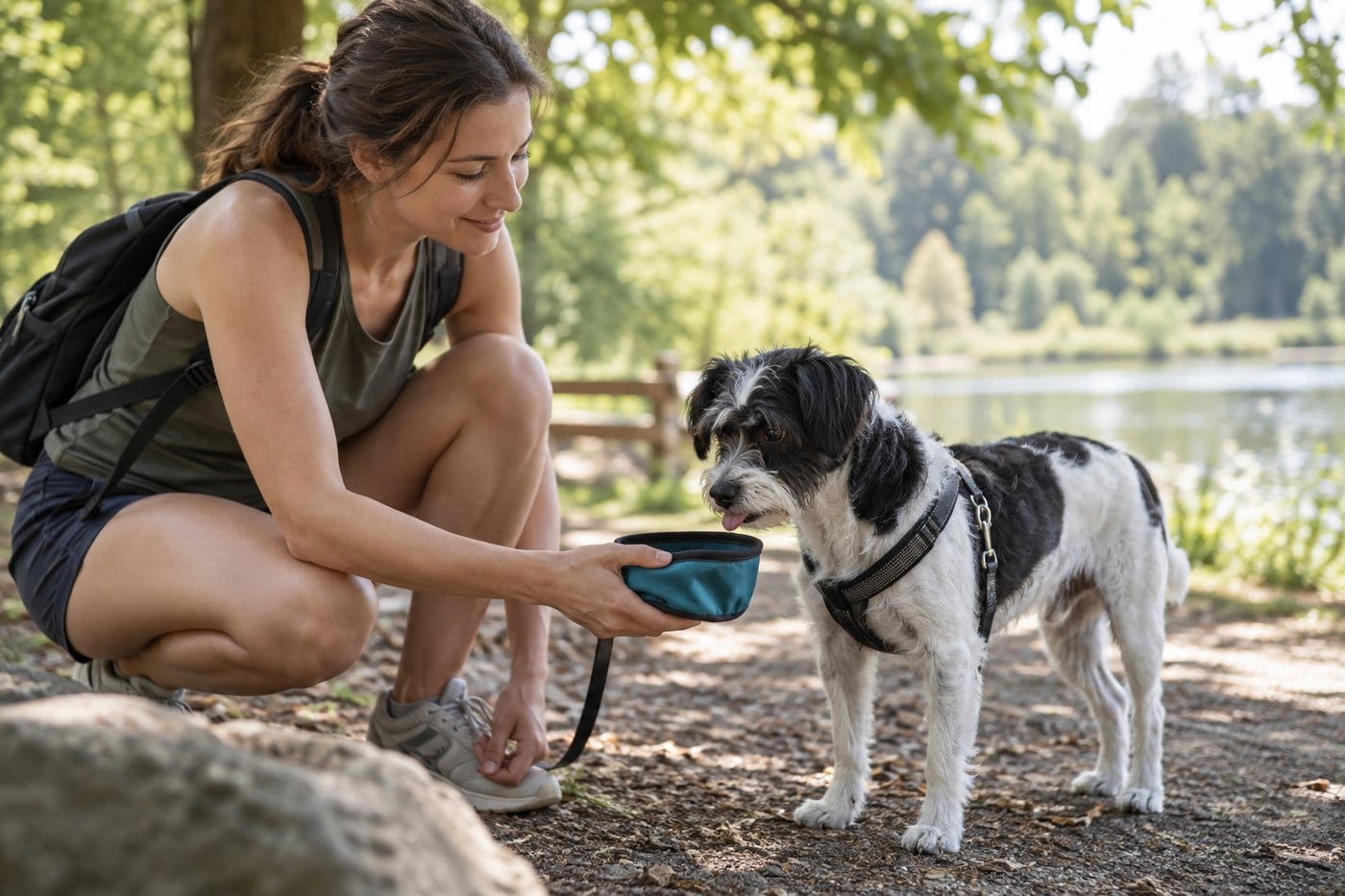
What to do while speaking with the clinic
Keep fresh water accessible to an alert dog that can drink normally. Do not force water into the mouth or syringe fluids into a weak or resisting dog. Ask your vet what is appropriate if drinking triggers vomiting. Avoid homemade electrolyte mixtures or human sports drinks unless the vet specifically recommends a suitable product.
- Record vomiting or diarrhea episodes and the last normal drink.
- Note whether urination has changed.
- Tell the clinic about heat exposure and recent exercise.
- List medications and known kidney, endocrine or other medical disease.
- Ask whether your dog should be seen immediately.
Questions about hydration
Does a drinking dog still risk dehydration?
Yes. Drinking does not guarantee that fluid intake matches losses. Continued vomiting, diarrhea or excessive urination can change the balance.
Can I treat severe dehydration at home?
No. An ill dog may need professionally assessed fluid treatment and management of the cause. The amount and route of fluids must fit the patient; more fluid is not automatically safer. [2]
What should I track after a vet visit?
Follow the discharge instructions and note drinking, food intake, urination, energy and any continuing losses. Ask for clear return precautions before leaving the clinic.
Related Dog Health guides
Sources
Content updated September 9, 2026. Educational information, not a diagnosis or a substitute for veterinary care.








Leave a Reply