
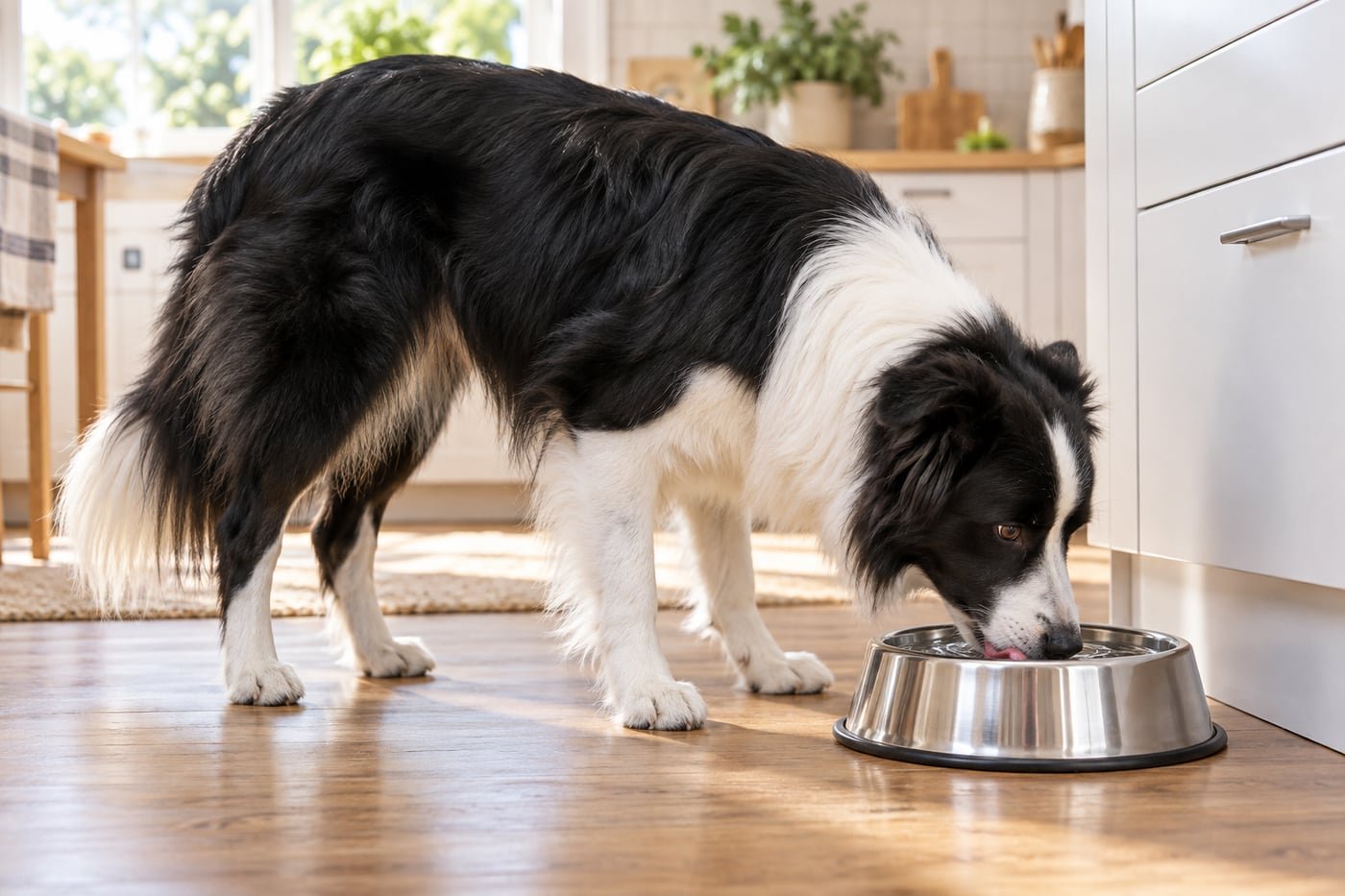
A dog drinking so much water that you keep noticing an empty bowl deserves a closer look. Warm weather, exercise and food moisture can affect drinking, but persistent unexplained thirst can also be a sign of disease. Do not restrict water to reduce accidents or test whether the thirst is real. [1]
Look at drinking and urination together
Tell your vet whether your dog is asking to go out more often, passing larger amounts of urine or having new overnight accidents. Increased drinking may compensate for water lost in urine. Kidney disease, diabetes and other hormonal or metabolic disorders are among the possibilities; the drinking pattern alone cannot distinguish them. [1] [2] [3]
Record weight changes, appetite and energy as well. A dog that is eating but losing weight or developing new symptoms needs more than a different water bowl.
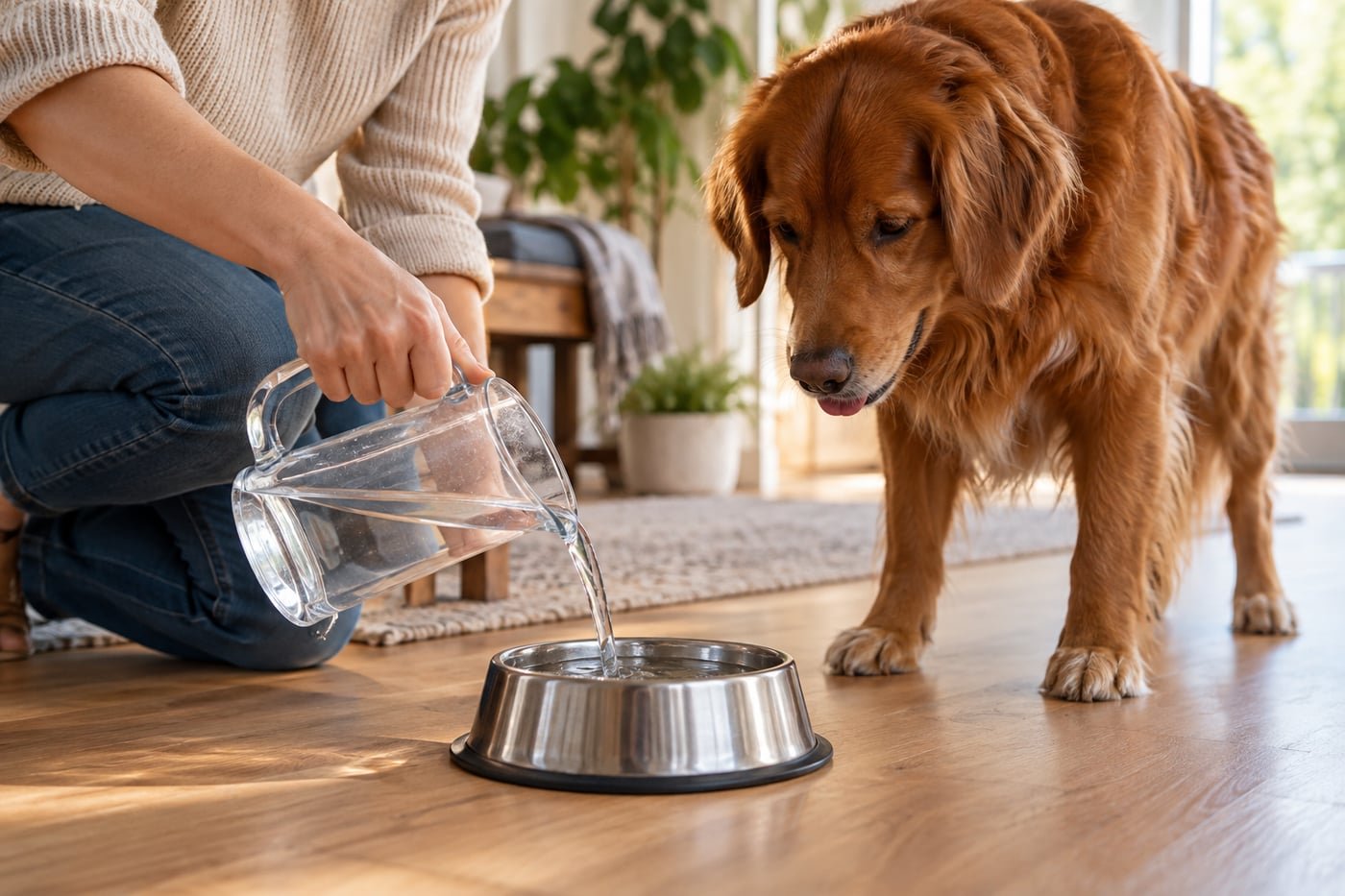
How to measure water without restricting it
Choose a normal day and note the time. Measure how much fresh water you put into the bowl, record each refill and subtract what remains at the end of the observation period. Keep refilling whenever needed. Write down spills and other water sources so the number is not presented as more precise than it is.
- Include outdoor bowls and water offered on walks.
- Note whether other pets share the bowl.
- Record unusually hot weather or extra activity.
- Tell the vet whether your dog eats wet food, dry food or both.
- List all medicines and supplements, including recent dose changes.
If you cannot measure accurately in a multi-pet home, say so. A rough account of a clear change is still useful; do not isolate or deprive your dog just to collect a number.
When should you arrange a veterinary visit?
Contact your vet about a persistent increase without an obvious explanation. Seek prompt help if it accompanies vomiting, poor appetite or marked lethargy, and emergency help for collapse or severe weakness. In an unspayed female, unusual thirst together with illness or vaginal discharge also needs urgent assessment because uterine infection is one possible cause. [1]
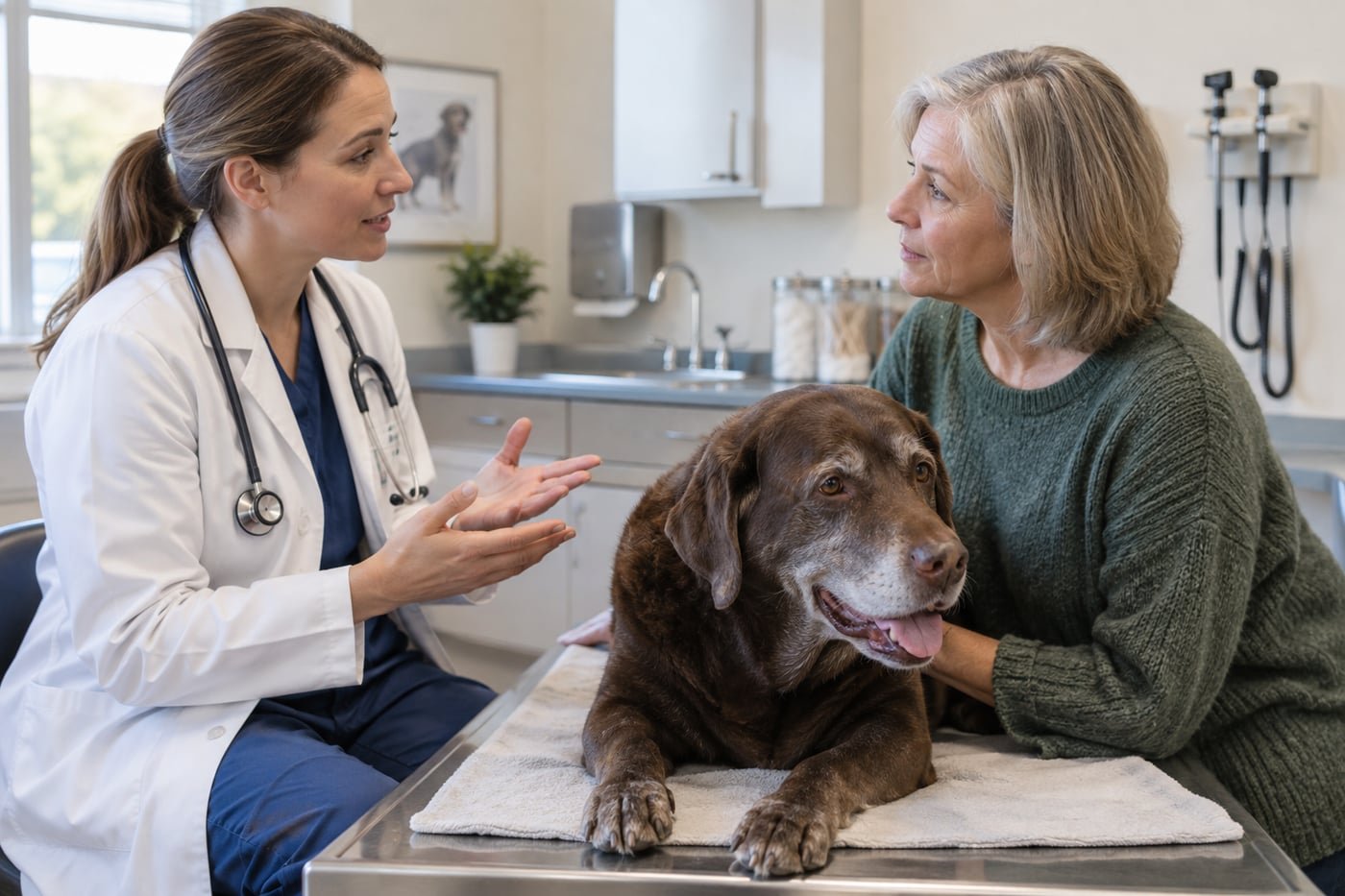
What testing may involve
Your vet may recommend blood tests and a urine assessment, then select further tests from the findings. Urine information is particularly useful alongside blood results. Ask whether to bring a sample and how the clinic wants it collected and stored. Never perform a water-deprivation test at home. [1]
Questions about excessive thirst
Does drinking more always mean diabetes?
No. Diabetes is one possibility among several. A change in thirst needs an examination and testing, not a diagnosis based on an internet symptom match.
Should I stop a medicine that increases thirst?
No. Tell the prescribing vet what changed and ask for advice. Abruptly stopping some medicines can be harmful, and an apparent side effect should not be assumed without checking.
Related Dog Health guides
Sources
- VCA: Testing for increased thirst and urination
- VCA: Chronic kidney disease in dogs
- VCA: Signs of diabetes in pets
Content updated September 9, 2026. Educational information, not a diagnosis or a substitute for veterinary care.








Leave a Reply