

Signs your dog may be sick include an unexplained change in appetite, drinking, energy, movement or toilet habits. Some dogs become quiet; others pace, hide or seem unusually irritable. A change does not identify a disease, but it is a reason to pay attention.
Which signs need emergency care?
Seek emergency veterinary help for breathing difficulty, collapse, severe weakness, abnormal pale or blue-gray gums, or a suddenly swollen abdomen with unproductive retching. Suspected poisoning also needs immediate professional advice. Do not wait to finish an online symptom checklist. [1]
Call ahead when possible. Describe what you can see and when it began, then follow the clinic’s transport instructions. If you are unsure whether to travel immediately, ask the emergency team rather than assuming it can wait until morning.
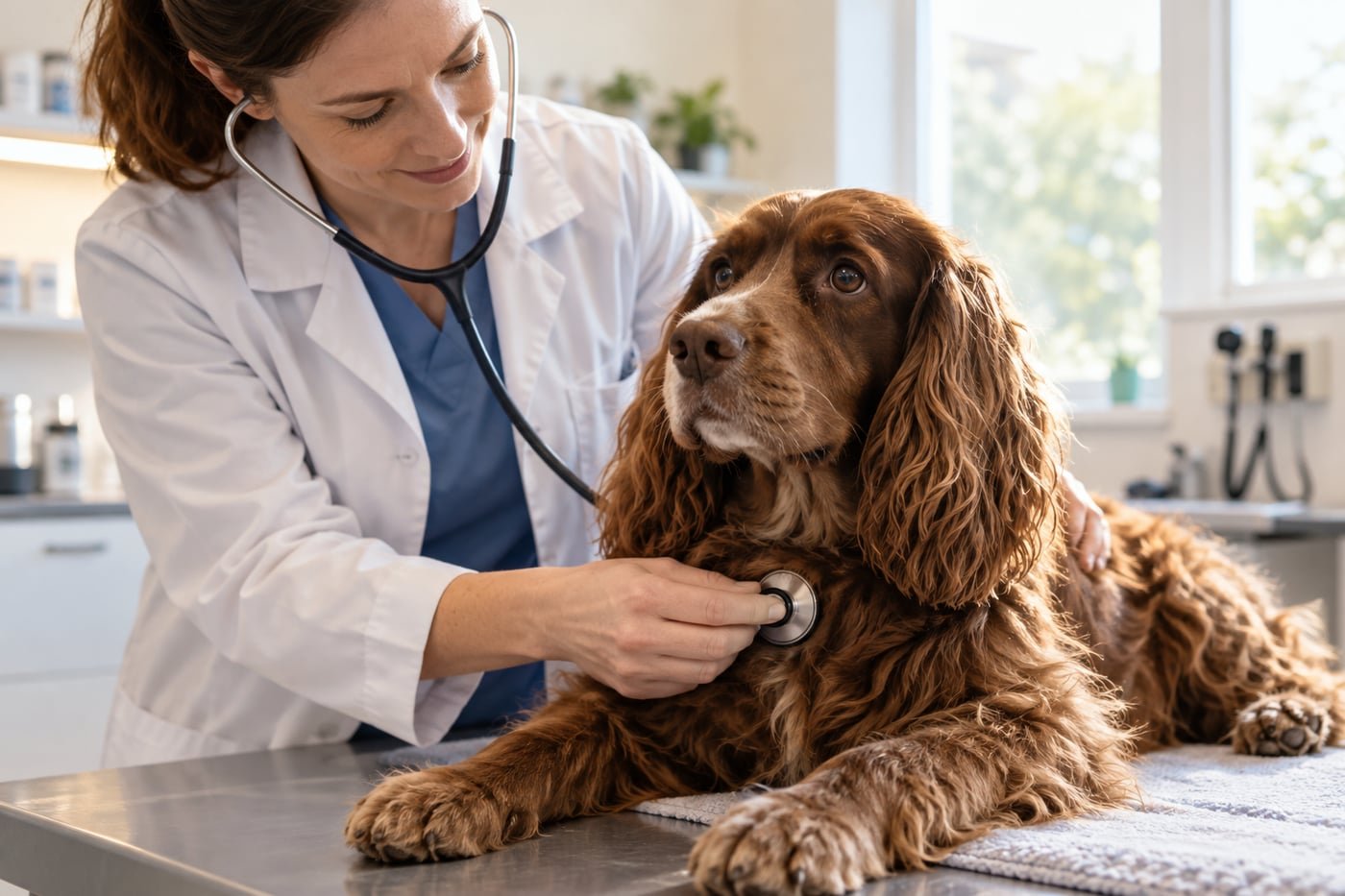
Subtle changes are worth recording
A dog in pain may be reluctant to climb stairs, jump into the car or have a familiar part of their body touched. Restlessness, reduced interaction and changes in posture can also signal discomfort. These signs are not specific to one illness, and a dog does not need to cry out to be in pain. [2]
Look for a pattern rather than trying to give it a medical name. “Stopped halfway through our normal walk twice this week” is more helpful than “getting lazy.” If several family members care for the dog, ask whether they noticed the same change.
Build a useful symptom timeline
- When was your dog last behaving normally?
- What changed first, and what happened afterward?
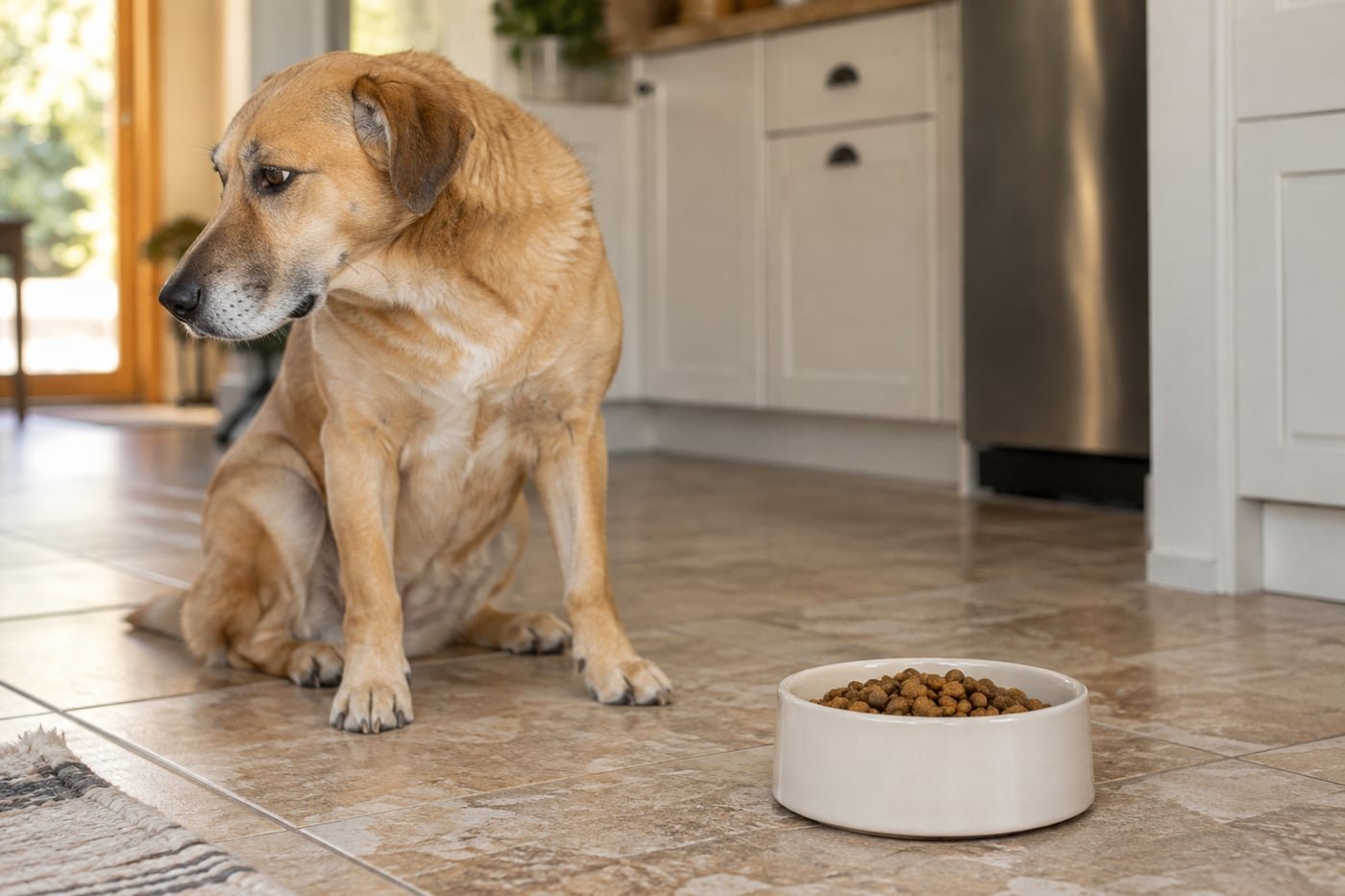
- Are food, water and urination different from usual?
- Has there been vomiting, loose stool, coughing or itching?
- Were there new medications, treats, travel or possible access to rubbish?
Take a short video if an intermittent behavior is hard to describe and filming will not delay care. Avoid forcing movement or handling a painful area to recreate a symptom.

What should you do while arranging advice?
Keep your dog in a comfortable, supervised space. Do not give leftover veterinary medicines or human painkillers unless your veterinarian instructs you to. Gather medication packaging, food details and any relevant photographs before the appointment. Routine care includes watching for changes between examinations, not just attending annual visits. [3]
Common questions
Can a sick dog still eat treats?
Yes. Accepting a favorite treat does not prove that a dog is well. Tell your vet about the difference between normal meals and treats, especially if chewing seems difficult or the dog also acts uncomfortable.
Should I wait a full day before calling?
There is no safe waiting rule for every symptom. Emergency signs require immediate help. For milder changes, call for advice about your dog’s age and medical history; puppies, frail seniors and dogs with existing disease may need earlier assessment.
Related Dog Health guides
Sources
- AAHA: Is this a pet emergency?
- Cornell: Recognizing pain in dogs
- Merck Veterinary Manual: Routine dog health care
Content updated September 9, 2026. Educational information, not a diagnosis or a substitute for veterinary care.







Leave a Reply