
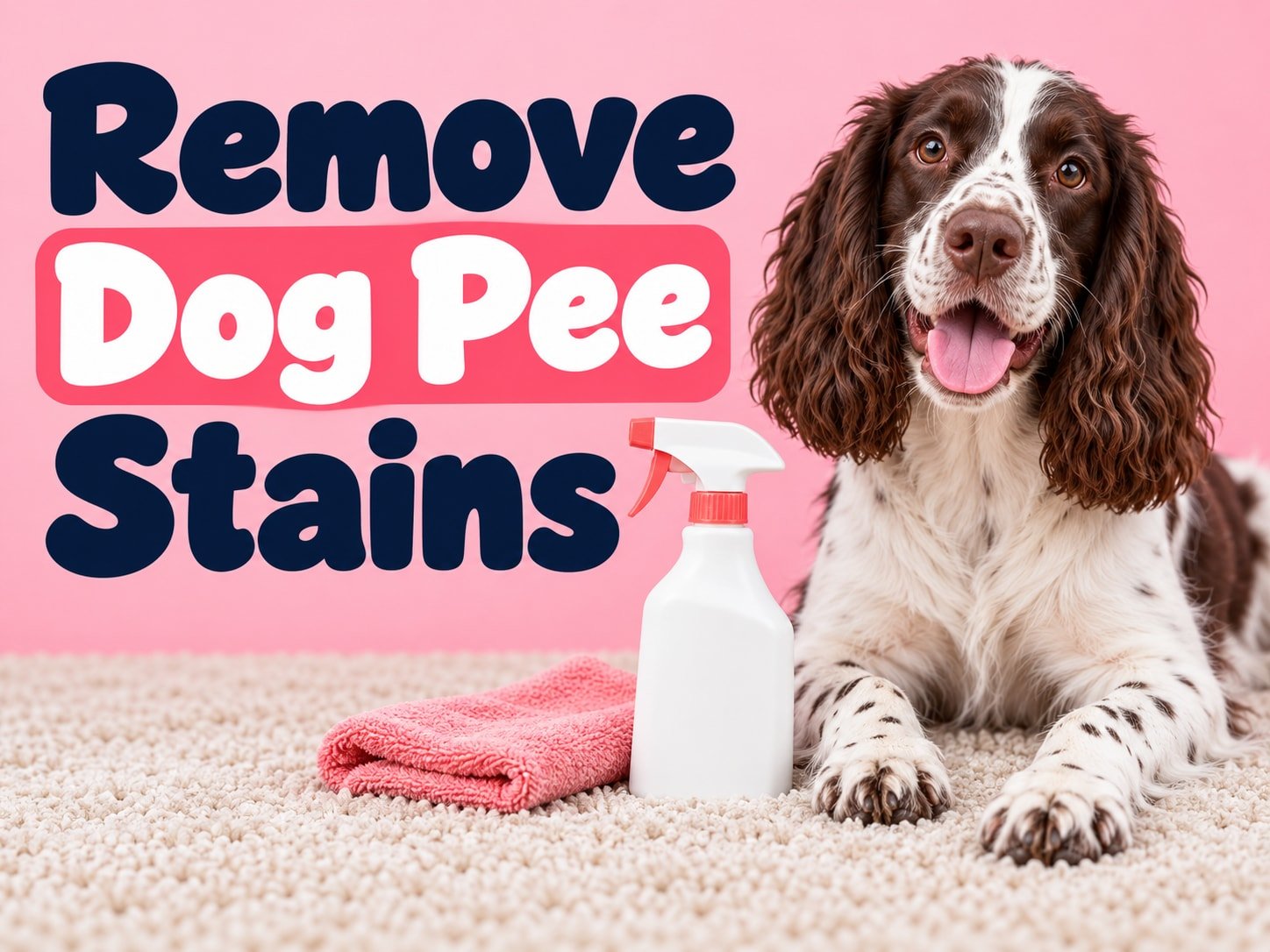
Blot fresh dog urine promptly, then use a carpet-compatible enzyme cleaner according to its instructions. Persistent smell may come from padding or another layer below the visible stain, so surface cleaning may not be enough.
Fresh urine versus an old stain
On a phone, swipe the table sideways to read every column.
| Situation | Best first move |
|---|---|
| Fresh wet spot | Blot with absorbent towels, working inward; do not scrub. |
| Unknown older spot | Locate the full affected area, inspect the carpet care label and test a compatible enzyme cleaner. |
| Odor returns after drying | Consider contamination in backing or underlay; seek professional advice if surface treatment fails. |
Use a product labeled for pet urine and follow its dilution, contact time and re-entry instructions. Avoid steam or heat before treating urine, and do not mix cleaners. Separate the dog until the surface is safe. Photograph or note repeated accidents and share changes in thirst, frequency or straining with a veterinarian. Straining to urinate with little or no output requires urgent care.
Blot a fresh accident
Use absorbent towels to lift as much liquid as possible without vigorous rubbing. Work carefully and keep the dog elsewhere while you clean. Note the full affected area so you do not treat only the centre of the visible mark.
Use the right product and contact time
Choose an enzyme cleaner labelled for pet urine and your surface. Patch-test first, apply as directed and allow the stated working time. Avoid steam cleaning a urine stain before it has been properly treated. Do not mix cleaners or add other chemicals to the product.
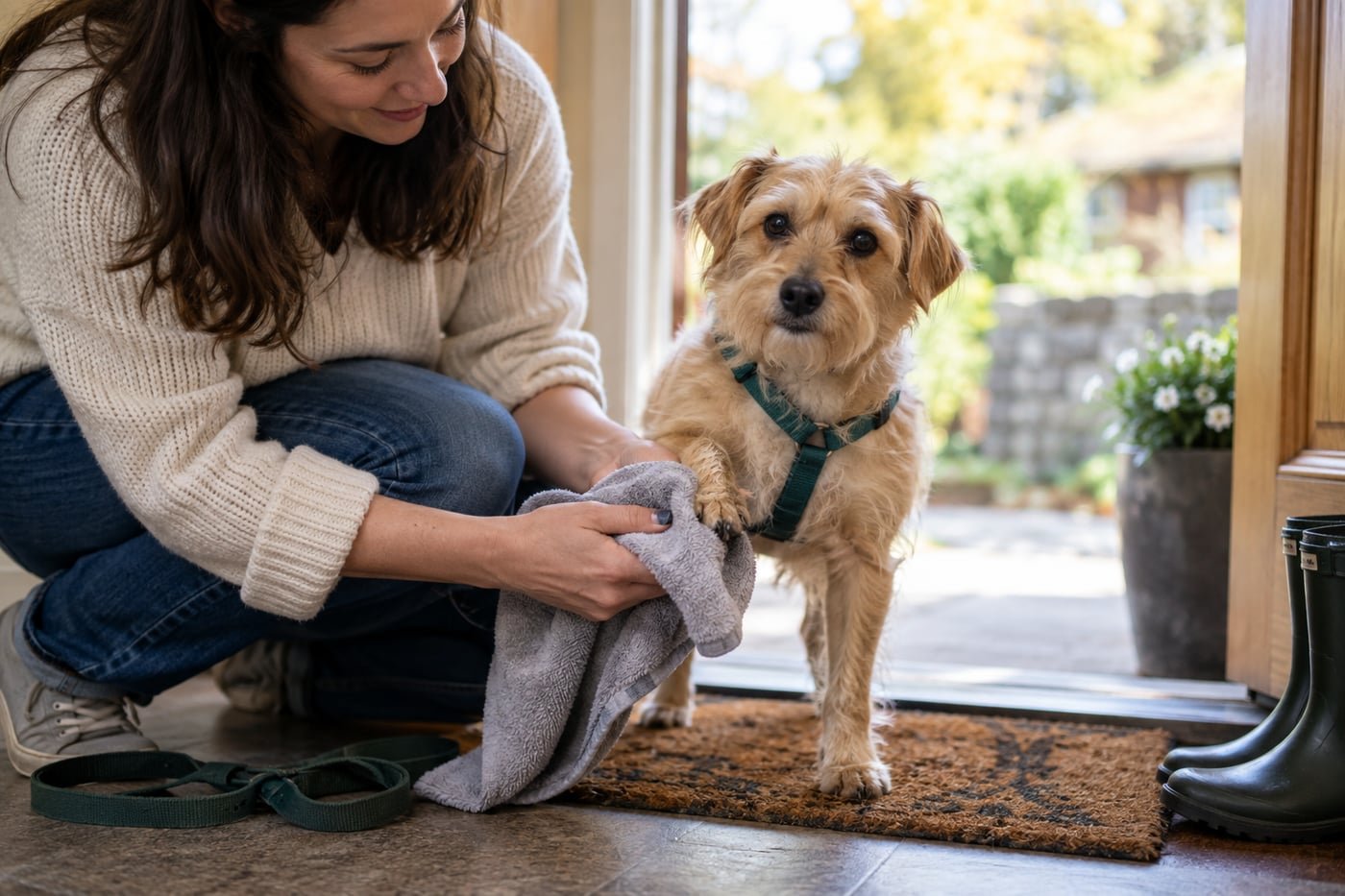
How should you approach an older urine stain?
Identify the affected area as accurately as possible and review what products have already been applied. Check the carpet care label and cleaner instructions before adding anything else. Some materials need professional treatment. If smell returns after the surface dries, tell the cleaner that urine may have reached the backing, pad or floor beneath it. Avoid promising yourself that one more surface spray will fix every depth of contamination.
Check beneath a persistent stain
If smell returns after drying, urine may have reached padding or another layer. A professional can assess whether deeper cleaning or material replacement is needed. Keep the area inaccessible until the treatment is complete and the label says it is safe to return.
Address repeat accidents
Review the toilet schedule and reward successful outdoor trips. New accidents in a previously house-trained dog deserve a veterinary discussion. Straining with little or no urine is urgent. Do not punish accidents; identify whether the dog needs more opportunities, training support or medical care.

How can you prevent cleaning from becoming a repeated cycle?
Block access while the area is being treated and dried, then review the dog’s toilet routine. Record when accidents happen, how often the dog goes out and whether urgency or discomfort is present. For a newly adopted dog, agree on one reward-based routine across the household. For a previously house-trained dog with new accidents, arrange a veterinary discussion rather than assuming deliberate misbehaviour.
Your practical checklist
- Move the dog away and blot as much fresh liquid as possible.
- Read the flooring and cleaning-product instructions and patch-test.
- Apply the compatible product with the stated contact time.
- Keep the area inaccessible until the label’s drying and re-entry requirements are met.
- Check for persistent deep contamination and address the reason for repeat accidents.
Common questions and answers
Should I steam-clean a urine stain immediately?
Avoid using heat or steam before the urine has been appropriately treated, because it can make odour removal harder. Follow the carpet and product guidance. A professional can advise on extraction or deeper treatment for an older or extensive problem.
Is any pet-labelled spray suitable for every carpet?
No. A pet label does not override the flooring’s care instructions. Check compatibility, patch-test and follow dilution and contact-time directions. Keep children and pets away for the period specified by the manufacturer.
Why does the smell return in humid weather?
A remaining source in the carpet or underlying layers may become noticeable again. That does not necessarily mean the dog had another accident. Review the affected material and seek professional assessment instead of automatically applying a different surface fragrance.
When do urine accidents need veterinary attention?
New or recurring accidents, discomfort or changes in drinking and urination deserve veterinary advice. Straining while producing little or no urine is urgent. Keep a record of the pattern, but do not delay care to complete it.
Check our previous articles
Continue with these related guides from My Dog Recipes:
Sources and further reading
- Humane Society of Southern Arizona: Stains and odours
- ASPCA: Dog grooming tips
- The Humane Society: Removing pet stains
Updated September 29, 2026. General educational guidance; individual health and feeding decisions depend on your dog’s needs.





Leave a Reply