
Dog first aid begins with recognising an emergency, protecting the injured dog and helper, and arranging veterinary care. Prepare contact details and supplies before an accident, and follow the clinic’s instructions during transport.
Emergency signs that should change your plan immediately
On a phone, swipe the table sideways to read every column.
| Sign | Response |
|---|---|
| Breathing difficulty, collapse, seizure, severe bleeding or major trauma | Call an emergency veterinarian now and arrange transport. |
| Repeated unproductive retching with a swollen abdomen | Treat as a possible bloat emergency; do not wait for a home remedy. |
| Possible poisoning | Save the packaging, record amount and time, and call a veterinarian or poison service promptly. |
| Small wound without other illness | Ask your clinic how to clean and cover it; a bite or deep wound still needs examination. |
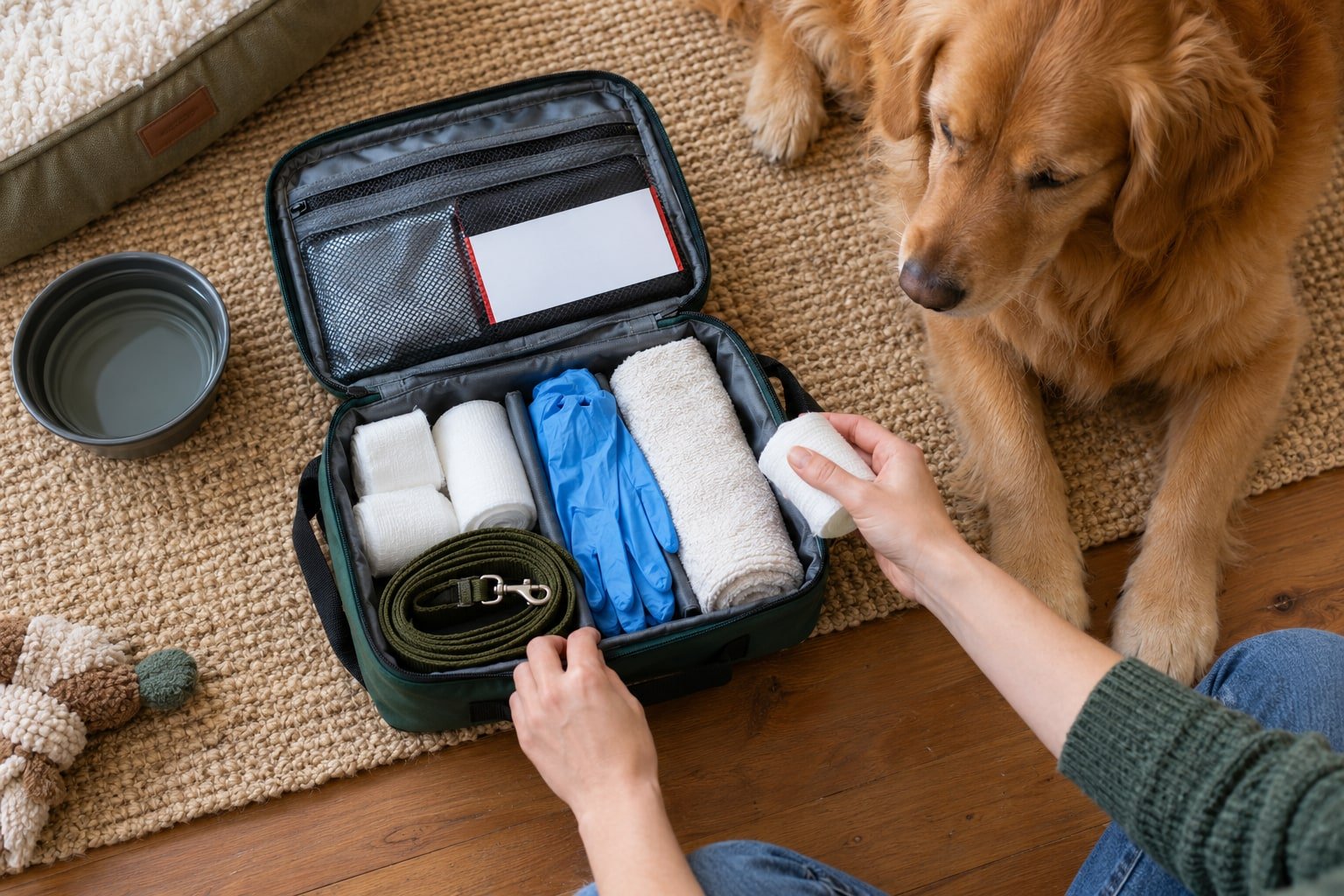
Keep an emergency clinic number, vaccination record, current medications and a pet first-aid kit accessible. A kit can hold gloves, gauze, bandage material, clean towels and a thermometer. Know the route to the emergency clinic before you need it. Do not give human medicines or induce vomiting without specific veterinary direction.
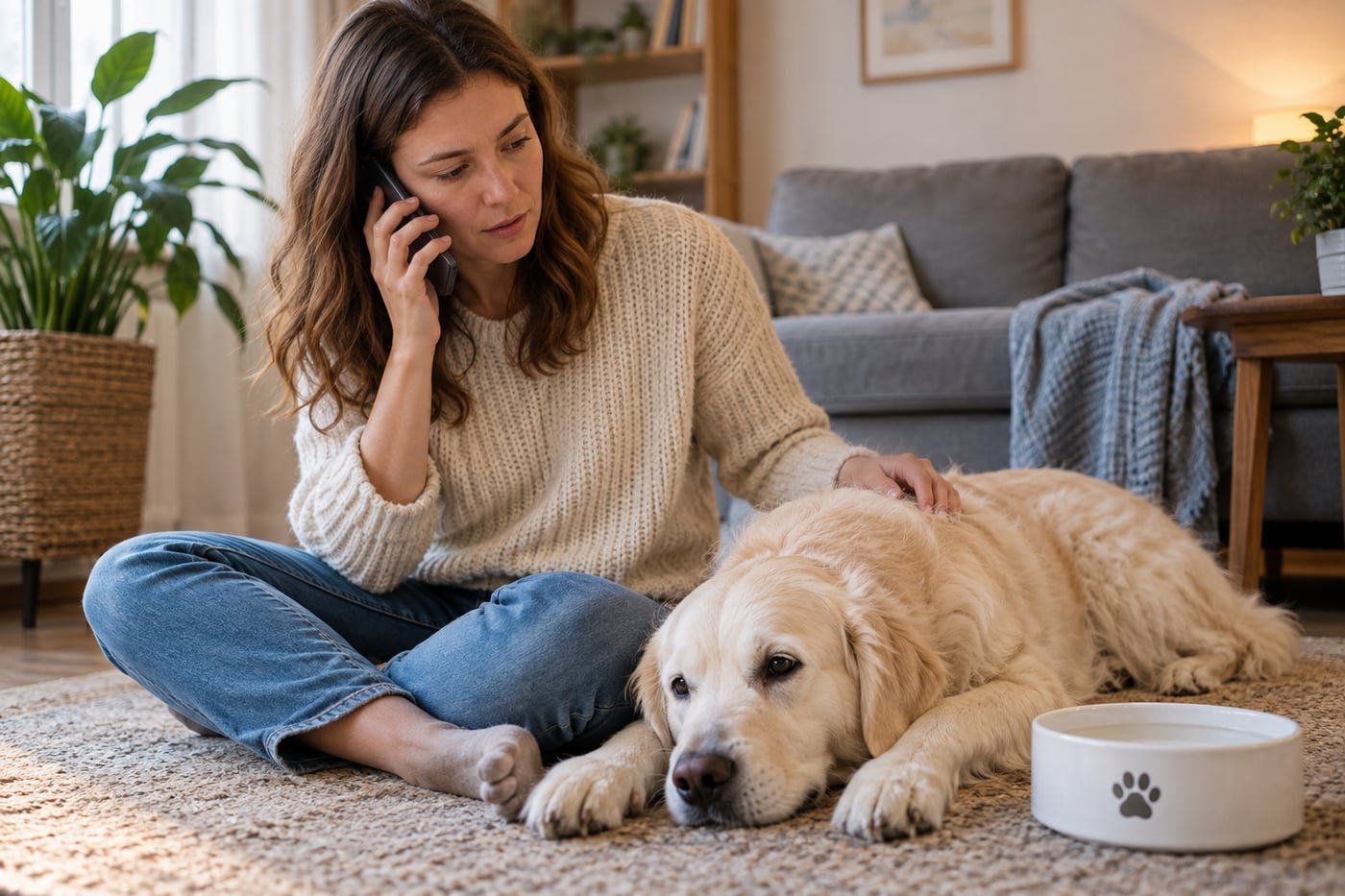
When calling, describe what happened, when it happened, the dog’s weight, breathing and responsiveness, and what you have already done. This lets the clinic prepare for arrival.
Make a practical emergency kit
Keep your veterinary and emergency clinic numbers, medication list, clean gauze, gloves, towels and a suitable carrier or transport plan together. Check the kit periodically. Store supplies where adults can reach them quickly, and tell a pet sitter where everything is kept.
Call promptly for serious signs
Breathing difficulty, collapse, uncontrolled bleeding, suspected poisoning and repeated unproductive retching require urgent veterinary advice. Call ahead when possible so the clinic can prepare. Describe what you can see rather than guessing the diagnosis.
What information helps an emergency team triage your dog?
Describe the observable problem, when it started and what happened beforehand. Have the dog’s approximate weight, regular medicines and known conditions ready. For a possible toxin exposure, keep the package and estimate how much is missing. If another person is available, ask them to gather records while you arrange transport. Do not delay departure to create a perfect written history.
Protect both dog and helper
An injured dog may bite from pain or fear. Avoid putting your face near the mouth or forcing a position. Apply steady pressure with clean material to external bleeding while arranging care. Move the dog carefully and follow the clinic’s transport guidance. Do not give human pain medicines.
Practise before you need it
Take a recognised pet first-aid course for hands-on skills such as safe handling and resuscitation. Keep a brief written emergency plan near the lead or carrier. Review which clinic is open at night and how you would get there if your usual driver were unavailable.
How can you prepare for an emergency away from home?
Save the address of a nearby emergency clinic before a trip, check its opening arrangements and keep enough phone charge for navigation. Make sure a sitter has permission and a way to contact you. Practise loading a comfortable dog into a carrier or vehicle so the equipment is familiar. A towel, lead and accessible records are more useful when everyone knows where they are.
Your practical checklist
- Assess immediate dangers to yourself and the dog before approaching.
- Contact emergency care for severe signs or suspected poisoning.
- Describe observations clearly and follow the clinic’s immediate advice.
- Use clean material and steady pressure for external bleeding while arranging care.
- Transport carefully; do not give human medicines or unprescribed treatments.
Common questions and answers
Which signs should not wait for a routine appointment?
Breathing difficulty, collapse, severe bleeding, suspected poisoning and a swollen abdomen with repeated unproductive retching are urgent examples. This is not an exhaustive list. If the dog appears seriously distressed, contact emergency care rather than waiting for an online answer.
Should I give a painkiller from my medicine cupboard?
No. Human pain medicines can be dangerous for dogs, and an unsuitable drug can complicate treatment. Tell the clinic if anything has already been given, including the product strength, amount and time. Bring the packaging.
Can a friendly dog bite when injured?
Yes. Pain and fear can change handling tolerance. Keep your face away from the mouth and avoid unnecessary manipulation of a painful area. Ask the clinic for safe transport guidance suited to the injury rather than improvising forceful restraint.
Can an online article teach complete pet CPR?
An article cannot replace hands-on instruction and assessment of the situation. Take a recognised pet first-aid course before an emergency. During a real collapse, contact an emergency veterinary team for immediate guidance and arrange urgent transport.
Check our previous articles
Continue with these related guides from My Dog Recipes:
Sources and further reading
Updated September 29, 2026. General educational guidance; individual health and feeding decisions depend on your dog’s needs.










Leave a Reply