

Dog sleeping positions can reflect comfort, temperature and available space, but they do not reliably reveal personality or diagnose illness. Pay more attention to changes in your dog’s normal sleep and ability to settle.
What sleeping positions may tell you—and what they cannot
On a phone, swipe the table sideways to read every column.
| Position | Possible everyday explanation | Do not overlook |
|---|---|---|
| Curled up | Conserving warmth or choosing a compact place | Difficulty settling or a new reluctance to move. |
| On the side | Comfortable rest | Sudden weakness if the dog cannot rise normally. |
| Sprawled on a cool floor | Looking for a cooler surface | Heavy panting or heat exposure. |
| Frequently changing position | Normal brief adjustment, or possible discomfort | Pain signs, coughing, restless nights or trouble lying down. |
One photo cannot prove that a dog feels safe, loves you or has a particular personality. Watch changes from the dog’s normal sleep, mobility, appetite and breathing. A new pattern of restlessness, crying, stiff movement or inability to get comfortable warrants a veterinary conversation.
Watch the individual pattern
Notice which resting places your dog chooses and whether they switch comfortably between positions. A dog may curl in one bed and stretch on the floor later. Compare today’s behaviour with that dog’s usual routine rather than assuming every dog should sleep in the same way.
Offer a comfortable choice
Provide a quiet resting area and enough space to turn and stretch. Keep access easy and the surface stable. Let the dog choose between suitable places where practical. A busy walkway may be convenient for people but a poor place for uninterrupted rest.
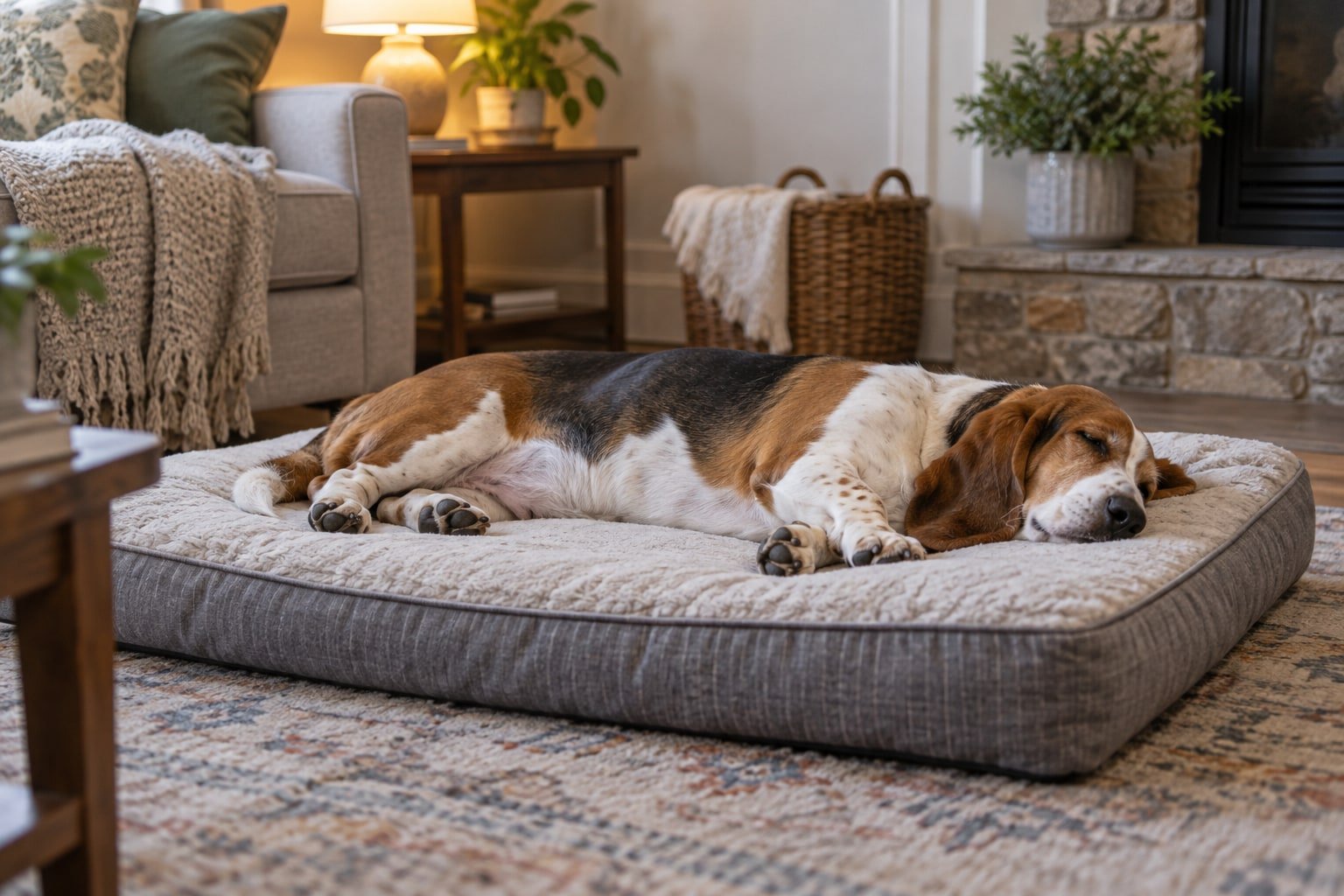
What can you reasonably learn from common positions?
A curled dog may prefer a compact resting space, while a stretched-out dog needs more usable room. Side sleeping and belly-up resting can be ordinary choices in a comfortable environment. Avoid turning these observations into certainty about trust, dominance or happiness. A dog can change positions during the same nap, and one photograph leaves out the surrounding conditions and the dog’s usual habits.
Protect undisturbed sleep
Teach children and visitors to call a resting dog from a distance rather than startling or climbing onto them. Keep the bedtime routine predictable. If you need to move the dog, wake them gently and encourage them to get up instead of pulling them from the bed.
Pay attention to a new change
Repeated difficulty settling, unusual restlessness or trouble rising can warrant a veterinary check, particularly when combined with other changes. Take a video and note timing. Laboured breathing or distress needs urgent attention; do not dismiss it as an unusual sleeping style.
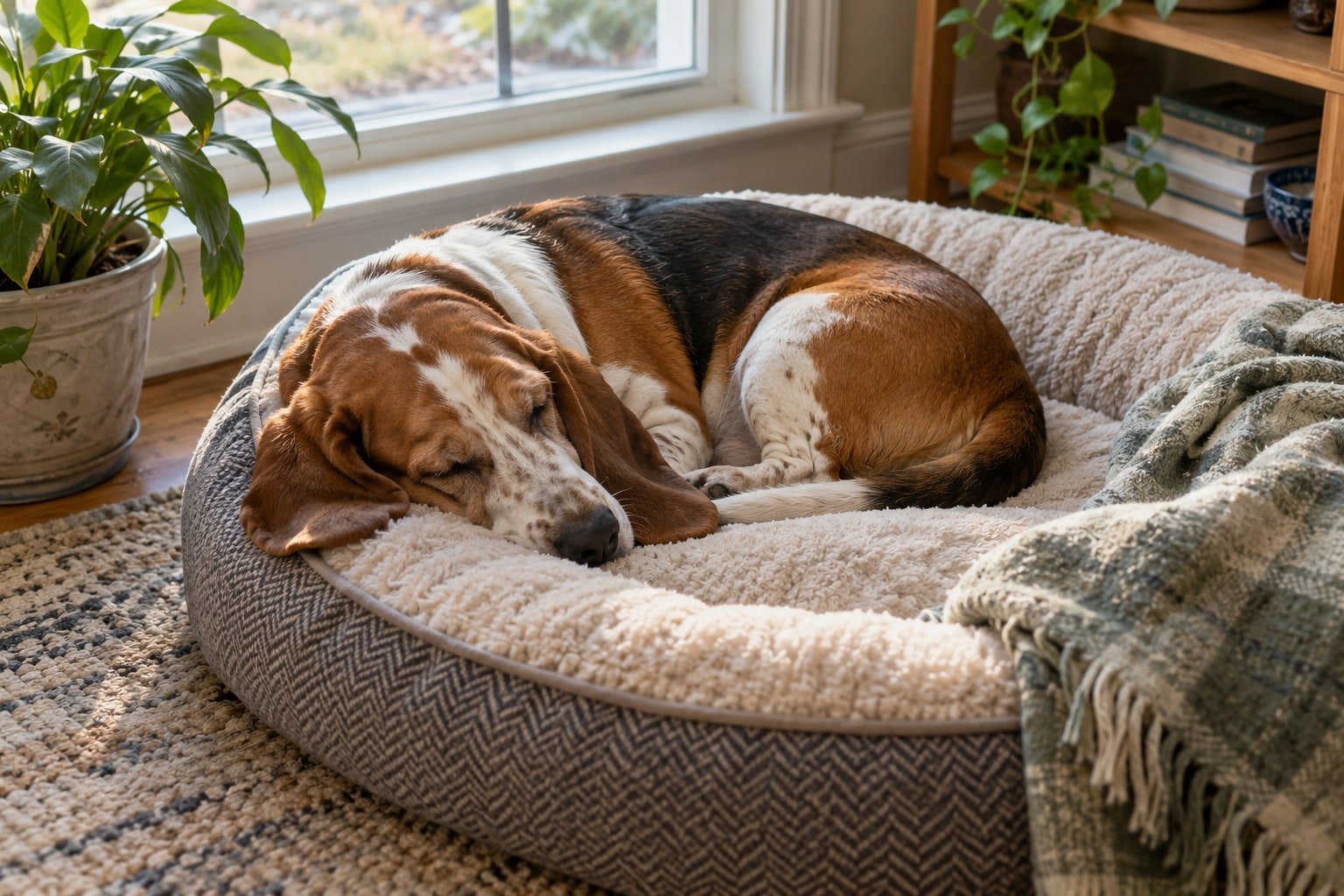
How can you improve the sleeping setup?
Watch where your dog naturally settles, then check whether that place is quiet, easy to reach and large enough. Offer a stable bed away from doors that open suddenly or routes used by running children. If a dog moves between warmer and cooler spots, provide suitable choices where practical. Keep the routine consistent, but let the dog choose a comfortable position rather than repeatedly repositioning them.
Your practical checklist
- Observe the dog’s normal sleeping places and positions over several days.
- Check that the bed allows comfortable turning and stretching.
- Keep access clear and avoid slippery approaches where possible.
- Protect resting time from unwanted handling or startling interruptions.
- Record new restlessness, difficulty rising or breathing changes for the vet.
Common questions and answers
Does belly-up sleeping prove my dog trusts me?
It can occur in a comfortable setting, but one posture does not prove a particular emotion. Consider the whole relationship and behaviour over time. There is no need to test the interpretation by touching or disturbing a sleeping dog.
Should I worry if my dog changes position often?
Occasional repositioning is normal. A marked new pattern of repeatedly getting up, struggling to settle or appearing uncomfortable deserves attention, especially with other changes. Record what you see and discuss it with your veterinarian.
Should I wake a dog who moves during a dream?
Avoid startling or physically grabbing a sleeping dog. If you are worried about unusual movements, safely record a naturally occurring episode and ask your vet. Do not assume every movement is a dream or attempt to provoke another episode.
Can a new bed solve disturbed sleep?
A suitable bed can improve the resting setup, but it cannot explain every new sleep change. Pain, illness, environment and routine may all matter. If restlessness or difficulty rising persists, get veterinary advice rather than repeatedly buying beds.
Check our previous articles
Continue with these related guides from My Dog Recipes:
Sources and further reading
Updated September 29, 2026. General educational guidance; individual health and feeding decisions depend on your dog’s needs.










Leave a Reply