

Plain carrots, green beans, cucumber and cooked pumpkin can suit many dogs as small extras. The best vegetables for dogs are simple to prepare, easy to portion and compatible with the individual dog’s diet.
Vegetables worth considering
On a phone, swipe the table sideways to read every column.
| Vegetable | Why choose it? | How to serve |
|---|---|---|
| Carrot | Crunch or a soft cooked texture | Chop; steam for dogs that struggle with hard pieces. |
| Green beans | Low-calorie volume | Plain fresh or cooked; no salted canned version. |
| Broccoli | Variety and fiber | Very small soft florets; too much may cause gas. |
| Cucumber | Water-rich crunch | Wash and cut into manageable pieces. |
| Peas | Small soft bites | Plain cooked or thawed; no pea dishes with onion. |
| Pumpkin | Soft fiber source | Plain cooked flesh or 100% puree, not pie filling. |
| Sweet potato | Soft starchy option | Fully cook, peel and keep the portion small. |
| Zucchini or yellow squash | Mild, water-rich option | Wash and serve plain in small pieces. |
These ingredients can add texture or help replace a higher-calorie treat, but they are not required for a dog eating a complete diet. “Healthy vegetable” does not mean unlimited quantity: beans and broccoli can cause gas, and starchy vegetables add calories.
Vegetable hazards
Do not give onion, garlic, chives, leeks or foods seasoned with them. Keep corn cobs away even if kernels are eaten, because the cob can cause obstruction. Avoid raw potato, green potato and unknown wild mushrooms. Prepared salads and canned vegetables may contain salt, butter or seasoning. When in doubt, choose a plain, well-known vegetable and ask your veterinarian about a dog with a medical diet.
Simple options to try
Plain carrots, green beans, cucumber and cooked pumpkin are useful starting options for many dogs. Remove tough or inedible parts and cut pieces to suit your dog. Cooking hard vegetables until soft can make them easier to serve. Use plain pumpkin rather than sweetened pie filling.
Keep seasonings separate
Steam or cook in water and set aside your dog’s portion before seasoning the family meal. Skip onion, garlic, rich sauces and heavily salted additions. Check frozen or canned products for added ingredients. A bag containing vegetables plus a sauce is different from a bag of plain vegetables.
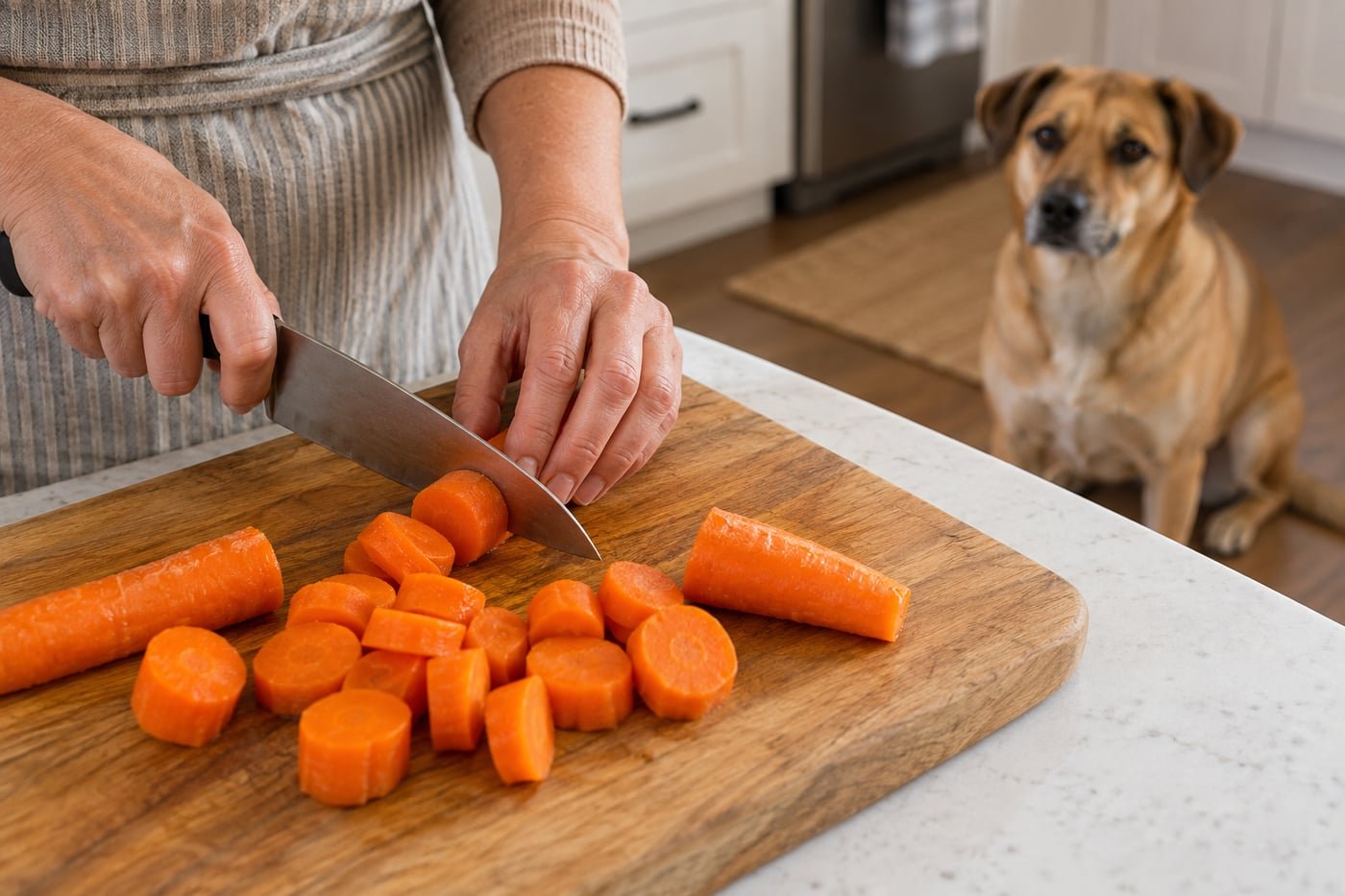
Should vegetables be raw or cooked?
Texture is a practical consideration. Soft cooked pieces may be easier for some dogs than firm raw chunks. Steam or cook without added seasoning, let the food cool and cut it appropriately. Do not rely on chewing to break down a piece that your dog tends to swallow whole. If dental discomfort changes what your dog can manage, ask the vet rather than only changing the texture.
Watch tolerance rather than chasing variety
A small sample is enough to start. Keep a note of new extras and any change in appetite or stools. If your dog follows a prescription or elimination diet, ask the treating veterinarian before adding vegetables. Individual needs can matter more than a general list of suitable foods.
Use vegetables in the right role
Vegetable toppers are extras, not a balancing supplement for meat-based homemade meals. A complete homemade diet needs a properly formulated recipe with specific amounts. For everyday preparation, portion extras separately and keep the dog’s main meal consistent.
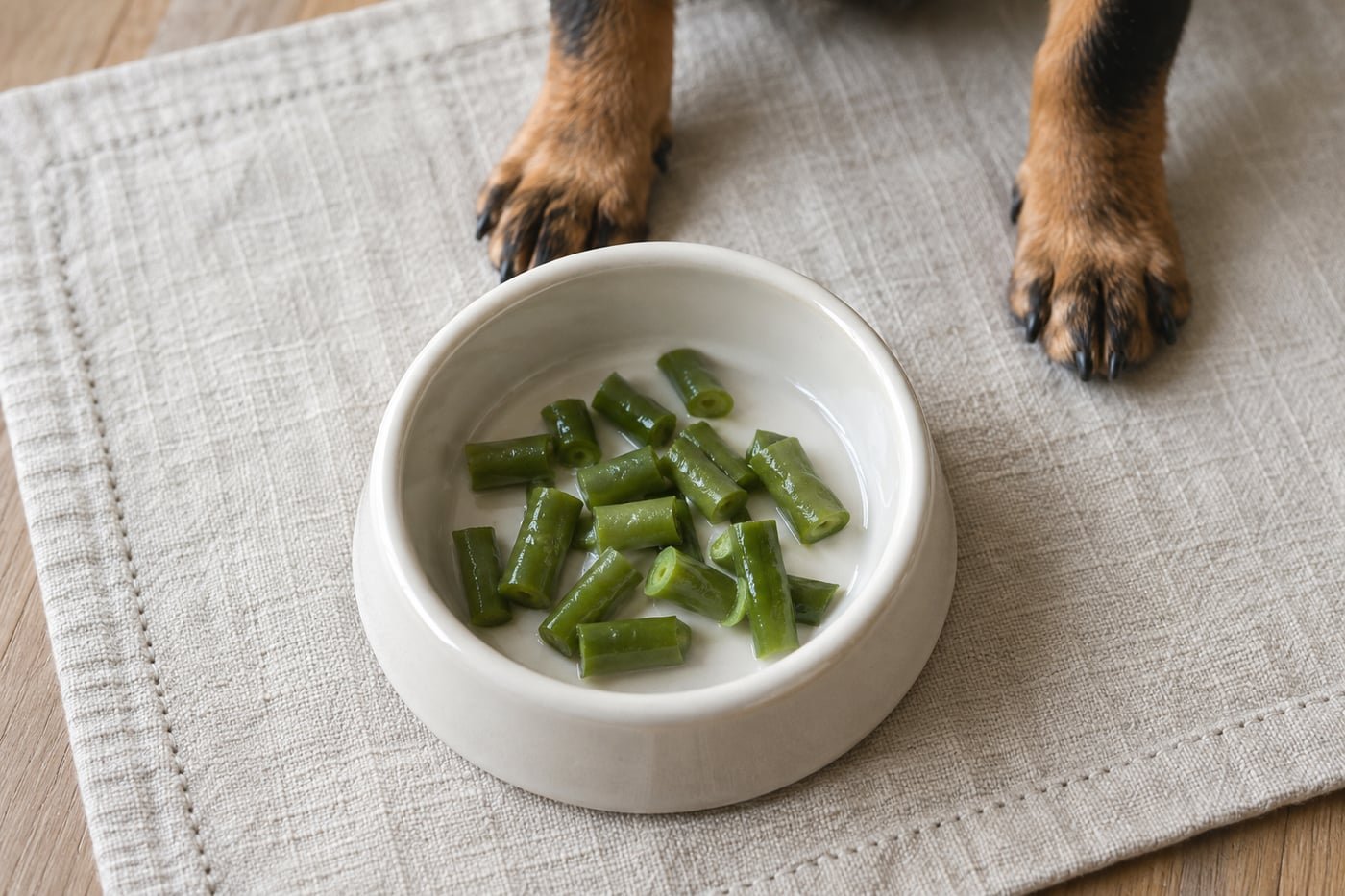
How can you batch-prepare small extras?
Prepare a plain portion separately from the family meal and divide it into small containers. Label the ingredient and preparation date so another person does not confuse it with seasoned leftovers. Keep the main diet stable while trying a new vegetable. If you want vegetables included as part of a full homemade diet, use a professionally formulated recipe rather than estimating a meat-to-vegetable ratio.
Your practical checklist
- Choose one plain vegetable and inspect it for spoilage.
- Wash, remove tough or inedible parts and cook if a softer texture is needed.
- Cool completely before offering a small taste.
- Store the dog’s plain portion separately from seasoned family food.
- Track tolerance and count it with the day’s other extras.
Common questions and answers
Are frozen vegetables suitable for dogs?
Plain frozen vegetables can be convenient. Read the ingredients: seasoned mixes, sauces and onion-containing blends are different products. Cook or soften them as appropriate and cut manageable pieces. Frozen packaging does not remove the need to check the actual ingredients.
Can vegetables replace part of every meal?
Do not substantially dilute a complete diet without a feeding plan. Replacing a large amount of food with low-calorie vegetables can change nutrient intake. Ask your vet for a measured plan if weight management is the reason you want to make that change.
Is pumpkin a treatment for every stomach problem?
No. Plain pumpkin is a food, and adding it does not identify or treat every cause of diarrhoea or constipation. Repeated straining, vomiting, pain or persistent stool changes need veterinary advice instead of progressively larger spoonfuls of pumpkin.
Does a colourful vegetable mix balance homemade dog food?
No. Variety alone does not establish adequate calcium, vitamins, minerals or essential fatty acids. A complete homemade diet requires calculated ingredients and supplements. Vegetables can be part of that recipe, but the recipe needs formulation as a whole.
Check our previous articles
Continue with these related guides from My Dog Recipes:
Sources and further reading
Updated September 29, 2026. General educational guidance; individual health and feeding decisions depend on your dog’s needs.







Leave a Reply