

To remove dog smell from the house, find and clean the source: bedding, equipment, trapped moisture or toilet accidents. Dry cleaned fabrics fully and investigate a persistent new smell coming from the dog.
Find the source of the smell first
On a phone, swipe the table sideways to read every column.
| Where odor starts | What to do |
|---|---|
| Bedding and blankets | Wash according to the care label; dry completely before reuse. |
| Food or water bowls | Wash and dry regularly, including mats and the surrounding floor. |
| Carpet or upholstery | Locate hidden accidents and use a surface-compatible pet stain product with the stated contact time. |
| The dog’s ears, mouth or skin | Arrange a veterinary assessment if odor is new, strong or persistent. |
Fragrance can mask a problem without removing it. Ventilate while cleaning, keep the dog away from chemicals until surfaces are safe, and never mix household cleaners. If smell returns after an accident area dries, liquid may have reached the padding. Repeated bathing of a dog with an ear or skin problem will not fix the underlying cause.
Wash and dry the resting area
Launder washable bedding and throws according to their care labels, and let them dry fully before reuse. Check beneath cushions and around the bed for trapped debris or moisture. A spare cover helps keep cleaning manageable without leaving your dog without a comfortable place to rest.
Clean everyday equipment
Wash bowls and clean collars, harnesses and toys using methods suitable for their materials. Empty bins promptly and improve airflow when conditions allow. Make a short weekly checklist for the dog’s most-used items rather than relying on a whole-house clean when the smell becomes noticeable.
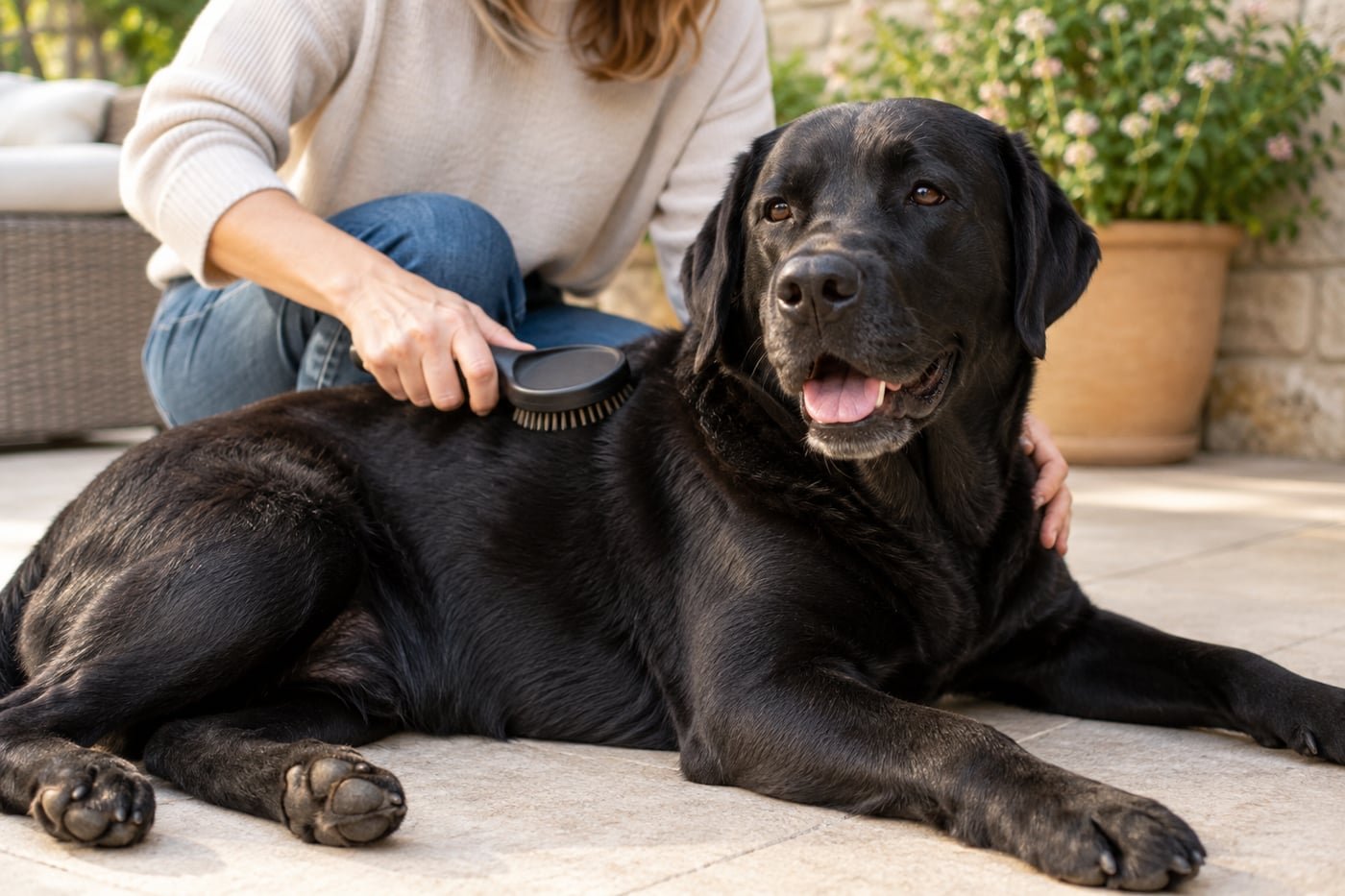
How do you find where the smell is coming from?
Check one area at a time, starting with the bed and favourite furniture. Lift cushions and look for trapped hair, dampness or an old accident. Then check collars, harnesses, bowls and bins. Keep a simple note of what you cleaned and whether it helped. This makes it easier to identify a recurring source than spraying fragrance throughout the house.
Treat accidents at the source
Use a product intended for the affected surface and type of stain, following its instructions. Patch-test first and keep the dog away for the stated contact and drying time. Do not mix cleaning chemicals. Persistent odour may come from padding underneath a carpet, not just its visible surface.
Check whether the smell comes from the dog
A persistent new smell from ears, skin or mouth deserves veterinary attention, especially with discomfort or discharge. Avoid repeated perfume sprays or excessive bathing as a substitute for finding the cause. Ask about a suitable grooming routine for your dog’s coat and skin.
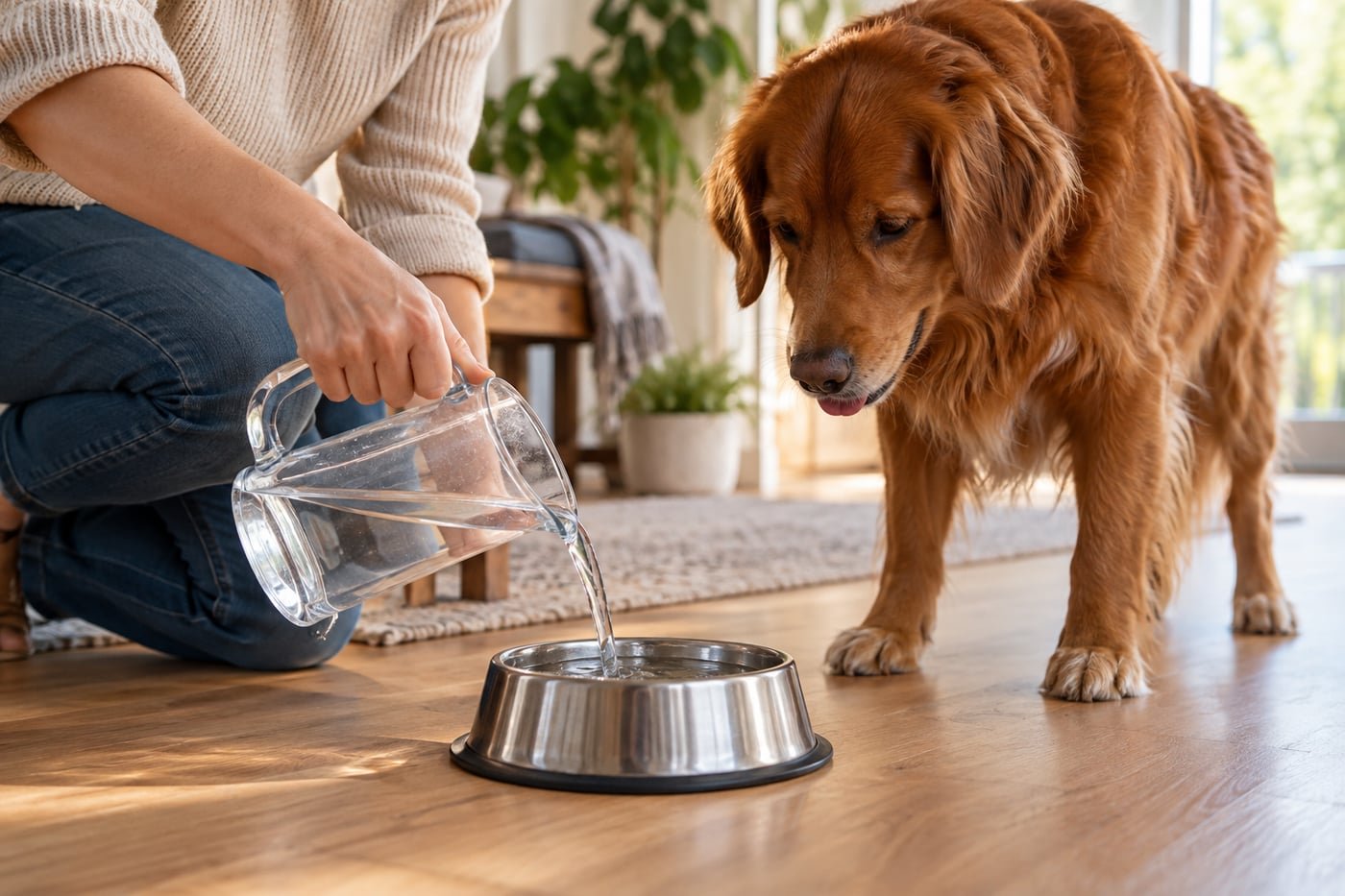
What should a weekly routine include?
Rotate washable bed covers, remove hair from resting areas, clean feeding equipment and check that damp items have dried completely. Follow each material’s care instructions and keep a spare cover available. When an accident has soaked below a carpet, surface cleaning may not reach the source. Ask a flooring professional about the underlying material instead of repeatedly soaking the top layer.
Your practical checklist
- Identify whether the smell comes from a surface, item or the dog.
- Remove debris and wash compatible covers and equipment.
- Dry everything fully before returning it to the resting area.
- Treat accidents with a suitable product according to its label.
- Seek veterinary advice for persistent new body, ear or mouth odour.
Common questions and answers
Can I use perfume to cover dog smell?
Fragrance does not remove the source. Start with cleaning and drying the affected material. Avoid applying household fragrances to the dog, and use products only as labelled. If the smell keeps returning, investigate the underlying item or health concern.
Why does the bed smell again soon after washing?
Check whether the inner cushion, liner or floor beneath it is still damp or soiled. A clean cover may hide a problem underneath. Follow the manufacturer’s care instructions and consider professional advice or replacement for material that cannot be adequately cleaned.
Does a smelly dog always need another bath?
No. A persistent new smell can come from ears, mouth or skin and may need veterinary assessment. Bathing repeatedly can delay finding the cause. Record where the smell seems strongest and any associated itching, redness or discomfort.
Can I mix cleaners for a stronger effect?
No. Mixing household chemicals can be dangerous and may damage surfaces. Use one compatible product according to its instructions, including ventilation, contact time and pet re-entry guidance. Ask the manufacturer if you are unsure about an earlier treatment.
Check our previous articles
Continue with these related guides from My Dog Recipes:
Sources and further reading
Updated September 29, 2026. General educational guidance; individual health and feeding decisions depend on your dog’s needs.







Leave a Reply