

Common dog allergy symptoms include itching, repeated licking or chewing, irritated skin and recurrent ear problems. Dogs can react to environmental allergens, flea bites or food, and more than one type of allergy may be present. Similar symptoms can also come from non-allergic disease. [1]
Know the difference between itching and an emergency
A sudden reaction with breathing trouble, collapse or rapidly increasing swelling needs emergency veterinary help. Do not wait to see whether a new food or shampoo fixes it. Persistent scratching without those emergency signs still deserves an appointment, particularly when skin is damaged or sleep is disrupted. [1]
Look for patterns, not a diagnosis
Does the itching occur during a particular season, after walks, around the feet or near the ears? Are other pets itchy too? These observations help organize the veterinary history, but none proves a particular trigger. Allergic disease is complex, and Cornell describes ongoing research into the immune pathways involved. [2]
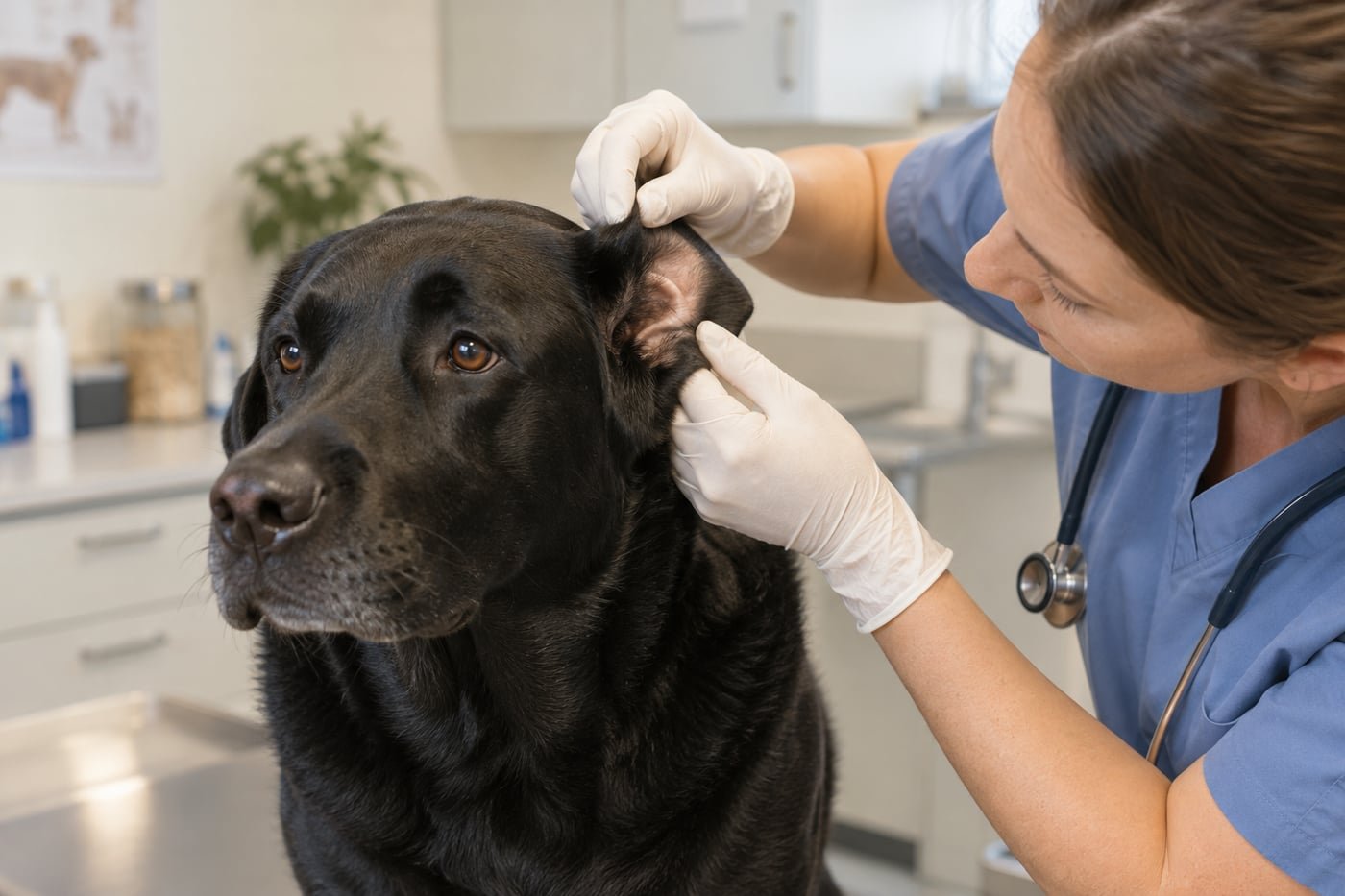
Keep the record simple enough to use every day. Note where your dog scratches and whether licking interrupts meals, sleep or walks. A diary is more reliable than trying to remember the worst day of the month.
What to bring to the appointment
- Dated photographs of skin changes, taken in similar light.
- A list of foods, treats, supplements and medicines.
- The exact flea-control product and dates it was given.
- Recent grooming products, detergents or household changes.
- Any previous ear or skin treatments and whether they helped.
Tell the vet if you have already changed several things. A timeline of those changes helps prevent improvement from being attributed to the wrong product.
Why identifying the cause matters
Different causes of itching require different plans. Your vet may investigate parasites, skin or ear infection, and allergic disease. A food-related concern may lead to a controlled diet trial; it should not be assumed from itchy paws alone. Treatment can involve managing both the trigger and the effects of inflammation or secondary infection. [1] [3]

Before trying a new product
Ask what you can safely use while waiting for the appointment. Avoid human creams, essential oils, ear drops or antihistamines without veterinary instructions. Take a photograph of the ingredient label if you want the clinic to assess a product. Preventing further self-trauma may also require a vet-recommended protective device.
Common questions about allergies
Does seasonal itching rule out food allergy?
No. The pattern is useful history, but it is not a definitive test. Dogs can have overlapping problems, and the veterinarian needs to interpret the full history.
Will bathing solve the problem?
Ask your vet which product and frequency fit your dog’s skin condition. Washing is not a substitute for identifying persistent itching or ear disease.
What counts as progress?
Use practical markers: less scratching, better sleep, fewer sore areas and more comfortable daily activity. Follow the agreed reassessment schedule rather than stopping the plan after a single good day.
Related Dog Health guides
Sources
Content updated September 9, 2026. Educational information, not a diagnosis or a substitute for veterinary care.












Leave a Reply