

The best orthopedic dog bed for a large dog offers sufficient usable space, supportive filling and easy entry. Compare dimensions, construction and washability; a product label alone does not establish comfort or medical benefit.
What to measure before buying
- Measure your dog lying in its usual resting position and allow room to stretch and turn.
- Check the dog can step on and off without a high lip or slippery landing.
- Feel whether the support bottoms out under the dog’s weight; thickness alone does not show firmness.
- Choose a removable washable cover and consider a waterproof liner if accidents occur.
- Place the bed on a stable, non-slip surface away from drafts and traffic.
An “orthopedic” product label is not a medical certification. Compare dimensions, support, cover construction and return policy. A very soft bed may be difficult for a dog with weak legs to rise from. A giant breed may need more sleeping area than the “large” size chart suggests.
When a bed is not enough
If your dog struggles to stand, hesitates at stairs, slips, cries when lying down or changes posture repeatedly, discuss pain and mobility with a veterinarian. A supportive bed may improve comfort but will not diagnose or treat arthritis.
Measure the usable sleeping area
Measure your dog while comfortably stretched out and compare that with the bed’s interior dimensions. Bolsters reduce the usable space even when the outside measurement looks generous. Check the stated weight range and return policy before buying, particularly for a very large dog.
Look for support and easy access
A supportive surface should not immediately flatten beneath the dog. A low entrance and stable, non-slip base can make getting in and out easier. Compare the construction and thickness rather than relying on a product name. Ask the seller how the filling holds up under your dog’s weight.
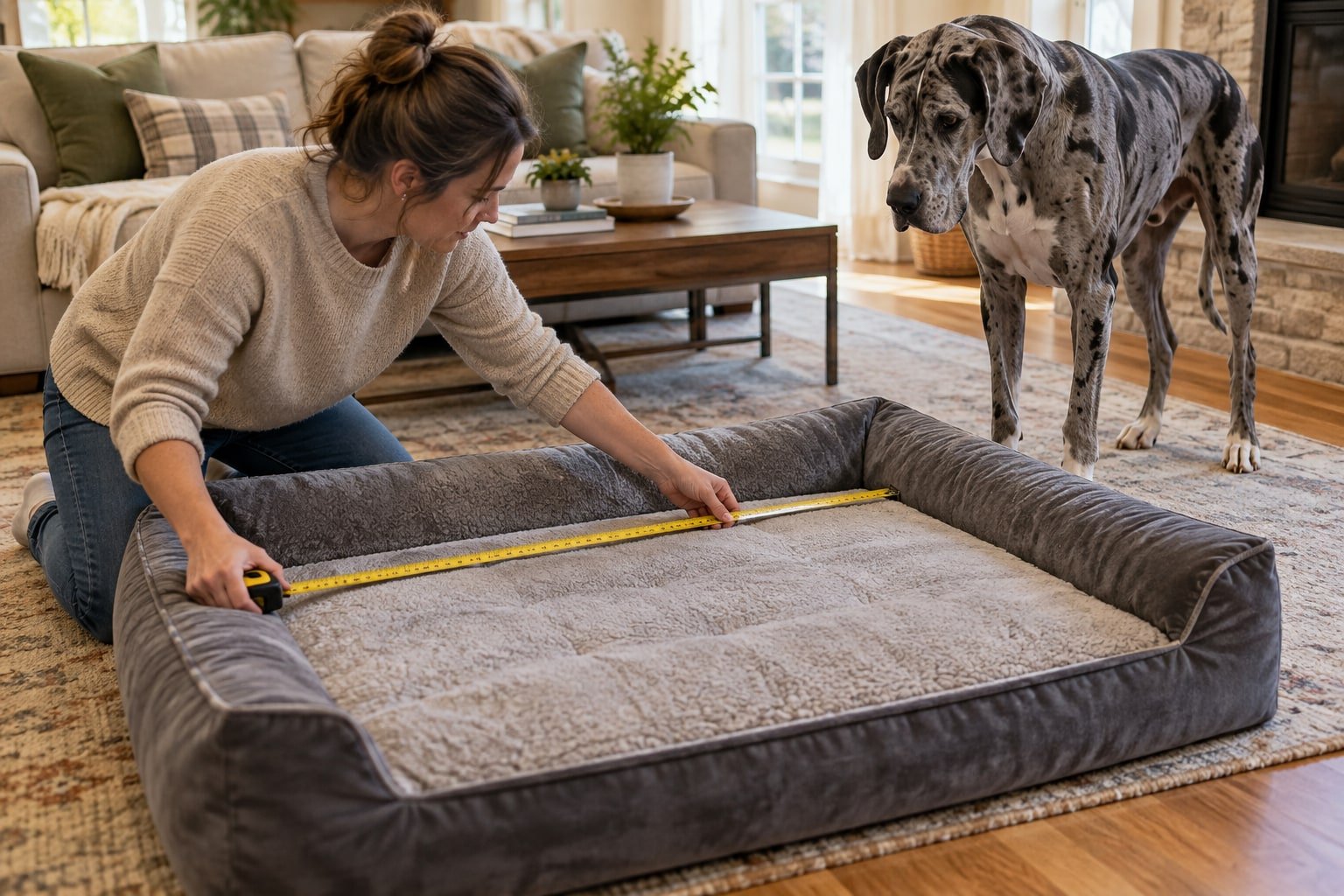
How should you compare two beds with similar prices?
Write down the interior sleeping dimensions, foam construction, entrance height, cover care instructions and replacement-cover availability. Check whether the advertised size includes thick bolsters. Read the return conditions carefully, including whether the dog may try the bed. A lower purchase price may be less useful if the cover cannot be washed or the filling compresses quickly under your dog’s weight.
Match the bed to your home
A removable washable cover and protected inner cushion make maintenance simpler. Check whether replacement covers are available. Place the bed on a clear route away from slippery turns and household traffic. A flat design may offer more stretch space, while some dogs prefer a headrest.
Review comfort after purchase
Watch whether your dog chooses the bed and rises comfortably. Keep the floor around it clear. A bed can support comfort but cannot treat the underlying cause of pain; stiffness, reluctance to move or difficulty settling should be discussed with your veterinarian.
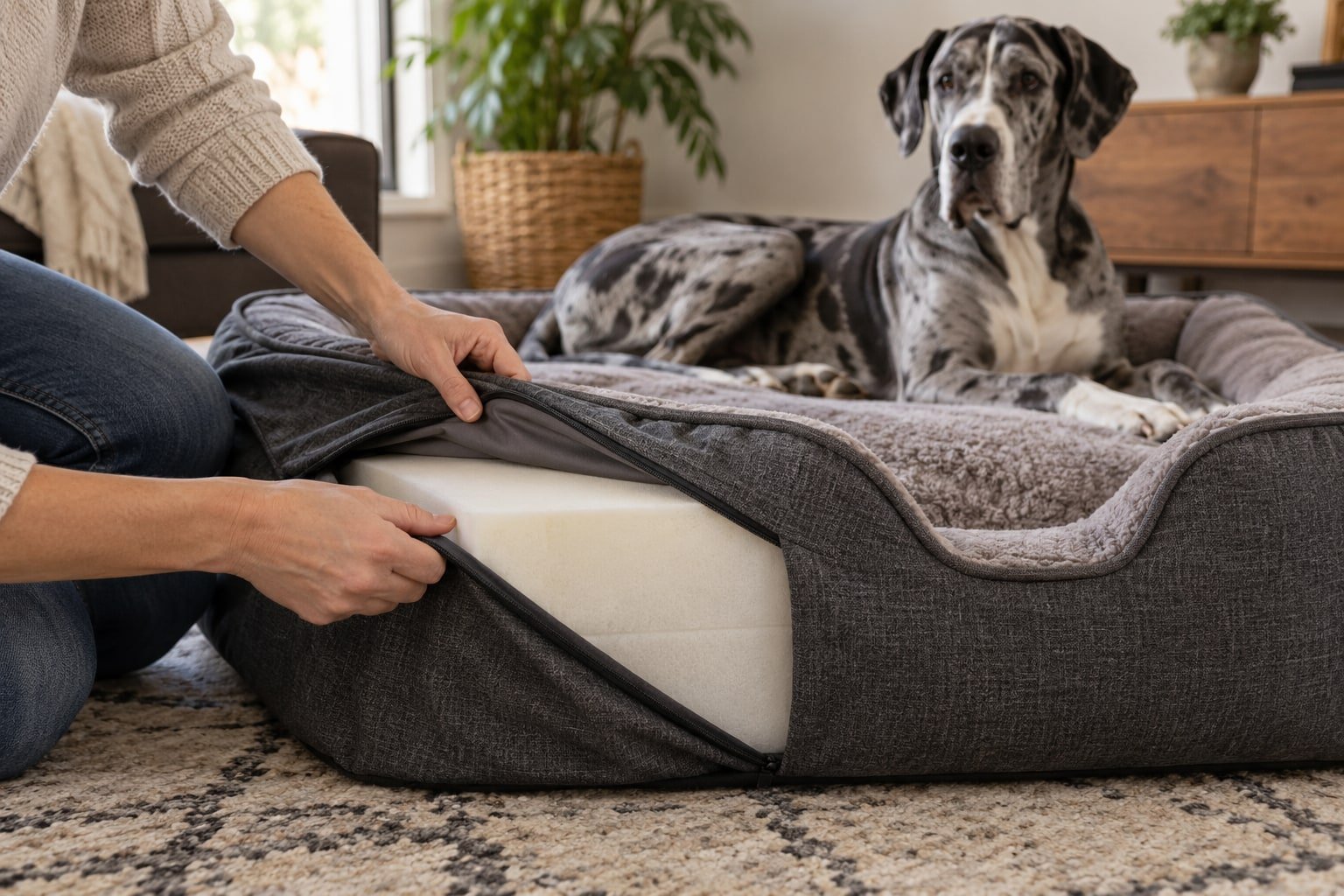
How can you judge the bed after it arrives?
Place it on a stable surface in a familiar resting area and let the dog investigate without being forced to stay. Watch whether there is room to stretch, whether the base shifts and whether rising looks comfortable. Keep notes over ordinary use rather than judging from one posed photograph. If the dog avoids it, consider placement, texture, temperature and access before assuming a thicker mattress is the answer.
Your practical checklist
- Measure the dog’s comfortable stretched-out sleeping space.
- Compare usable interior dimensions rather than only the external size.
- Check support, entrance height and a stable non-slip base.
- Review washing instructions, liner protection and replacement covers.
- Observe comfort at home and discuss persistent stiffness with the vet.
Common questions and answers
Does orthopedic mean a bed treats arthritis?
No. The label does not prove that a bed treats a medical condition. A supportive bed can be one part of a comfortable home setup, but arthritis and other causes of pain need a veterinary management plan.
Is the thickest bed always best?
No. Support under the dog’s weight, stability and access matter alongside thickness. A high mattress may be awkward for a dog with mobility problems. Compare the construction and usable space instead of choosing by height alone.
Should I choose a flat bed or bolsters?
Watch how your dog usually rests. A flat bed offers more unobstructed stretching space, while a bolster can provide a headrest for a dog who likes one. Make sure an entrance remains easy and the interior is large enough.
Which brand is best for every large dog?
There is no single choice established by this guide. We have not conducted comparative product testing. Use the feature checklist, the dog’s size and needs, and a practical return policy to evaluate current products without relying on an invented ranking.
Check our previous articles
Continue with these related guides from My Dog Recipes:
Sources and further reading
Updated September 29, 2026. General educational guidance; individual health and feeding decisions depend on your dog’s needs.










Leave a Reply