
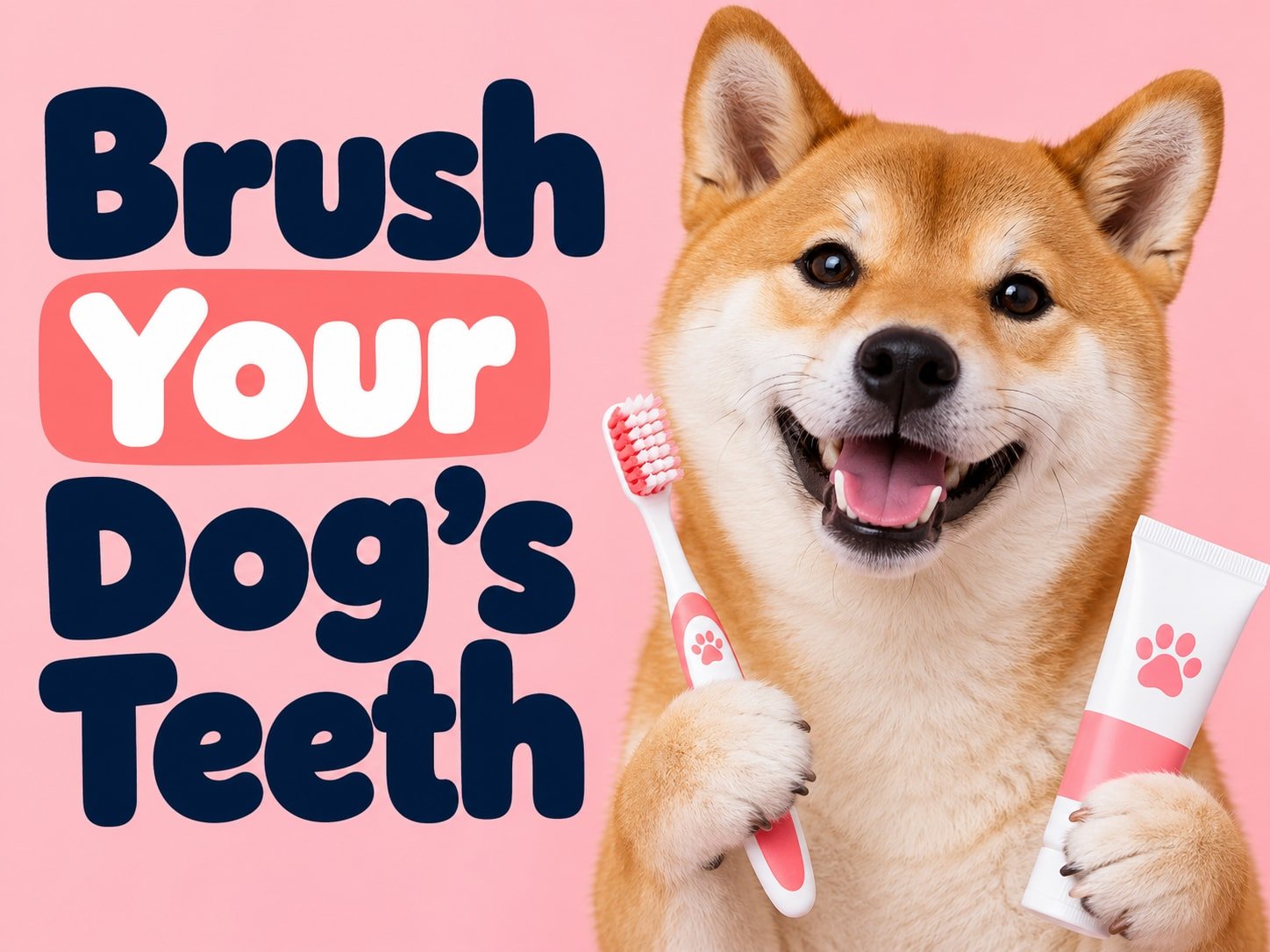
Clean your dog’s teeth with a soft pet brush and dog toothpaste, building gradually towards daily brushing. Start with comfortable handling, and arrange a dental examination if the mouth appears painful or diseased.
Make toothbrushing possible in stages
- Let the dog sniff the brush and taste a small amount of dog toothpaste.
- Touch the outside of the lips briefly, reward and stop before the dog pulls away.
- Lift the lip and brush a few outside tooth surfaces with a soft brush.
- Build toward more teeth over several short sessions. Focus on the gum line without scrubbing hard.
- Use praise and a consistent routine; ask your vet for a demonstration if handling is difficult.
Use dog toothpaste, never a human toothpaste with ingredients the dog may swallow. Brushing removes plaque before it hardens; it cannot remove established tartar or fix a painful broken tooth. Persistent bad breath, red gums, bleeding, drooling, difficulty chewing or a loose tooth call for a dental exam.
What if brushing is not yet tolerated?
Do not force open the mouth. Work on calm handling, then ask a veterinarian about suitable dental products. Look for an accepted product on the VOHC list if you need a supported plaque or tartar claim. A chew can help some dogs but does not replace brushing or professional assessment.
Choose dog-specific supplies
Use a soft brush of a suitable size and toothpaste made for pets. Human toothpaste is not appropriate for dogs. Keep a separate kit and replace a worn brush. Choose a quiet time and a position where you can lift the lip without holding the dog down.
Introduce each step separately
Begin with a brief lip lift followed by a reward. Let the dog become familiar with the pet toothpaste, then try touching a few outer tooth surfaces with the brush. Build slowly across sessions. Ending after a comfortable small step is more useful than forcing a full-mouth session.
How can you teach brushing without a struggle?
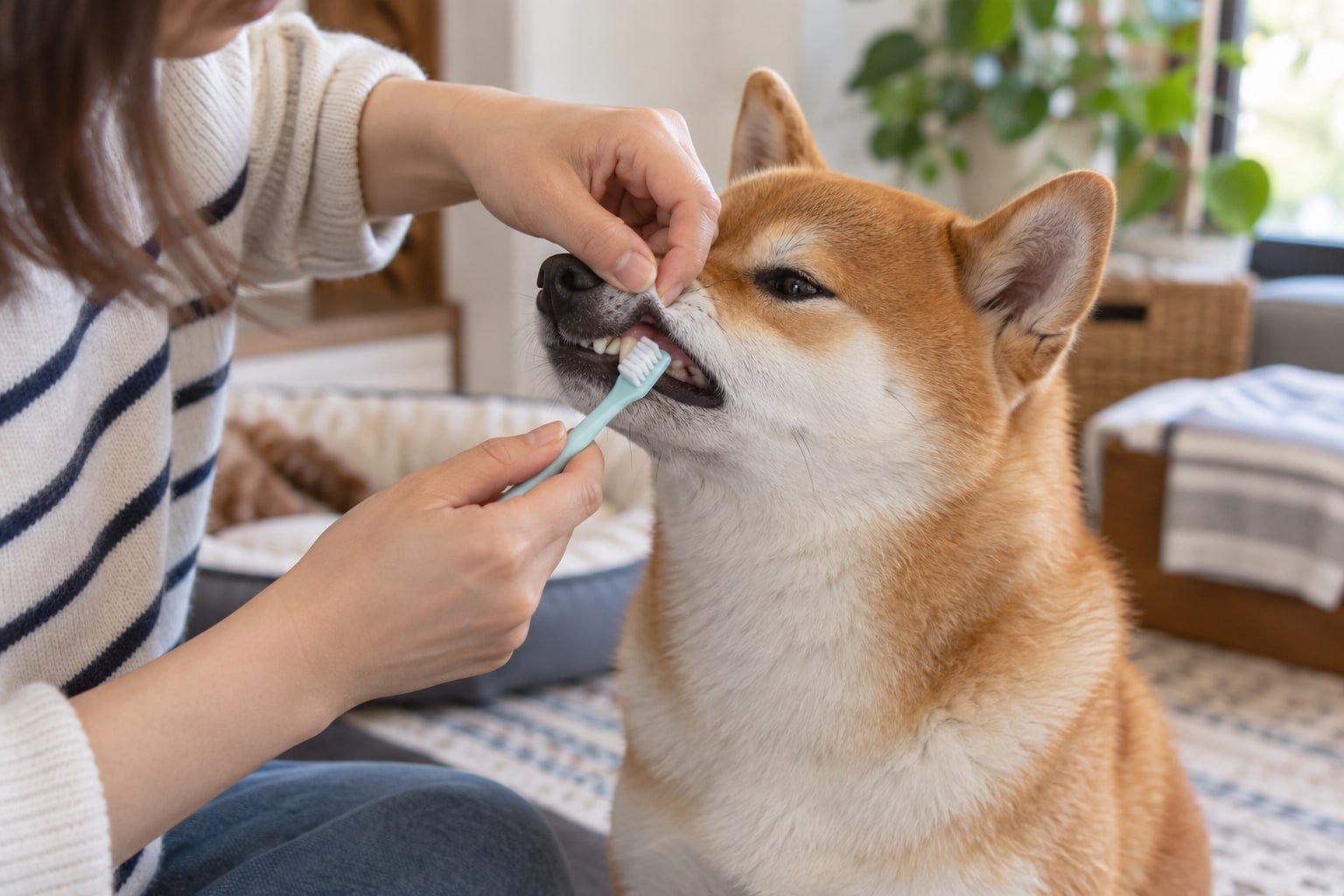
Break the task into short steps: sitting beside you, accepting a lip lift, tasting pet toothpaste and allowing the brush to touch one tooth. Reward each comfortable step and stop before the dog becomes upset. Practise with the same simple setup so the sequence is predictable. If the dog previously tolerated brushing but suddenly resists, consider discomfort rather than assuming the training has failed.
Brush gently at the gumline
Use gentle movements along the outside surfaces, following your veterinary team’s demonstration. Increase the area as your dog tolerates it. Brushing helps manage plaque, but it does not remove established tartar or replace professional dental assessment and treatment.
Keep a record of changes
Bad breath, bleeding, dropping food or a reluctance to chew should prompt a dental check. Make brushing easy to remember by linking it to a regular household routine. Other dental products can supplement a plan, but ask your veterinarian which options suit your dog.
How do brushing and veterinary dentistry work together?
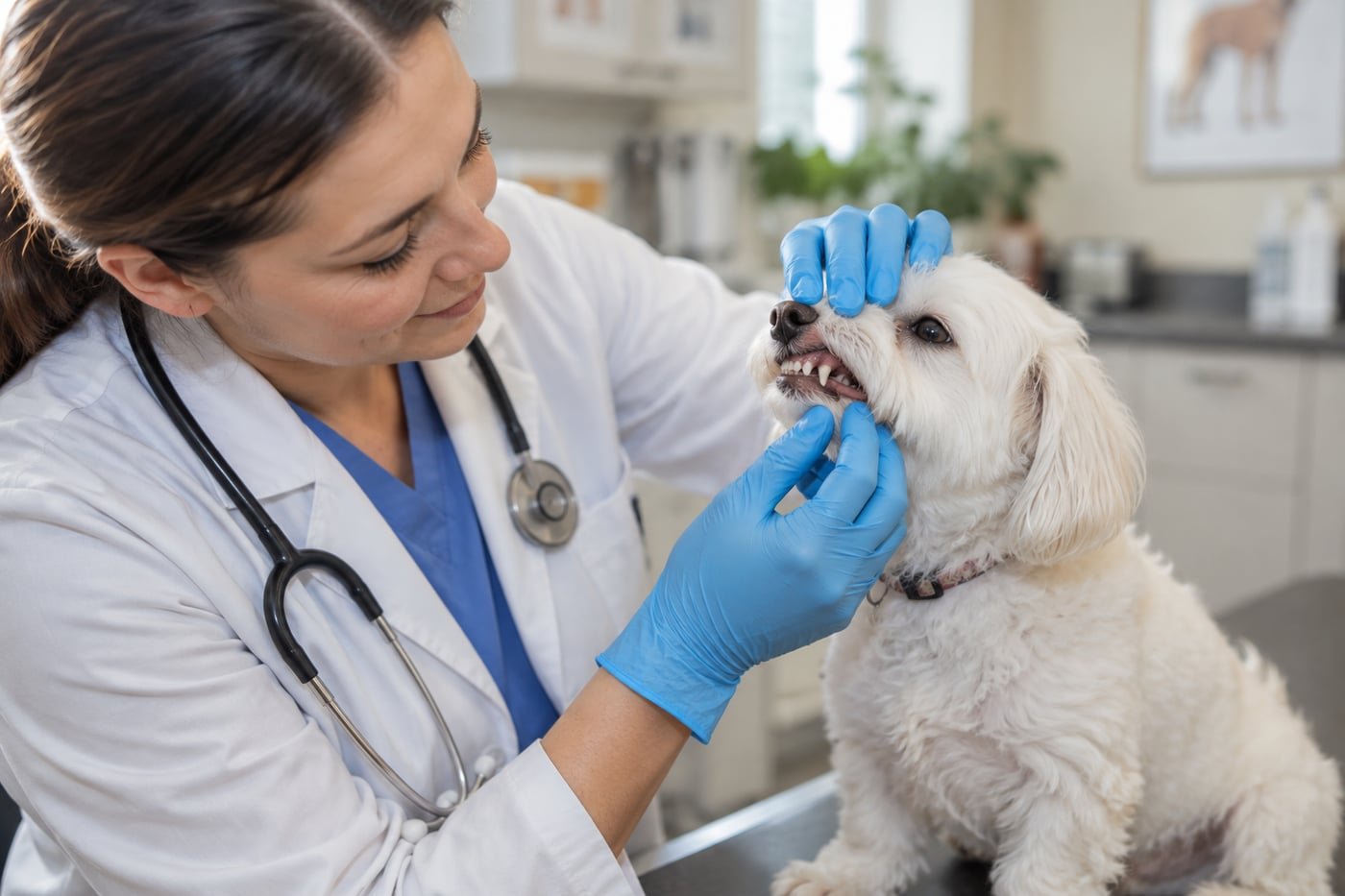
Home brushing manages plaque on surfaces you can reach. A veterinary dental assessment looks for problems that cannot be judged from a quick glance at the front teeth. Established tartar and disease below the gumline need professional assessment and treatment. Ask your vet to show you where to focus and when the next dental review should occur, particularly after treatment or an extraction.
Your practical checklist
- Choose a quiet moment and place the dog on a stable surface.
- Let the dog investigate the brush and pet toothpaste without forcing contact.
- Lift the lip gently and begin with a few accessible outer surfaces.
- Brush with light pressure near the gumline and gradually cover more teeth.
- Stop for pain or marked distress and reward calm participation.
Common questions and answers
Can I use human toothpaste?
Use toothpaste formulated for pets. Human products are not intended to be swallowed by dogs and may contain unsuitable ingredients. Check the label rather than assuming that a small amount or a children’s product makes it appropriate.
Do I need to force the mouth open?
No. You can begin with accessible outer tooth surfaces by gently lifting the lip. Do not wrench the jaw open or restrain a frightened dog for a full brushing session. Ask your veterinary team to demonstrate a comfortable approach.
Will brushing remove brown tartar?
Brushing helps with plaque but does not reliably remove established tartar. Scraping at home can injure the mouth and miss disease below the gumline. Arrange an examination and follow the dental-care plan recommended for your dog.
What if my dog’s gums bleed?
Stop if brushing is painful or causes concerning bleeding, and contact the clinic. Inflamed gums or other dental problems may need treatment. Do not solve the problem by applying more pressure or choosing a harder brush.
Check our previous articles
Continue with these related guides from My Dog Recipes:
Sources and further reading
Updated September 29, 2026. General educational guidance; individual health and feeding decisions depend on your dog’s needs.








Leave a Reply