
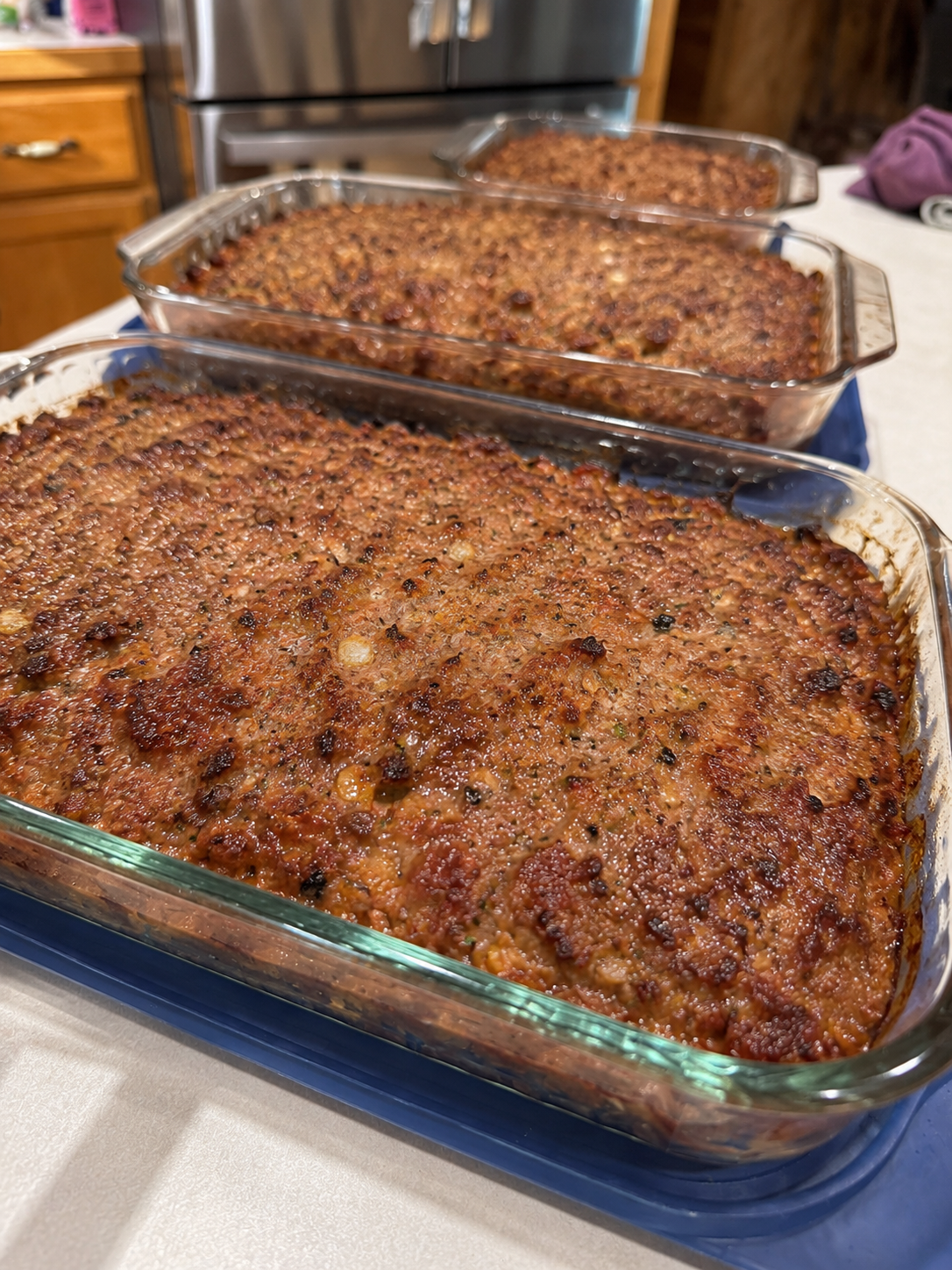
Salmon, beef and venison form the base of this large dog meatloaf batch, with eggs, broccoli and a layer of sweet potato. Baking in several shallow dishes makes the mixture easier to handle, while chilled squares can be packed separately for the freezer.
This is a batch-preparation outline, not a complete nutritional formulation. Several ingredient weights and supplement details are missing. A 70/20/10 ratio alone does not establish nutritional balance, and the categories behind that ratio were not specified for this batch.
Ingredients recorded for the batch
- 4 lb king salmon, including skin and liver within that weight
- 1 sac of salmon roe, weight not specified
- 4 lb high-fat ground beef, fat percentage not specified
- 6 lb venison
- 1 large sweet potato, weight not specified
- Broccoli, quantity not specified
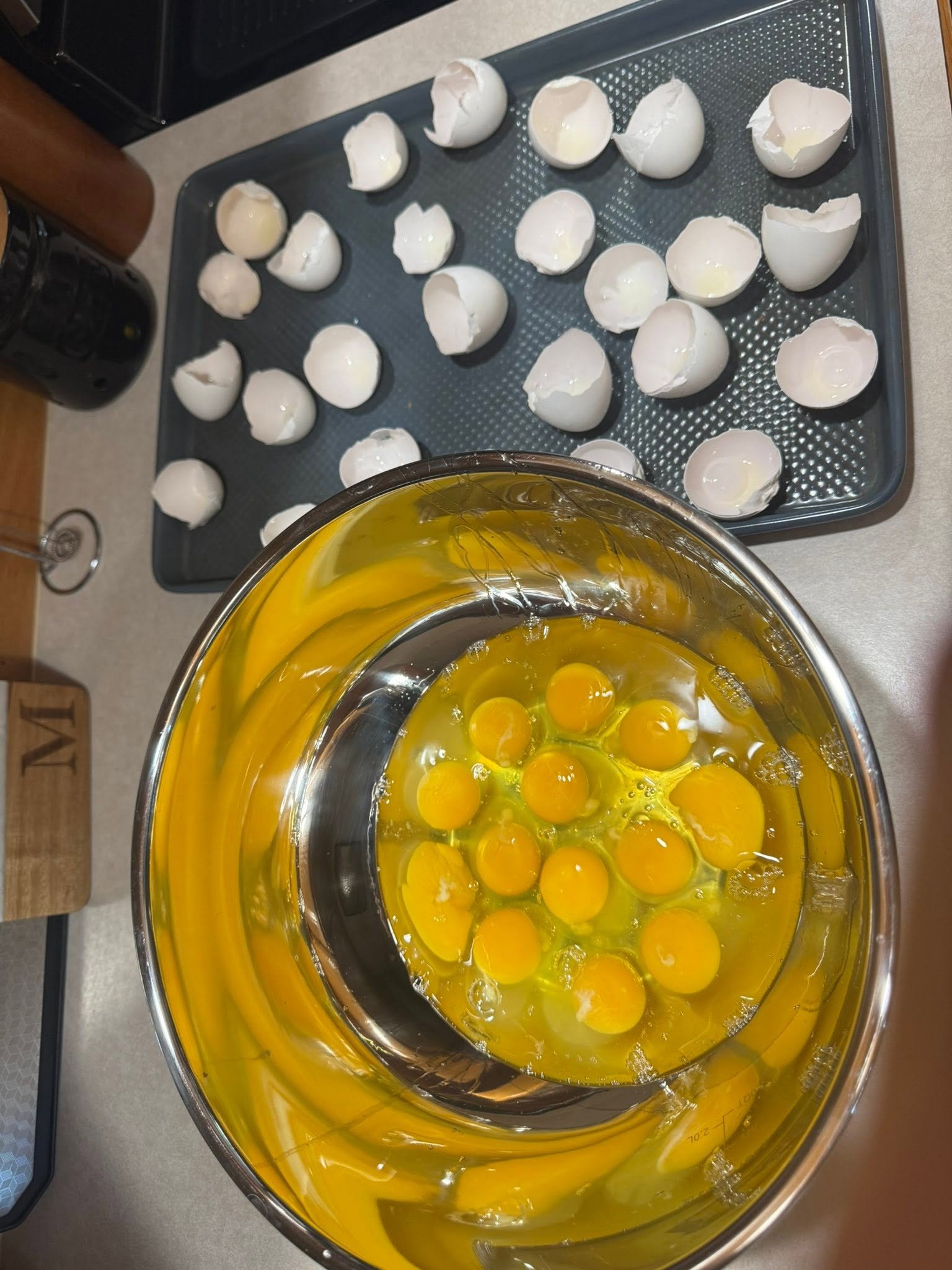
- 13 eggs
- 10 oz bone broth
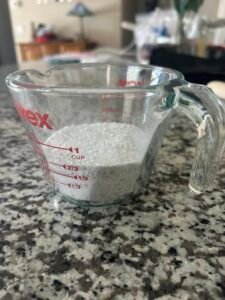
The original batch also included crushed eggshells. Keep the eggshell quantity separate from the egg count: the correct calcium amount must be calculated for the full recipe. Do not automatically add all 13 shells. The salmon liver proportion, roe weight, broccoli weight and broth measurement also need to be recorded before nutritional analysis.
Prepare the ingredients
The following is a suggested cooking approach; no tested baking time was supplied. Use plain ingredients and broth without onion or garlic. Check the salmon carefully and remove all bones before grinding or mixing. Grinding does not replace deboning. Use fresh, properly handled roe rather than salted or seasoned caviar.
Keep the fish, meat and eggs refrigerated until needed. Clean the preparation area and keep pets away from raw ingredients. Salmon must be thoroughly cooked before feeding; raw salmon can transmit a serious disease to dogs.
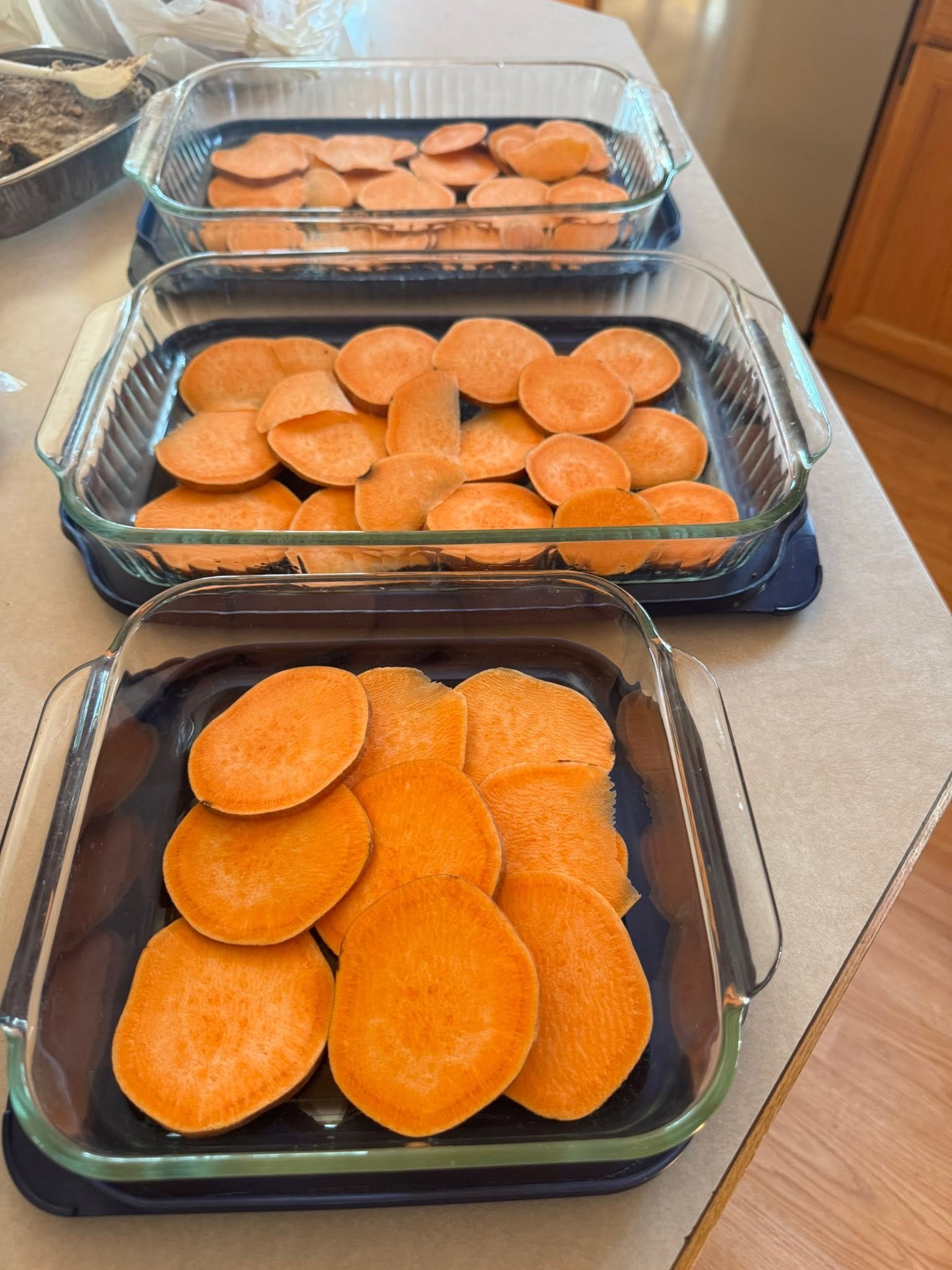
1. Prepare the sweet potato layer
Wash the sweet potato and cut into thin, even slices. Arrange in a shallow layer in oven-safe baking dishes. The slices need to become fully tender during cooking; thick slices may remain firm beneath the meat.
2. Prepare the eggs and vegetables
Crack the eggs into a separate bowl and beat lightly. Finely chop or grind the broccoli for even distribution. Set the shells aside rather than adding an unmeasured amount to the mixture. If a veterinary nutrition formulation calls for eggshell calcium, follow its exact preparation and weight.
3. Combine the mixture
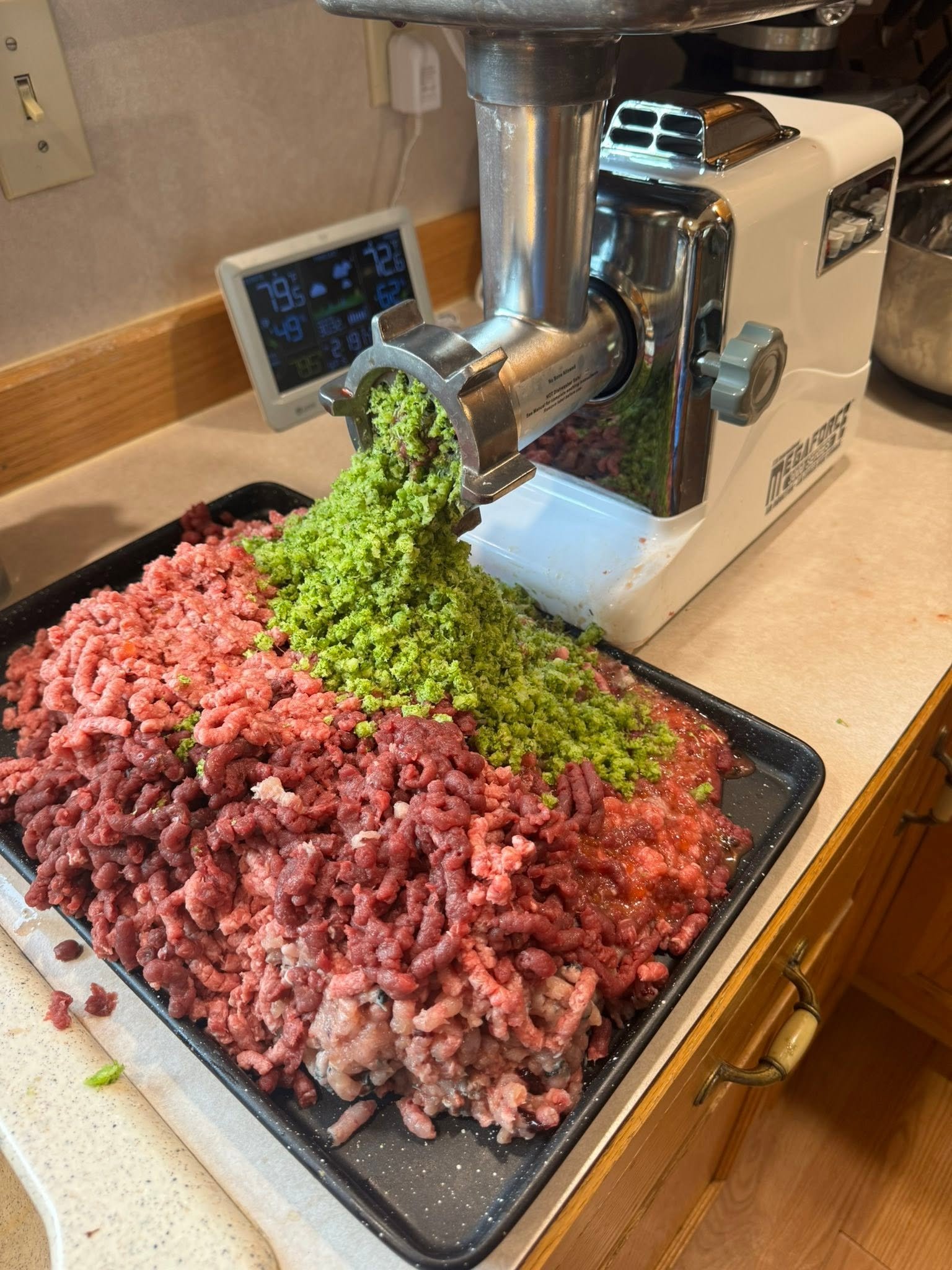
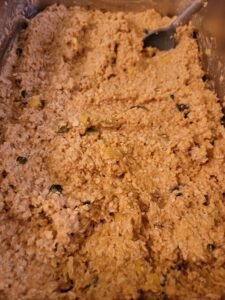
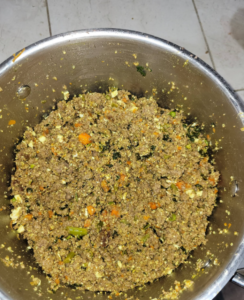
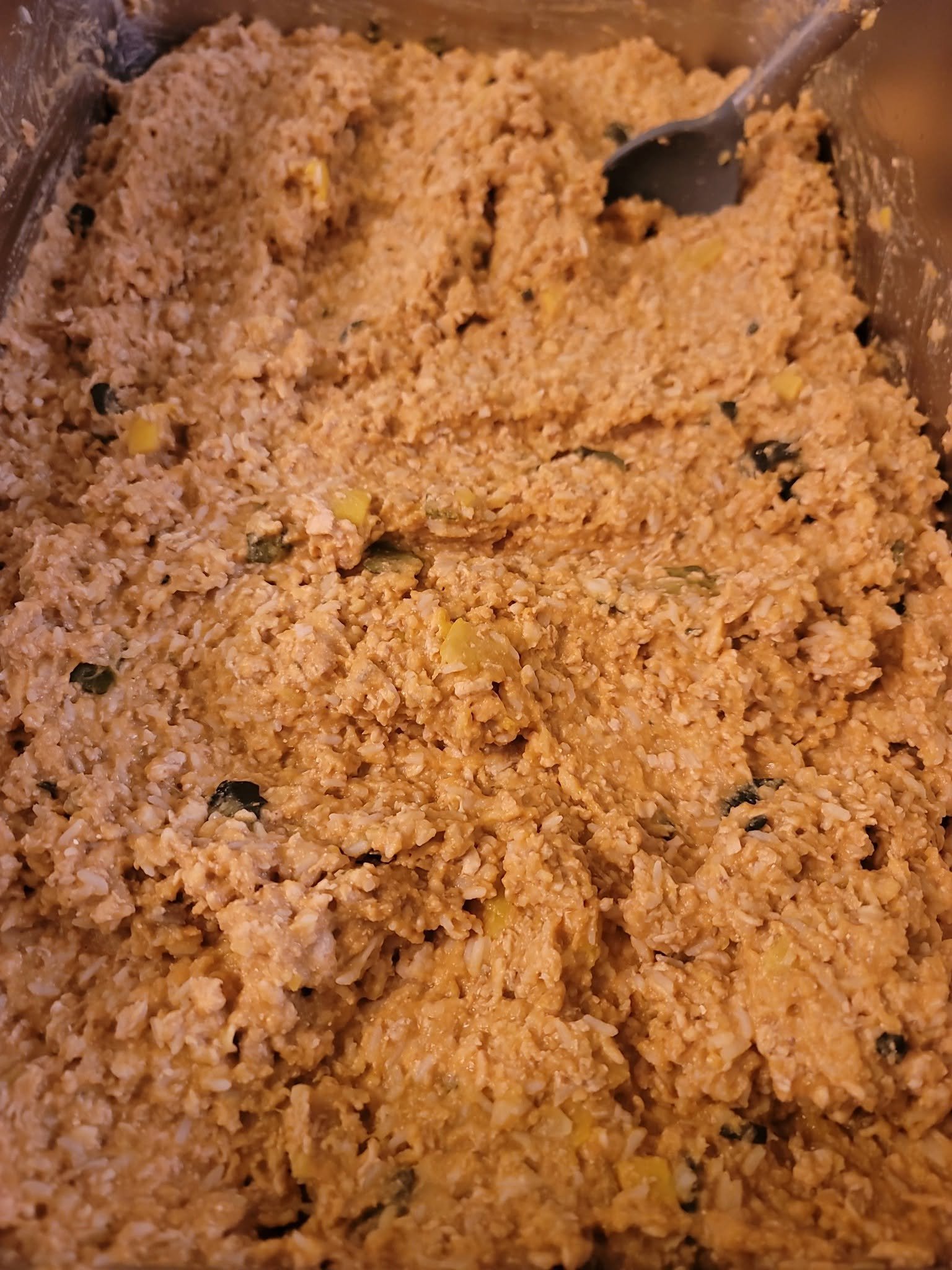
Finely mince or grind the deboned salmon and venison as needed. Combine with the ground beef, roe, broccoli, beaten eggs and broth. Work in manageable batches, keeping unused ingredients chilled, and mix thoroughly so the ingredients are distributed evenly.
Fill and bake the meatloaves
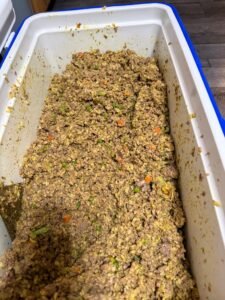
Preheat the oven to 350°F (175°C). Spoon the mixture over the sweet potato, spreading it into an even, relatively shallow layer. Use enough dishes to avoid deep, densely packed loaves. Follow the glassware manufacturer’s oven instructions and remove any lids that are not oven-safe.
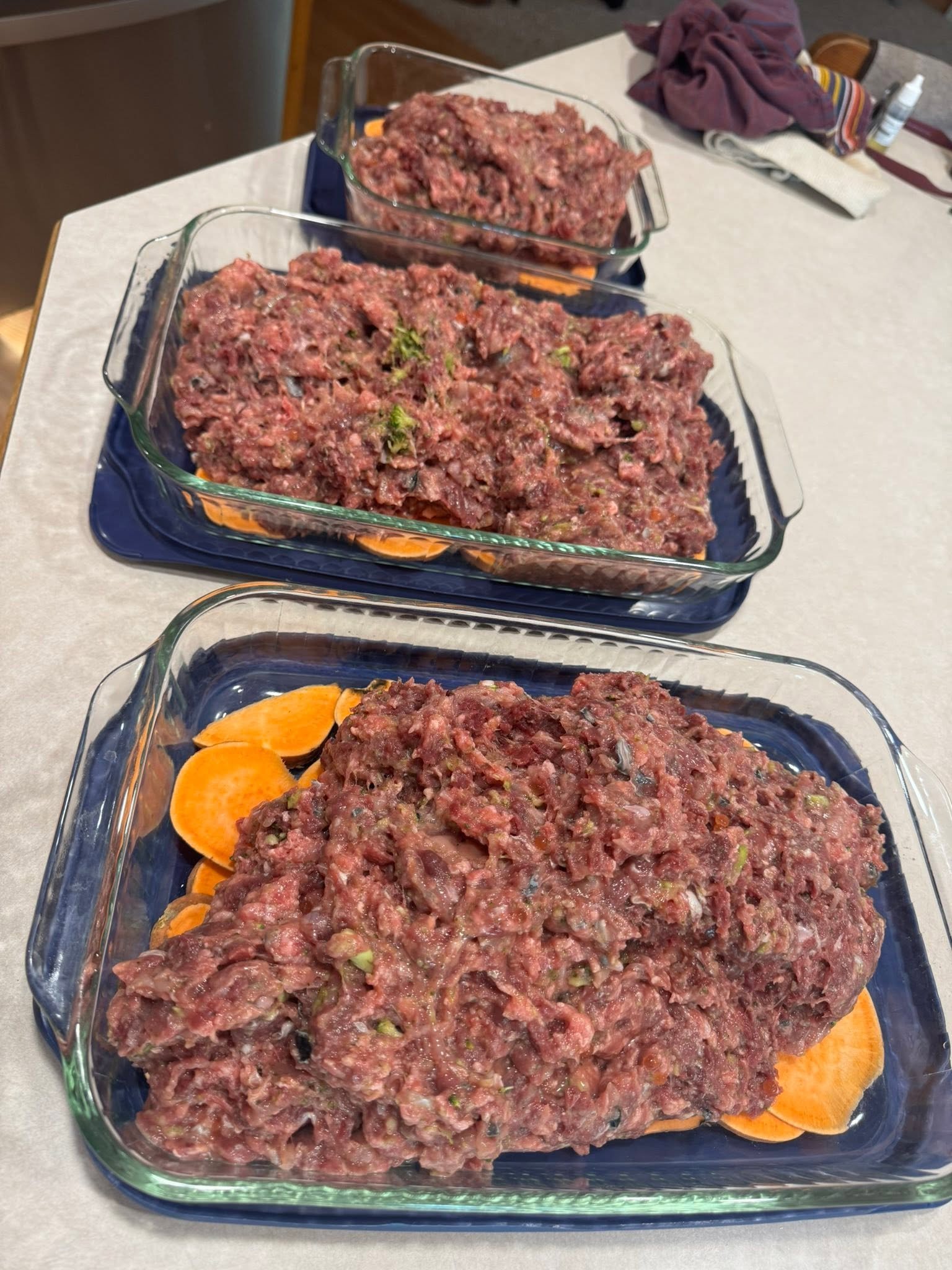
Smooth the surface gently. Leave room between dishes for heat circulation, and bake in separate rounds if the oven is crowded. Keep waiting batches refrigerated.
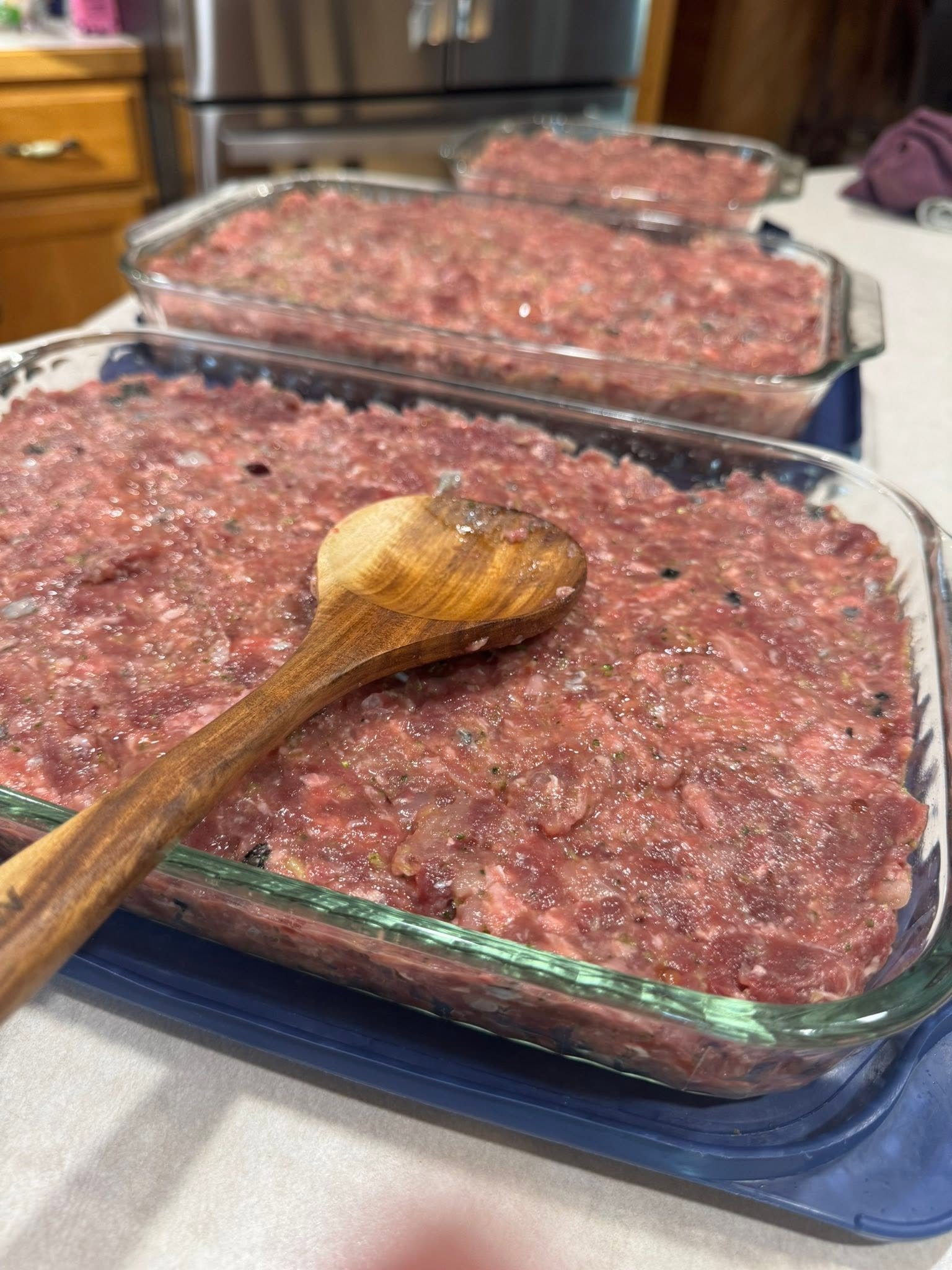
Cook until the center of every dish reaches 165°F (74°C), checking several places with a food thermometer without touching the glass. Check that the sweet potato is tender too. Baking time depends on depth, dish size and starting temperature, so there is no reliable fixed time for this batch. A browned surface does not confirm that the center is cooked.
Cool, cut and store
After a brief rest, divide the cooked food into smaller sections and transfer to shallow storage containers. Refrigerate promptly, within two hours of cooking, or within one hour when the surrounding temperature exceeds 90°F (32°C). Do not leave a large batch on the counter until completely cold.
Once chilled, cut into squares and record their weights. Keep refrigerated portions at 40°F (4°C) or below and use within three to four days. Freeze the remainder promptly in labelled, individual portions for best quality within two to three months. Thaw in the refrigerator and remove all packaging before serving.
Portion size and the 70/20/10 ratio
Three squares a day is not a transferable feeding amount: squares vary in weight and calories, and dogs have different needs. This batch has no verified calorie total or serving yield. An accurate calculation needs the meat fat percentages, all ingredient weights and the finished batch weight.
Before using this as a daily diet, have a veterinary nutrition specialist formulate the recipe for the individual dog. Calcium, phosphorus and other nutrients need to be assessed together. Eggshells and a general multivitamin do not establish that those needs are met.
Yogurt, a mushroom blend and a joint supplement were mentioned with the original feeding routine, but no products or doses were supplied. They are not included as recipe instructions. Any additions should be included in the full dietary review so their calories and nutrients are counted and overlapping supplements can be assessed.


Leave a Reply