
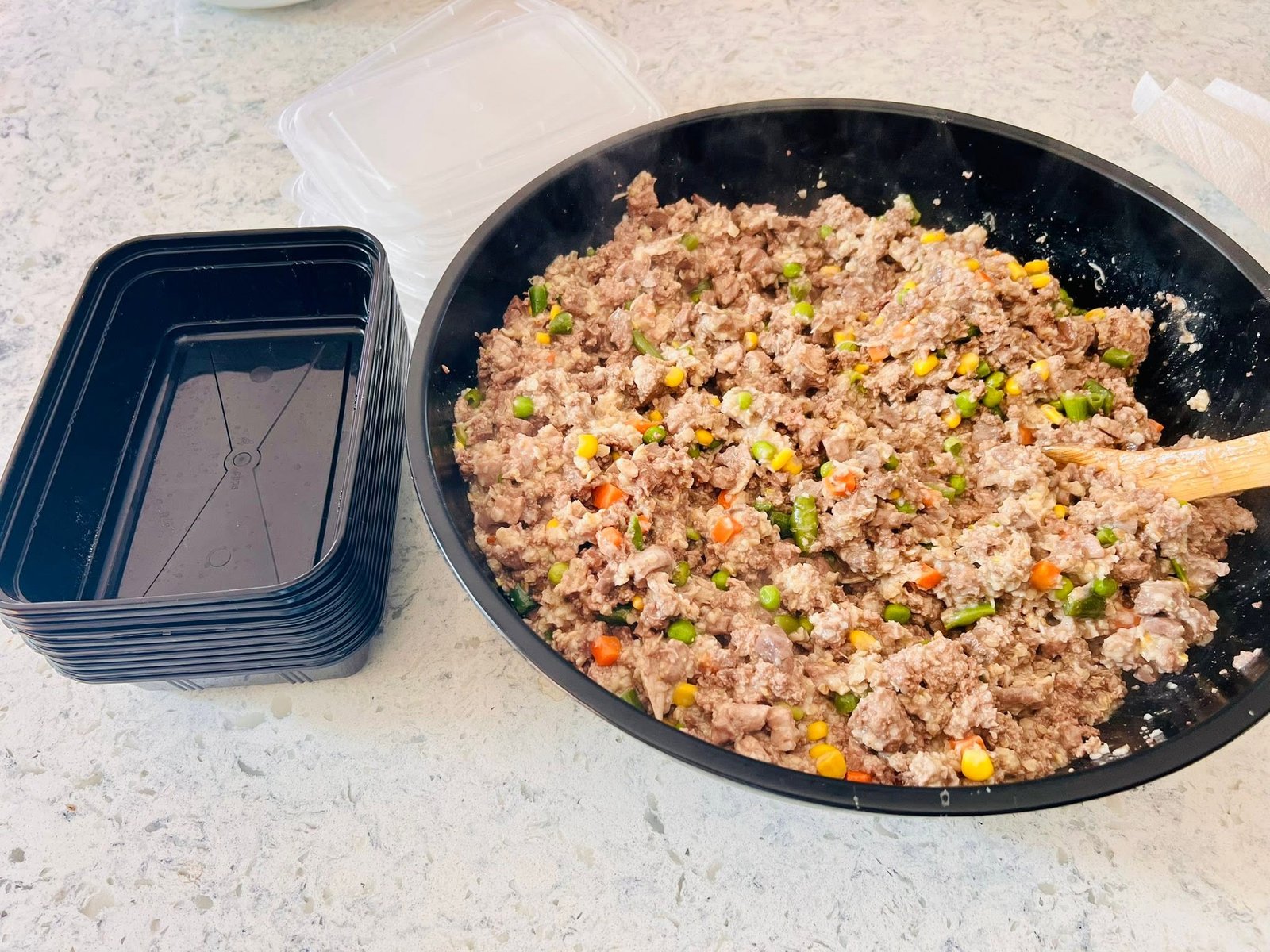
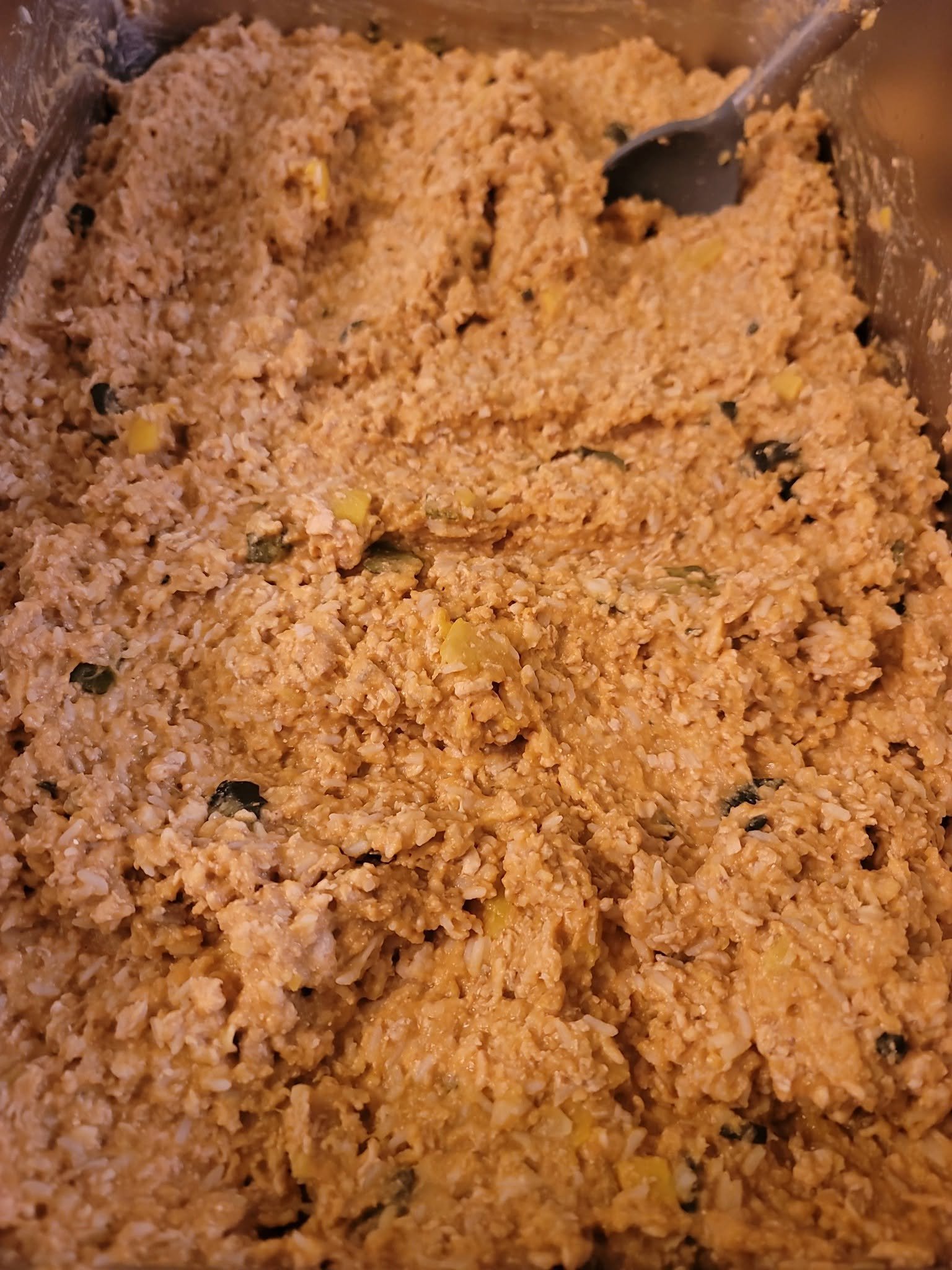
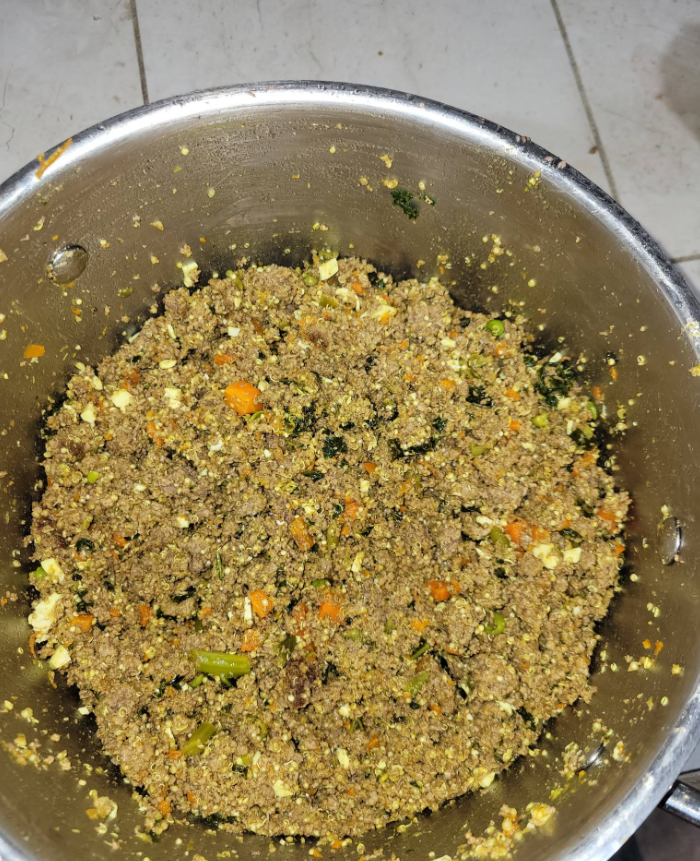
Beef and turkey dog food with oats combines chopped meat, ground meat, eggs and vegetables in a batch that can be divided into individual containers. Cooking the components in manageable amounts and mixing them thoroughly helps keep preparation organized.
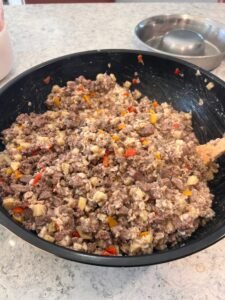
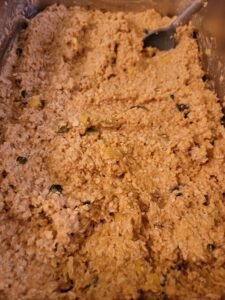
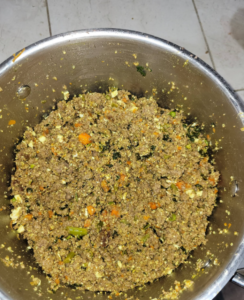
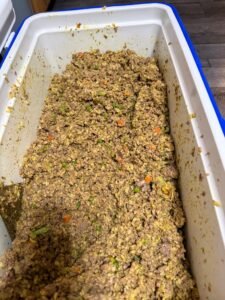
A daily homemade diet should be complete and balanced for the dog’s life stage. This ingredient list does not establish that balance. Quantities, meat specifications and a measured calcium source are needed before it can become a complete feeding recipe. The photos show the mixture’s appearance, not its nutrient content.
Ingredients to record
- Roast — specify the type of meat and cut
- Sirloin — specify the meat and cut
- Turkey — specify the cut and whether skin is included
- Ground turkey — record its fat percentage
- Ground beef — record its fat percentage
- Chicken gizzards
- Beef heart
- Mixed vegetables — list each vegetable and its weight
- Eggs — record the number or prepared weight
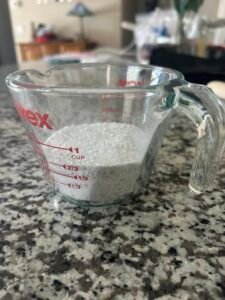
- Oats — specify the type and dry weight
Eggshells were also listed, but their preparation and amount need to be specified in the final formulation. Do not estimate a shell dose from the number of eggs used.
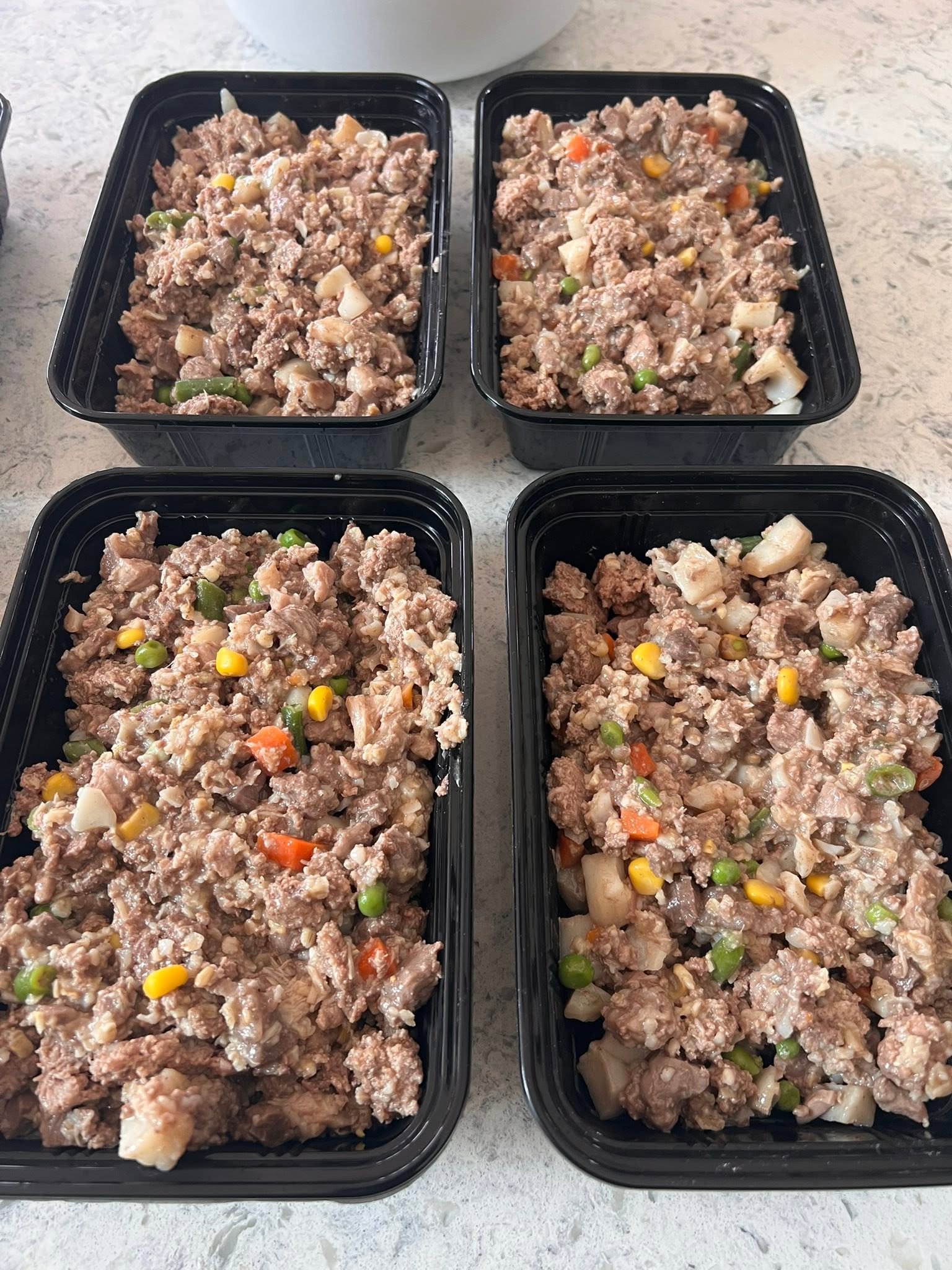
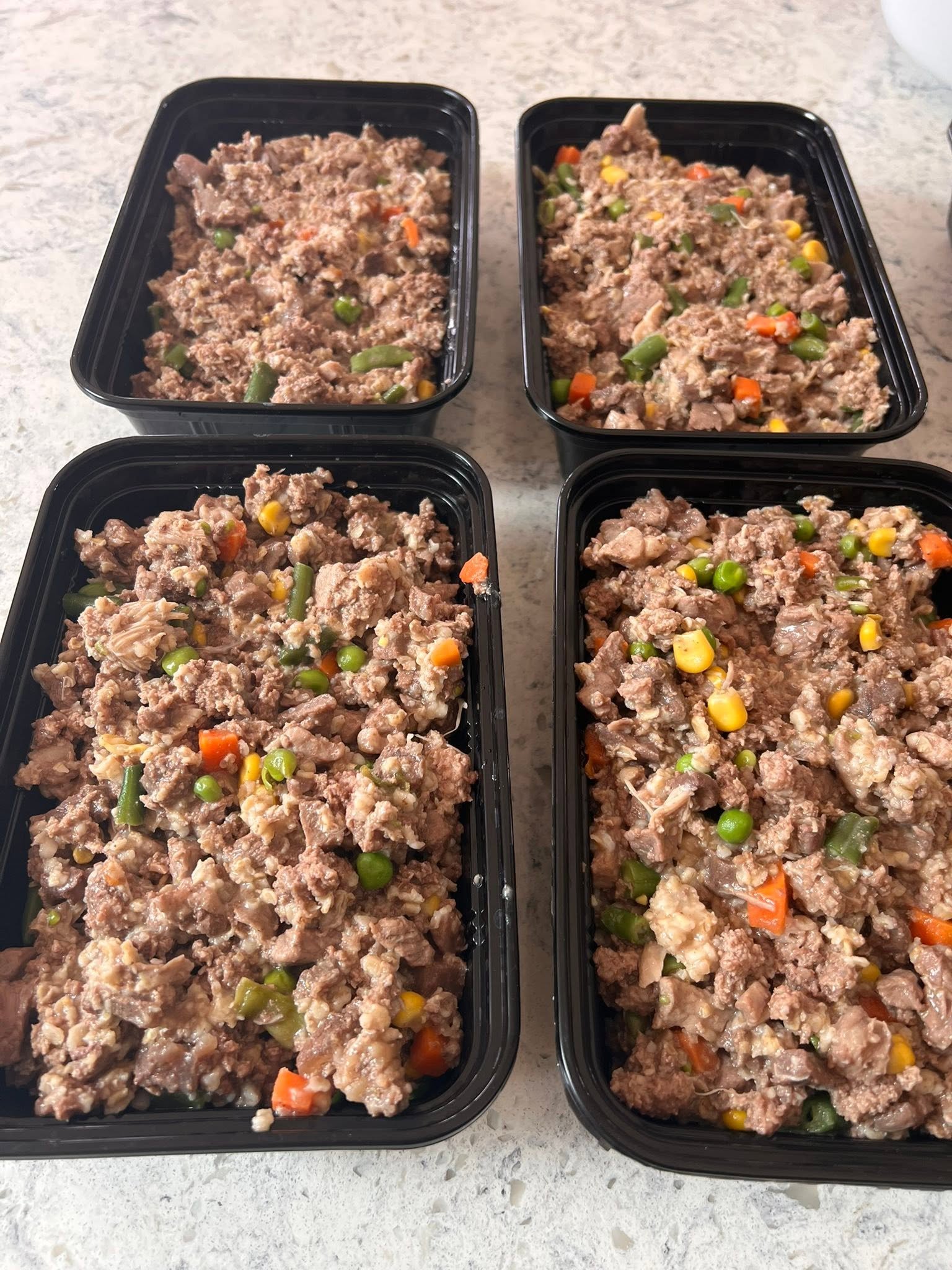
The vegetables visible in the photos appear to include peas, carrots, green beans and corn. That visual identification is tentative; check the actual package or ingredient record. No additional ingredient or quantity can be confirmed from the photographs.
What makes a recipe balanced?
Nutritional balance means supplying essential nutrients in suitable amounts and proportions at the intended daily calorie intake. A mix of several meats, vegetables and oats does not automatically achieve this. Calcium, vitamins, trace minerals and essential fats all need consideration as part of the complete formula.
A board-certified veterinary nutritionist can analyze exact ingredient weights and adjust the recipe for the individual dog. The final instructions should specify supplements, preparation methods and serving amounts. Until that work is done, this draft should not replace a complete daily food.
Eggshell calcium needs a measured plan
Adding eggshells is not proof that calcium and phosphorus are balanced. The calcium source, preparation and amount must match the full recipe, including any other supplements. Use only the precise instructions supplied with a formulated diet; do not stir in loose shell fragments or add a guessed spoonful of powder.
Heart and gizzards also have their own nutrient profiles. They should not be treated as interchangeable with liver or as a substitute for a complete vitamin and mineral plan.
Organizing preparation
Once the ingredient amounts are established, label them as raw, cooked or drained weights. Keep raw-meat cutting boards and utensils separate from cooked food. Use plain ingredients without onion, garlic, seasoning blends or salty sauces, and remove bones from meat before mixing or serving.
Cook turkey, ground turkey and chicken gizzards to 165°F (74°C), verified with a food thermometer. Ground beef needs at least 160°F (71°C). If cooking the meats together with poultry, use the poultry temperature throughout the mixture. Follow the appropriate cooking method for each whole cut rather than assigning one cooking time to everything.
Cook the oats in plain water according to the package instructions and prepare frozen vegetables as directed on their packet. Cook eggs until the whites and yolks are firm. These are general preparation guidelines, not a tested method for an unmeasured batch.
Mixing and weighing portions
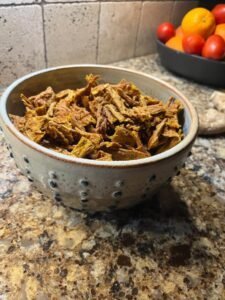
Chop the cooked ingredients to a manageable texture and mix them thoroughly in a clean bowl. Follow the final formulation for any prescribed supplements and when they should be added. Record the finished batch weight before dividing it into measured portions.
The number of containers does not determine the number of daily servings. Serving size depends on the food’s calorie content and the dog’s needs, so no cups-per-day recommendation can be calculated from this list.
Refrigerating and freezing the batch
Transfer cooked food into shallow containers promptly. Refrigerate within two hours, or within one hour if the surrounding temperature is above 90°F (32°C). Keep the refrigerator at 40°F (4°C) or below and use refrigerated portions within three to four days.
Freeze the remaining supply promptly in labeled portions. Thaw in the refrigerator and follow the individual feeding plan when weighing a serving. Avoid leaving a deep bowl of food on the counter to cool completely.
Before repeating the batch
Keep a record of the exact meat cuts, fat percentages, vegetable mixture, oat type, ingredient weights and finished yield. Those details provide the basis for a proper nutritional assessment. Guessing quantities may produce a similar-looking meal, but it cannot establish a balanced diet.

Leave a Reply