
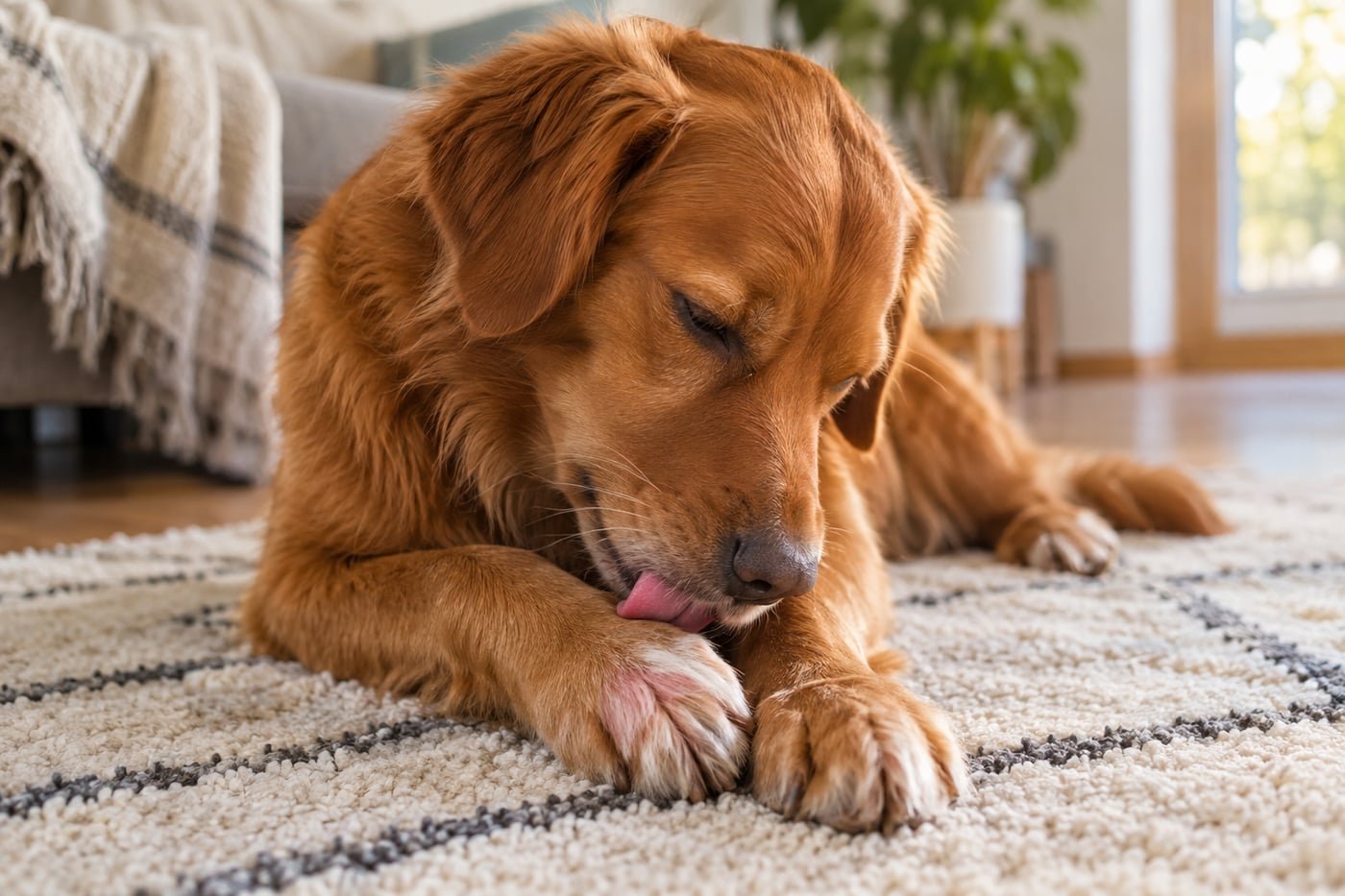
Possible signs of food allergies in dogs include persistent itching, paw licking, recurrent ear trouble and sometimes vomiting or diarrhea. These symptoms also occur with other conditions. A symptom checklist or a reaction to one meal cannot confirm a food allergy. [1]
Food allergy is not the same as every food reaction
A food allergy involves an immune response. Other adverse reactions may involve intolerance or a different digestive problem. A dog can also develop an allergy to an ingredient they have eaten before; a familiar food is not automatically ruled out. [1]
For your notes, use descriptions such as “scratching most evenings” or “three ear flare-ups this year.” Save the term “food allergy” for the diagnosis your veterinary team establishes.
How an elimination trial works
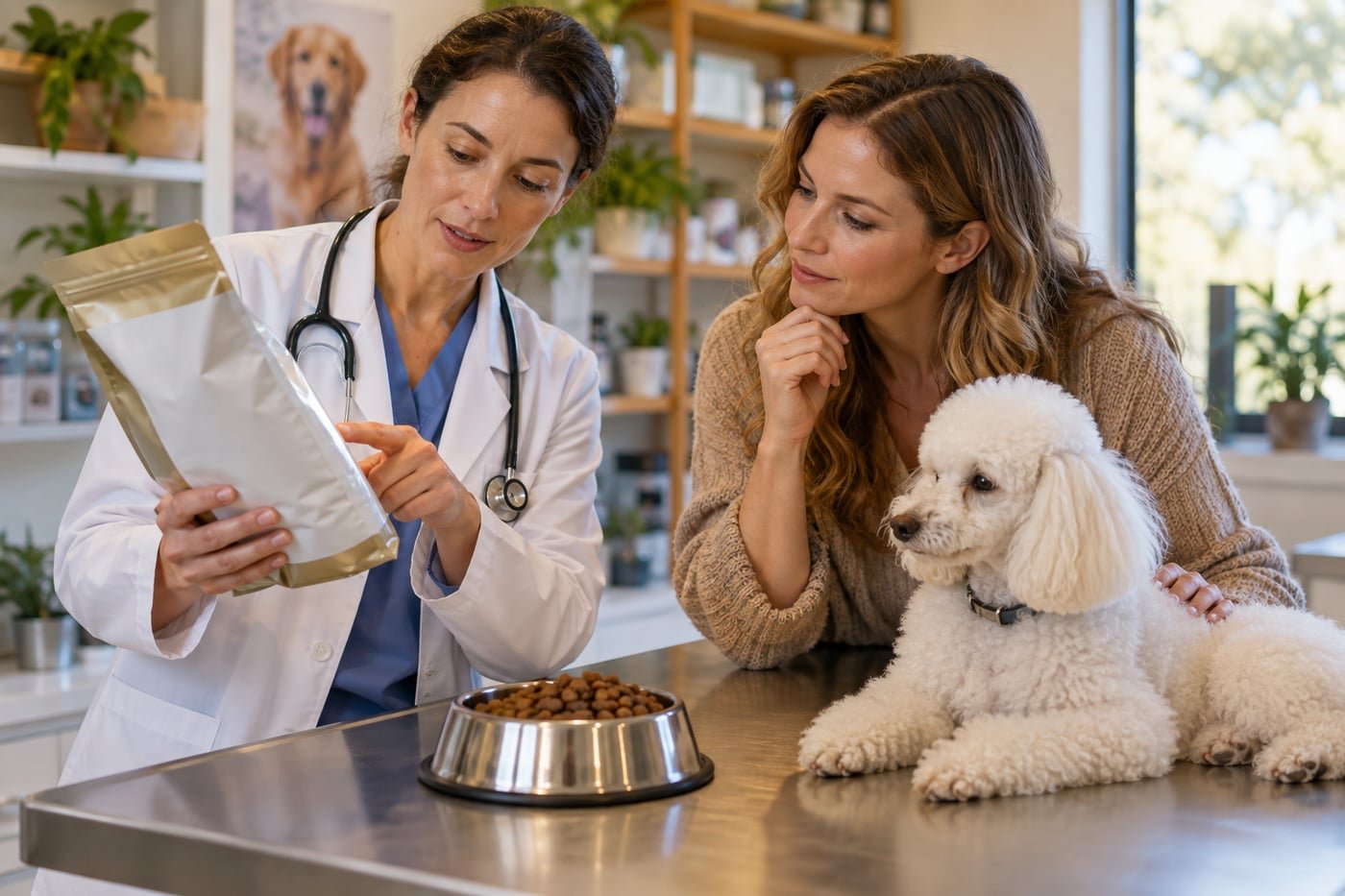
Your vet may recommend a controlled elimination diet followed by a planned dietary challenge. The trial diet is selected from the dog’s feeding history and may use hydrolyzed protein or a suitable novel protein. Trials commonly last several weeks; the Canadian Academy of Veterinary Dermatology explains why strict control and follow-through matter. The veterinary team should set the duration and challenge plan. [2]
Randomly rotating supermarket foods is not the same test. If several things change at once, it becomes difficult to tell what caused improvement or a flare-up.
Make a complete food inventory
- Photograph labels for meals, toppers and treats.
- List dental chews, supplements and flavored medicines.
- Record food used for training or hiding tablets.
- Include scraps, other pets’ food and anything picked up outdoors.
- Tell every family member what the trial allows.
Ask the clinic what rewards and medication options are compatible with the trial. Do not stop parasite prevention or other prescribed treatment on your own. A written household plan is easier to follow than assuming everyone remembers a verbal list.
Track improvement without guessing
Choose a consistent way to record scratching, ear symptoms, stool changes and sleep disruption. Take dated photographs where appropriate. Bring this record to follow-up visits rather than deciding that one better day proves the diagnosis.
The dietary challenge is important to interpreting a successful trial. Follow the veterinarian’s instructions rather than reintroducing several foods yourself. Do not deliberately provoke a reaction in a dog with a history of severe reactions without specialist guidance. [2]
Common food allergy questions
Does grain-free mean hypoallergenic?
No. The label does not show whether a food avoids your dog’s specific trigger. The full ingredient history and the suitability of the trial diet matter more than a marketing category.
Can a hair or saliva test choose the right diet?
Do not replace a veterinary elimination-and-challenge process with a commercial screening result. Ask your veterinarian which testing methods can answer the clinical question for your dog. [2]
When is a reaction urgent?
Sudden breathing trouble, collapse or rapidly developing facial swelling needs immediate veterinary advice. Do not try to manage a severe reaction by changing dinner. [3]
Related Dog Health guides
Sources
- VCA: Food allergies in dogs
- Canadian Academy of Veterinary Dermatology: Elimination diet trial
- VCA: Allergies in dogs
Content updated September 9, 2026. Educational information, not a diagnosis or a substitute for veterinary care.






Leave a Reply