
Flying with a small dog requires advance checks with the operating airline, the destination authorities and your veterinarian. Reserve the pet’s place, confirm carrier requirements and practise comfortable carrier time before departure.
Flight planning timeline
On a phone, swipe the table sideways to read every column.
| When | Task |
|---|---|
| Before booking | Confirm the airline’s current pet policy, cabin space, carrier dimensions, fees, route restrictions and breed rules. |
| Weeks ahead | Check destination and transit requirements with the relevant authorities; arrange veterinary documents within their valid dates. |
| At home | Let the dog voluntarily enter and rest in the carrier; practice short closed-door periods. |
| Travel day | Bring the carrier, identification, records, cleanup supplies and a familiar absorbent liner; follow airline feeding instructions. |
A small dog is not automatically eligible for cabin travel. The carrier must meet the airline’s rule and let the dog fit as required. Never give a sedative just to make a flight easier without explicit veterinary advice. International requirements can change, so use the destination authority and USDA APHIS for the specific route instead of relying on an old blog checklist.
Confirm the exact itinerary
Check the operating airline for every flight, including connections. Ask about reservations, carrier measurements, fees and where the dog may travel. Save the written requirements and confirmation. A codeshare flight may be operated by a different airline with its own conditions.
Arrange health and entry documents
Consult your veterinarian well in advance about fitness to travel and required paperwork. For international travel, use the destination’s official rules and the relevant animal-health authority, such as USDA APHIS for travel involving the United States. Timing requirements can matter as much as having the document.
What should you confirm before paying for a ticket?
Ask about the exact route, aircraft and every operating carrier. Confirm whether pets are accepted, the permitted travel arrangement, carrier dimensions, fees and how a pet reservation is recorded. Check the return journey too. Save the current policy and written booking confirmation. A general pet-friendly statement is less useful than confirmation for the specific flight you intend to take.
Practise with the carrier
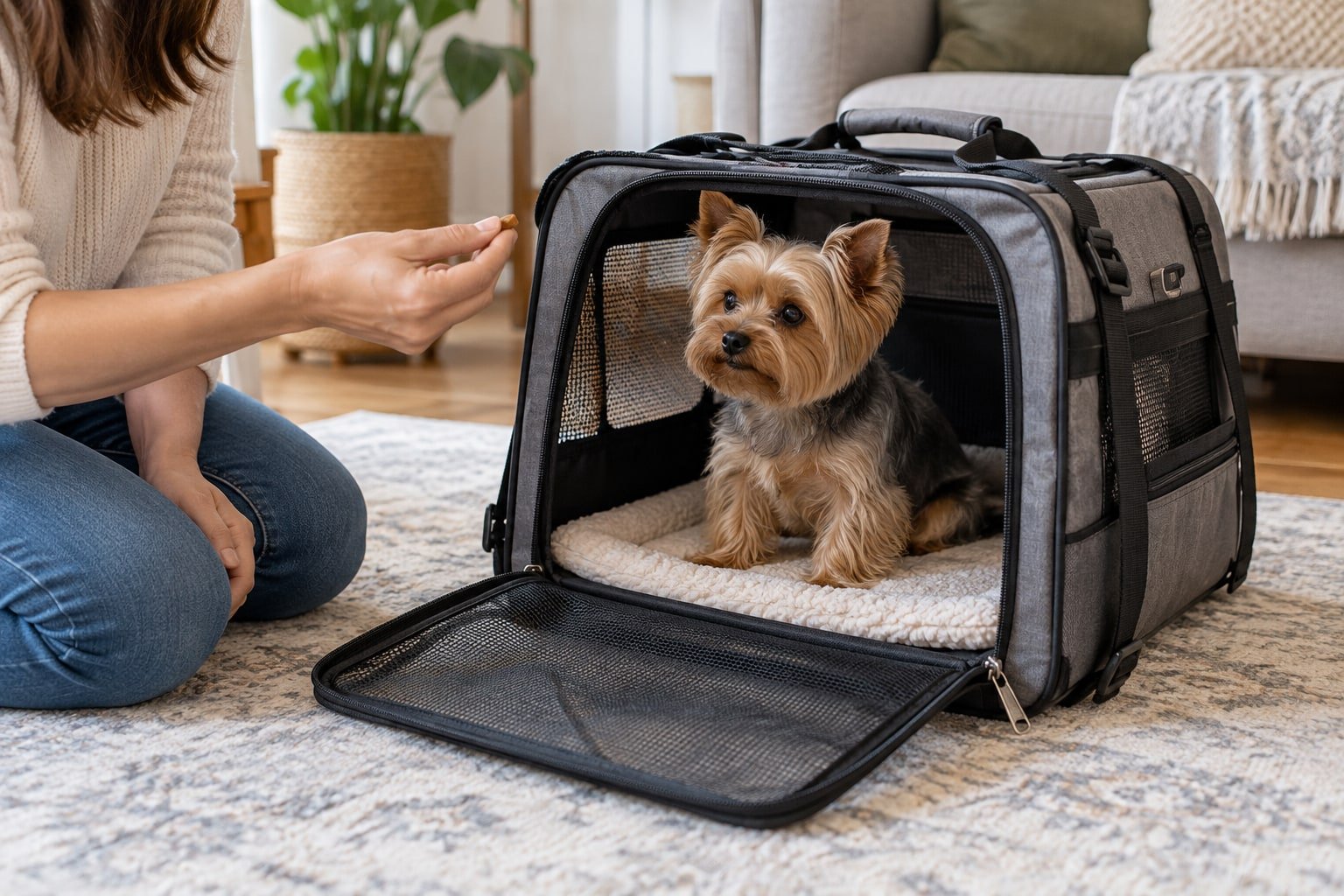
Introduce the carrier at home with short, comfortable sessions. Check that your dog can fit as required by the airline. Pack absorbent materials, cleaning supplies, identification and essential records. Make a plan for permitted relief opportunities and water access during the journey.
Put the individual dog first
Discuss breathing problems, anxiety or other health concerns with your veterinarian. Do not give sedatives or travel medication without veterinary guidance. Consider another travel arrangement if the route or restrictions make the journey unsuitable. Recheck official requirements close to departure because they can change.
How do you prepare a travel-day folder?
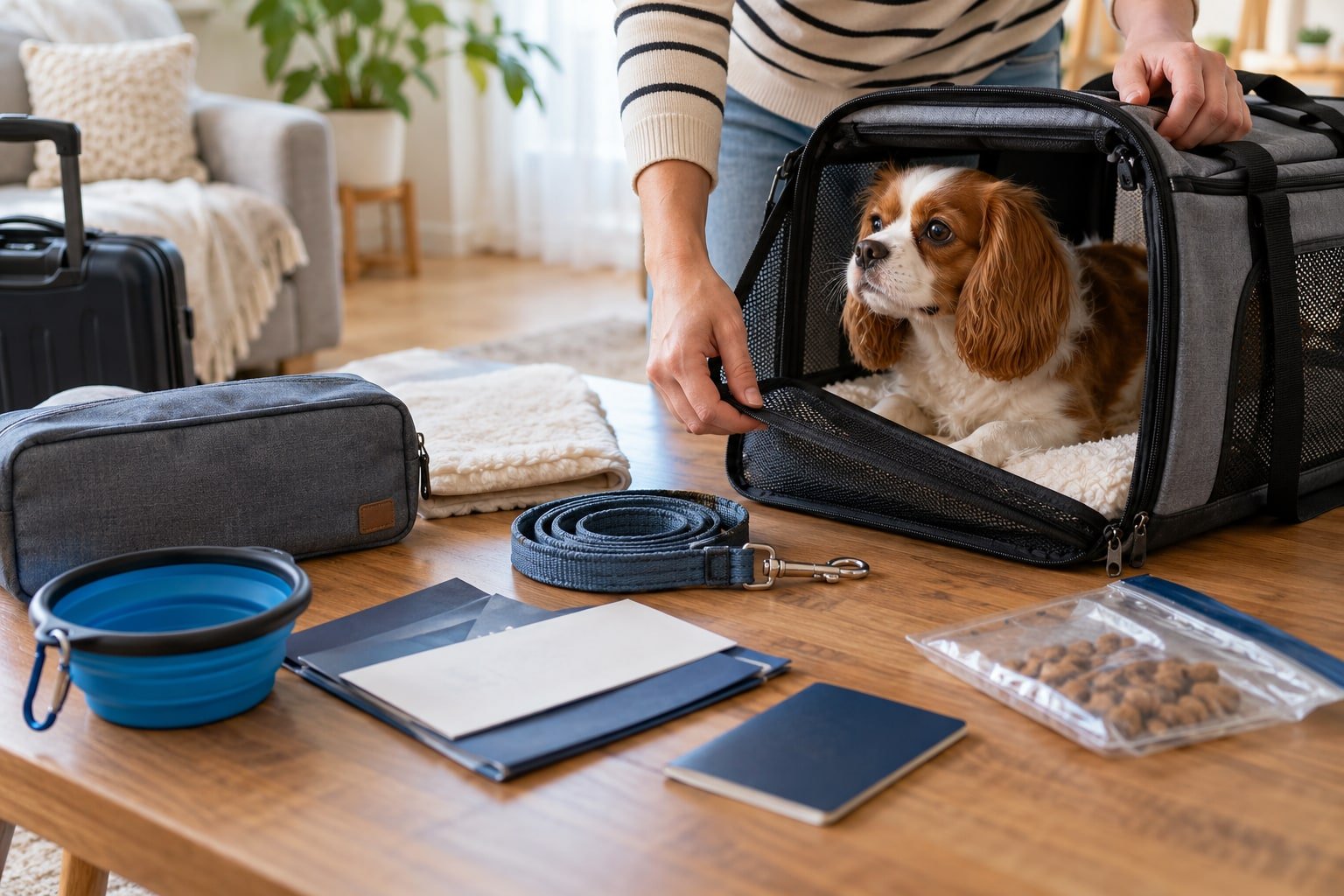
Keep identification, required health documents, medication information, airline confirmation and emergency contacts together. Use the official destination and animal-health guidance to establish deadlines well in advance. Place essential supplies where they are accessible without unpacking the entire bag. Include absorbent material and a plan for water and permitted relief opportunities, while following the airline’s rules for keeping the dog contained.
Your practical checklist
- Discuss fitness to fly and anxiety or breathing concerns with your veterinarian.
- Check the actual airline, route and destination requirements.
- Reserve the pet’s place and obtain a compliant carrier.
- Practise relaxed carrier sessions at home before the journey.
- Recheck documents, timing and policies before departure and the return trip.
Common questions and answers
Does a small dog automatically qualify for cabin travel?
No. Airlines set conditions for pets, carriers and routes, and available spaces may be limited. Confirm your particular booking. The dog also needs to fit comfortably within the required carrier arrangement; body weight alone may not answer that question.
Can I use the same documents for every destination?
No. Entry, return and transit requirements can differ. Use official authorities and work with the appropriate veterinarian on documentation. A certificate accepted for one trip may not satisfy another country’s rules or timing requirements.
Should I sedate my dog for the flight?
Do not give sedatives or other travel medicine without veterinary guidance. Discuss the dog’s health and the full travel arrangement. Medication is not a substitute for assessing whether the journey is appropriate or for preparing the carrier routine.
What if my dog cannot settle in the carrier?
Start preparation well before the trip and seek qualified help if distress continues. Do not assume several hours of confinement will fix the problem. Review alternative arrangements if the dog’s welfare or the route makes flying unsuitable.
Check our previous articles
Continue with these related guides from My Dog Recipes:
Sources and further reading
- USDA APHIS: Preparing pets for air travel
- USDA APHIS: Pet travel
- US Department of Transportation: Travelling with animals
Updated September 29, 2026. General educational guidance; individual health and feeding decisions depend on your dog’s needs.










Leave a Reply