
Preventing your dog from getting lost starts with secure boundaries, suitable walking equipment and current identification. Make an escape-prevention routine for visitors, deliveries, travel and anyone who looks after the dog.
Build three layers of protection
On a phone, swipe the table sideways to read every column.
| Layer | Practical check |
|---|---|
| Prevent escape | Inspect gates, fence gaps, door routines and harness fit before visitors or deliveries. |
| Make identification visible | Use a readable tag with a current phone number and keep the microchip registration current. |
| Prepare to search | Store recent photos, chip number and local shelter contacts where family can find them. |
Practice recall in a secure place with rewards, but do not assume training will stop a frightened dog from bolting. During fireworks, storms, travel or house moves, use a secure room, lead and clearly assigned door management. If a dog disappears, check the immediate area, alert shelters and the microchip registry, and share an accurate photo and contact number. Do not chase a panicked dog into traffic.
Check the escape points
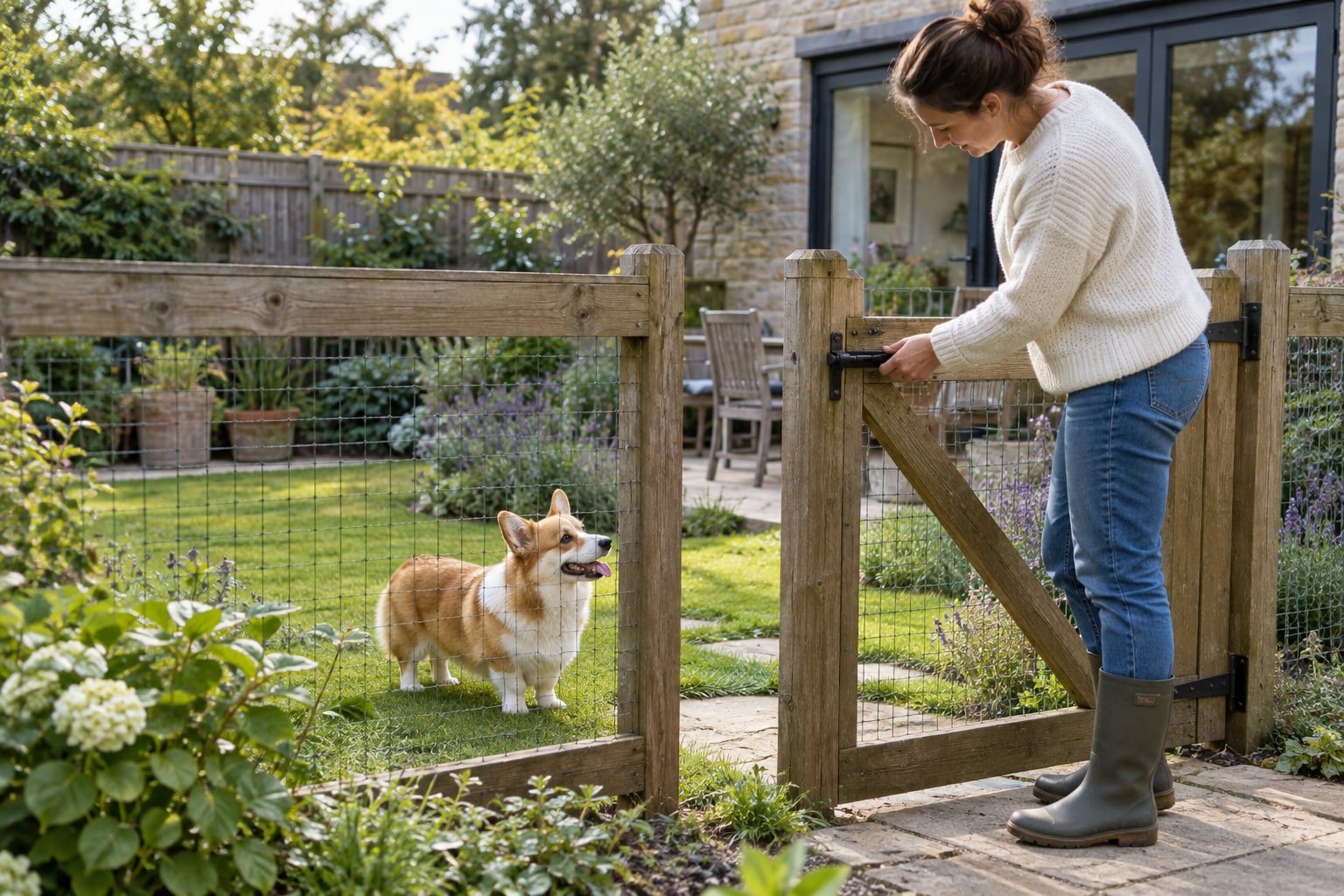
Walk the fence line and look for gaps, loose panels and objects a dog could climb. Check gate latches after deliveries or garden work. When visitors arrive, use a secure room or barrier if the entrance is busy. Agree who is responsible for letting the dog out.
Check walking equipment
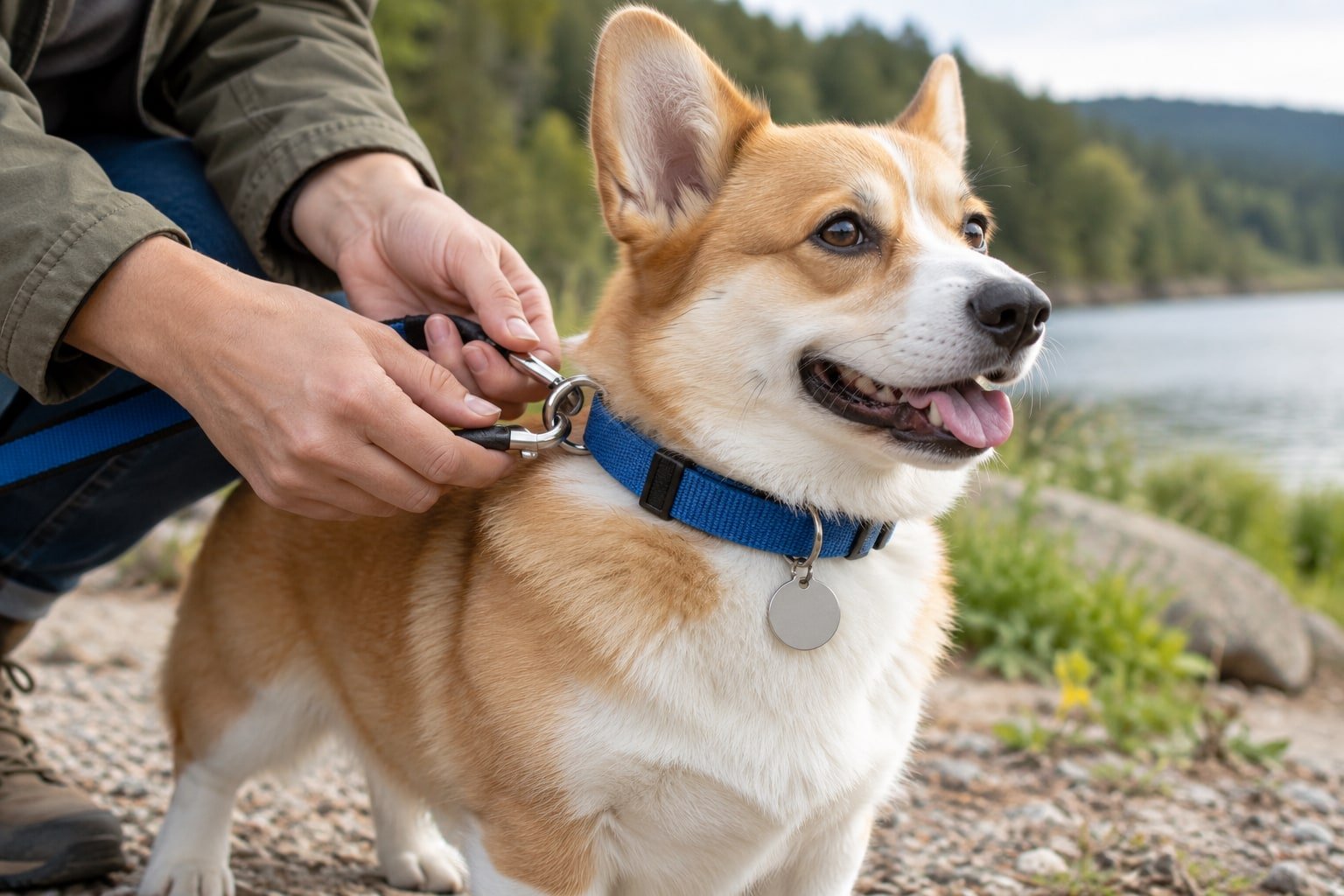
Inspect lead clips, harness stitching and collar fit. In unfamiliar or unsecured places, keep the dog on suitable equipment. Practise recall with rewards in a secure area, then use a long line where appropriate while building reliability. A trained recall does not replace physical safety near traffic.
How should you handle doors and visitors?
Decide where the dog will stay before a busy arrival begins. A secure room or properly placed barrier is easier to manage than trying to catch a dog between moving people. Put a reminder near a garden gate for workers and guests. After work in the garden, physically check the latch and boundary before letting the dog outside; do not rely only on someone saying it is closed.
Keep identification current
Use a readable contact tag and keep microchip registration up to date. Save recent clear photographs, including distinctive markings. Share your routine with dog walkers and sitters, and give them an emergency contact they can actually reach.
Have a missing-dog plan ready
If your dog goes missing, contact local shelters, veterinary clinics and the chip registry promptly. Share an accurate description and last-seen location. Search calmly and avoid chasing a frightened dog into traffic. Keep a log of reports so helpers can coordinate rather than duplicate the same search.
What changes when you travel or use a sitter?
Walk through the property with the carer and point out weak spots, routines and equipment. Explain whether the dog tries to slip a harness, climbs furniture near a fence or rushes a doorway. Share a current photo and emergency contacts. At a holiday property, check boundaries from scratch rather than assuming a listing described as dog-friendly means that the garden is escape-proof.
Your practical checklist
- Inspect gates, fences and accessible windows before leaving the dog in an area.
- Check lead clips and collar or harness fit before walks.
- Use a secure setup for deliveries, visitors and moving luggage.
- Keep the tag readable, chip registration current and photographs recent.
- Give walkers and sitters a short written routine and emergency contact.
Common questions and answers
Can I rely on recall instead of a lead?
A recall is valuable, but even a well-trained dog can be distracted or frightened. Use physical management where traffic, wildlife, local rules or an unsecured setting make it necessary. Practise recall with rewards in an appropriate safe space.
Is a fenced garden always secure?
No. Gaps, damaged panels, weak latches and climbing opportunities can change over time. Inspect after storms or building work and check what a dog can reach from furniture or stored objects. Supervision remains useful even in a familiar garden.
What should I do first if my dog escapes?
Act promptly and coordinate helpers. Contact local shelters, veterinary clinics and the chip registry, share a clear photograph and last-seen location, and keep a record of sightings. Avoid chasing a frightened dog towards traffic or other hazards.
Does a tracker replace identification?
No. A tracker may add a way to look for location, but devices depend on their own battery and network conditions. Maintain the collar tag, chip registration and escape-prevention routine rather than relying on a single tool.
Check our previous articles
Continue with these related guides from My Dog Recipes:
Sources and further reading
Updated September 29, 2026. General educational guidance; individual health and feeding decisions depend on your dog’s needs.









Leave a Reply