

Both canned and dry dog food can provide complete nutrition when labelled for the right life stage. Choose according to your dog’s health, calorie needs and preferences, then compare storage, convenience and cost.
Compare the label before the format
On a phone, swipe the table sideways to read every column.
| Question | Canned food | Dry food |
|---|---|---|
| Is it complete for this dog? | Check the nutritional adequacy statement and life stage. Wet and dry can each be complete or supplemental. | |
| How do I measure it? | Use the can’s calories and actual portion; high moisture changes volume. | Use calories per cup or gram; weigh the portion for consistency. |
| What happens after opening? | Refrigerate promptly according to the label and discard when directed. | Keep in its original bag inside a clean sealed container, in a cool dry place. |
| Will it clean teeth? | Neither format automatically replaces toothbrushing or veterinary dental care. | |
For a dog with kidney disease, urinary disease, weight loss or a veterinary diet, the appropriate formulation matters more than whether it comes in a can or bag. Introduce a new food gradually according to veterinary advice and monitor stool, appetite and body condition. Do not compare the protein numbers on a wet and dry label without accounting for moisture.
Check the adequacy statement
Look for a food identified as complete and balanced for the appropriate life stage. Products intended only for supplemental feeding should not become the whole diet. Ask your veterinarian about health-related needs rather than choosing from front-of-pack claims alone.
Compare portions by calories
Wet food contains more water, while dry food is convenient to measure and store. Equal cupfuls are not interchangeable. Use the calorie information on each label when combining them, and count treats too. Track weight and body condition so the serving can be adjusted to the individual dog.
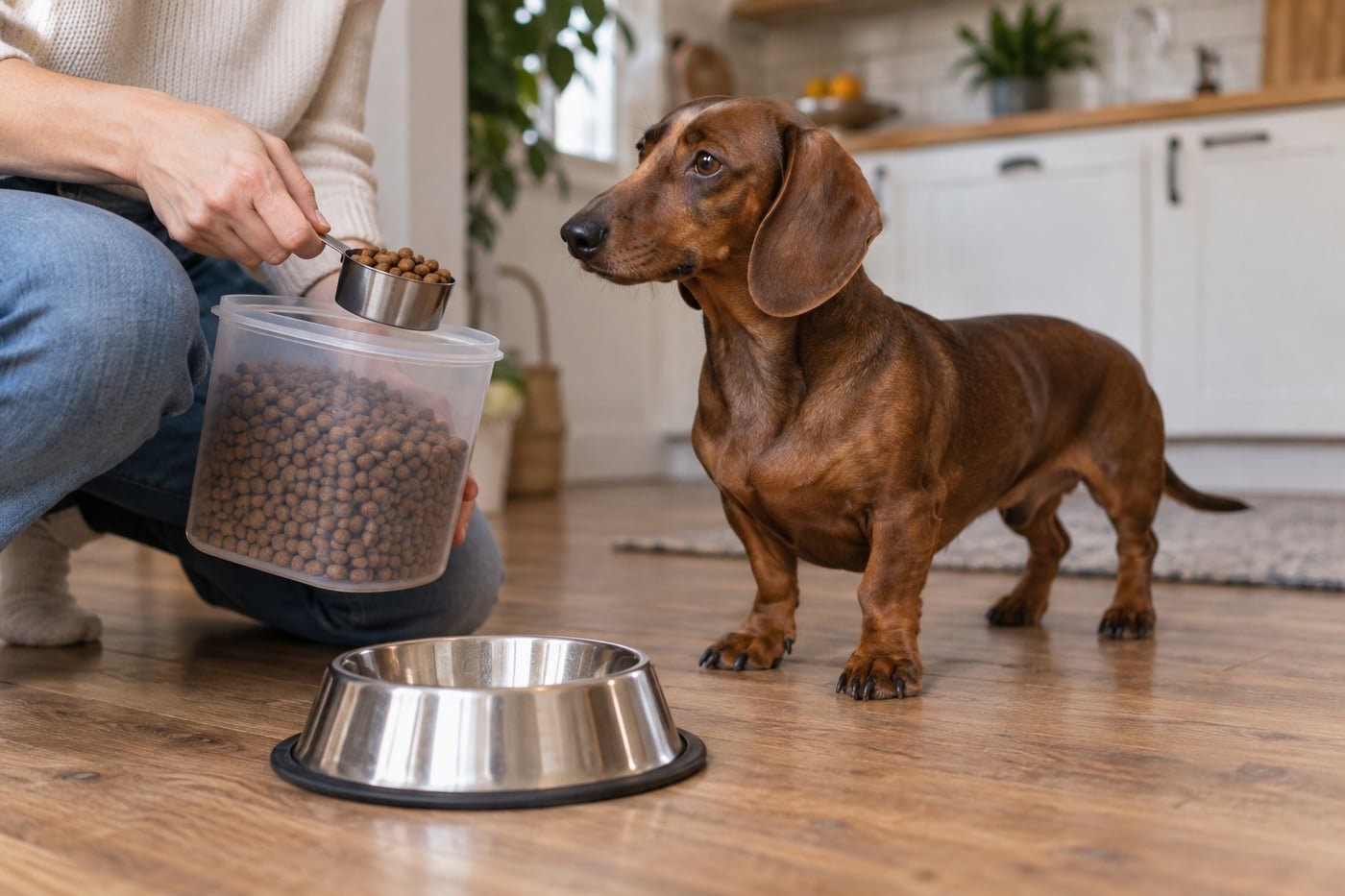
How do you compare the labels fairly?
Begin with the nutritional adequacy statement and calorie content, not the picture on the front. Moisture makes the percentages on wet and dry labels difficult to compare directly. For a detailed nutrient comparison, ask the manufacturer for values on a consistent basis and discuss them with your veterinarian. For serving decisions, the useful starting point is how many calories each measured portion provides.
Store each format properly
Keep dry food in its original bag inside a clean container when practical, preserving the lot information. Follow the label for opened wet food, including refrigeration instructions. Wash bowls and measuring tools regularly. Avoid repeatedly topping up a storage bin without cleaning it.
Make a manageable change
Plan a gradual transition unless your veterinarian gives different instructions. Write down the old and new portions so everyone in the household follows the same schedule. Persistent vomiting, diarrhoea, refusal to eat or weight change deserves a veterinary discussion rather than repeated food switching.
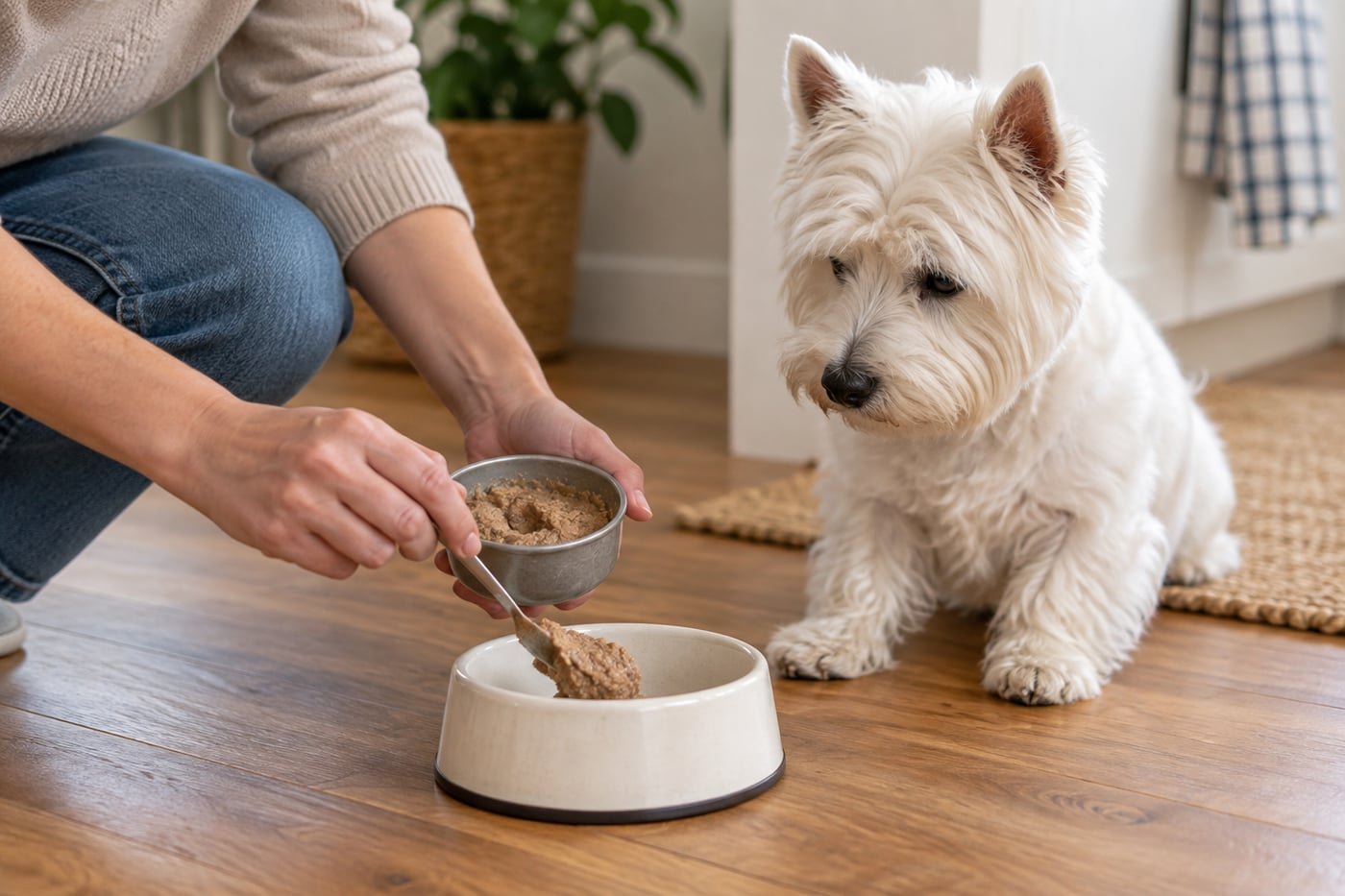
What does mixed feeding look like in practice?
Combining wet and dry food requires replacing some of one food with the other, not adding a second full meal. As a calculation example only, if a feeding plan allocates 400 calories to a meal and wet food supplies 100, the dry portion would need to supply the remaining 300. Your dog’s actual allowance must be individualised; this example does not prescribe a daily intake.
Your practical checklist
- Record the current food, measured daily amount and all extras.
- Check life-stage suitability and calories on the proposed food.
- Calculate portions in calories rather than exchanging equal cupfuls.
- Introduce the new feeding arrangement gradually unless your vet directs otherwise.
- Monitor appetite, stools and body condition, and review the amount when needed.
Common questions and answers
Is canned food always healthier than kibble?
No. Format alone cannot establish nutritional quality or suitability. A complete diet for the appropriate life stage, reliable manufacturer information and your dog’s individual response matter more than whether the food comes in a can or bag.
Does ordinary dry food clean dogs’ teeth?
Do not assume that crunching standard kibble provides adequate dental care. Dental diets and products have specific claims and evidence. Ask your vet about a dental plan that includes home care and examination rather than choosing food texture as a substitute.
Can I leave wet food out all day?
Follow the product’s storage and serving instructions and remove uneaten food promptly. Refrigerate opened wet food as directed. Leaving a dish out indefinitely makes both freshness and accurate intake harder to manage, especially in a warm room.
What if my dog refuses the new food?
Check whether the refusal is limited to the new food or is part of a broader appetite change. Do not repeatedly add richer toppings without understanding the problem. Persistent refusal, weight loss or other symptoms warrants veterinary advice.
Check our previous articles
Continue with these related guides from My Dog Recipes:
Sources and further reading
Updated September 29, 2026. General educational guidance; individual health and feeding decisions depend on your dog’s needs.







Leave a Reply