

This egg, cheese and spinach omelette for dogs uses a short ingredient list and a gently heated pan. It can be cooked as one thin omelette or several small rounds, then cooled and divided into small portions.
Serve it as an occasional topper or treat alongside a complete diet. Three eggs do not establish a serving for one large dog or seven small dogs: portions depend on each dog’s calorie allowance and the other food eaten that day.
Ingredients
- 3 eggs, shells removed
- A small handful of spinach, washed and finely chopped
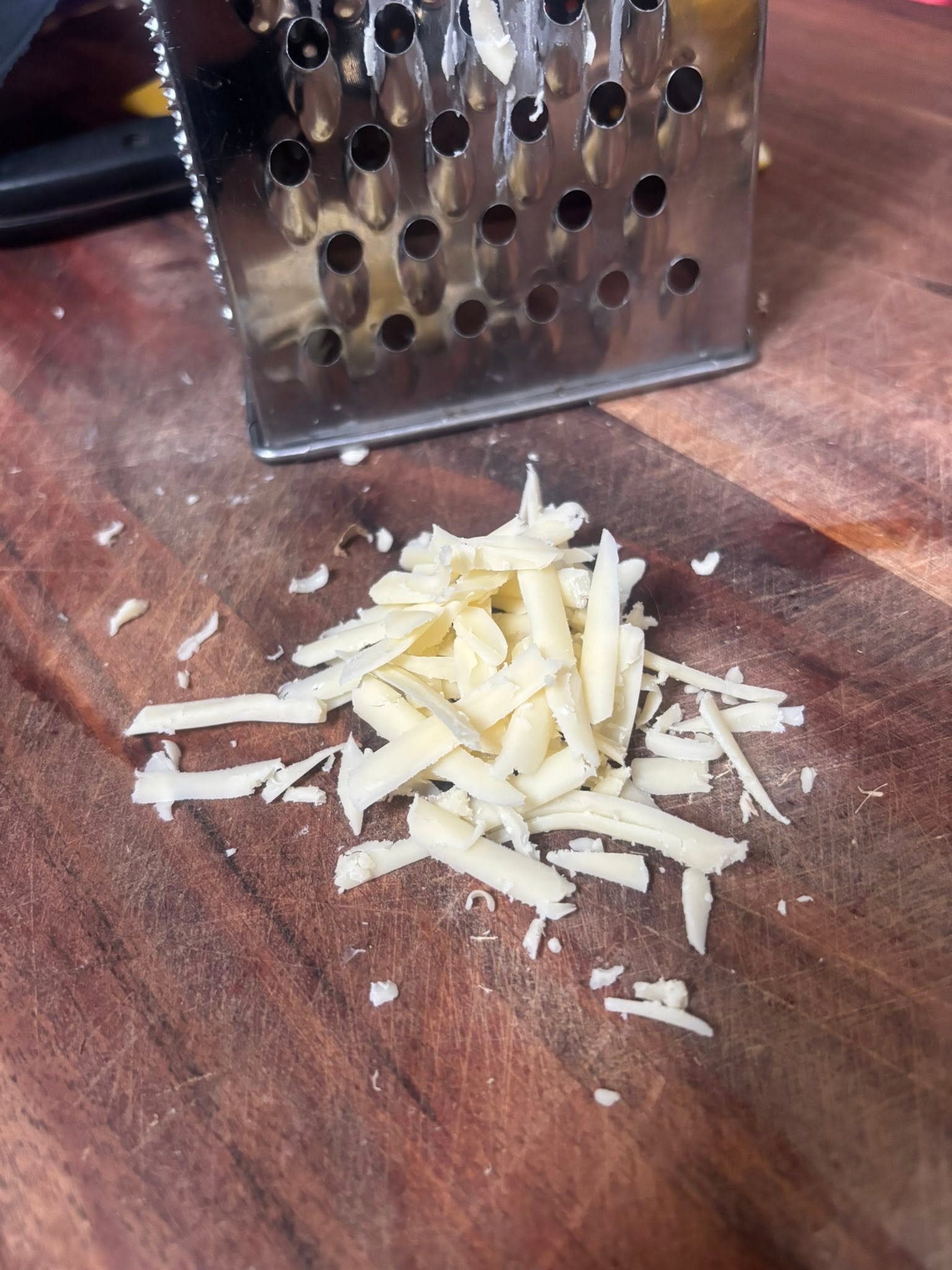
- 10–15 g plain cheese, such as cheddar, finely grated
- 1 teaspoon flax seed, finely ground
- Coconut oil, optional: only enough to lightly grease the pan
A suitable nonstick pan may not need added oil. If using oil, measure the amount so it can be included in the nutrition estimate. Record the egg size, spinach weight and cheese type for a more repeatable batch. Use plain cheese without onion, garlic or other flavorings, and add no salt or seasoning.
How to make the omelette
1. Prepare the mixture
Beat the eggs in a bowl until the yolks and whites are combined. Stir in the chopped spinach, grated cheese and ground flax seed. Chop spinach finely rather than leaving long leaves, and distribute it evenly through the eggs.
2. Warm the pan gently
Set a nonstick frying pan over medium-low heat. If needed, spread a thin film of the measured coconut oil across the cooking surface. Avoid a smoking-hot pan, which can brown the outside while leaving the center undercooked.
3. Cook in a thin layer
Pour in the mixture to form a thin omelette, or spoon it into small rounds with space between them. Stir the bowl between rounds so the spinach, cheese and seeds do not collect in the last portion.
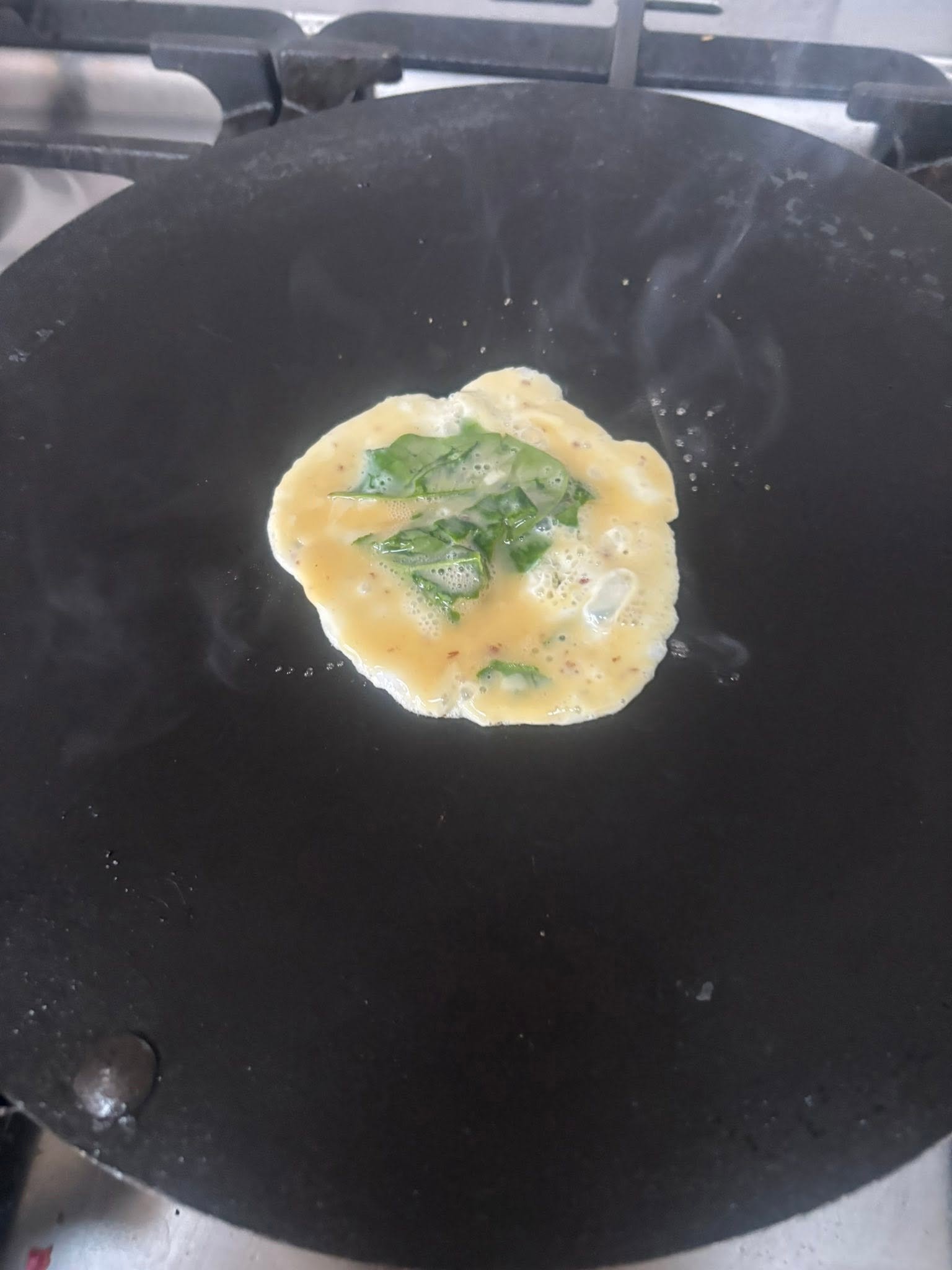
Let the underside set before sliding a broad spatula underneath. Turn carefully and continue cooking until the egg is fully set. If it breaks, finish cooking it as soft scrambled pieces; it does not need to stay in one piece.
Check the thickest part reaches 160°F (71°C) with a suitable food thermometer. There should be no runny egg remaining. Pan size, heat and thickness affect cooking time, so use doneness rather than a fixed number of minutes.
4. Cool and portion
Move the cooked omelette onto a clean plate and let the serving cool before offering it. Cut or tear it into small pieces appropriate for the dog. Keep the remaining food separate from anything the dogs have mouthed.

Tips for an evenly cooked omelette
Keep the layer thin, use finely grated cheese and avoid crowding the pan. If the bottom browns too quickly, lower the heat. For fragile rounds, wait until the edges are set before turning. A small amount of cheese supplies flavor; adding more also changes the fat, salt and calorie content.
The method has not been kitchen-tested here. Coconut oil is an optional cooking aid, not a required supplement or a reason to increase the portion.
Serving as a treat or topper
Keep all treats, toppers and other extras together within 10% of the dog’s daily calories. This recipe is not a complete meal, and adding cheese does not make its calcium and other nutrients balanced. An exact serving weight needs a calorie estimate for the actual batch and the dog’s feeding plan.
Do not assume 10–15 g of cheese is appropriate for every dog simply because it is a small amount in the recipe. Suitability depends on the portion and individual tolerance. For a dog following a prescribed diet, check whether these ingredients fit that plan before adding them.

Nutrition notes
Eggs and cheese contribute protein and fat, and flax seed and spinach add other nutrients in smaller amounts. Their presence does not demonstrate improved digestion, skin health or immunity from this recipe.
The supplied 420-calorie total and macronutrient figures cannot be verified because the oil amount, egg size and spinach weight are unspecified. To estimate the batch, total the nutrition for each measured ingredient, including any cooking oil. Weigh the finished omelette to estimate calories per gram and calculate small portions from that figure.
Storage
Refrigerate leftovers promptly in a shallow, covered container at 40°F (4°C) or below. Do this within two hours of cooking, or one hour if the surrounding temperature exceeds 90°F (32°C). Use within three to four days or freeze small portions promptly for longer storage. Thaw in the refrigerator and discard uneaten food that has been left out beyond these limits.



Leave a Reply