
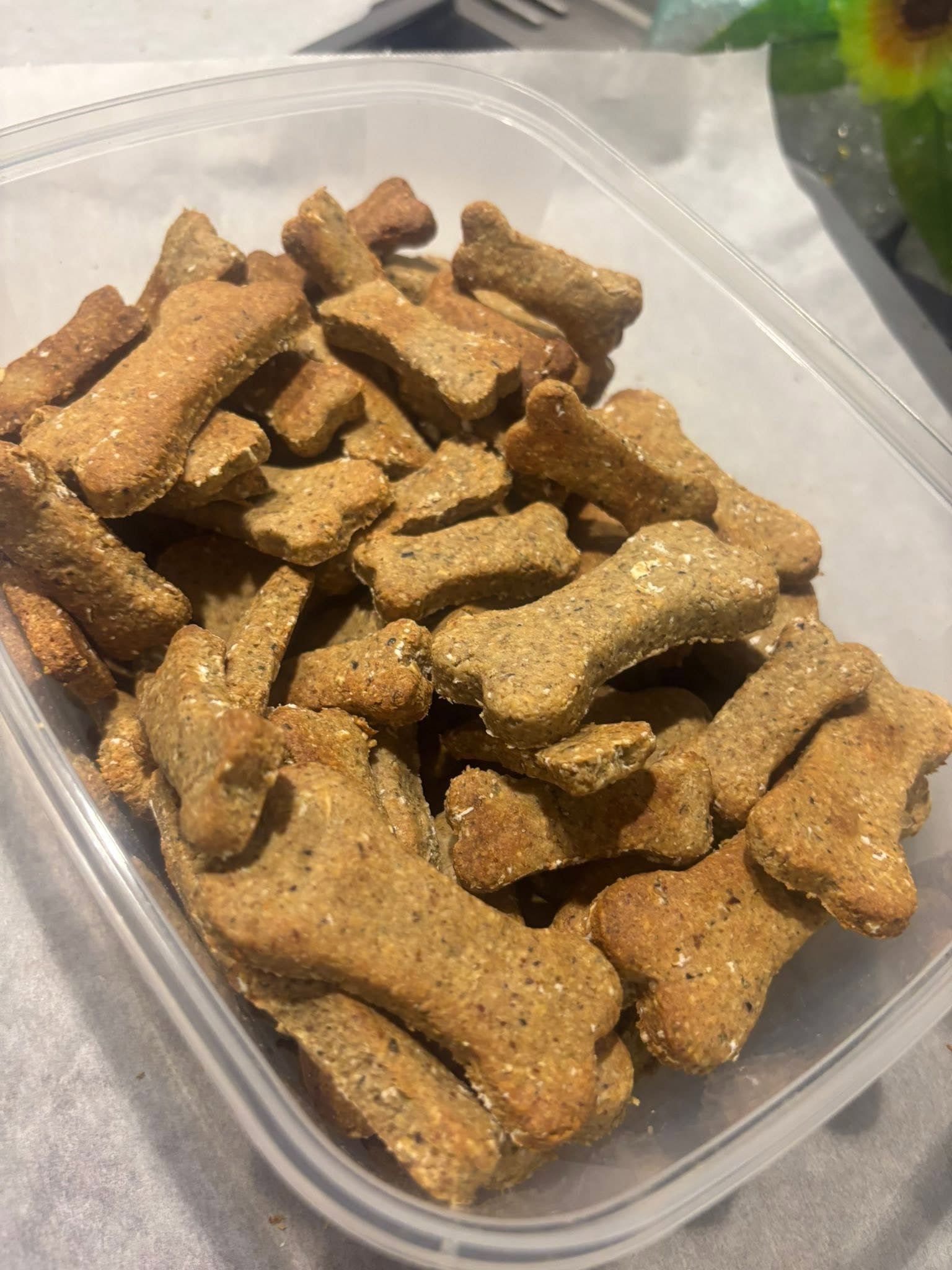
These blueberry and seed dog biscuits combine oat flour, peanut butter, applesauce and eggs in a dough that can be rolled and cut into shapes. Finely ground seeds give the dough an even texture, while chopped blueberries add small pockets of fruit.
They are occasional treats to serve alongside a complete diet. The recipe is not a meal replacement, and the finished biscuits have not been kitchen-tested here.
Recipe at a glance
- Oven: 175°C / approximately 350°F
- Thickness: 6 mm / approximately ¼ inch
- Baking time: 22–25 minutes as a starting range
- Yield: count the finished biscuits; approximately 30 was reported, but cutter size and dough thickness can change this substantially
Ingredients
- 300 g whole-grain oat flour, plus a little for rolling if needed
- 120 g natural, unsalted peanut butter without xylitol
- 25 g ground flax seeds
- 25 g ground, shelled sunflower seeds
- 30 g ground, shelled pumpkin seeds
- 100 g plain, unsweetened applesauce
- 2 large eggs, approximately 100 g without shells
- 60 g fresh blueberries, rinsed, dried and roughly chopped
- 2 g ground cinnamon, optional
- 1–2 tablespoons water, only if needed
Use plain ingredients without sweeteners or seasoning. Check the peanut butter and applesauce labels for xylitol, which may also be listed as birch sugar. Stir separated peanut butter thoroughly before weighing. If gluten avoidance is required, choose oats labeled gluten-free.
How to make blueberry and seed dog biscuits
1. Prepare the oven and ingredients
Preheat the oven to 175°C (approximately 350°F) and line baking sheets with oven-safe parchment. Grind the seeds finely rather than leaving large pieces. Chop the blueberries small enough that they will not catch the cutter or tear the dough.
2. Mix the wet ingredients
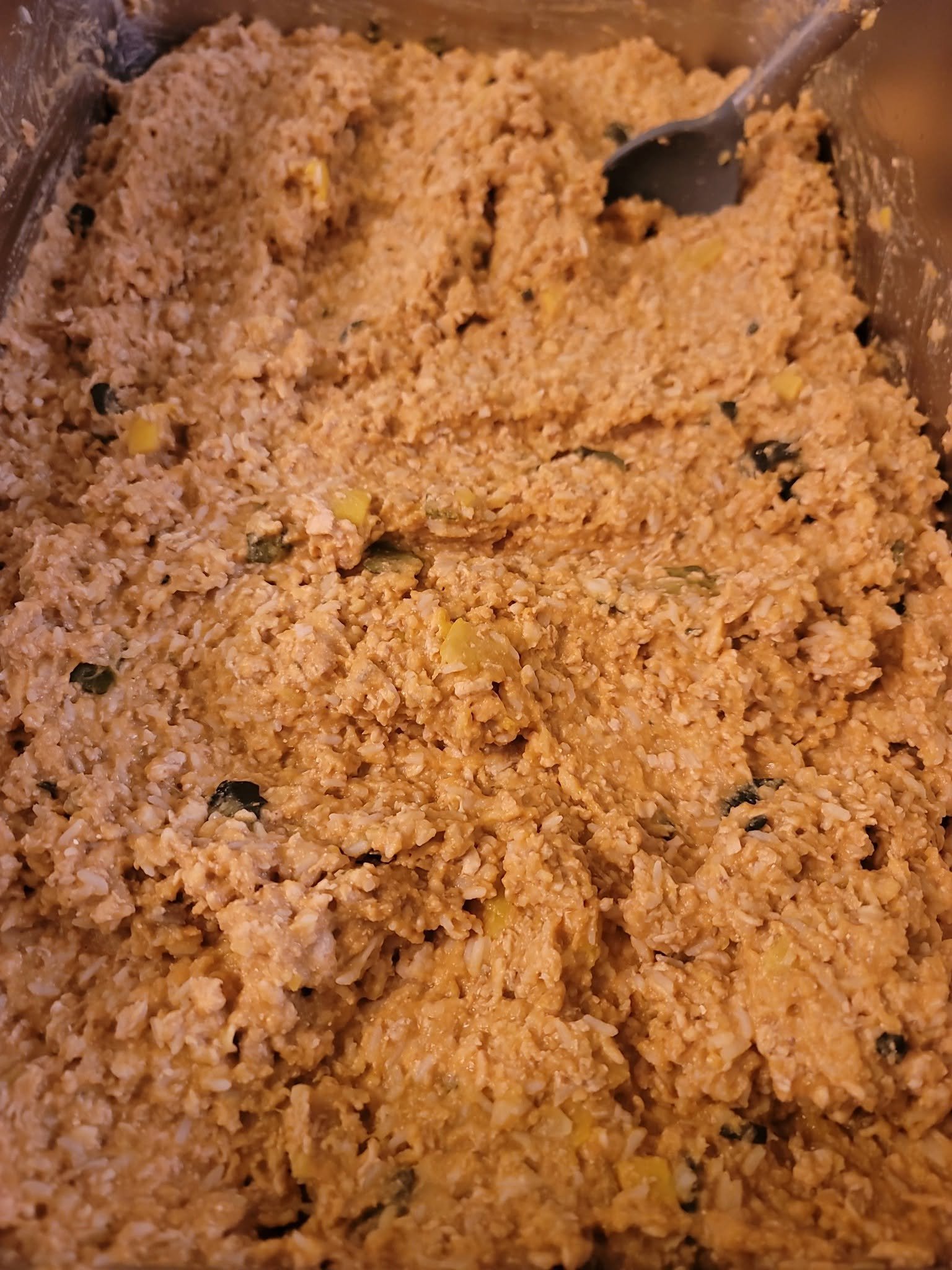
Whisk the peanut butter, applesauce and eggs until evenly combined. Stir in the ground seeds, optional cinnamon and chopped blueberries. Scrape the sides and bottom of the bowl so the seed mixture is distributed throughout.
3. Bring the dough together
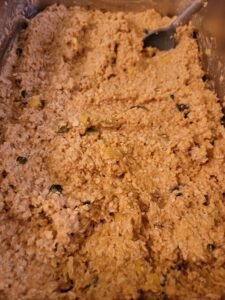
Fold in the oat flour gradually. Let the dough rest for about five minutes so the flour can absorb moisture before deciding whether it needs water. It should hold together when pressed and release from your hands without leaving a thick coating.
If it crumbles, add water one teaspoon at a time, using only as much of the suggested 1–2 tablespoons as needed. If sticky, chill briefly and roll between sheets of parchment. Record any extra flour used because it changes the batch weight and nutrition.
4. Roll and cut evenly
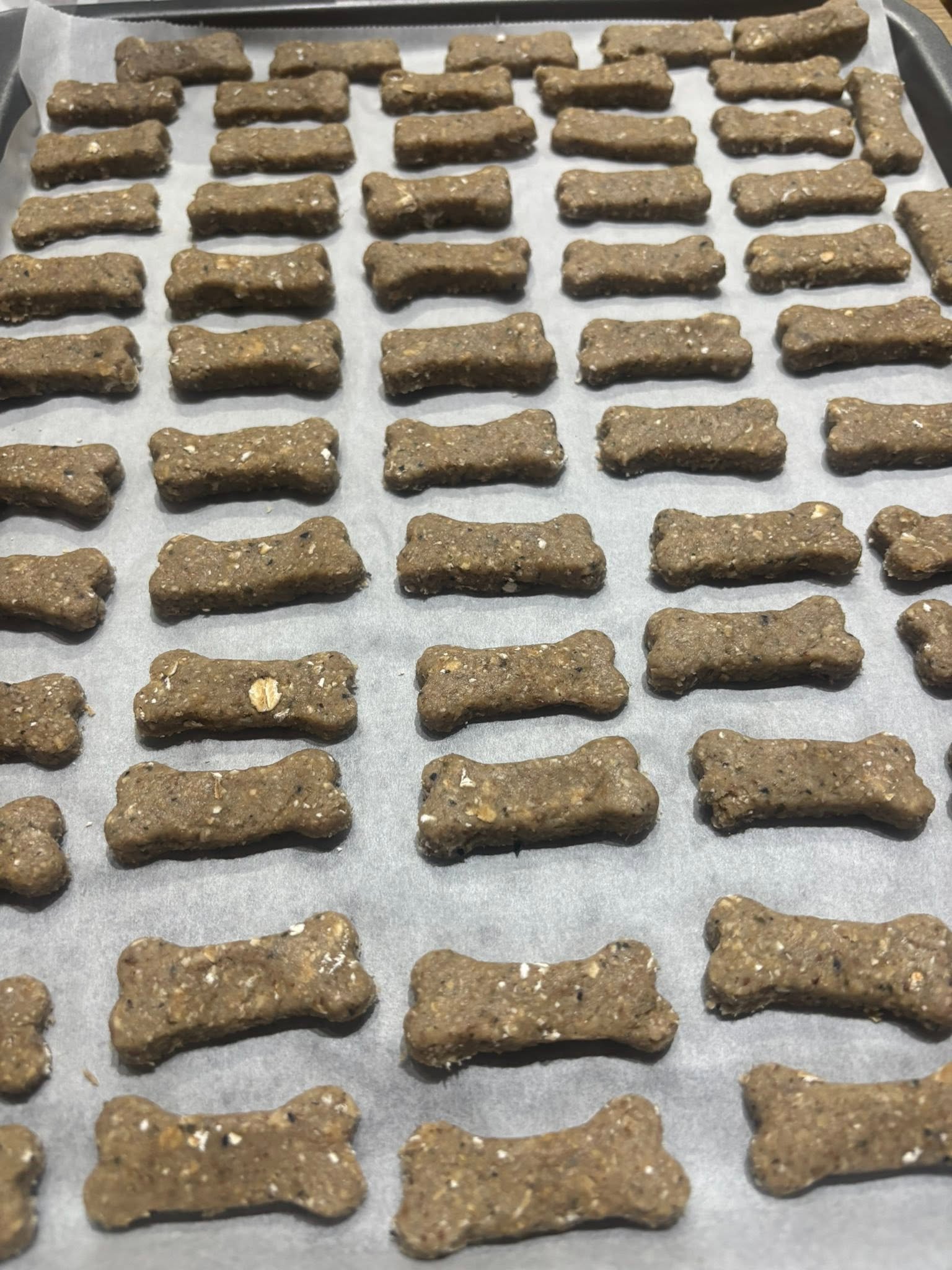
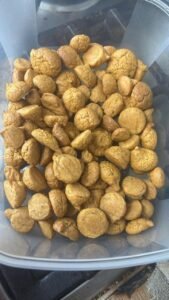
Roll to 6 mm thick on a lightly floured surface or between parchment sheets. Cut into shapes and place about 2 cm apart on the trays. A cutter approximately 2.5 × 5 cm can be used, but do not rely on its dimensions to predict yield. Re-roll scraps gently and keep smaller pieces on a separate tray so they do not overbake.
5. Bake and check the centers
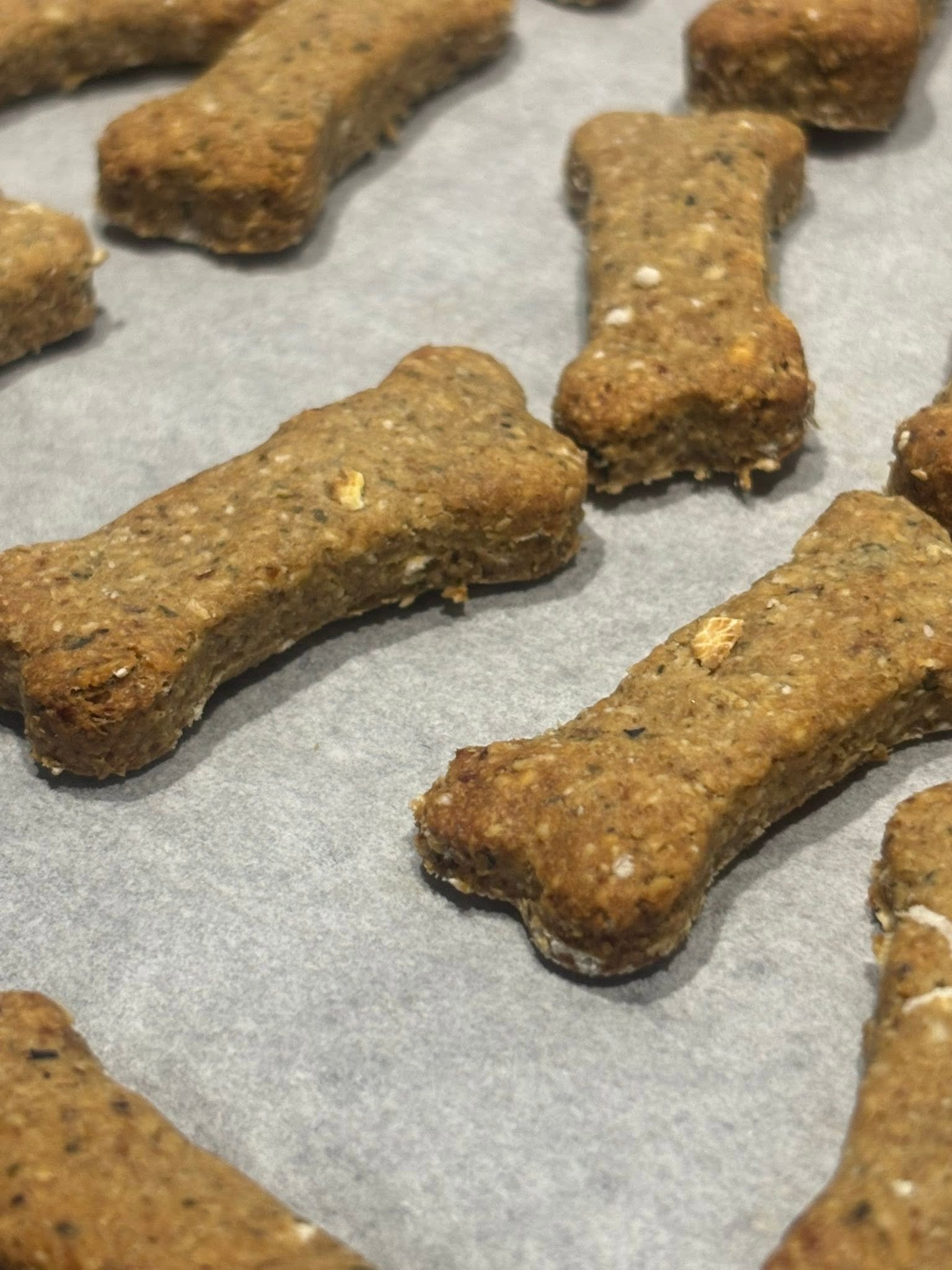
Bake for 22–25 minutes, beginning to check earlier for small pieces. Rotate the tray if your oven browns unevenly. The biscuits should be firm with lightly browned edges and no wet dough in the center. For this egg-containing dough, check a representative thick biscuit with a suitable thin-tip thermometer for 160°F (71°C). Extend baking if necessary; the timer and surface color alone do not confirm doneness.
6. Cool before packing
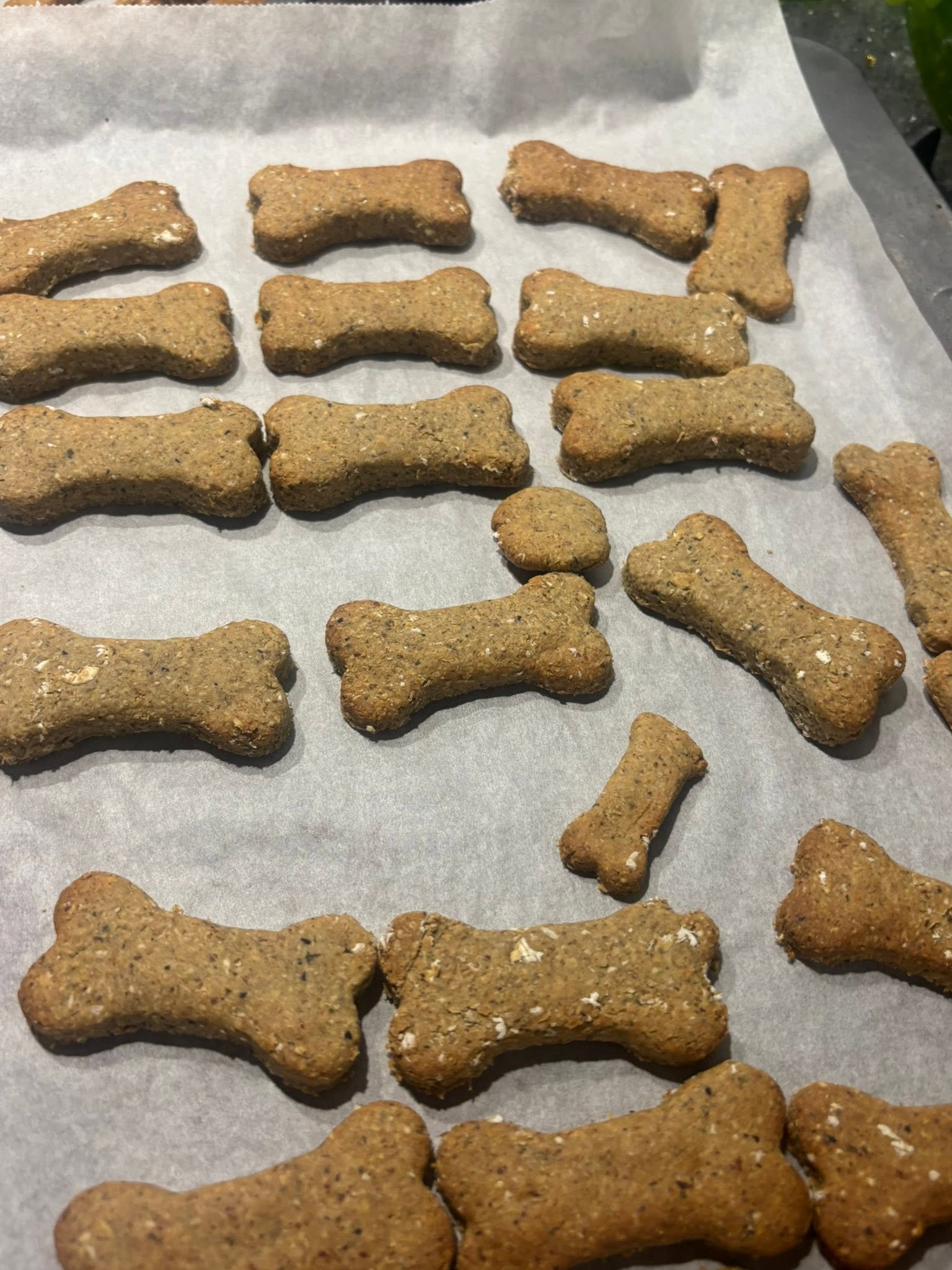
Leave the biscuits on the tray briefly until firm enough to lift, then move them to a wire rack. Let steam escape before sealing the container, and refrigerate within two hours of baking, or within one hour when the surrounding temperature exceeds 90°F (32°C).
Tips for consistent results
Weigh ingredients instead of switching between grams and cups. Natural peanut butter thickness and applesauce moisture can vary, so adjust dough gradually. Uniform thickness matters more than the shape of the cutter. If edges darken while centers remain soft, make the next batch more evenly thin and check your oven temperature.
Do not add extra seeds to dry out sticky dough: use a short rest and chilling first. The seed and peanut butter amounts already contribute substantially to the batch’s energy content. A crisp exterior also does not establish that the biscuits are dry enough for room-temperature storage.
Storage
For a conservative home-storage approach, keep these fruit-and-egg biscuits in an airtight container at 40°F (4°C) or below and use within three to four days. Freeze extra portions promptly for up to three months for best quality, then thaw in the refrigerator. A ten-day refrigerator shelf life has not been validated for this recipe.
Nutrition and serving
The supplied calorie, vitamin and mineral figures have not been verified against the actual ingredients. Per-biscuit values also depend on the number and size of pieces produced, so a fixed 75-calorie claim is not used here.
To estimate nutrition, use the labels or appropriate food-composition data for each weighed ingredient, total the batch and divide by the actual yield if all biscuits are similar in size. For mixed sizes, weigh the finished batch and calculate an estimate per gram instead. Include any flour added during rolling.
Oats and seeds contribute fiber, while eggs, seeds and peanut butter contribute protein and fat. These ingredients do not establish that the biscuits control inflammation, boost immunity or improve coat health. Serve small pieces appropriate for the dog and keep all treats and extras within 10% of daily calories. An exact daily biscuit count requires a reliable calorie estimate and the dog’s feeding allowance.



Leave a Reply