
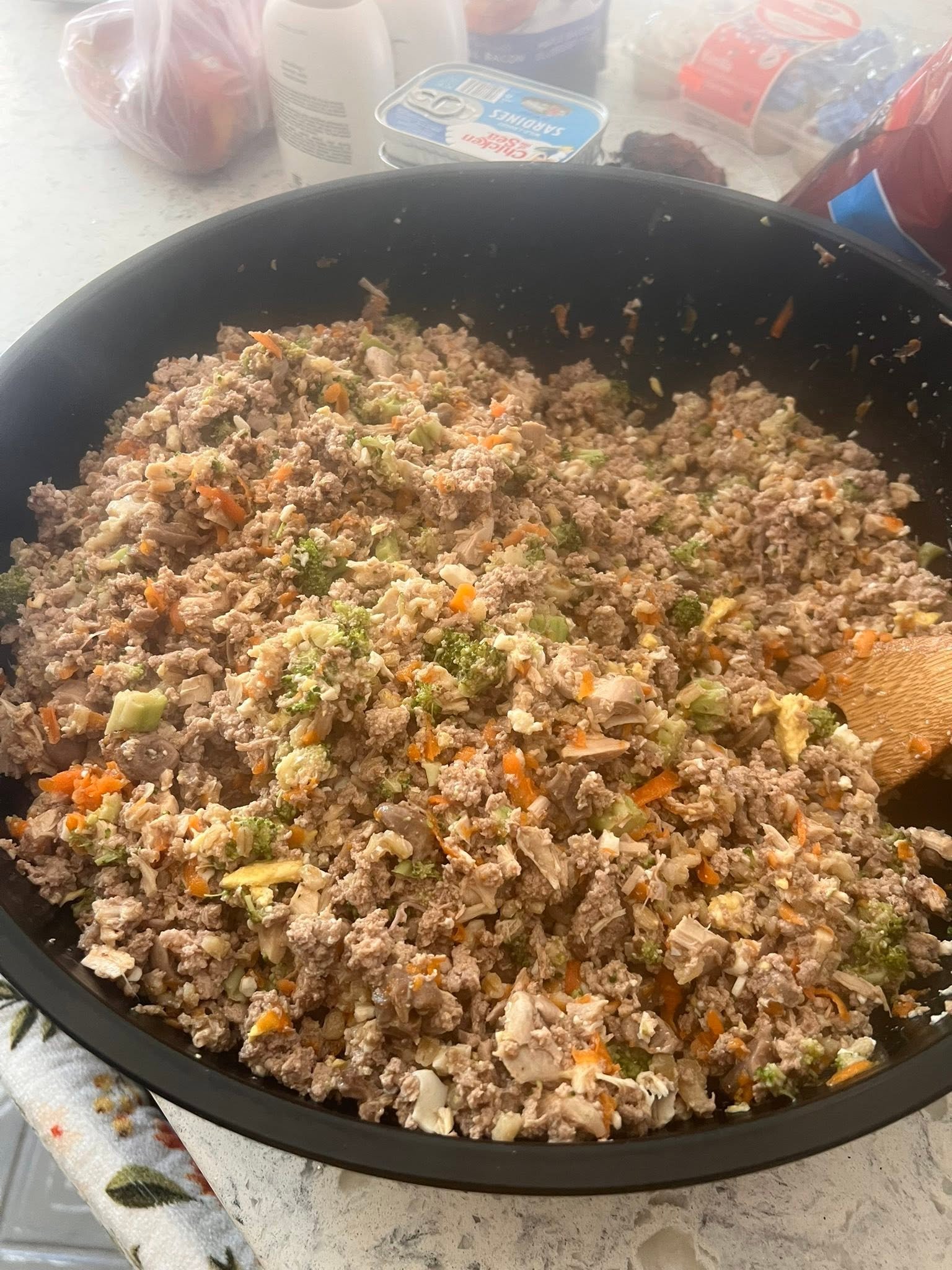
Homemade turkey dog food with barley combines poultry, eggs, carrots and broccoli in a mixture that can be portioned ahead. Cooking the barley separately makes its texture easier to control, while preparing the poultry in manageable batches helps avoid uneven cooking.
This guide also covers packing cooked food for travel. The ingredient list is not a complete, balanced feeding formula: only the egg count was supplied. Exact weights and an individual nutritional formulation are needed before this mixture replaces a dog’s regular diet.
Ingredients in the turkey and barley batch
- Turkey — specify the cut and whether skin is included
- Ground turkey — record the weight and fat percentage
- Chicken gizzards
- Chicken hearts
- Carrots
- Broccoli
- Plain, unsweetened applesauce without xylitol
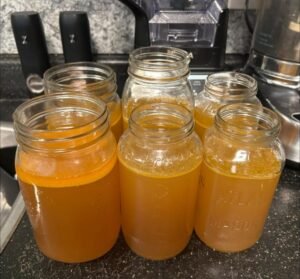
- Barley cooked in chicken broth
- 6 eggs — size or weight to confirm
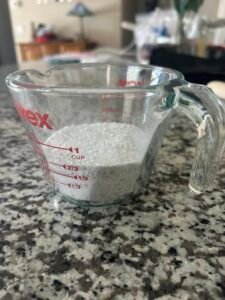
Record the weight of every ingredient, including the dry barley and the broth used. Specify whether the barley is pearled or hulled because cooking instructions differ. Use plain broth without onion, garlic or added salt, and check the full ingredient label rather than relying on the words “chicken broth.”
Ingredients visible elsewhere on a kitchen counter are not automatically part of the recipe. Keep the formula tied to the written ingredient list and confirmed measurements.
How to organize preparation
1. Cook the barley separately
Follow the package instructions for the barley type, using the measured broth specified in the finalized recipe. Cook until tender. If it becomes dry before softening, follow the package guidance for additional liquid and record the amount. Separate cooking prevents the grain from remaining firm while the meat is already done.
2. Prepare the turkey and vegetables
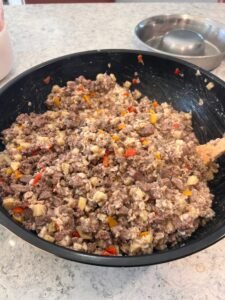
Remove bones from the turkey. Chop carrots and broccoli into manageable pieces and keep raw poultry utensils separate from cooked ingredients. Break ground turkey into smaller crumbles as it cooks, using batches that leave enough space to stir and check the food.
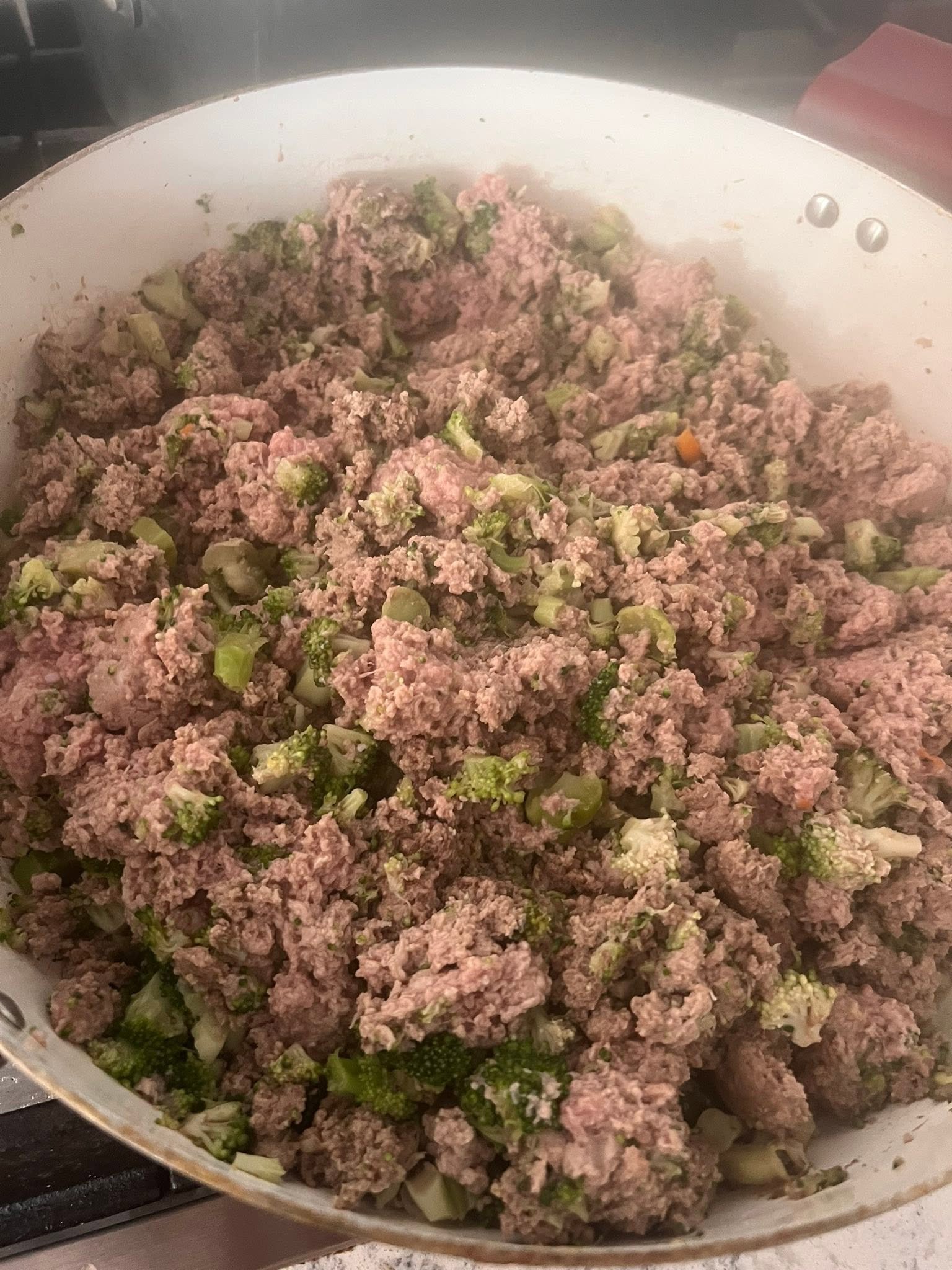
3. Cook poultry and giblets thoroughly
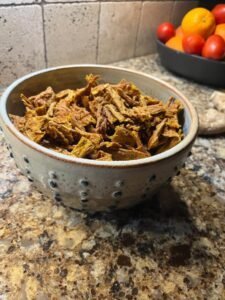
Turkey, ground turkey, chicken hearts and chicken gizzards should reach 165°F (74°C), checked with a food thermometer. Thick pieces and crowded pans can cook unevenly, so check more than one location. Chop cooked hearts and gizzards into pieces appropriate for the final texture. Cook vegetables until softened; use package directions for frozen produce.
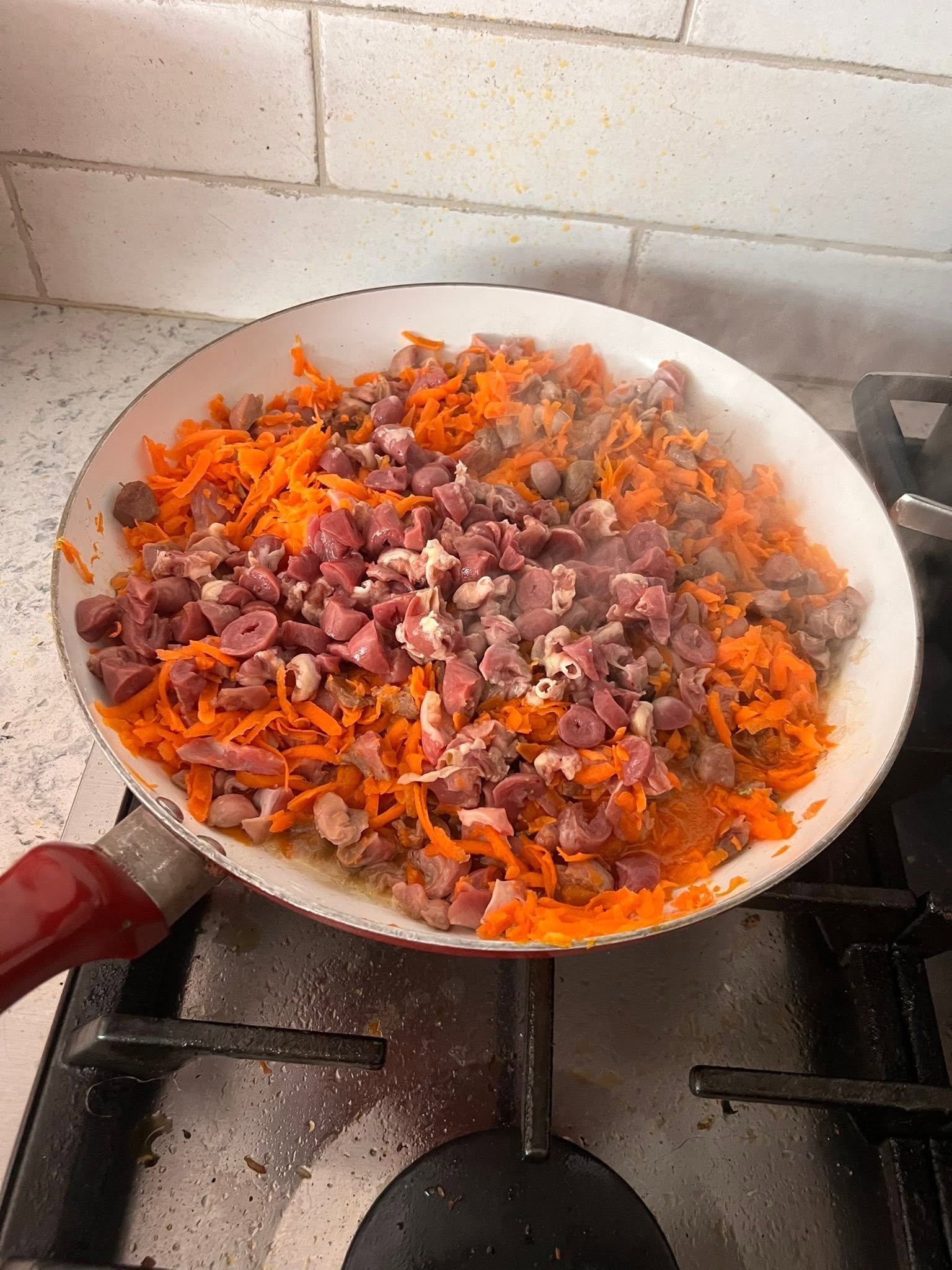
4. Cook the eggs and mix
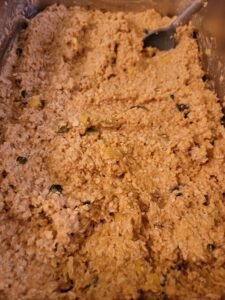
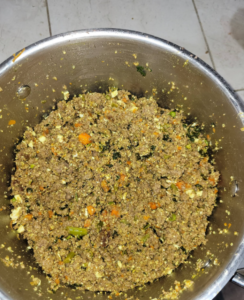
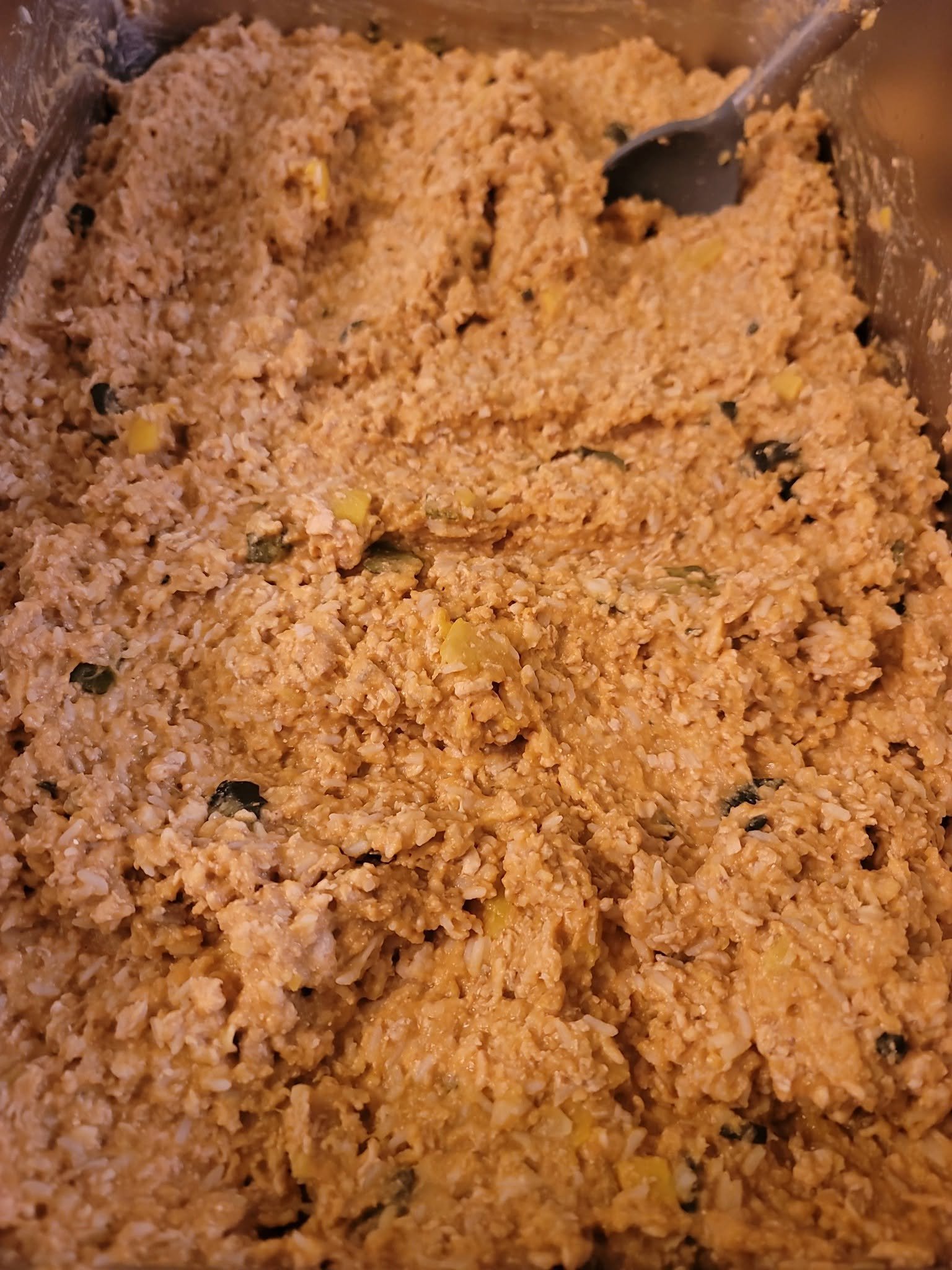
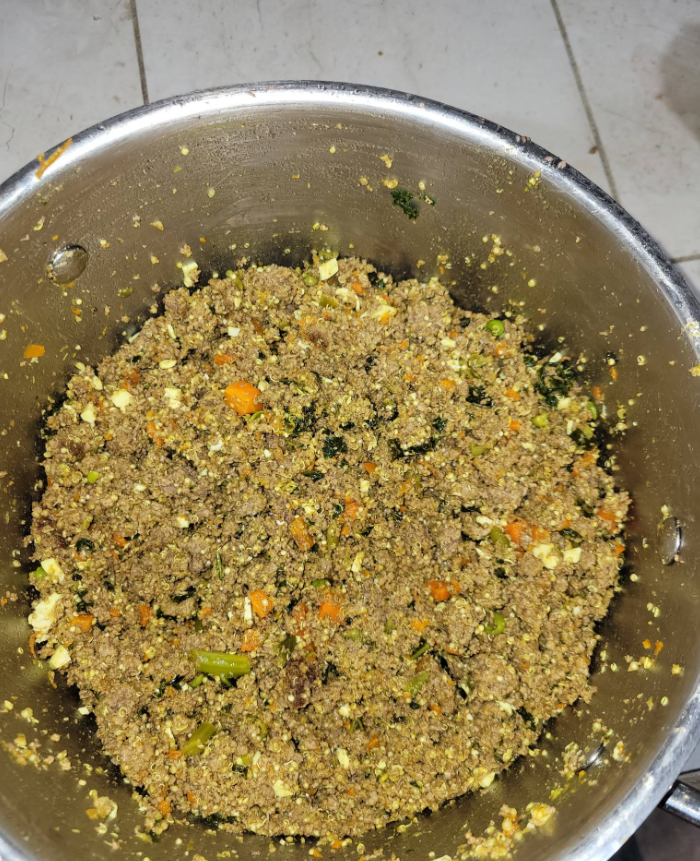
Cook the six eggs until the whites and yolks are firm, then chop or break them into small pieces. If eggs are cooked as a mixed egg dish, check that it reaches 160°F (71°C). Combine the prepared ingredients in a clean bowl with the measured applesauce and barley, stirring from the bottom to distribute them evenly.
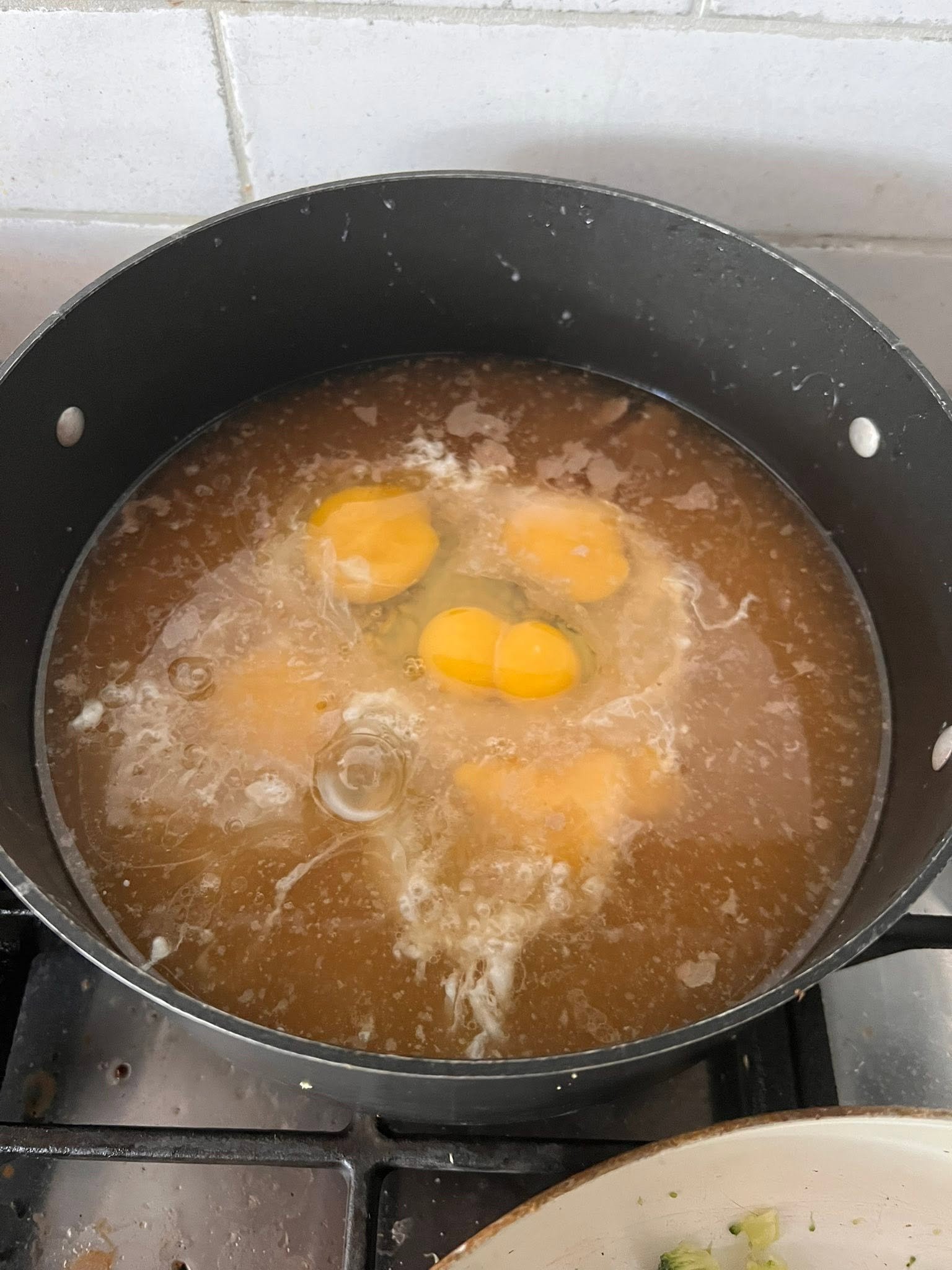
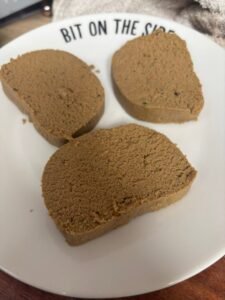
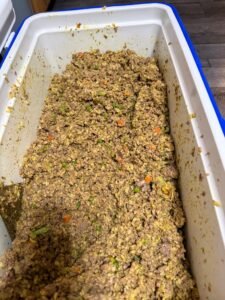
These are proposed preparation steps, not a tested cooking schedule for a known batch size. The photographs show stages of preparation and cannot confirm doneness. Follow the finalized recipe for any additional supplements and when to mix them in.
Cooling the batch before packing
Divide cooked food into shallow containers promptly and refrigerate within two hours, or within one hour when the surrounding temperature exceeds 90°F (32°C). Keep refrigerated food at 40°F (4°C) or below. Use refrigerated portions within three to four days and freeze the rest promptly.
Taking homemade dog food on a road trip
A two-week trip needs a freezer and replenishment plan, not two weeks of refrigerated meals. Pack chilled or frozen portions in a well-insulated cooler with plenty of ice packs and a thermometer. Keep food at 40°F (4°C) or below, replenish the cold source and minimize how often the lid is opened.
Arrange freezer access for food needed later in the trip and refrigerator space for the next portions. A cooler that only keeps food refrigerated does not extend its refrigerator storage life. Track preparation and thawing dates rather than restarting the clock when moving containers between locations.
Discard perishable food left above refrigeration temperature for more than two hours, or one hour in conditions above 90°F (32°C). If its temperature history is unknown, discard it rather than relying on smell. Take a familiar complete food as backup if dependable cold storage is unavailable.
Portions and nutritional balance
The egg count does not establish yield or serving size. Turkey cuts, meat weights, barley quantity and the dog’s needs must be known before calculating daily portions. Adding barley after a grain-free period does not by itself improve or complete the nutritional balance.
For daily feeding, use a recipe formulated for the dog’s life stage and health. Have ingredient changes checked before travel, and keep the feeding routine consistent while away. Record the final batch weight and weigh portions according to the completed feeding plan.
Leave a Reply