
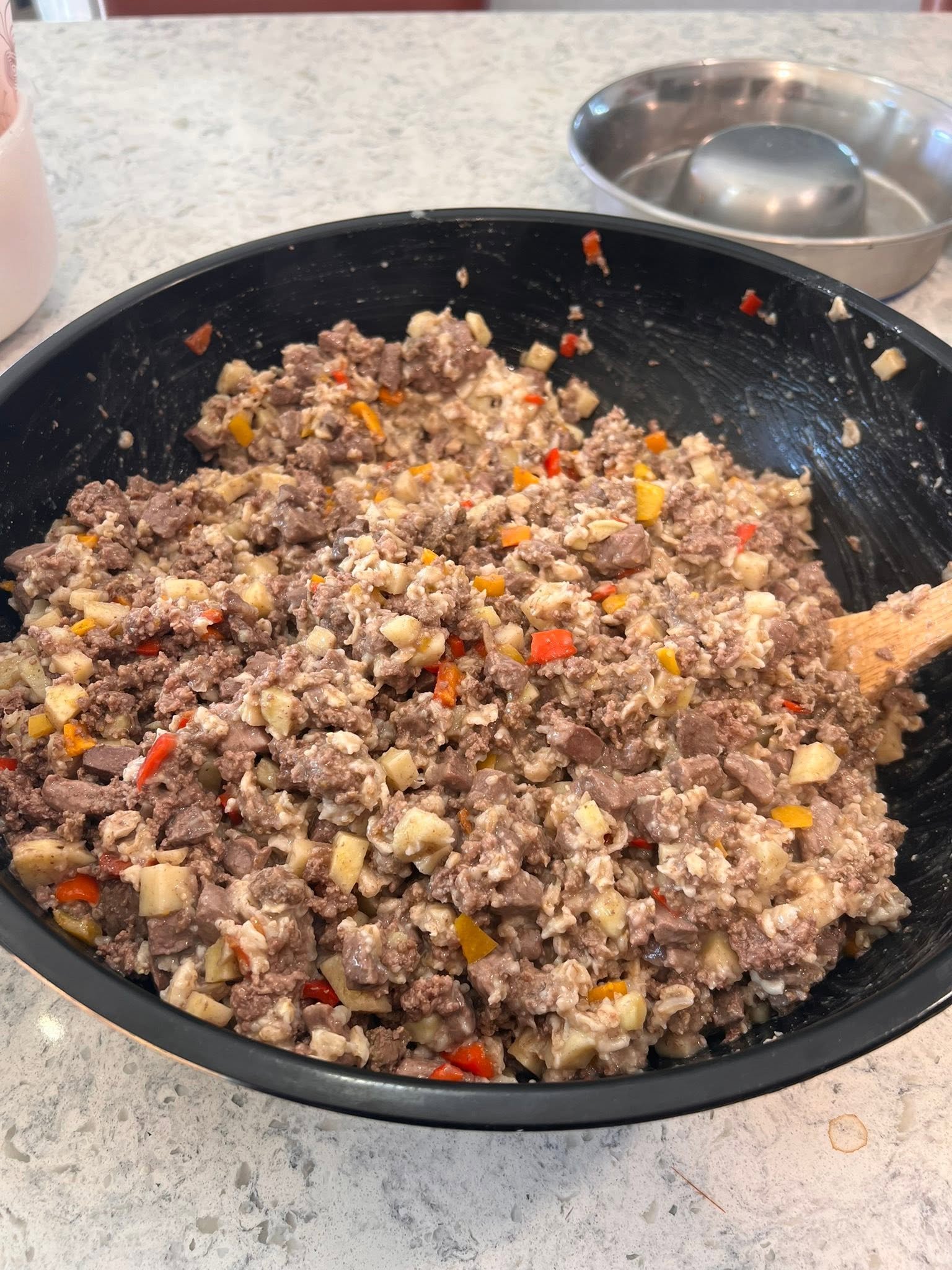
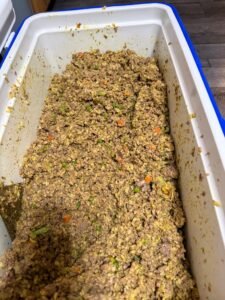
Homemade beef dog food with sweet potatoes and oats brings together tender beef pieces, ground meat, soft vegetables and cooked oats. The practical challenge is getting each component to the right texture before combining them: chuck needs time to soften, while ground beef, liver and eggs need a different approach.
This preparation guide is not yet a nutritionally balanced recipe. Ingredient amounts were not supplied. Exact weights, meat specifications and a calculated calcium and supplement plan are needed before using it as a complete daily diet. The steps below improve kitchen organization and consistency without inventing those proportions.
Ingredients and measurements to prepare
- Boneless beef chuck roast — record the trimmed weight
- Ground beef — record the weight and fat percentage
- Beef heart — record the prepared weight
- Beef liver — measure separately from heart and other meat
- Sweet potatoes — record the peeled, prepared weight
- Sweet bell peppers — remove stems and seeds, then weigh
- Eggs — record the size and number or weight
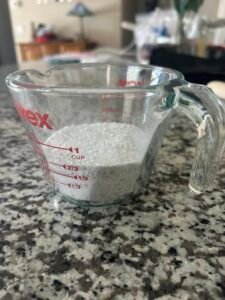
- Plain oats — specify the type and dry weight
Eggshells are part of the original ingredient notes, but they need a separate, measured calcium instruction. Do not add all the shells simply because the eggs are in the recipe. Keep a record of whether each weight is taken before or after cooking.
Step-by-step preparation for a finalized formula
1. Set up before cooking
Have a kitchen scale, food thermometer, separate raw-meat utensils and shallow storage containers ready. Cut vegetables into similar-sized pieces for more even cooking. Use sweet bell peppers, not hot peppers, and keep onion, garlic and seasoned sauces out of the mixture.
2. Give chuck time to become tender
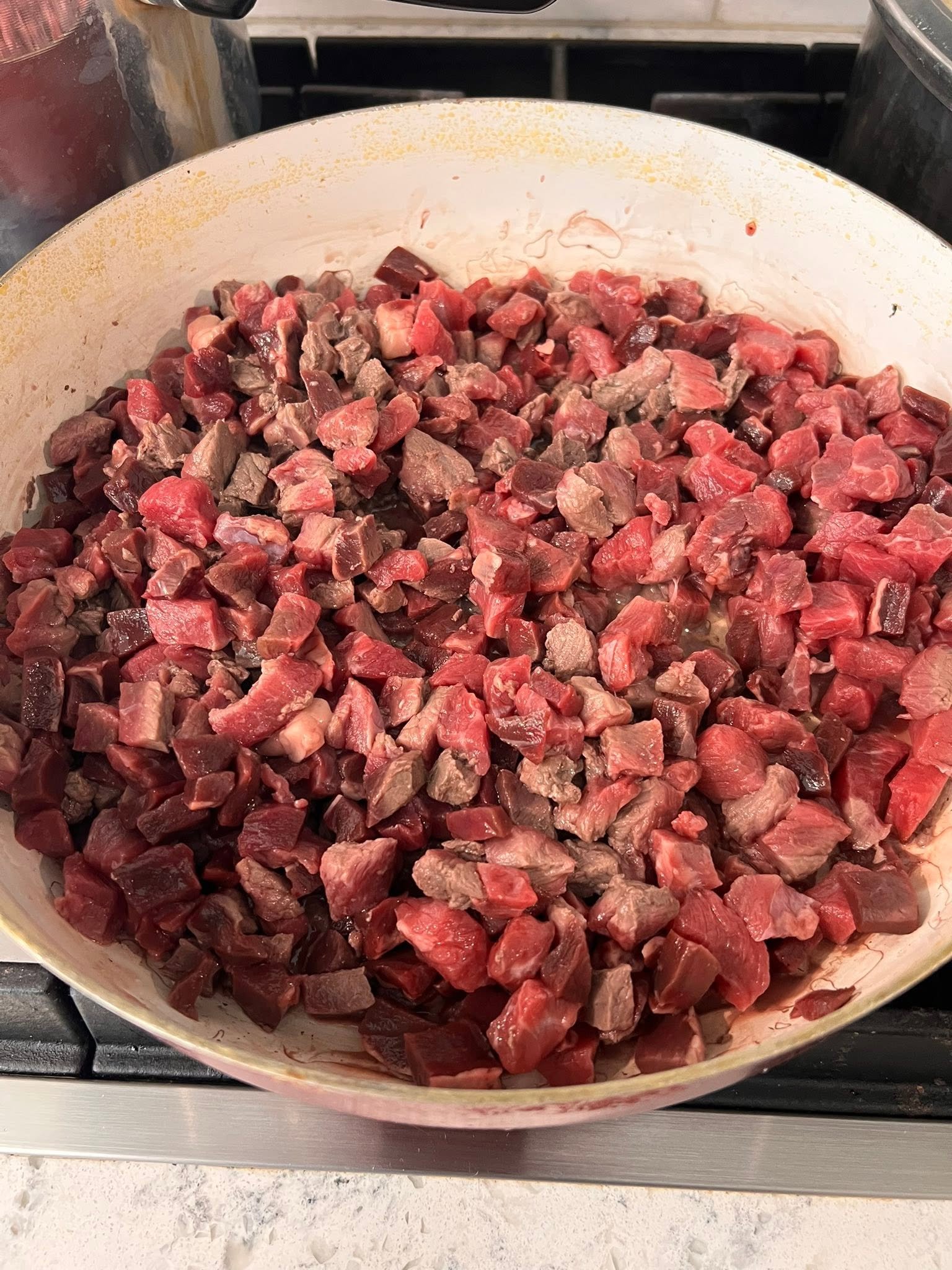
Cook the chuck separately using a covered, moist-heat method such as braising with plain water. Maintain a gentle simmer rather than a hard boil, and check the liquid so the pan does not run dry. Continue until the meat separates readily with a fork, then chop or shred it into manageable pieces. Tenderness and food safety are separate checks; appearance alone cannot establish either.
3. Cook the remaining meats in manageable batches
Break ground beef into small crumbles as it cooks. Cook ground beef, beef heart and beef liver to at least 160°F (71°C), measured with a thermometer. Separate pans make it easier to check the different components without leaving the liver cooking for the entire chuck-braising time. Follow the finalized formula on whether cooking juices and fat are retained or discarded; changing that step changes the food.
4. Soften the vegetables and cook the oats separately
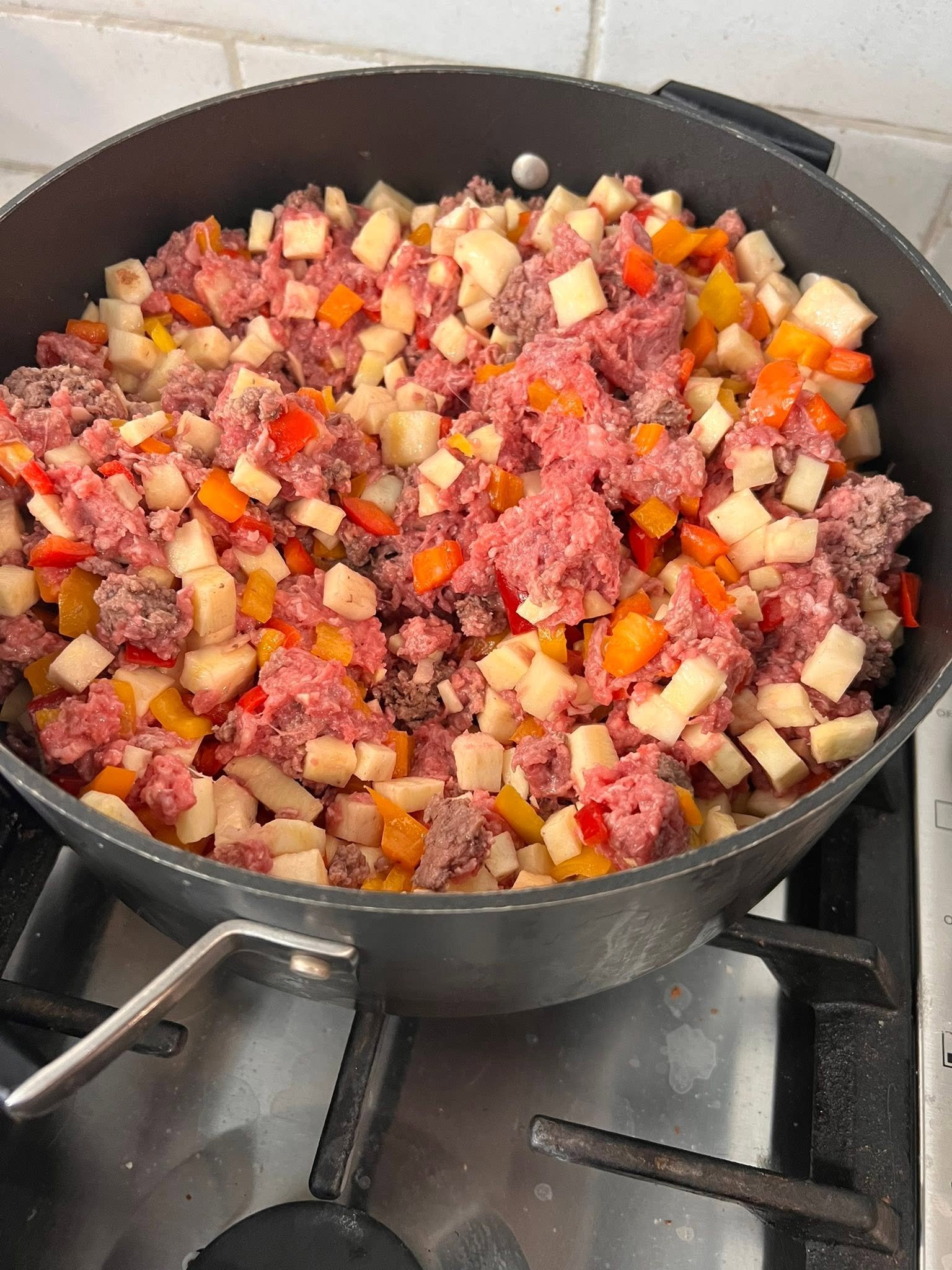
Steam or simmer diced sweet potatoes until a fork passes through them easily. Cook the peppers until softened. Prepare the oats in plain water according to their package instructions, using the measured amount specified in the final recipe. Separate cooking prevents the oats from becoming thick before the sweet potatoes are tender.
5. Prepare eggs and combine
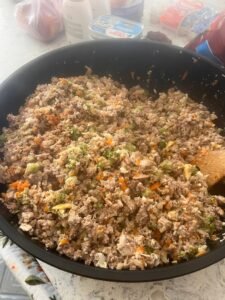
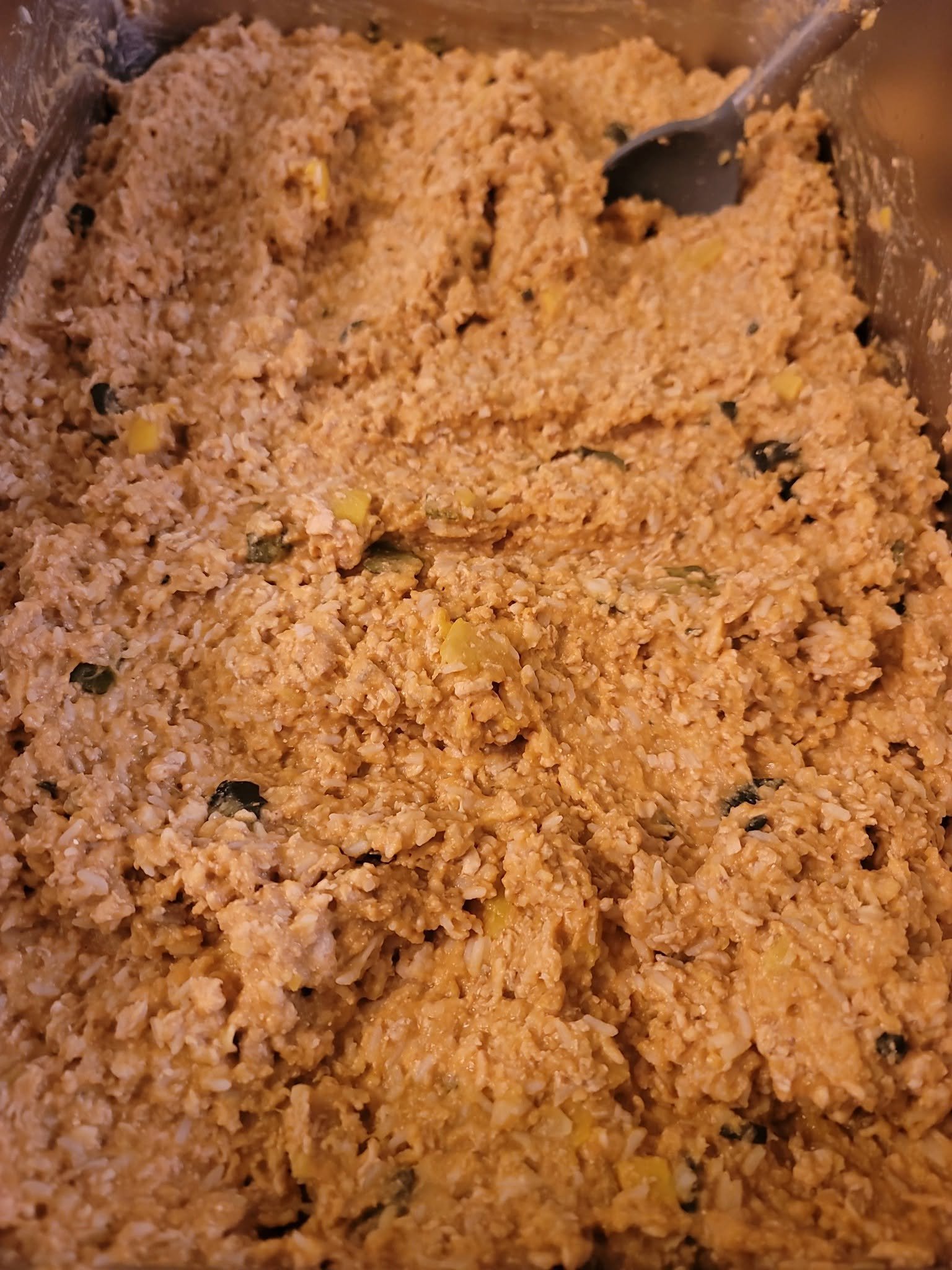
Cook eggs until the whites and yolks are firm, remove the shells and chop. Combine the cooked components in a clean bowl. Fold from the bottom so meat and vegetables distribute evenly through the oats. If the mixture is too dry, add plain water in small measured additions and record how much was used.
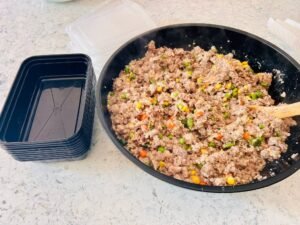
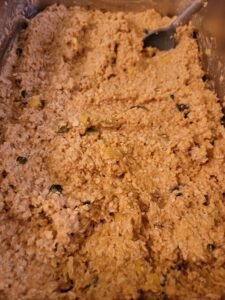
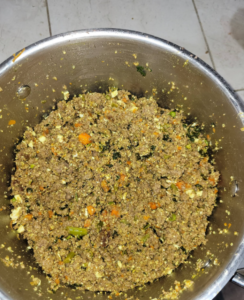
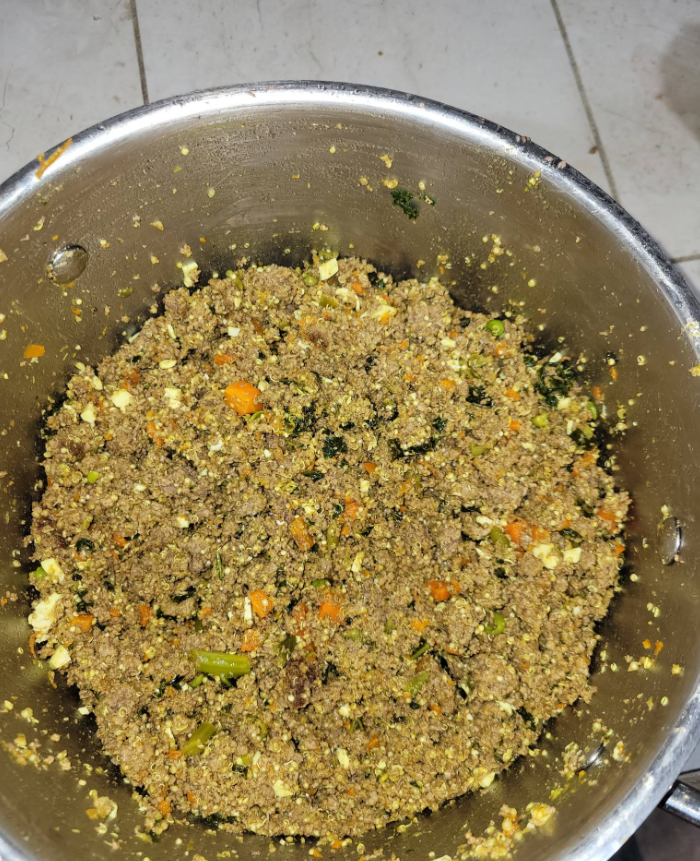
These are proposed preparation improvements, not a claim that the photographed batch followed this method. Cooking times cannot be specified reliably until the quantities, piece sizes and equipment are known.
How to improve the texture
- Tough beef: give the chuck more gentle, moist cooking time before mixing; reheating the whole batch will also continue cooking the other ingredients.
- Firm sweet potato pieces: cook them separately until tender before combining.
- Dry or sticky mixture: loosen with a little measured plain water rather than adding extra oil or unmeasured ingredients.
- Uneven portions: mix thoroughly, then weigh each portion using the final feeding plan.
What is needed to make it balanced?
A veterinary nutritionist needs the exact ingredient weights, the dog’s life stage and health information, and the intended daily intake to calculate a complete formula. That assessment includes calcium relative to phosphorus, essential fats, vitamins and trace minerals. Eggshell alone does not cover all those needs.
Ask for a written calcium source and quantity, any additional supplements, and precise preparation instructions. Do not guess a supplement scoop size or substitute heart for liver. This guide does not establish a daily serving size, calorie total or complete-and-balanced claim.
Cooling and storing the batch
Divide cooked food into shallow containers promptly. Refrigerate within two hours, or within one hour when the surrounding temperature exceeds 90°F (32°C). Keep the refrigerator at 40°F (4°C) or below. Use refrigerated portions within three to four days and freeze the remaining supply promptly.
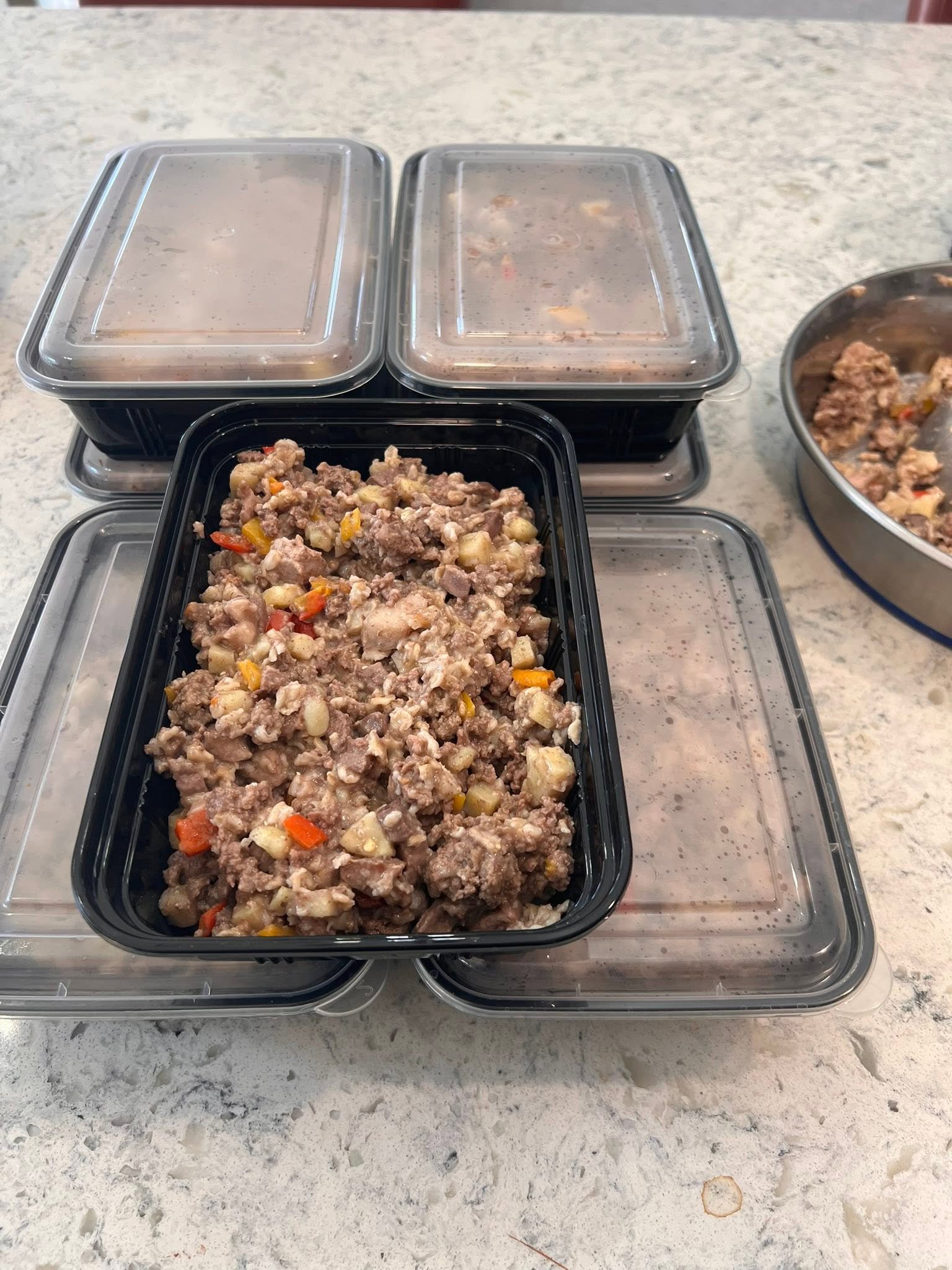
Label containers with the preparation date and thaw in the refrigerator. Keep the finished batch weight and any added water in the recipe record. Consistent measurements and a finalized feeding plan make subsequent batches easier to reproduce.

Leave a Reply