
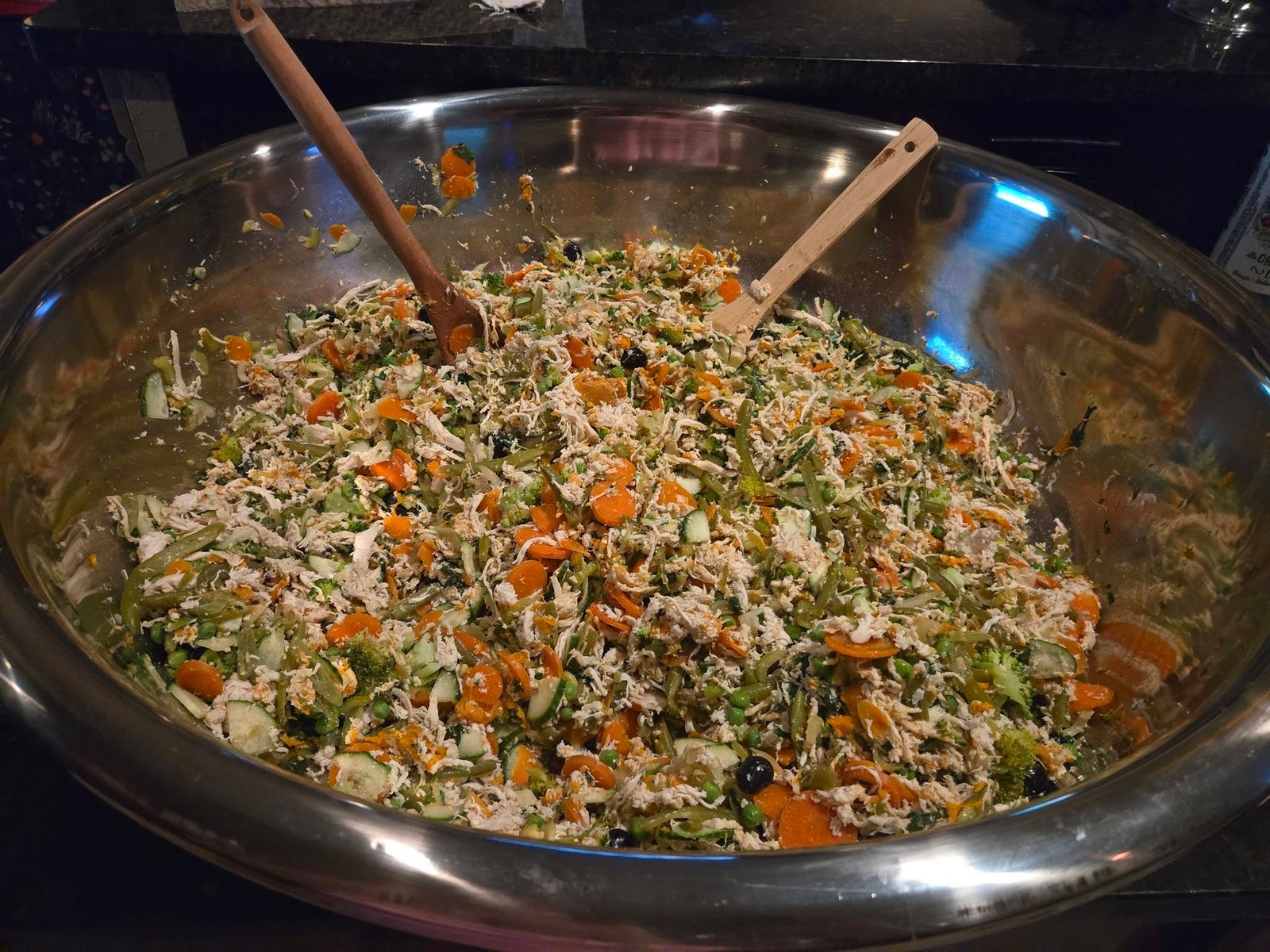
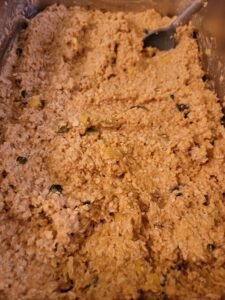
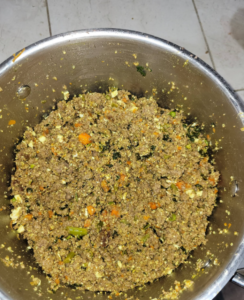
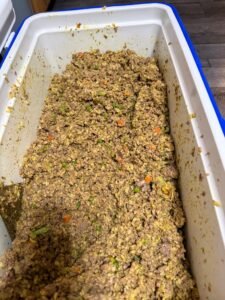
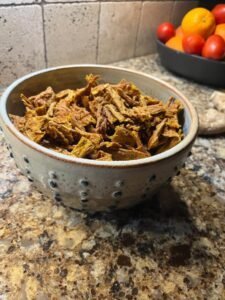
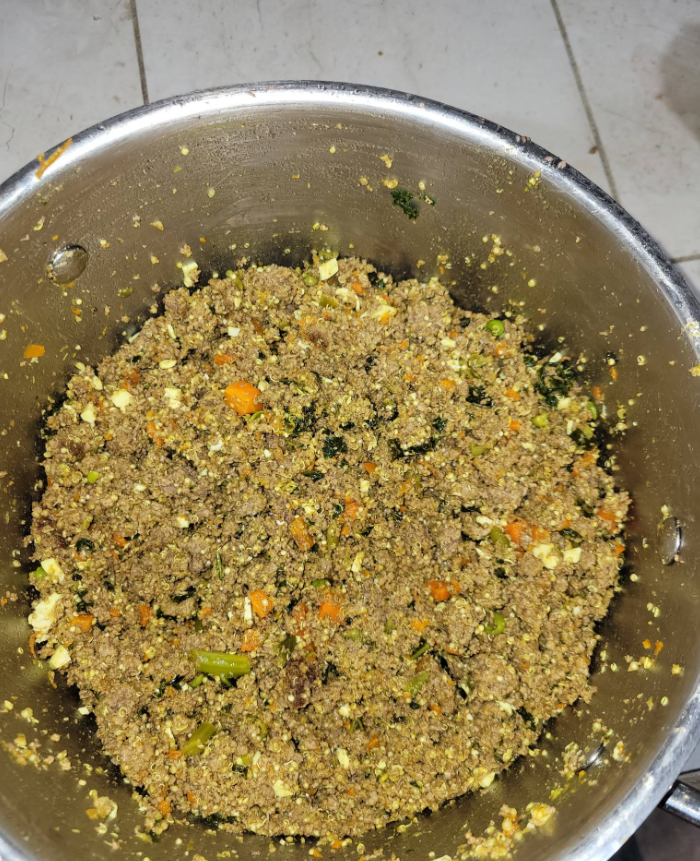
Chicken, sweet potatoes and blueberries bring different textures to a homemade dog food batch: shredded meat, soft vegetables and small pieces of fruit. Preparing the components separately makes it easier to organize a large cooking session before combining everything in a clean mixing bowl.
This ingredient record is a starting point for recipe development, not a complete daily diet. The amounts below have not been nutritionally formulated, and their raw-versus-cooked weighing basis needs confirmation. Use an individually balanced recipe before replacing a dog’s regular food.
Chicken and vegetable batch ingredients
The following amounts are transcribed from the recipe notes. Ounces refer to weight, not fluid volume.
- Chicken: 228 oz (14 lb 4 oz)
- Spinach: 27 oz (1 lb 11 oz)
- Carrots: 32 oz (2 lb)
- Celery: 16 oz (1 lb)
- Green beans: 84 oz (5 lb 4 oz)
- Broccoli: 32 oz (2 lb)
- Cucumber: 32 oz (2 lb)
- Blueberries: 10 oz
- Peas: 30 oz (1 lb 14 oz)
- Sweet potatoes: 64 oz (4 lb)
These listed weights total 34 lb 11 oz. They do not establish the finished yield: cooking changes moisture, and the notes do not specify when the ingredients were weighed. Record the chicken cut, whether it is boneless and skinless, and the prepared weight of each component before repeating the batch.
Preparing the ingredients
Once the formula and weighing instructions have been finalized, set out a kitchen scale, separate utensils for raw chicken, cooking pans and shallow storage containers. Work in manageable quantities so ingredients can be cooked, checked and cooled promptly.
Cook chicken to an internal temperature of 165°F (74°C), checked with a food thermometer. Remove any bones before shredding. Prepare the vegetables according to the finalized recipe, cooking frozen vegetables as directed on their packages. Wash fresh produce and cut it into pieces appropriate for the intended preparation. Use plain ingredients without onion, garlic or seasoned sauces.
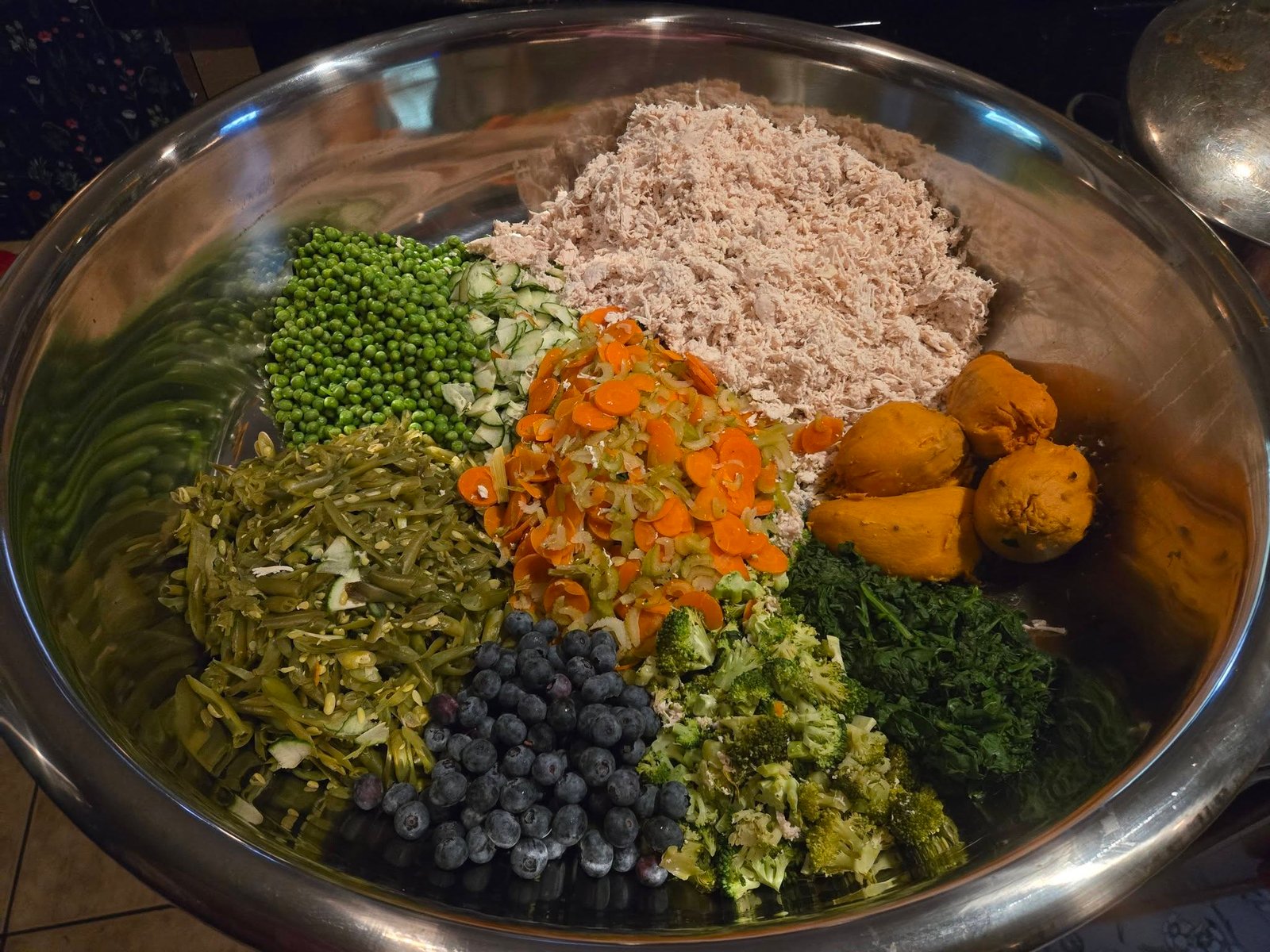
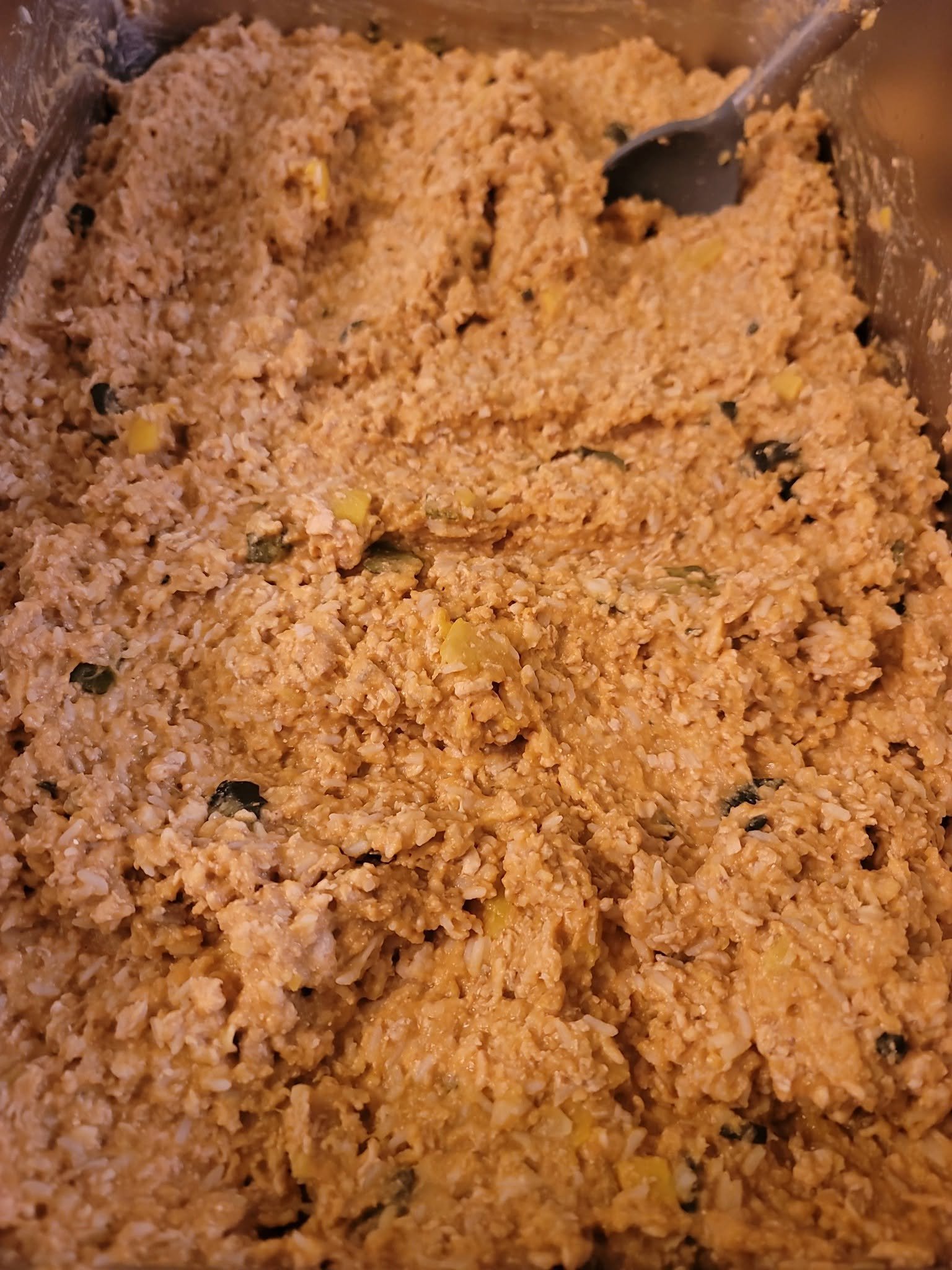
Combine the prepared components in a clean, food-safe bowl and mix thoroughly. Mash the sweet potato so it distributes through the shredded chicken and vegetables. These are general preparation steps; the ingredient notes do not provide a tested cooking schedule.
Does mixing homemade food with kibble balance the meal?
Adding some kibble does not automatically supply whatever a homemade mixture is missing. Replacing a substantial portion of a complete food with an unbalanced mixture can change the nutrient balance of the whole diet. The proportions and total intake matter.
If homemade food will provide a significant share of daily calories, have the combined diet assessed. Keep a record of the exact commercial food, how much is fed and the homemade ingredients rather than assuming a scoop of kibble covers the gaps.
Will oats, quinoa or organ meat make it complete?
Adding grains or organ meat changes the mixture, but it does not prove that all nutrient requirements are met. Sweet potatoes already contribute carbohydrate; adding another carbohydrate source is not the same as balancing a diet.
A supplement must match a specific recipe and be used in the specified amount. Product ratings or a general recommendation are not a substitute for that match. Have a veterinary nutritionist define the ingredients, supplements and quantities together before making a full transition to homemade food.
Feeding puppies and managing adult weight
Puppies have growth requirements that differ from adult maintenance needs. This unformulated mixture should not replace a complete growth diet. An adult dog’s weight-loss portions are also inappropriate as a feeding plan for a growing puppy.
For an adult weight-management plan, monitor body condition and weight with the veterinary team. Weight change alone does not establish that a recipe is balanced. No cancer-prevention or longevity benefit has been established for this mixture.
Cooling and storage
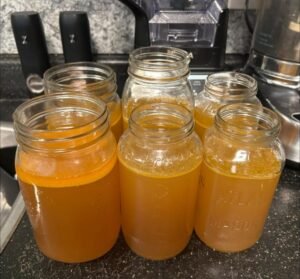
Divide the food into shallow containers promptly instead of cooling it in one deep bowl. Refrigerate within two hours, or within one hour when the surrounding temperature exceeds 90°F (32°C). Keep the refrigerator at 40°F (4°C) or below.
Use refrigerated cooked portions within three to four days. Freeze the remainder promptly in labeled portions and thaw in the refrigerator. Choose portion weights from the finalized feeding plan rather than filling containers by eye.
Before making the next batch
Confirm the weighing basis and finished yield, then keep those details with the final formulation. Consistent ingredient measurements and a clear serving plan make a large cooking day easier to repeat without relying on estimates.
Leave a Reply