
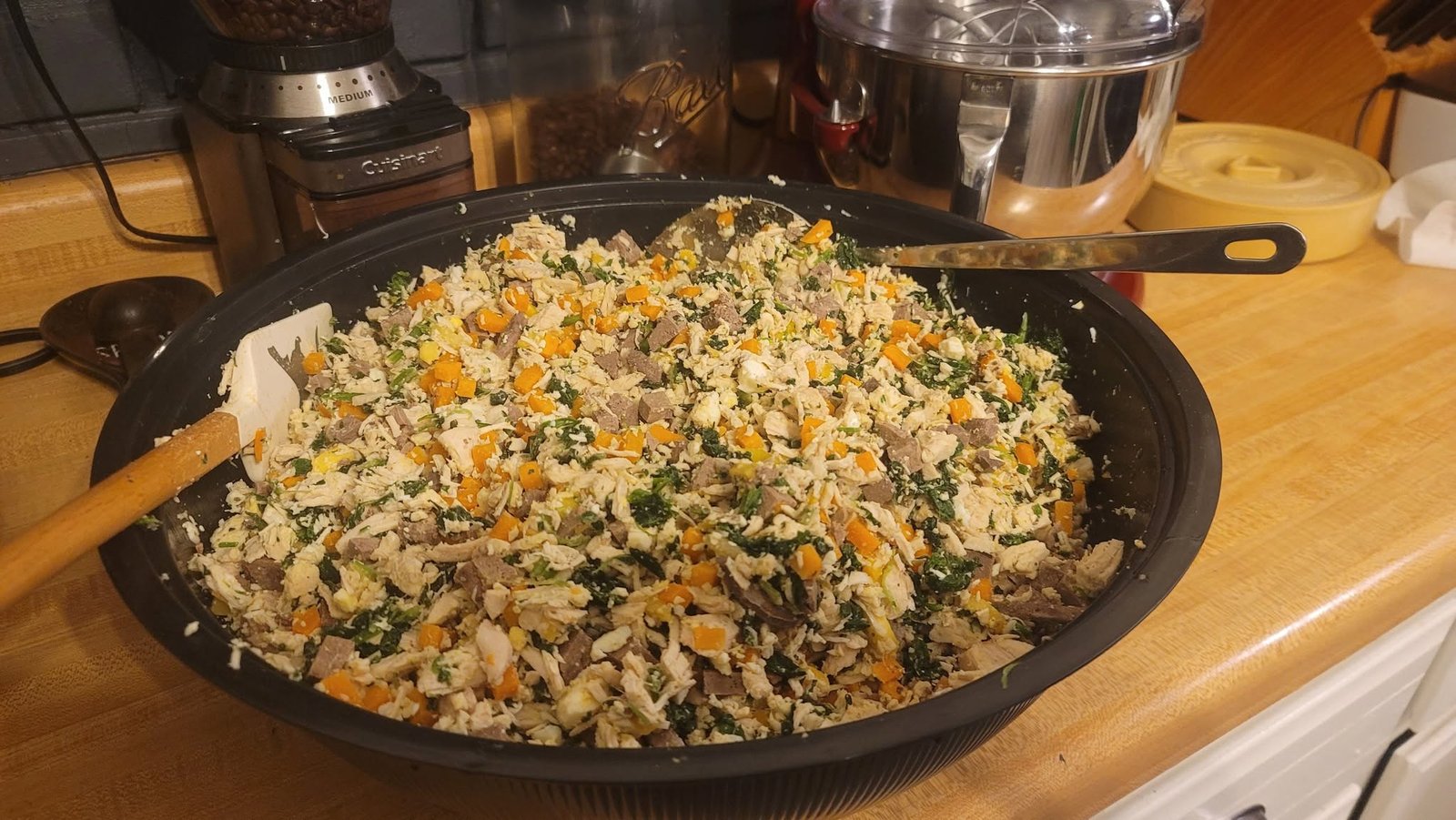
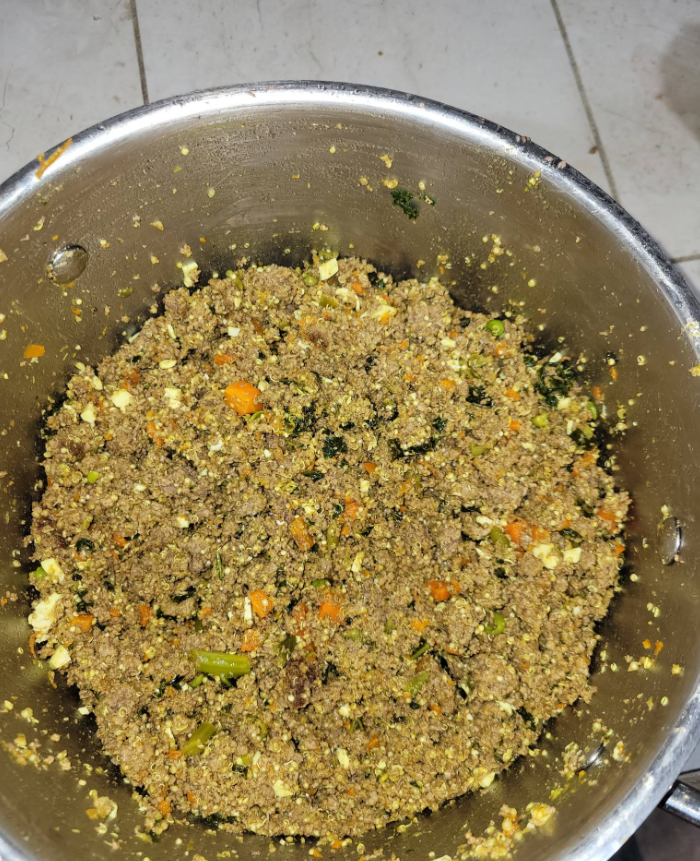
This homemade chicken and vegetable mixture brings together chopped chicken breast, beef liver, sweet potato, eggs and green vegetables. A little reserved chicken cooking liquid gives the finished mixture a moist, spoonable texture, while portioning it into small containers makes a large batch easier to store.
The preparation notes and photographs were supplied by Caesar’s owner. This article organizes those notes into a clear kitchen workflow, with updated guidance for cooking vegetables and cooling a large batch.
Recipe draft: Package weights still need confirmation. This mixture has not been nutritionally analyzed or formulated as a complete diet. Do not use it as your dog’s only food or assume the pictured bags represent daily portions. A board-certified veterinary nutritionist can assess and formulate a home-prepared diet for an individual dog. UC Davis explains why ingredient variety alone does not establish nutritional balance.
Ingredients from the original batch
The quantities below preserve the supplied notes. “Large bag,” “medium bag” and “package” are not standardized weights; confirm the labels before treating this as a reproducible recipe.
- 10 lb chicken breast; use boneless chicken for this preparation
- 3 packages beef liver — weight per package and total weight to confirm
- 2–3 sweet potatoes, peeled and chopped — size and total weight not specified
- 1 large bag frozen peas — weight to confirm
- 2 medium bags mixed peas and carrots — weight per bag to confirm
- 2 bags chopped spinach — weight per bag to confirm
- 3 bunches broccoli crowns, finely chopped — total weight not specified
- 12 hard-boiled eggs, shells removed and eggs mashed
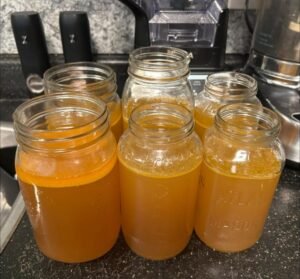
- Plain cooking liquid reserved from the chicken, added gradually as needed
Use plain vegetables without sauce or seasoning. Keep onion, garlic, stock cubes and salty seasoning blends out of the cooking liquid. The original chicken brand is not essential to the method.
How to prepare the chicken and vegetables
1. Organize the batch
Set out clean cooking pots, a food thermometer, a large food-safe mixing bowl and shallow storage containers. Keep raw meat and its utensils separate from the cooked ingredients. With this quantity of chicken, work in batches if necessary so the pots are not overcrowded.
2. Cook the chicken and reserve its liquid
Add enough plain water to cook the chicken evenly and prevent the pot from drying out. Simmer until the thickest pieces reach 165°F / 74°C. Remove the chicken, chop or shred it, and reserve the plain liquid separately. Temperature matters more than an estimated boiling time. FoodSafety.gov cooking temperature guidance.
3. Cook the liver and sweet potatoes separately
Boil the beef liver until it reaches at least 160°F / 71°C internally, then drain and chop. In a separate pot, boil the peeled sweet potato pieces until tender and drain. Do not replace the unspecified liver packages with guessed weights. USDA guidance for organ meats.
4. Cook the vegetables
Cook the frozen peas, peas-and-carrots mixture and spinach according to their package instructions, then drain. Steam or boil the finely chopped broccoli until tender. This updates the original method: covering thawed vegetables with warm sweet potatoes is not a reliable substitute for cooking them. Follow package directions for frozen foods.
5. Combine and adjust the moisture
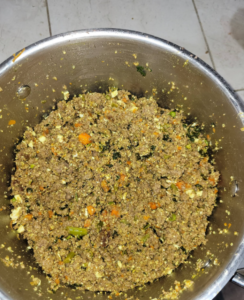
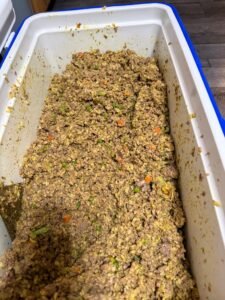
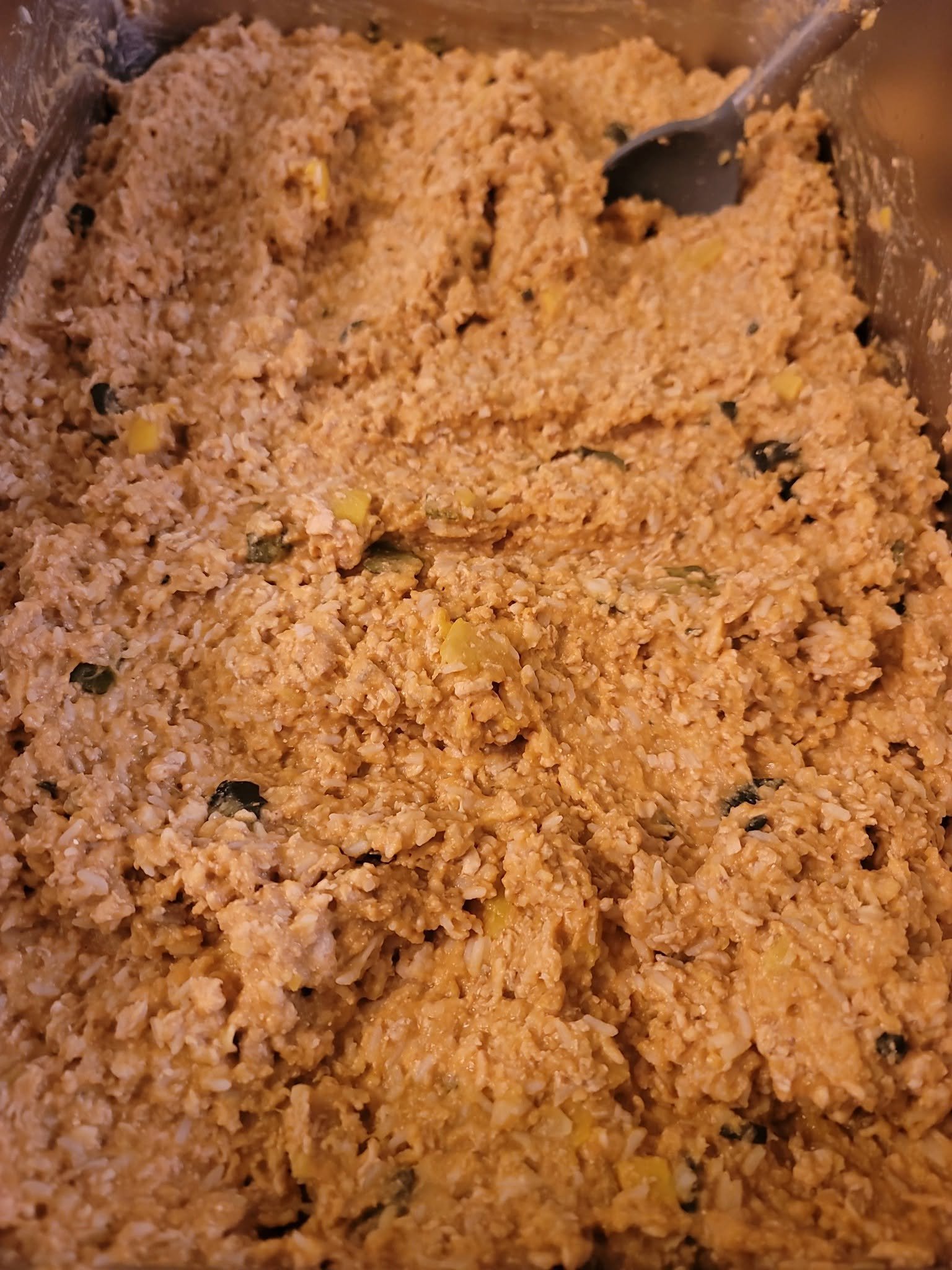
Fold the cooked vegetables and sweet potato together. Add the chopped chicken and liver, then distribute the mashed hard-boiled eggs throughout the mixture. Add the reserved chicken liquid a little at a time, stopping when the mixture is moist rather than swimming in liquid. Begin portioning promptly; do not leave the full batch standing while it cools.
How to portion and store a large batch
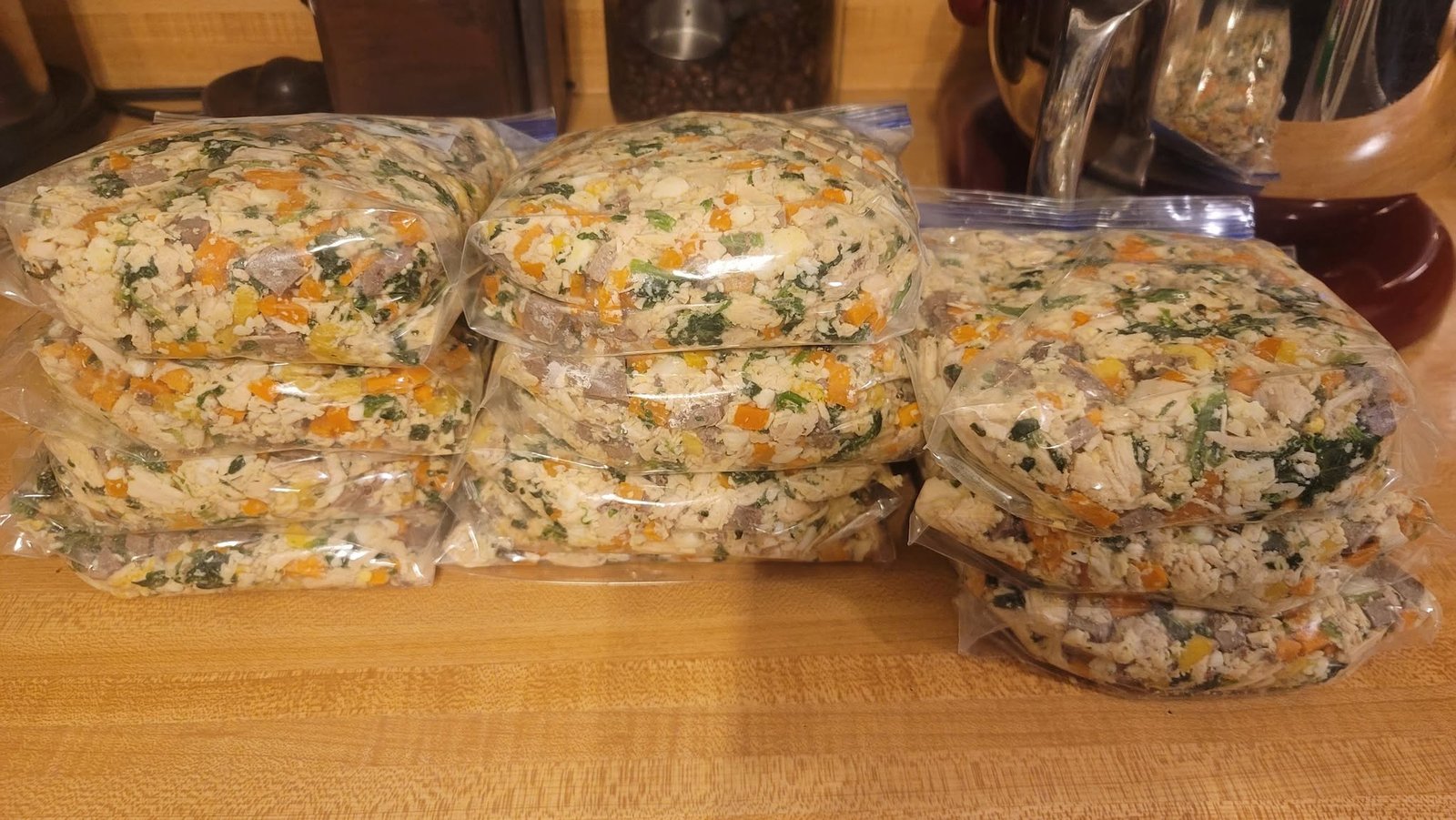
Divide the food into small, shallow containers and refrigerate within two hours of cooking, or within one hour when the room is above 90°F / 32°C. Avoid cooling it as one deep mass. Keep refrigerated portions at 40°F / 4°C or colder and use within three to four days. Freeze the remainder promptly in labeled freezer-safe portions; flatten cooled bags for easier stacking. Thaw in the refrigerator, not on the counter. If reheating, heat to 165°F / 74°C, then let the serving cool before offering it. USDA leftover storage guidance.
How much should a dog eat?
No serving amount or calorie figure can be calculated reliably from these notes. The liver and vegetable weights, finished batch weight and individual dog’s requirements are unknown. A container count cannot resolve those gaps. Before using this mixture regularly, have the exact recipe and your dog’s feeding plan assessed by a veterinary nutritionist.
What needs confirming before this draft is finalized?
Record the weight of each liver and vegetable package, the prepared weights of the sweet potatoes and broccoli, and the amount of cooking liquid used. Keep those details with the recipe. Do not add guessed calcium or supplement doses to make it appear balanced; formulation requires the full recipe and the dog’s needs.
Leave a Reply