
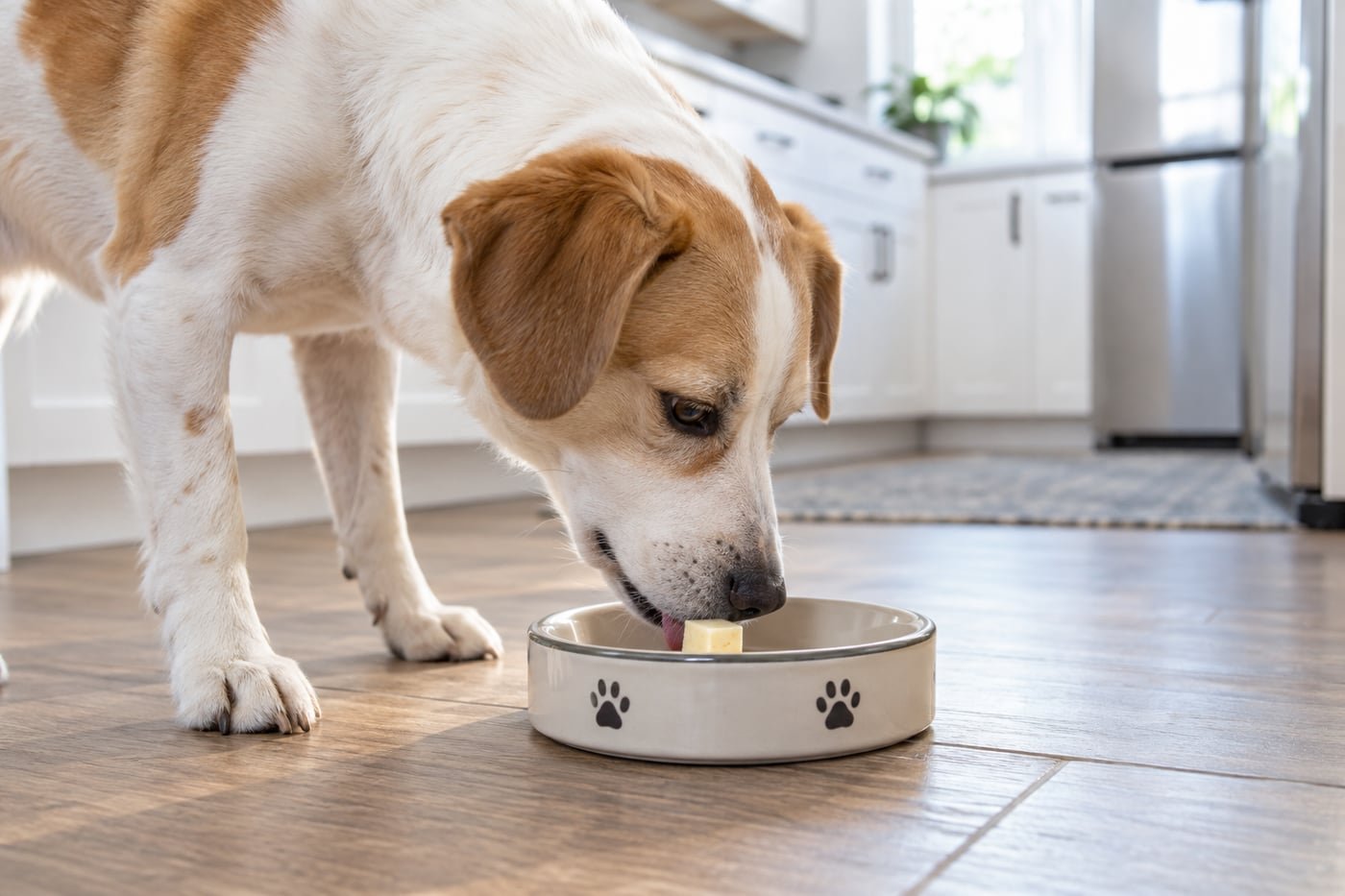
Many dogs can eat a tiny piece of plain cheese, but cheese is a rich treat rather than an everyday dietary requirement. Fat, salt, calories and lactose tolerance all affect whether it is a sensible choice for your dog. Some dogs should avoid it altogether. [1]
What type of cheese is a better choice?
A small amount of a plain, lower-fat cheese may be preferable to a very rich or heavily salted variety. Always read the ingredients. Cheese flavored with onion, garlic, herbs or other additions needs more scrutiny than an unseasoned product. [1] [2]
Cut the serving before opening the training session. Repeatedly breaking pieces from a large block makes it easy to lose track of how much your dog has eaten.
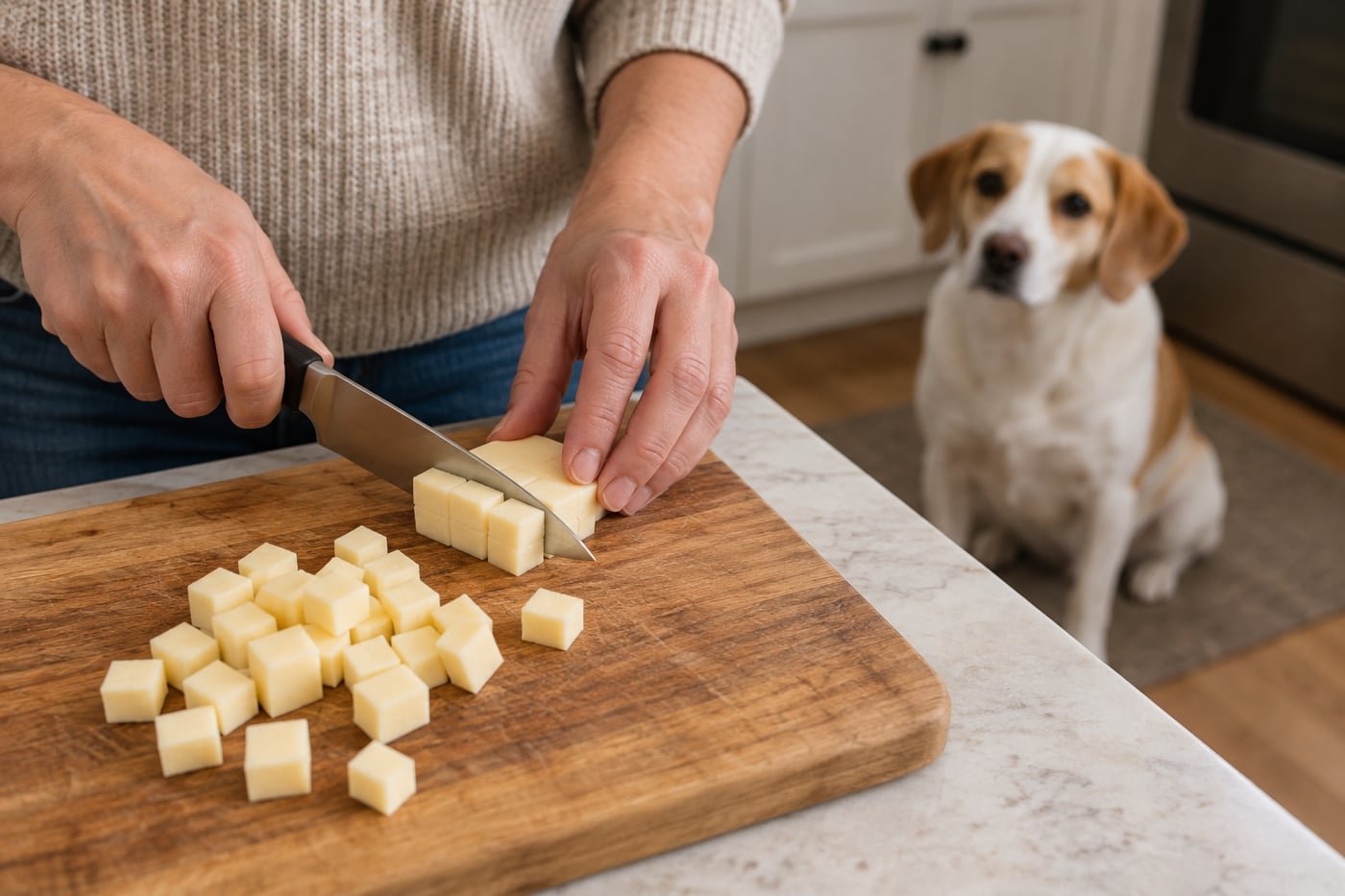
How should you offer cheese?
- Check that the product contains no unsafe flavorings.
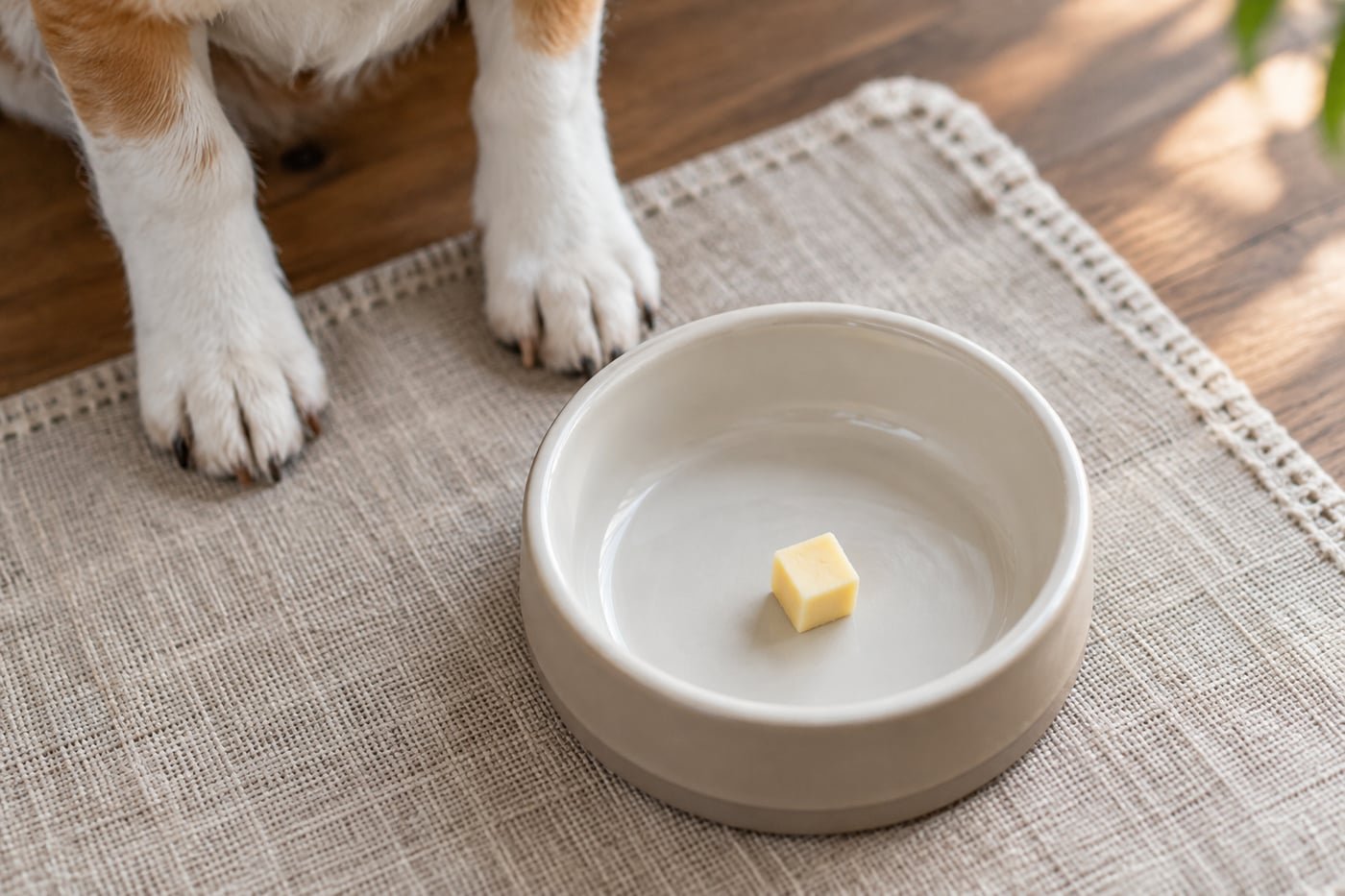
- Choose a very small, soft piece that is easy to swallow.
- Offer a tiny taste while supervising your dog.
- Watch for digestive changes afterward.
If you use cheese to hide a tablet, first check with the prescribing veterinarian that the medication can be given with food and dairy. Use only enough to conceal the medicine. [1]
Which dogs should avoid cheese?
Dogs with a dairy allergy, poor lactose tolerance, pancreatitis history or a diet that restricts fat or sodium may need to avoid it. A weight-management or prescription feeding plan also changes the treat allowance. Ask the vet managing that plan before adding cheese. [1] [2]
Can dogs eat blue cheese?
Avoid blue cheese and moldy cheese. Certain molds associated with these products can produce substances harmful to dogs. If your dog eats some and develops vomiting, tremors or other unusual signs, seek urgent veterinary advice. Keep spoiled food out of reach. [2]
How much cheese is too much?
There is no universal cube size for every dog. Start much smaller than a human snack portion and count the calories with all other extras. Treats should generally stay within about 10% of daily calories, and rich cheese may use that allowance quickly. [2]
What about cheese sauce or pizza?
Mixed dishes can contain onion, garlic, excess fat and salt. Removing a visible topping does not remove ingredients cooked into the sauce. Choose a tiny plain piece instead, and stop sharing cheese if it causes gas, loose stool or vomiting.
Related food safety guides
Sources
Content updated September 9, 2026. General educational information; ask your veterinarian about your dog’s individual feeding needs. This article has not been reviewed by a veterinarian.

Leave a Reply