
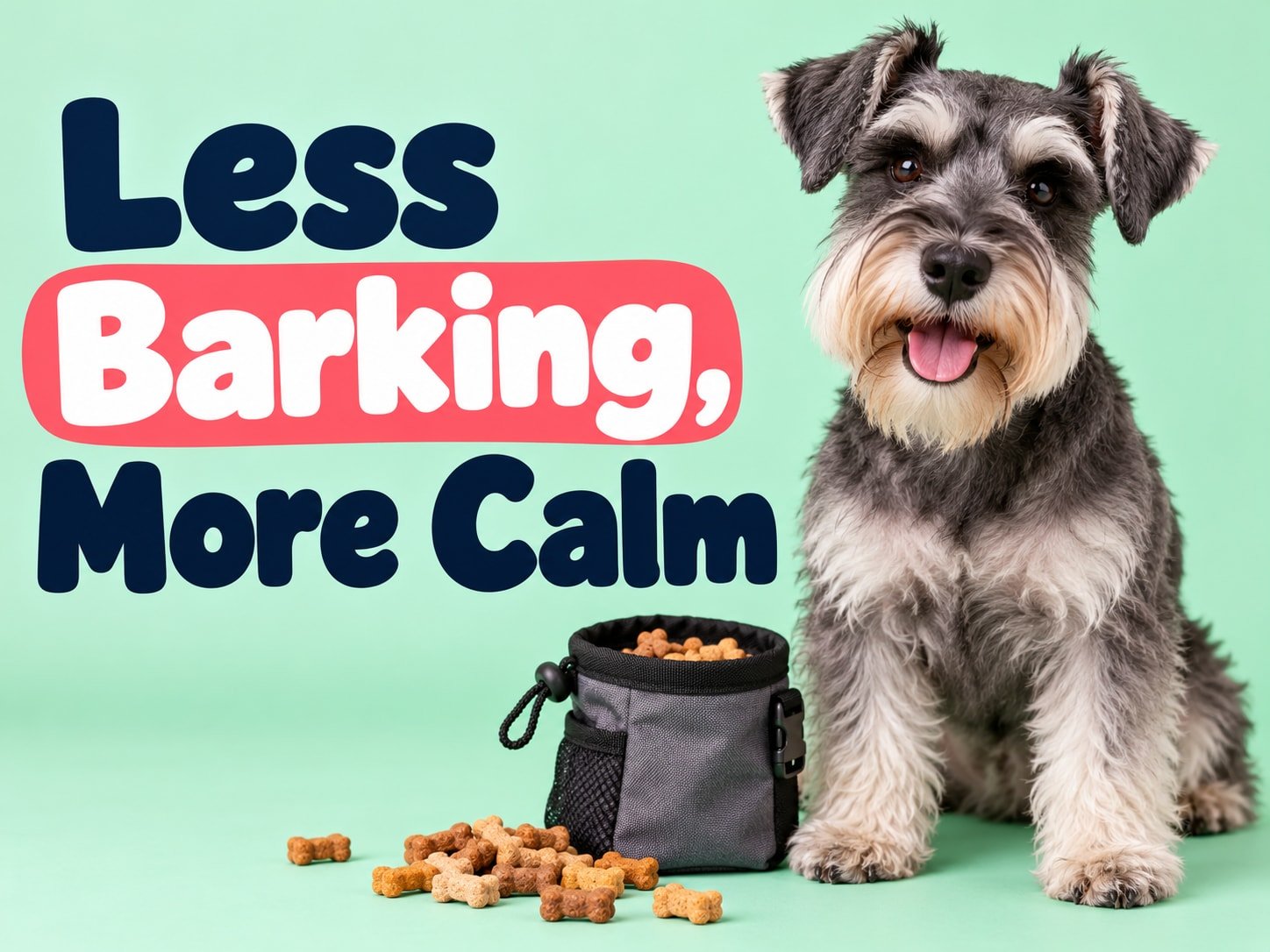
To reduce unwanted barking, identify its cause, manage triggers and reward a calmer alternative. Use short, achievable training sessions; fear, pain or separation distress may need a veterinary behaviour plan.
Match the training to the reason for barking
On a phone, swipe the table sideways to read every column.
| Likely trigger | Useful first step |
|---|---|
| Doorbell or people outside | Reduce the view and reward a quiet move to a mat before rehearsing easy doorbell practice. |
| Boredom or unmet activity | Review exercise, enrichment, rest and time left alone. |
| Fear or unfamiliar dogs | Increase distance; do not force exposure until the dog is barking intensely. |
| When left alone | Record the pattern and ask a veterinarian or qualified behavior professional about separation distress. |
Keep sessions short. Reward the behavior you want while the dog is still able to respond, rather than waiting for a long barking episode. Do not use punishment, shock or intimidation: these can increase fear and suppress warnings without solving the trigger. A sudden new bark pattern, pain signs or distress should be evaluated medically.
Identify the trigger
Keep notes on location, time and what the dog can see or hear. Barking at the window, during play and when left alone may need different plans. Record a short video if it is safe and does not require deliberately provoking the dog.
Make success easier
Use curtains or move a resting spot away from a busy window. Increase distance from things that trigger barking on walks. Provide suitable exercise, sniffing opportunities and rest. Management gives you quieter situations in which to teach an alternative behaviour.
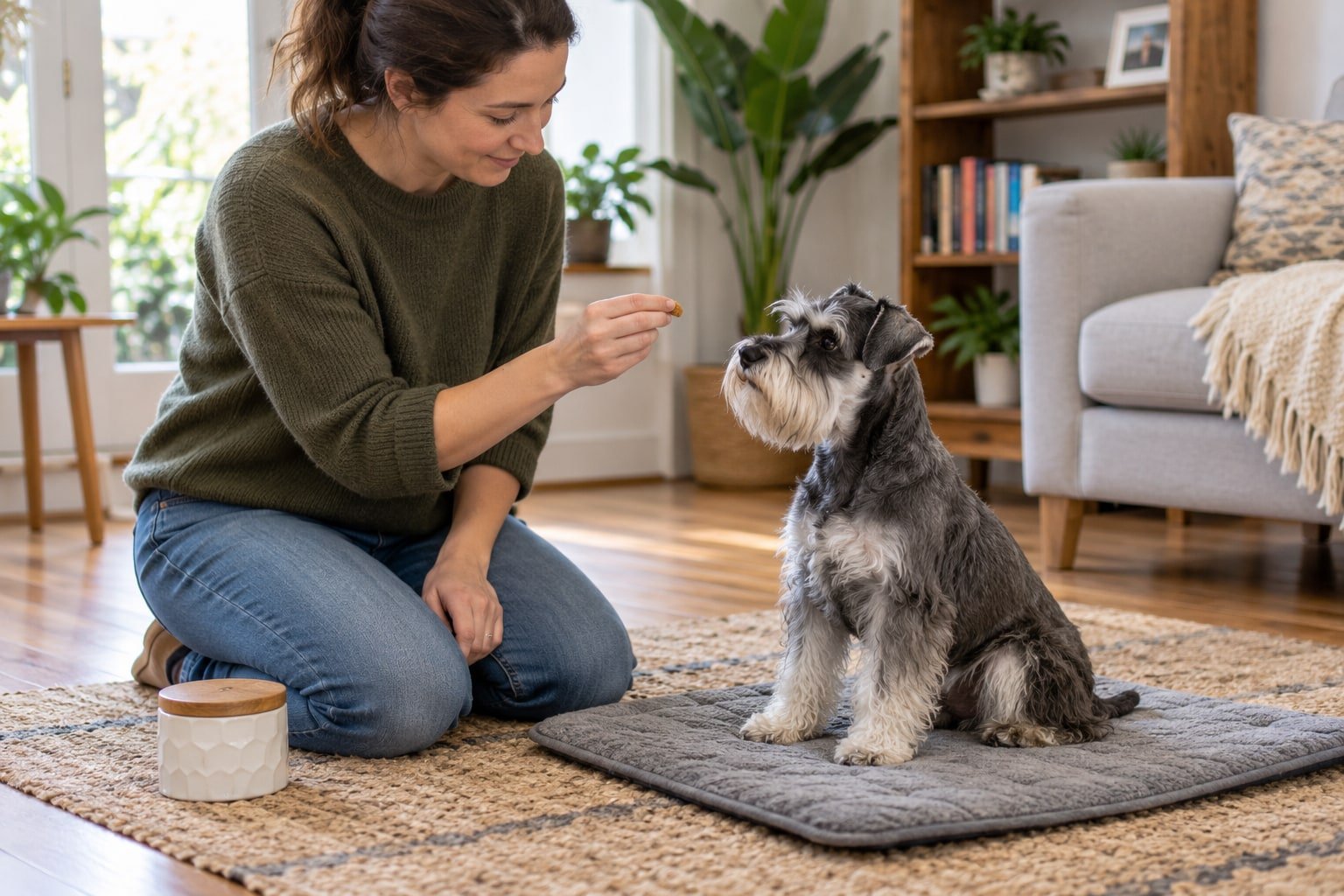
How do you build a training session the dog can succeed at?
Practise the alternative behaviour before introducing the difficult situation. Reward going to a mat in a quiet room, then add a mild version of the trigger at a manageable distance. If the dog starts sustained barking or cannot engage, make the setup easier. Change one variable at a time, such as distance or duration, so you can tell which adjustment helped.
Reward a behaviour you want
Practise going to a mat, looking back at you or settling while the trigger is absent or far enough away for the dog to cope. Reward promptly and build difficulty gradually. Keep sessions short. Avoid shouting, shock collars and other aversive approaches that can add fear or distress.
Recognise when training is not enough
Sudden barking changes, night-time agitation or signs of pain deserve a veterinary check. Barking linked with panic when alone needs an individual separation-related behaviour plan. Do not simply leave a distressed dog to bark until exhausted.
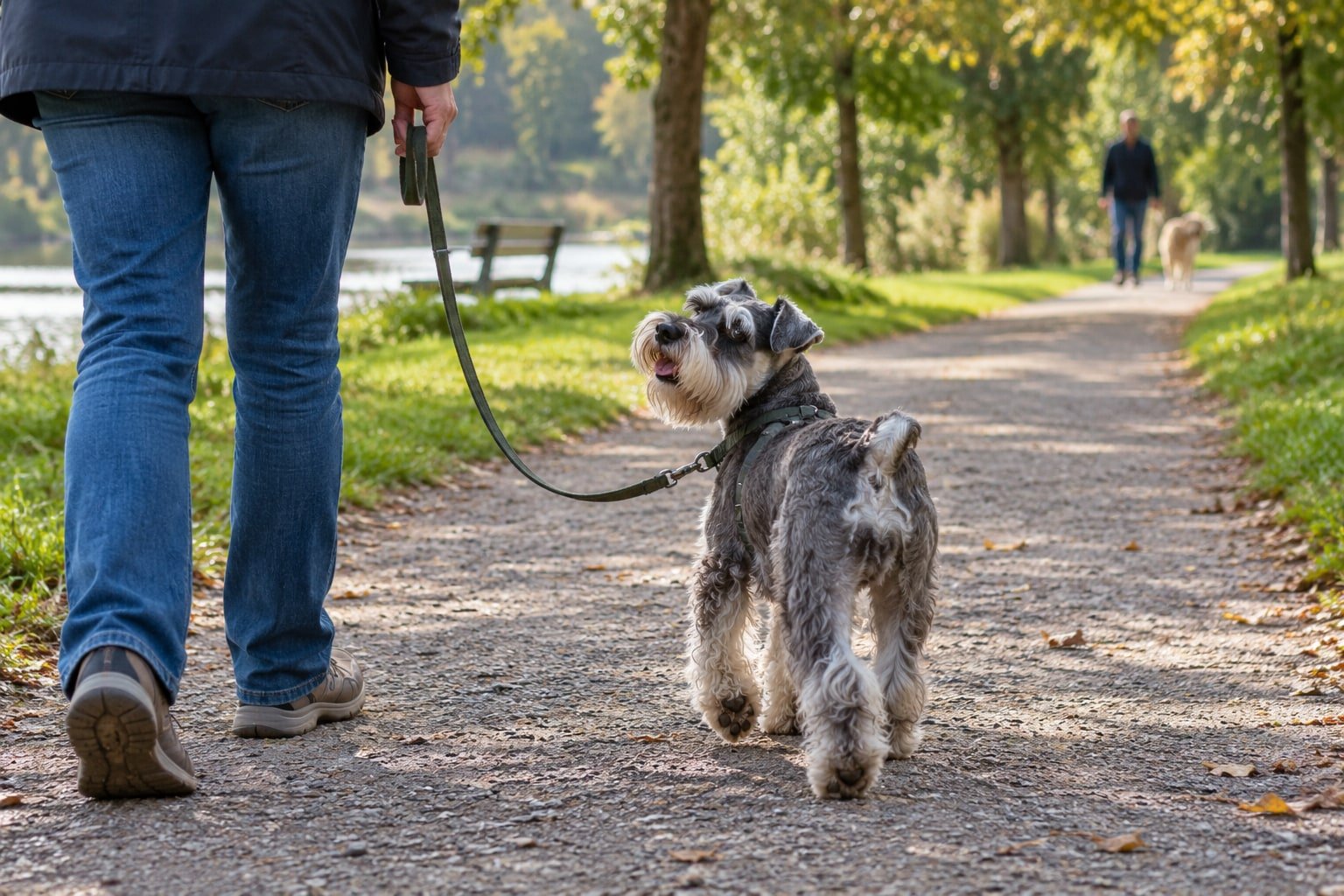
What should progress look like?
Measure specific changes: fewer barking episodes at the window, a shorter recovery after a noise or a quicker return of attention on a walk. Keep a brief log and use the same cues and rewards across the household. Progress is not a promise of complete silence. Dogs still communicate, and the aim is a comfortable response that the dog can repeat in everyday situations.
Your practical checklist
- Record the trigger and the conditions around each barking episode.
- Reduce avoidable exposure using distance, barriers or a quieter resting spot.
- Teach a simple alternative when the dog is already calm.
- Reward the alternative before the situation becomes too difficult.
- Increase difficulty gradually and seek help for fear, panic or sudden changes.
Common questions and answers
Should I shout quiet when my dog barks?
Shouting can add excitement or distress without teaching a clear alternative. Practise the behaviour you want in an easier setting and reward it. During a difficult episode, manage the situation first rather than repeating a cue the dog cannot follow.
Are anti-bark shock collars a good shortcut?
Reward-based methods are recommended by veterinary behaviour guidance. Aversive tools can add welfare risks and do not necessarily address why barking occurs. Work on triggers and alternative behaviours, and get qualified help when the cause is unclear.
Can I ignore barking when my dog is alone?
Not all alone-time barking is attention-seeking. Panic or separation-related distress needs an individual assessment and plan. Record naturally occurring behaviour if safe, discuss it with your veterinarian and avoid simply leaving the dog distressed for longer periods.
Why has my older dog started barking at night?
A new night-time pattern can have several causes, including health changes. Arrange a veterinary discussion and record sleep, toileting, movement and other differences. Do not treat it only as a training problem or punish the dog for waking.
Check our previous articles
Continue with these related guides from My Dog Recipes:
Sources and further reading
Updated September 29, 2026. General educational guidance; individual health and feeding decisions depend on your dog’s needs.









Leave a Reply