
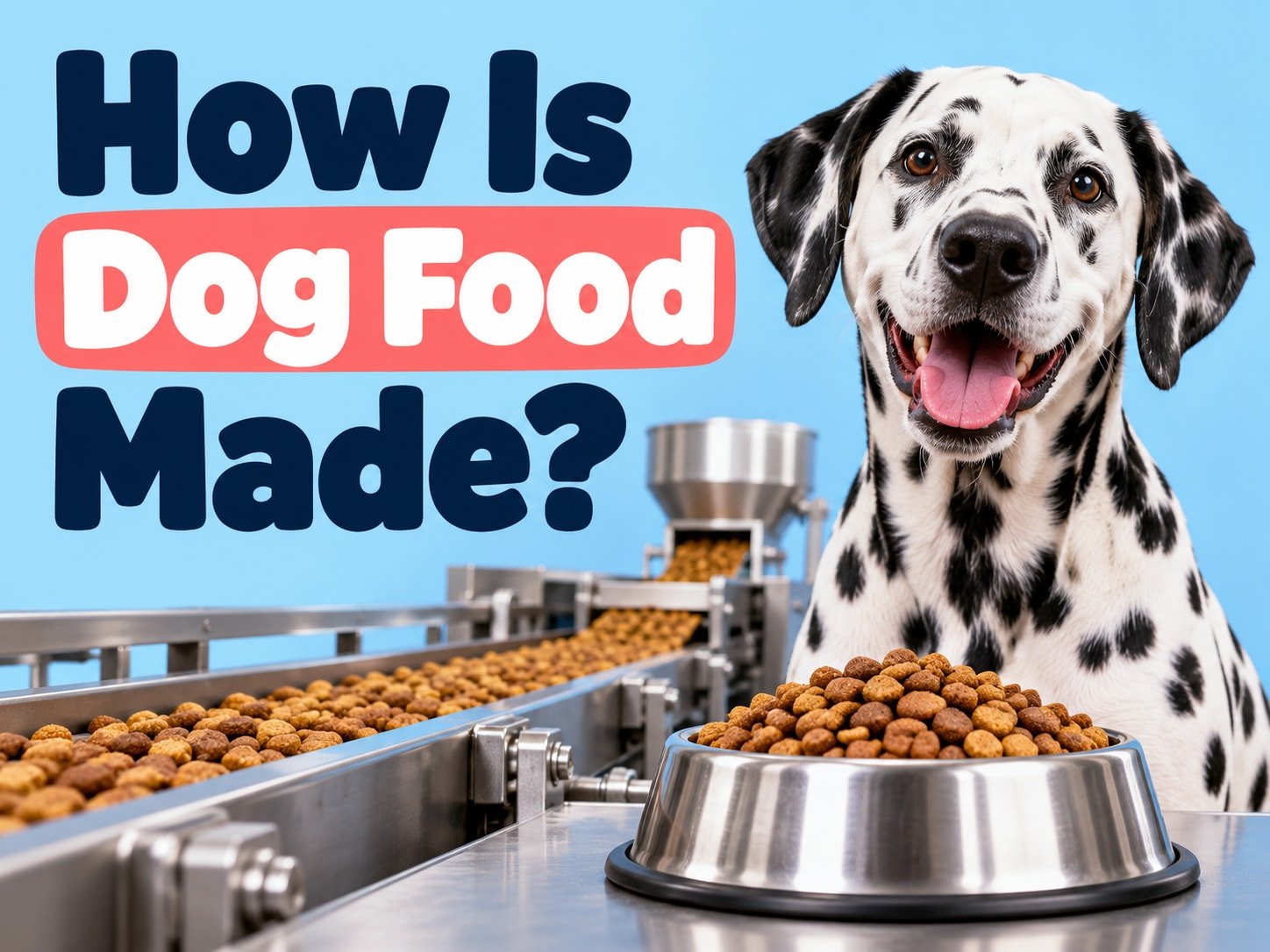
Pet food is made by formulating a recipe, sourcing ingredients, processing the mixture and checking the finished product. Dry and canned foods use different methods, so evaluate the manufacturer’s quality controls as well as the format.
What does a manufacturer actually do?
- Formulate: choose ingredient proportions and nutrient targets for a specified life stage.
- Source and inspect: obtain ingredients and packaging with documented supplier and safety controls.
- Process: a dry food may be mixed, cooked and extruded, then dried; canned food is filled and heat processed in a sealed container.
- Test and trace: check finished food against safety and quality requirements, assign lot numbers and keep records for recalls.
- Label: declare ingredients, feeding instructions, calories and nutritional adequacy as applicable.
Processes vary by company. A photograph of a conveyor or a marketing phrase such as “human grade” cannot tell you whether the finished diet meets your dog’s needs.
Five useful questions for a brand
Ask who formulates the diet and their qualifications; whether the food is complete for the stated life stage; how finished batches are checked; where manufacturing occurs; and how a customer can obtain nutrient or recall information. Keep the lot number when reporting a concern. A recall is a safety response to a specific problem, not by itself a full quality score for every product a brand has made.
A formula comes first
Manufacturers select ingredients to supply nutrients for a target animal and life stage. Ingredients are weighed and mixed before processing. Ask the company who formulates the food and how the finished product is checked against its nutritional claims. A long or short ingredient list is not a substitute for that information.
Different foods use different processes
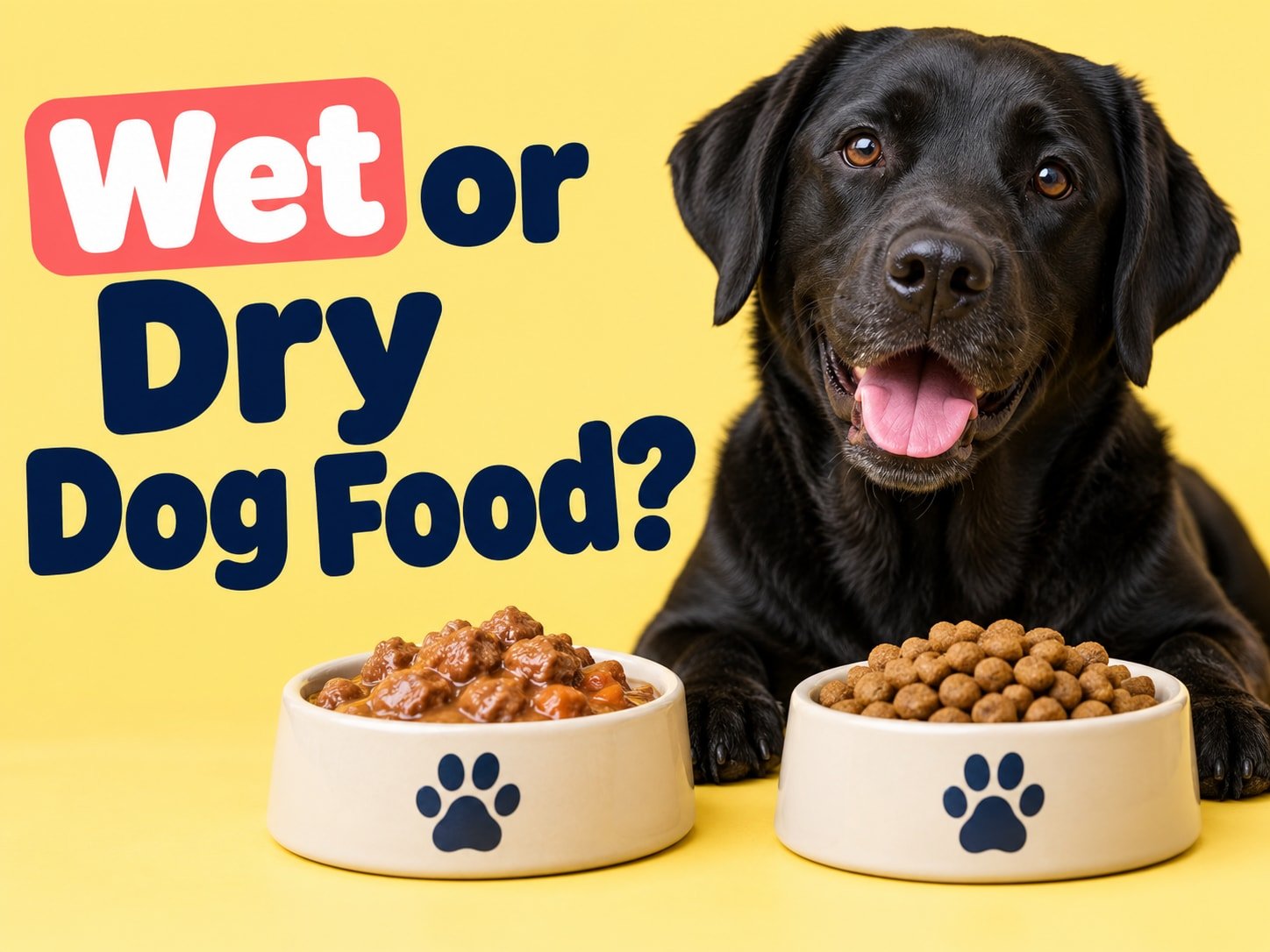
Many dry foods are cooked through extrusion, shaped, dried and sometimes coated. Canned foods are sealed and heat processed. Other formats use different methods. These are broad descriptions, so contact the maker for details about a particular product rather than assuming every brand uses the same equipment or sequence.
What happens during dry and canned food production?
For many dry foods, a mixed dough is heated under pressure and pushed through an extruder, then cut and dried. Coatings may be applied afterward. Canned food is filled into suitable packaging, sealed and heat processed. These descriptions explain common methods rather than a universal recipe: individual plants and products differ, and the manufacturer should be able to explain its own process.
Quality controls matter
In the United States, pet food is subject to FDA safety and labelling requirements. That does not mean every product is individually approved before sale. Ask about supplier controls, testing and how the company traces a finished package back to its production lot. Clear answers are more useful than vague quality slogans.
Keep information from the package
Save the lot number, best-before date and manufacturer contact details. Photograph the label before discarding a bag. If food looks or smells unusual, stop using that package and contact the manufacturer; speak with your veterinarian if your dog becomes unwell.
Which questions reveal more than advertising claims?
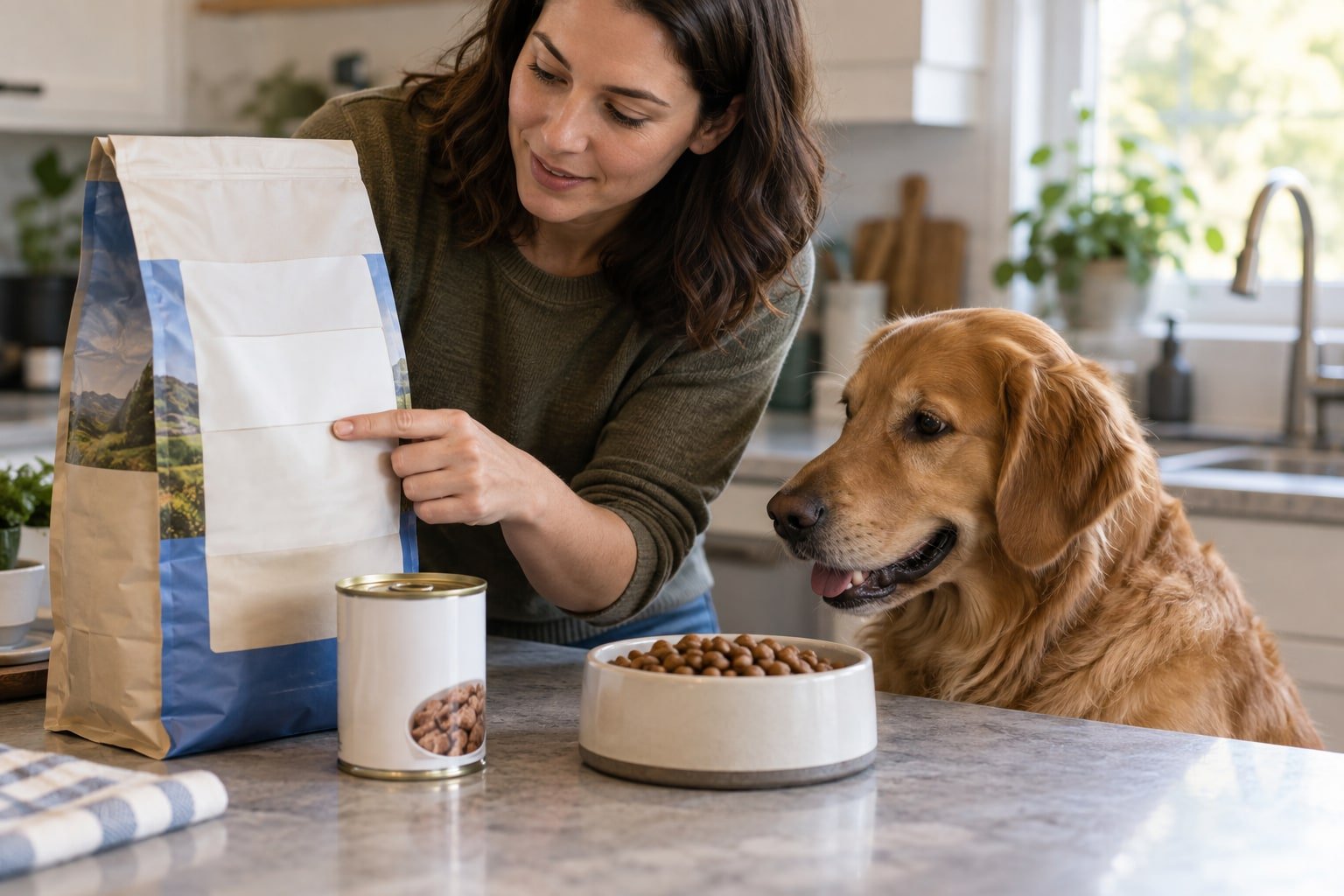
Ask who formulates the recipe, which nutritional standard it targets, what checks are performed on ingredients and finished batches, and how complaints are investigated. Request specific answers rather than treating phrases such as premium or human-grade as a complete evaluation. Keep a record of the response alongside the exact product name because different foods from one company can have different purposes and formulations.
Your practical checklist
- Read the full product name and nutritional adequacy statement.
- Find the manufacturer’s contact information and production-lot code.
- Ask about formulation expertise and quality-control procedures.
- Save the package details when transferring food into storage.
- Report an unusual package or suspected problem with the lot details available.
Common questions and answers
Is every pet food approved by the FDA before sale?
No. FDA regulation is not the same as individual premarket approval of every finished pet-food product. Be cautious about broad approval claims. Check the precise statement and ask the company what it means in relation to its product.
Does extrusion make food nutritionally unsuitable?
The process name alone does not answer that question. Formulation accounts for processing, and the finished food must be evaluated for its intended nutritional purpose. Ask about the completed product and supporting quality checks rather than judging only one manufacturing step.
Can an ingredient list tell me everything about quality?
No. It identifies ingredients but does not fully describe nutrient availability, formulation expertise, batch consistency or how the food suits your dog. Use it alongside the adequacy statement, calorie information and the manufacturer’s answers.
Why keep the original bag or lot number?
The production code helps identify the exact batch if there is a quality concern or recall. A photo of the label and code can be useful, but keeping the original package also preserves the manufacturer’s storage and feeding information.
Check our previous articles
Continue with these related guides from My Dog Recipes:
Sources and further reading
Updated September 29, 2026. General educational guidance; individual health and feeding decisions depend on your dog’s needs.

Leave a Reply